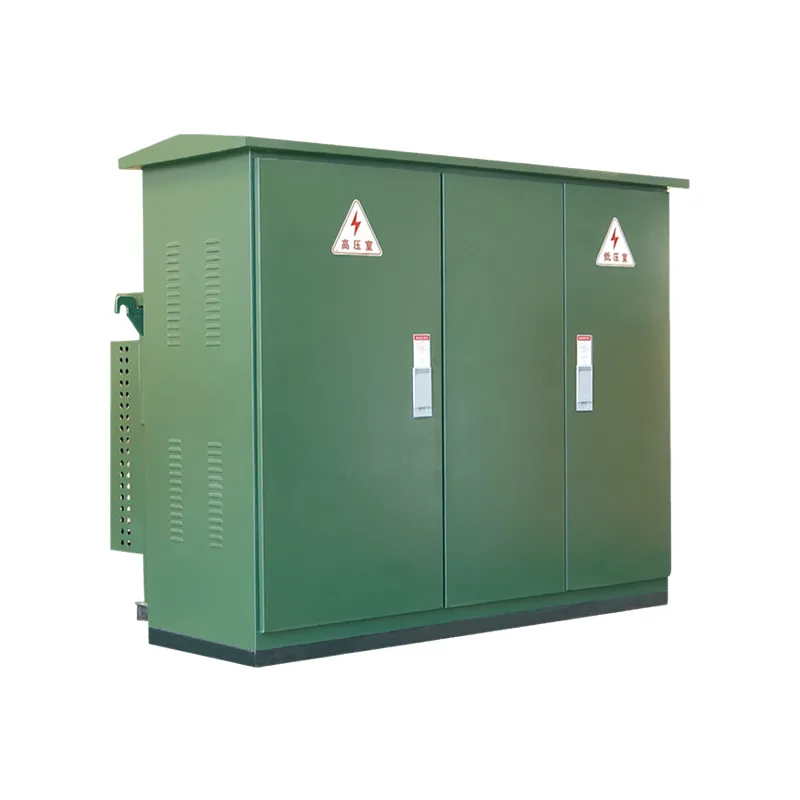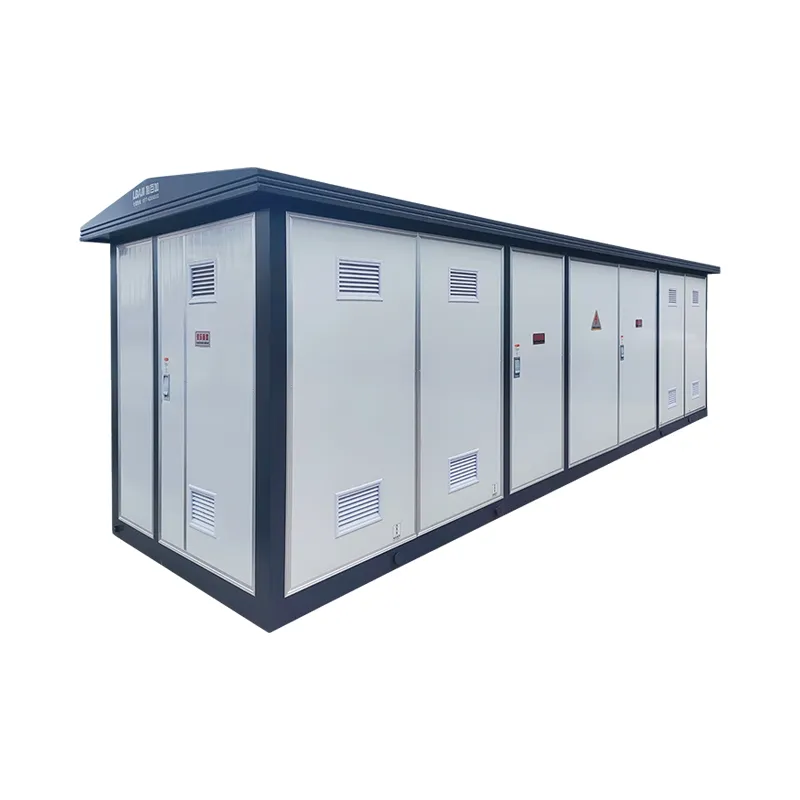
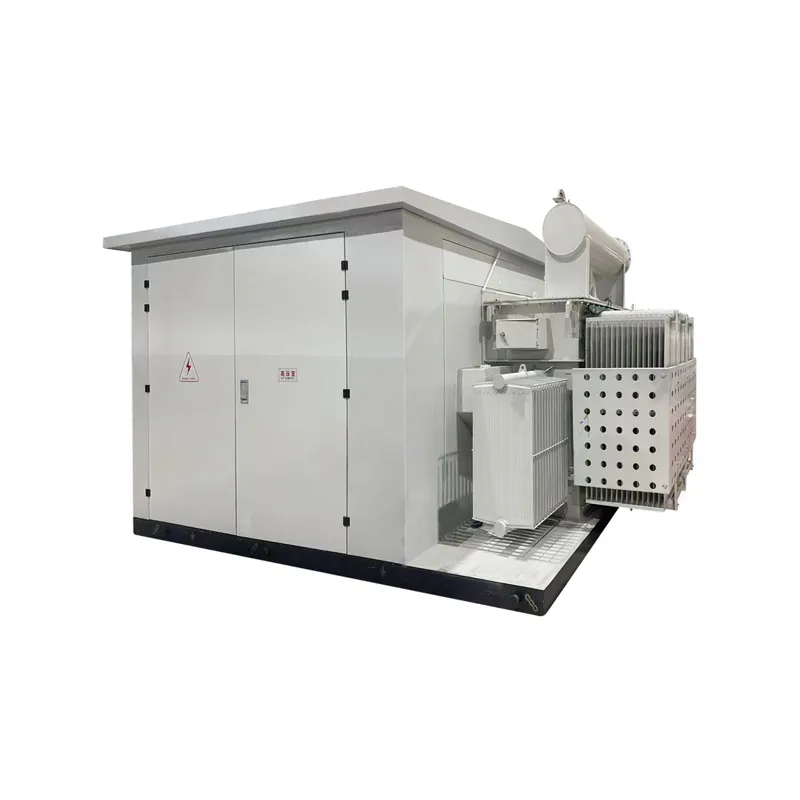
35KV New Energy Box Type (Chinese Type) Substation

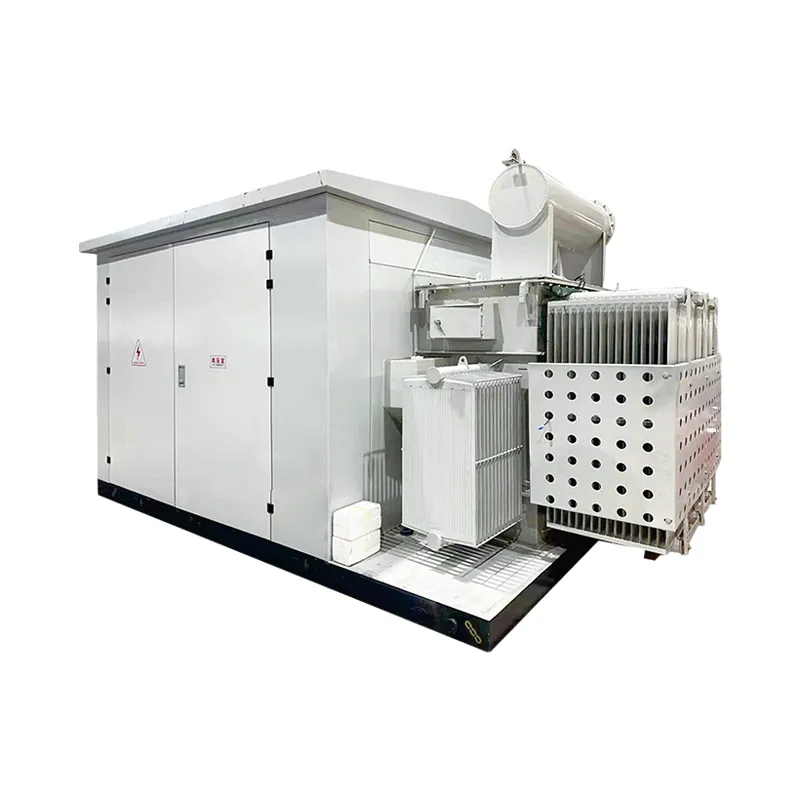
35KV compact pre-installed substation, commonly known as the Chinese type box transformer, is a new type of box substation, products are widely used in wind farms and photovoltaic power plants. It is mainly composed of transformer body, high voltage electrical part, low voltage electrical part, box and so on.

Overview

35KV compact pre-installed substation, commonly known as the Chinese type box transformer, is a new type of box substation, products are widely used in wind farms and photovoltaic power plants. It is mainly composed of transformer body, high voltage electrical part, low voltage electrical part, box and so on. The transformer is a three-phase double-winding oil-immersed self-cooling power transformer without excitation regulating voltage. The high voltage electrical part of Hua-type box transformer is mainly composed of 35kV high voltage circuit breaker, 35kV isolation switch, 35kV current transformer, 35kV voltage transformer, 35kV lightning arrester, 35kV live display, etc. The low-voltage electrical part of Huashi box transformer is mainly composed of low-voltage frame circuit breaker, self-use electrical system (self-use transformer, feeder switch, etc.), surge protector, etc.

Product characteristics

1, compact structure, small size, easy installation, flexible;
2, fully insulated, fully sealed structure, safe and reliable, maintenance-free, reliable protection of personal safety;
3, the high voltage side adopts double fuse protection, in which the plug-in fuse fuse is double sensitive fuse (temperature, current), the backup fuse is the current limiting fuse, reducing the operating cost;
4, the high-voltage wire adopts the cable connector structure, fully insulated, safe and reliable, easy to operate;
5, can be used for ring network, can also be used for terminal, conversion is very convenient, improve the reliability of power supply;
6, the transformer is three-phase three-column or three-phase five-column structure, the iron core adopts the stepped joint process or rolled core process, low noise, low loss, anti-short circuit and overload ability;
7, the use of vacuum drying and vacuum oiling special process, our company will be used in 110kV products of this process extended to 10kV products, to improve product quality to provide a strong guarantee;
8, the box can use anti-corrosion design and special spray painting treatment according to the requirements of the operating environment, with “three anti-corrosion” function, that is, anti-condensation, anti-salt spray, anti-mold function and can meet the high temperature, high humidity environment anti-corrosion requirements.

Technical requirement

The Chinese type box transformer is composed of three parts: high voltage room, transformer and low voltage room. Each room is separated into an independent interval by a partition board. A lower manhole is provided in the box for easy installation and maintenance. Its internal layout structure is set according to the requirements of standard design drawings. Natural cooling method is adopted in the tank, and the temperature of the low pressure chamber is controlled below 60℃ through the cooling device in the cabinet to ensure a good operating environment of the secondary equipment. On the transformer cabinet, install the communication cabinet (to install the switch, optical fiber box and other devices), UPS battery cabinet in 1.1 times continuous long-term overload operation (the oil temperature does not exceed 85℃ under the project environment), 1.2 times continuous overload operation for 3 hours (the oil temperature does not exceed 85℃ under the project environment), 1.5 times short-term overload operation. It shall comply with the provisions of General Equipment for Transmission and Transformation Engineering of State Grid Corporation (Typical specifications for 66kV and below transformer and distribution power stations) and the relevant values in Table 3-2.

Dehumidification, explosion-proof and anti-condensation measures should be taken inside the transformer box. The cable holes in the high and low pressure chamber should be sealed by using polymer flexible sealing material TS-68 on the basis of fireproof mud sealing. The door of the container is fitted with sealing strips. The sealing strip is made of EPDM rubber, which has good heat resistance, weather resistance, ozone resistance, corrosion resistance and aging resistance. High-voltage cable heads, busbars, wiring terminals and other live parts are fully insulated with flame retardant and thermal conductive silicone rubber insulation material TS-10. The high-voltage parts of 35kV should be able to withstand the requirements of 40.5kV voltage and voltage for 1min after insulation treatment. The low-voltage busbar should be able to withstand the requirement of 2.5kV voltage and withstand voltage for 1min after insulation treatment. High voltage bushing porcelain bottles, insulation rod, insulator and other insulation devices are brushed with high self-cleaning anti-fouling flash coating SRTV, coating thickness 0.4±0.1mm. The seller is responsible for retrofitting the added cooling fan with external circulation ventilation. (Delete) The design service life of the box shall not be less than 30 years. The combination of low-power constant heater and dehumidifier should be set up in each compartment, and ventilation holes should be set reasonably according to the volume of the cabinet. The temperature and humidity signals of the box should have the remote transmission function and be uploaded to the box transformer measurement and control device through the communication interface.
Reviews

There are no reviews yet.

Be the first to review “35KV New Energy Box Type (Chinese Type) Substation”

Your email address will not be published. Required fields are marked *

Frequently Asked Questions

What is a Prefabricated Distribution Substation?

A Prefabricated Distribution Substation is a factory-assembled power distribution solution that integrates a transformer, medium voltage switchgear, low voltage switchgear, protection equipment, control systems, and auxiliary components into a compact prefabricated enclosure.

It is designed to simplify transportation, installation, commissioning, and operation, making it suitable for utility power distribution, industrial plants, commercial buildings, solar power plants, wind farms, data centers, mining projects, and infrastructure applications.

What is the difference between a Prefabricated Substation and a conventional substation?

A conventional substation generally requires more equipment installation and construction work at the project site.

A prefabricated substation is largely assembled and tested in the factory before delivery. This can reduce on-site construction and wiring work, shorten installation time, simplify project coordination, and improve manufacturing quality control.

It is particularly useful for projects where space, installation time, transportation, or construction conditions are limited.

What equipment is included in a Prefabricated Distribution Substation?

The configuration can be customized, but a typical prefabricated distribution substation may include:

  • Power transformer
  • Medium voltage switchgear
  • Low voltage switchgear
  • Ring main unit
  • Circuit breaker
  • Load break switch
  • Protection relay
  • Metering system
  • Busbar system
  • Surge protection
  • Control and monitoring system
  • Auxiliary power system
  • Lighting and ventilation system
  • Prefabricated enclosure

The final configuration is determined according to the customer’s single-line diagram, electrical specifications, application, and local grid requirements.

What type of transformer can be installed in a Prefabricated Substation?

LBAJI can integrate both oil-immersed transformers and dry-type transformers into prefabricated substations.

Oil-immersed transformers are commonly used for utility, industrial, renewable energy, and outdoor distribution applications.

Dry-type transformers are often selected for commercial buildings, data centers, indoor installations, and projects where fire safety and reduced environmental impact are important.

What voltage levels are available?

The substation can be designed for different medium voltage and low voltage systems according to the project requirements.

Common medium voltage levels include:

6kV, 10kV, 11kV, 13.8kV, 15kV, 20kV, 22kV, 24kV and 35kV.

The secondary voltage can also be customized according to the local distribution system, such as 400V, 415V, 480V, 690V and other low voltage requirements.

What transformer capacities are available?

LBAJI can provide different transformer capacities according to the project’s electrical load.

Common capacities include:

100kVA, 160kVA, 250kVA, 315kVA, 400kVA, 500kVA, 630kVA, 800kVA, 1000kVA, 1250kVA, 1600kVA, 2000kVA and above.

For large industrial and renewable energy projects, multiple-transformer configurations can also be considered.

Can I choose copper or aluminum windings?

Yes. Depending on the transformer design and project requirements, customers can select copper or aluminum windings.

Copper windings generally provide excellent electrical conductivity and mechanical strength, while aluminum windings can offer a more economical solution.

The appropriate winding material can be selected according to the required performance, budget, operating conditions, and project specifications.

Can the medium voltage and low voltage switchgear be customized?

Yes.

The MV and LV switchgear can be configured according to the customer’s electrical system, including:

  • Rated voltage
  • Rated current
  • Short-circuit capacity
  • Circuit breaker type
  • Protection relay
  • Metering
  • Busbar configuration
  • Cable entry and exit
  • Control and communication requirements

Customers can provide their single-line diagram or technical specification, and LBAJI can develop the corresponding configuration.

Is a Prefabricated Distribution Substation suitable for solar power plants?

Yes.

Prefabricated substations are widely used in solar photovoltaic power plants because they can integrate transformers, MV switchgear, LV equipment, protection, monitoring, and auxiliary systems into a compact solution.

They can help simplify electrical integration between the PV generation system and the grid or local distribution network.

Can a Prefabricated Substation be used for wind farms?

Yes.

For wind power projects, prefabricated substations can be designed according to the project’s collection voltage, transformer capacity, grid connection requirements, protection system, and environmental conditions.

The solution can be customized for wind farms, distributed wind power systems, and renewable energy collection systems.

Are Prefabricated Substations suitable for industrial plants?

Yes.

They are commonly suitable for factories, manufacturing facilities, warehouses, mining operations, oil and gas facilities, and other industrial applications.

A customized configuration can provide medium voltage incoming power, transformer voltage conversion, low voltage distribution, protection, metering, and monitoring within one integrated system.

Can they be used for commercial buildings and data centers?

Yes.

Prefabricated substations can be configured for commercial buildings, shopping centers, office buildings, hospitals, data centers, and other critical facilities.

For these applications, the design can place greater emphasis on reliability, protection, redundancy, fire safety, monitoring, and continuous power availability.

Can Prefabricated Substations be used in mining projects?

Yes.

Mining projects often require reliable power distribution in remote and demanding environments.

The enclosure, transformer, switchgear, ventilation, corrosion protection, and protection system can be customized according to the temperature, dust, altitude, humidity, transportation, and site conditions.

Can LBAJI manufacture a customized Prefabricated Distribution Substation?

Yes.

Customization is one of the main advantages of LBAJI’s prefabricated substation solutions.

The following can be customized:

  • Transformer capacity
  • Transformer type
  • Primary and secondary voltage
  • Frequency
  • MV switchgear
  • LV switchgear
  • Protection system
  • Metering system
  • Enclosure dimensions
  • Cable entry arrangement
  • Ventilation system
  • Fire protection
  • Monitoring system
  • Communication system
  • Internal layout
Can you manufacture the substation according to our drawings?

Yes.

Customers can provide a single-line diagram, general arrangement drawing, technical specification, equipment list, or project tender document.

LBAJI’s engineering team can review the information and develop the equipment configuration according to the project requirements.

Can you design the electrical system if we do not have a complete specification?

Yes.

If you do not have a complete technical specification, you can provide basic information such as:

Power capacity + input voltage + output voltage + frequency + application + quantity + project location.

Based on this information, the engineering team can help recommend a suitable transformer and switchgear configuration.

Can the enclosure dimensions be customized?

Yes.

The enclosure dimensions can be designed according to the internal equipment arrangement, transportation limitations, installation location, maintenance space, cable routing, ventilation requirements, and local regulations.

For projects with limited installation space, a compact layout can be developed.

What standards can the Prefabricated Distribution Substation comply with?

The substation can be designed and manufactured according to applicable international and regional standards.

Depending on the equipment configuration and destination market, relevant IEC standards and local electrical regulations can be considered.

Customers can specify required standards, testing procedures, certification requirements, and grid codes before production.

How is the Prefabricated Substation protected against electrical faults?

The protection system can include:

  • Overcurrent protection
  • Short-circuit protection
  • Earth-fault protection
  • Transformer protection
  • Surge protection
  • Circuit breaker protection
  • Fuse protection
  • Temperature monitoring
  • Other customized protection functions

The protection scheme is selected according to the voltage level, transformer capacity, grid configuration, and project requirements.

Does LBAJI conduct factory testing before shipment?

Yes.

The electrical equipment can undergo factory testing before shipment according to the applicable standards and agreed technical requirements.

Testing may include transformer tests, insulation tests, switchgear operation tests, wiring checks, protection function checks, and other required inspections.

This helps reduce potential problems during installation and commissioning at the project site.

Can you provide test reports and technical documentation?

Yes.

Depending on the project requirements, LBAJI can provide relevant technical documents such as:

  • Technical specifications
  • Single-line diagrams
  • General arrangement drawings
  • Foundation drawings
  • Wiring diagrams
  • Equipment lists
  • Factory test reports
  • Inspection documents
  • Operation manuals
  • Installation instructions
  • Maintenance documentation
Can a Prefabricated Distribution Substation be installed outdoors?

Yes.

Prefabricated substations are commonly designed for outdoor installation.

The enclosure can be customized according to the local environment, including waterproofing, dust protection, ventilation, cooling, anti-corrosion treatment, temperature control, and other environmental requirements.

Can the substation be used in hot, cold, humid, or dusty environments?

Yes.

The design can take local environmental conditions into consideration, including:

  • Ambient temperature
  • Humidity
  • Rainfall
  • Dust
  • Salt spray
  • Altitude
  • Corrosive environments
  • Solar radiation

Customers should provide the project location and environmental conditions so the equipment can be properly designed.

How is the Prefabricated Substation transported?

The transportation method depends on the overall dimensions, weight, equipment configuration, and destination.

LBAJI can provide relevant dimensions, weight, lifting points, packing information, loading requirements, and transportation documentation to support international logistics planning.

How long does it take to install a Prefabricated Distribution Substation?

Because major components can be assembled and tested before shipment, on-site installation can be significantly simplified compared with a conventional site-built substation.

The actual installation time depends on the foundation preparation, equipment configuration, cable connections, site conditions, and commissioning requirements.

Does the Prefabricated Substation require a foundation?

Yes.

A suitable foundation is normally required to support the equipment and ensure safe and stable installation.

LBAJI can provide foundation interface dimensions and installation drawings according to the final substation configuration.

Can LBAJI provide a complete turnkey Prefabricated Substation solution?

Yes.

LBAJI can provide an integrated solution covering:

Engineering Design → Equipment Selection → Manufacturing → Factory Testing → Packing → Delivery → Technical Documentation

The exact project scope can be customized according to the customer’s requirements.

Can I purchase the transformer and switchgear separately?

Yes.

Customers can purchase a complete prefabricated substation or procure individual products such as:

  • Oil-immersed transformers
  • Dry-type transformers
  • MV switchgear
  • LV switchgear
  • Ring main units
  • Box-type substations
  • PV electrical equipment

This provides flexibility for EPC contractors, distributors, system integrators, and electrical equipment importers.

Do you support OEM and customized orders?

Yes.

OEM and customized solutions can be discussed according to project requirements.

Customization may include equipment configuration, enclosure design, nameplates, documentation, electrical specifications, and other applicable requirements.

What information is required to get a quotation?

For an accurate quotation, please provide as much of the following information as possible:

  • Transformer capacity
  • Primary voltage
  • Secondary voltage
  • Frequency
  • Transformer type
  • Quantity
  • MV switchgear requirements
  • LV switchgear requirements
  • Protection requirements
  • Application
  • Project location
  • Applicable standards
  • Delivery destination

If you do not have all the information, simply send us your project requirements or single-line diagram. Our engineers can help evaluate the suitable solution.

Why choose LBAJI for Prefabricated Distribution Substations?

LBAJI provides integrated electrical equipment solutions covering transformers, medium voltage switchgear, low voltage switchgear, box-type substations, photovoltaic electrical equipment, and other power distribution products.

With manufacturing and engineering capabilities, LBAJI can coordinate multiple electrical components within one prefabricated solution, helping customers simplify equipment procurement, system integration, installation, and project management.

Our solutions can be customized for utility, renewable energy, industrial, commercial, infrastructure, mining, and other power distribution applications.

Where can I buy a Prefabricated Distribution Substation?

LBAJI supplies customized prefabricated distribution substations for international projects and supports OEM, project-based, EPC, distributor, and industrial procurement requirements.

Customers can submit their voltage, transformer capacity, application, quantity, destination country, and technical requirements for evaluation and quotation.

How much does a Prefabricated Distribution Substation cost?

The price depends on the transformer capacity, voltage level, transformer type, winding material, MV and LV switchgear configuration, protection system, enclosure dimensions, standards, quantity, and delivery destination.

For this reason, a project-specific quotation is more accurate than a standard product price.

What is the lead time for a customized Prefabricated Substation?

Lead time depends on the substation configuration, transformer capacity, customization requirements, quantity, testing requirements, and production schedule.

After receiving the technical specifications, LBAJI can provide a project-specific production and delivery schedule.

Can I send my project specifications for evaluation?

Yes.

You can send your single-line diagram, technical specification, tender document, equipment list, or basic project requirements.

LBAJI’s engineering team can review the information and recommend a suitable prefabricated substation configuration.