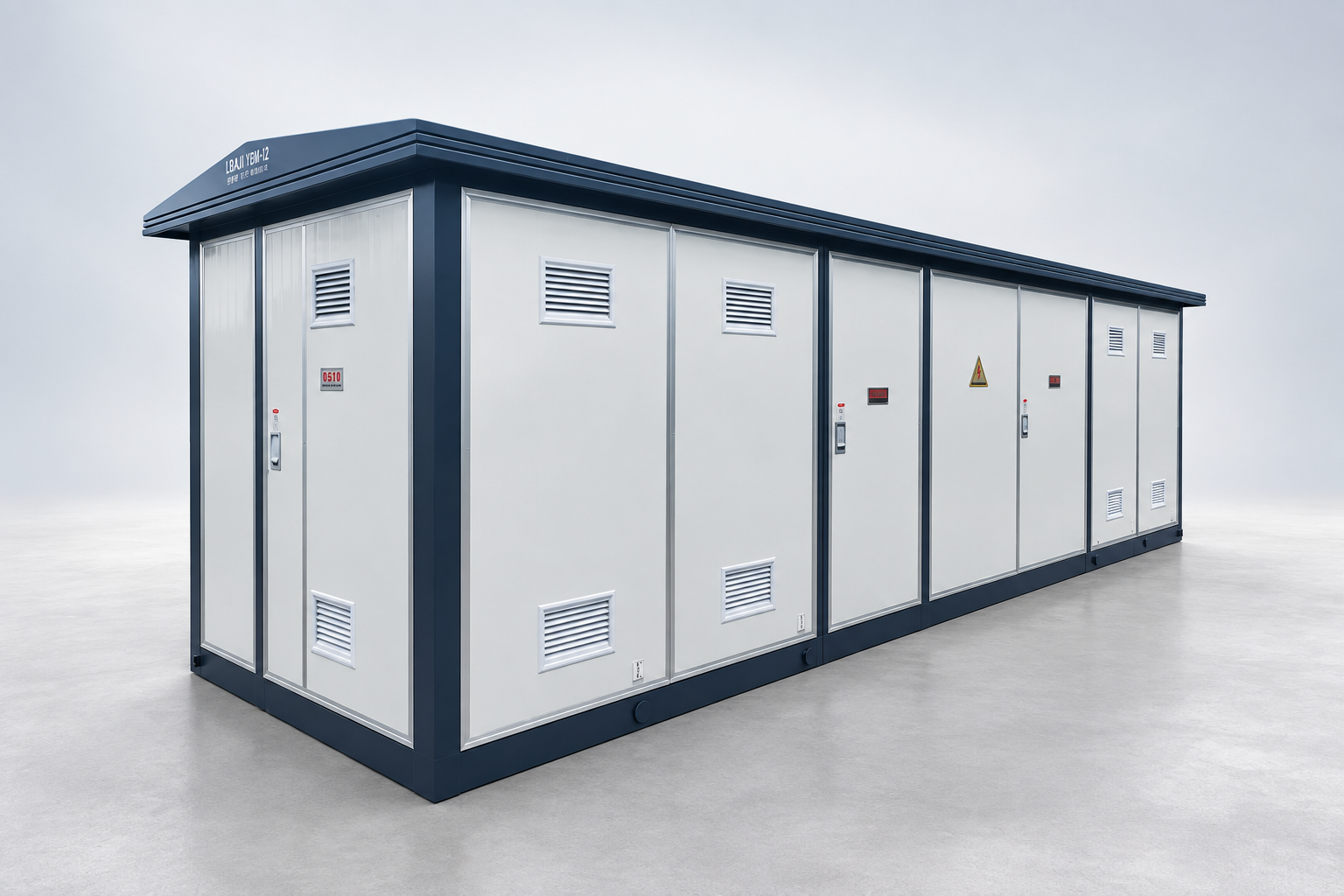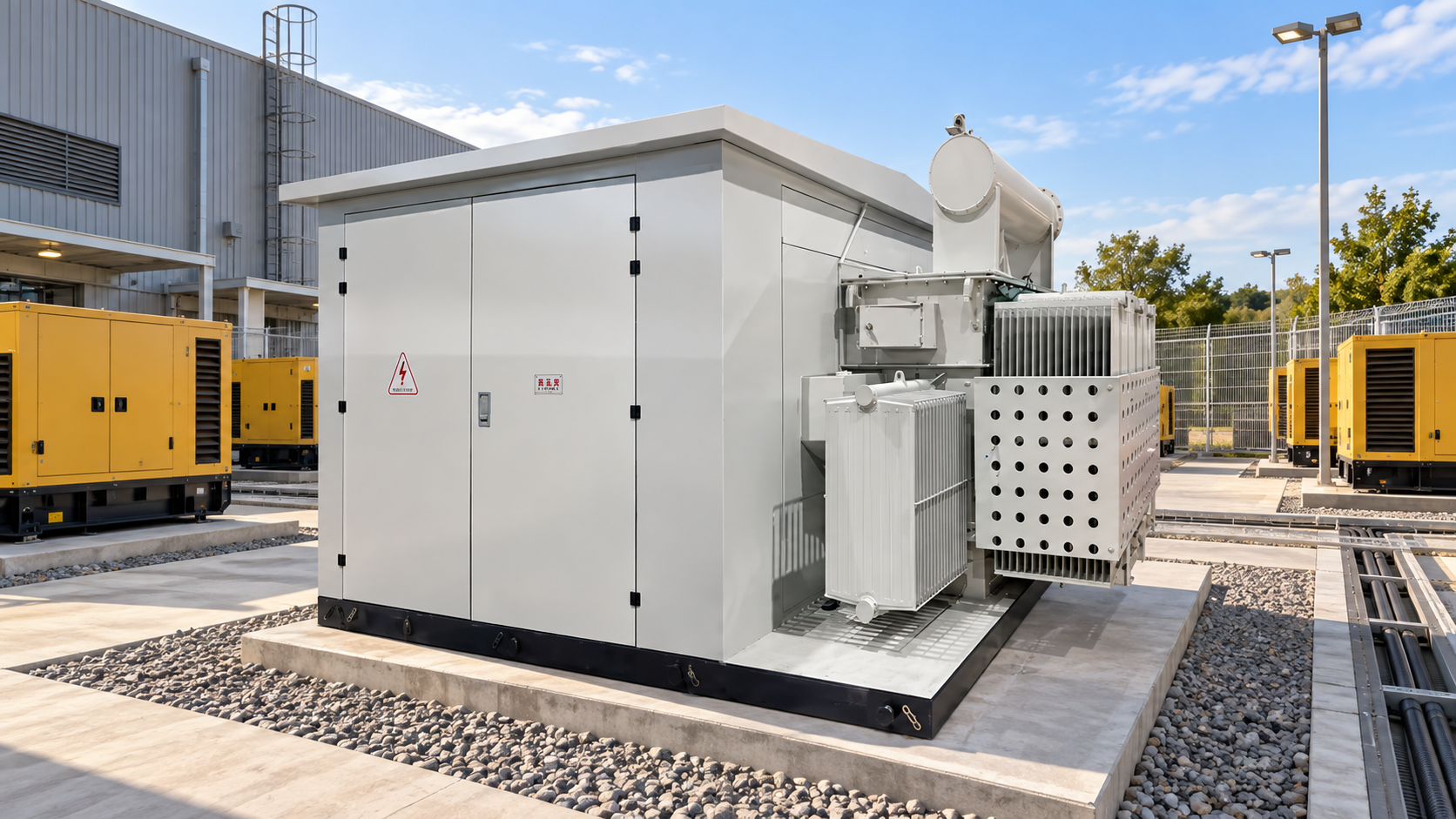

An industrial power distribution system carries electricity from the supply connection to production processes, utilities and supporting services through a coordinated arrangement of transformers, switchgear, feeders and local distribution equipment. Its design must match how the plant operates, including maintenance, process starts and supply interruptions. A collection of correctly rated components does not by itself establish a reliable system: interfaces, protection and operating arrangements must also work together. This guide focuses on industrial architecture and operating decisions, helping project teams describe the required system before purchasing individual assemblies or approving an expansion.
Understand the path from supply to process
Begin at the actual supply boundary. A plant may receive electricity at medium voltage and transform it on site, or receive low-voltage supply under a different ownership arrangement. Establish the service conditions and responsibility for incoming equipment. The primary distribution arrangement then supplies transformers, large loads or downstream distribution sections as appropriate to the installation. Local circuits complete the path to production machinery, lighting, controls and essential services.
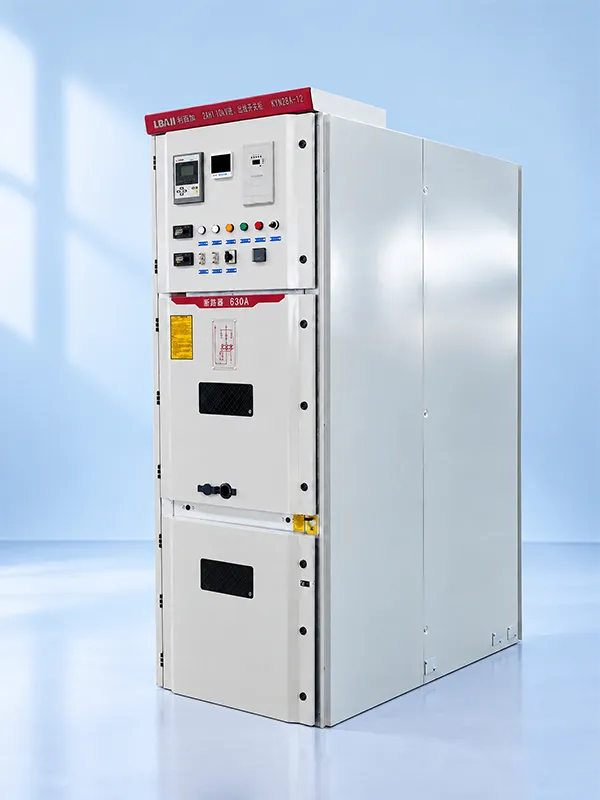
Draw these boundaries on the single-line diagram. Identify voltage levels, sources, switching functions and the equipment owner at each interface. Do not infer internal configuration from the appearance of a cabinet. The KYN28A-12 assembly illustrated in this article represents a medium-voltage equipment exterior, rather than a complete plant design. Its product designation does not establish suitability for every supply condition; project documentation must confirm the selected assembly’s ratings, functions and interfaces.
Distinguish system architecture from equipment selection
Architecture answers where the supply paths run, how loads are grouped and what operating arrangements are permitted. Equipment selection answers how a particular function is implemented within that architecture. Choosing a circuit breaker before resolving the available fault duty, protection role and assembly requirements can create a mismatch. Similarly, selecting a transformer without considering the downstream installation can leave voltage performance or interface issues unresolved.
Keep the decisions connected through controlled documents. The equipment schedule should follow the current single-line diagram and approved study results. Supplier drawings must preserve the intended circuit function or explicitly identify deviations. If an alternative is proposed, assess its effect on the system rather than comparing only the individual component. An economical substitution may require new protection work, different cable terminations, additional space or revised operating procedures, all of which affect the delivered project.
Group loads by production role and interruption consequence
Industrial loads do not all respond to interruption in the same way. A brief interruption may stop a continuous process, spoil material or require a lengthy restart, while another operation can pause without serious consequences. Supporting services can be just as important as the main process. Cooling, lubrication, ventilation, controls and communications may determine whether a machine can operate safely even when its main power supply remains available.
Create a load register that identifies normal operation, starting behavior, supporting dependencies and permissible downtime. Process owners should approve the consequences, while engineers establish the electrical requirements. Avoid describing every load as critical: doing so obscures priorities and can inflate contingency equipment without improving actual resilience. The register should distinguish a safe shutdown requirement from continuous production and identify the sequence needed to restore operations after an interruption.
Select supply arrangements for credible operating cases
A radial path has a clear relationship between upstream and downstream equipment. A fault or planned isolation on that path may interrupt the connected loads. Other arrangements can provide additional supply options, but they also require appropriate equipment, protection, interlocks and operator capability. A second connection is useful only when the complete alternative path can serve the intended loads under approved conditions.
Review normal operation, planned maintenance and credible supply loss separately. Record which loads remain supplied and which must stop in each case. Two feeds can share an upstream point of failure, and a standby source may not support every process start or operating load. Describe these limitations explicitly. Do not use a generic diagram or a marketing phrase such as dual supply as evidence that a particular plant has uninterrupted power.
Define fault containment and protection boundaries
Protection is intended to detect abnormal conditions and operate the appropriate devices under the designed conditions. The relationship between devices matters: an upstream operation can interrupt more of the plant than necessary if coordination has not been assessed. However, selectivity and electrical safety are engineering questions with constraints, rather than simple promises that every downstream fault will leave all other equipment running.
Provide the engineer with source information, transformer data, cable characteristics, equipment ratings and the intended operating states. Changes to generators, supply capacity or distribution configuration can alter the studies. Request a clear record of approved settings, responsibilities for implementation and verification requirements. Operations teams need access to the final records and a change process, so that a replacement component or revised operating state is not introduced without considering the rest of the system.

Address motor starts and power quality in context
Large motors, variable-speed drives, furnaces and other process equipment can affect the distribution system differently from steady resistive loads. Investigate relevant starting conditions, load variation and power-quality requirements with the equipment manufacturer and engineer. A reported voltage disturbance should be associated with measured conditions, affected equipment and the time of occurrence. Otherwise a proposed correction may address the wrong cause.
Reactive power equipment and harmonic mitigation require system assessment. Installing capacitors solely because a power factor value appears low can create other issues if operating conditions and existing equipment are ignored. Likewise, a larger transformer is not a universal cure for process trips. Describe acceptable equipment performance and obtain the relevant studies before selecting corrective equipment. Keep numerical limits tied to applicable requirements and the connected equipment’s verified needs rather than using unsourced rules of thumb.
Compare industrial arrangements with a qualitative checklist
The table below organizes operating questions for a design review. It does not supply electrical ratings or switching instructions. Final choices depend on the project’s studies, applicable requirements and approved operating procedures. The linked Purdue distribution-systems lecture provides background on distribution structures, while the IEC scope page identifies the relevant medium-voltage assembly subject area.
Source context: Purdue University distribution-systems overview. The checklist is qualitative; project criteria require engineering approval.
| Operating requirement | Arrangement question | Evidence needed before approval |
|---|---|---|
| Normal production | Are process and supporting loads supplied through the intended paths? | Current diagram, load register and normal-state studies |
| Planned maintenance | Which production sections must stop when equipment is isolated? | Isolation boundaries, outage plan and access requirements |
| Supply interruption | Is an alternative path available and capable of the defined duty? | Source independence, load assessment and approved controls |
| Fault response | Which protection devices are expected to operate? | Fault assessment, coordination review and verified settings |
| Expansion | Can the proposed change fit the electrical and physical system? | Revised studies, interface drawings and extension limits |
Preserve maintainability in the physical layout
A distribution room must support installation, inspection and the maintenance approach selected for the equipment. Delivery routes, access space, cable entry and environmental conditions should be coordinated before the purchase is finalized. Drawings must describe the supplied configuration and the work area it requires. An attractive equipment photograph cannot demonstrate compliant clearances or maintenance access for a proposed arrangement.
Consider the consequences of maintenance on adjacent equipment and production. A removable device does not automatically make the complete installation maintainable while the rest remains energized. The assembly design, isolation facilities and approved procedures determine the permissible work. Electrical work should be performed by qualified personnel under the applicable safety requirements. The official electrical-work-practices reference linked below is a source for safety context, not a replacement for site-specific assessment or instructions.
Specify monitoring around operational decisions
Monitoring should answer questions that operators can act on: whether a section is approaching an assessed constraint, whether a disturbance coincides with a process event, or whether maintenance needs investigation. Define meter locations, signals, data retention and responsibility for responding to alarms. More measurements provide little value if the records cannot be connected to equipment identification and operating conditions.
Plan communication interfaces and access controls together with the electrical scope. Confirm what remains available during an outage and how events are time-stamped. Avoid confusing remote monitoring with permission to perform remote switching; operating controls require separate engineering and authorization. At handover, the owner should receive signal definitions, interface documentation and instructions for maintaining the records. This enables future investigations to use evidence rather than assumptions about what happened on the plant floor.

Prepare a coordinated procurement and handover package
Procurement should identify each assembly’s function within the system, the project conditions it must satisfy and the boundaries supplied by other parties. Include the approved equipment schedule, interface drawings, required verification records and documentation language. Require suppliers to state exclusions and deviations explicitly. A complete quotation comparison should include transport, site support, spare-parts needs and the work required to connect the assembly to the existing installation.
Commissioning should verify the delivered arrangement against the approved design and demonstrate the relevant functions under an authorized plan. Preserve final drawings, accepted settings, equipment identification and verification results. Train the responsible staff on the approved operating arrangements and change process. When production changes or new sources are connected, update the system record and review affected studies. Reliability depends partly on keeping the design aligned with actual operation throughout the installation’s life.
الأسئلة الشائعة
What equipment forms an industrial power distribution system?
The arrangement can include incoming supply equipment, switchgear, transformers, feeders and local distribution equipment. The exact scope depends on supply voltage, ownership, production loads and operating requirements.
Does a second incoming supply guarantee continuous production?
No. The sources may share an upstream limitation, and the alternative path may not support every load or starting condition. Continuity requires an assessed complete arrangement and approved controls.
Why should supporting services appear in the load register?
A small control, cooling or lubrication load can determine whether a large process remains safe and available. Production criticality therefore includes dependencies, not only electrical power ratings.
Can a cabinet photograph confirm the system rating?
No. It shows visible appearance only. Equipment ratings, circuit functions, interfaces and verification evidence must be confirmed from the selected configuration and approved documentation.
When should distribution studies be reviewed?
Review affected studies after significant load growth, new sources, transformer or protection changes, altered operating arrangements, or recurring electrical problems. Keep final settings and drawings aligned with the installation.
المراجع الفنية والمعدات ذات الصلة
توضح صفحات المعايير المرتبطة نطاقها؛ ويقتضي الامتثال للمشروع الحصول على الوثائق المناسبة ومراجعة الهندسة.
- مجموعة IEC للتركيبات الكهربائية الموصولة بالشبكة الكهربائية المغلقة المعدنية
- 29 CFR 1910.333 الممارسات الكهربائية (الطبعة الرسمية لعام 2025)
- Purdue University distribution-systems overview
- LBAJI KYN28A-12 مفتاح كهربائي قابل للإزالة من المعدن
- أساسيات معدات التحكم
- industrial switchgear equipment selection
- electrical feeder function
التعلم الإضافي: أساسيات المعدات
يُمثل هذا الفيديو التعليمي المستقل محتوىً إضافياً يضيف إلى المناقشة الأساسية حول وظائف المعدات. ولا يحل محل الوثائق المعتمدة الخاصة بالمشروع أو إجراءات العمل الكهربائية المؤهلة. المصدر: غاوراف ج – TheElectricalGuy.
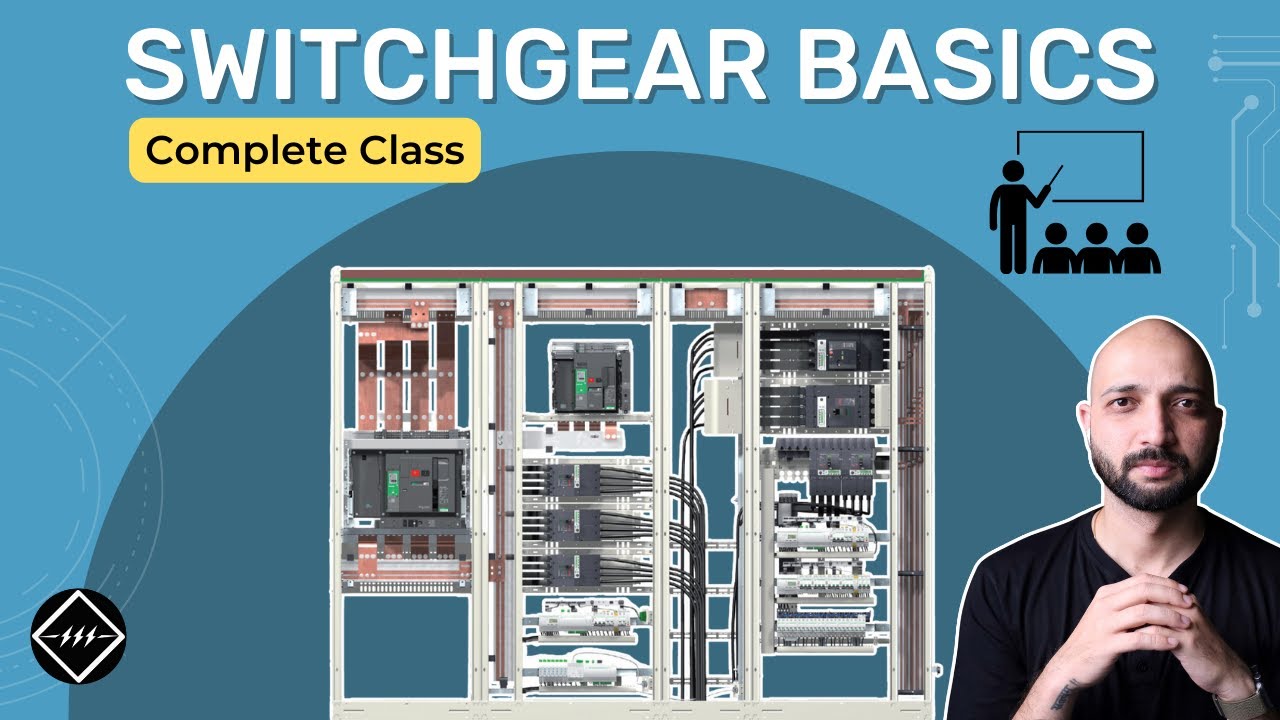
شاهد أساسيات التبديل الكهربائي: دليل المبتدئين الشامل | TheElectricalGuy