
Low voltage versus high voltage is not a single worldwide cutoff. The boundary depends on the electrical code, utility rule, product standard and task. In a practical power-distribution design, the distinction changes insulation, clearances, protection, switchgear construction, test methods and the qualifications required to work on the equipment. This guide compares the two categories without treating a voltage label as a complete equipment specification.
Why the boundary must be named
Different standards use different terms, and “medium voltage” is often used between low- and high-voltage systems. A building code may define low-voltage circuits for wiring rules, while a switchgear standard uses a rated-voltage range for a product. A 24 V control loop, a 400 V distribution board and an 11 kV feeder are not designed, tested or operated the same way. State the governing standard and nominal system voltage before comparing equipment.
ال IEC 62271-200 scope addresses AC metal-enclosed switchgear above 1 kV up to and including 52 kV, while the IEC 61439 series addresses low-voltage switchgear and controlgear assemblies. These sources describe product-standard boundaries; they do not replace the local electrical code or the project specification. OSHA also requires guarding and safe-work controls around electrical equipment, so low voltage is not a synonym for harmless.
| سؤال تصميم | Lower-voltage assembly | Higher-voltage assembly |
|---|---|---|
| Primary concern | Conductor heating, fault protection, insulation and touch protection | All of those plus electric-field stress, arc control and greater clearance demands |
| Typical enclosure | Panelboard, distribution board, MCC or LV switchgear | Metal-clad, metal-enclosed, RMU or GIS switchgear |
| حماية | MCB, MCCB, ACB, fuse, overload and electronic trip units | Breaker or load switch, CT/VT, relay, fuse and earthing switch |
| القيام بالاختبار | Continuity, insulation where permitted, functional and protective-device checks | Additional model-specific dielectric, mechanical, relay, interlock and cable tests |
| Work boundary | Still requires isolation and qualified work practices | Greater arc, induced-voltage and stored-energy hazards; controlled switching is essential |
Equipment architecture changes with voltage
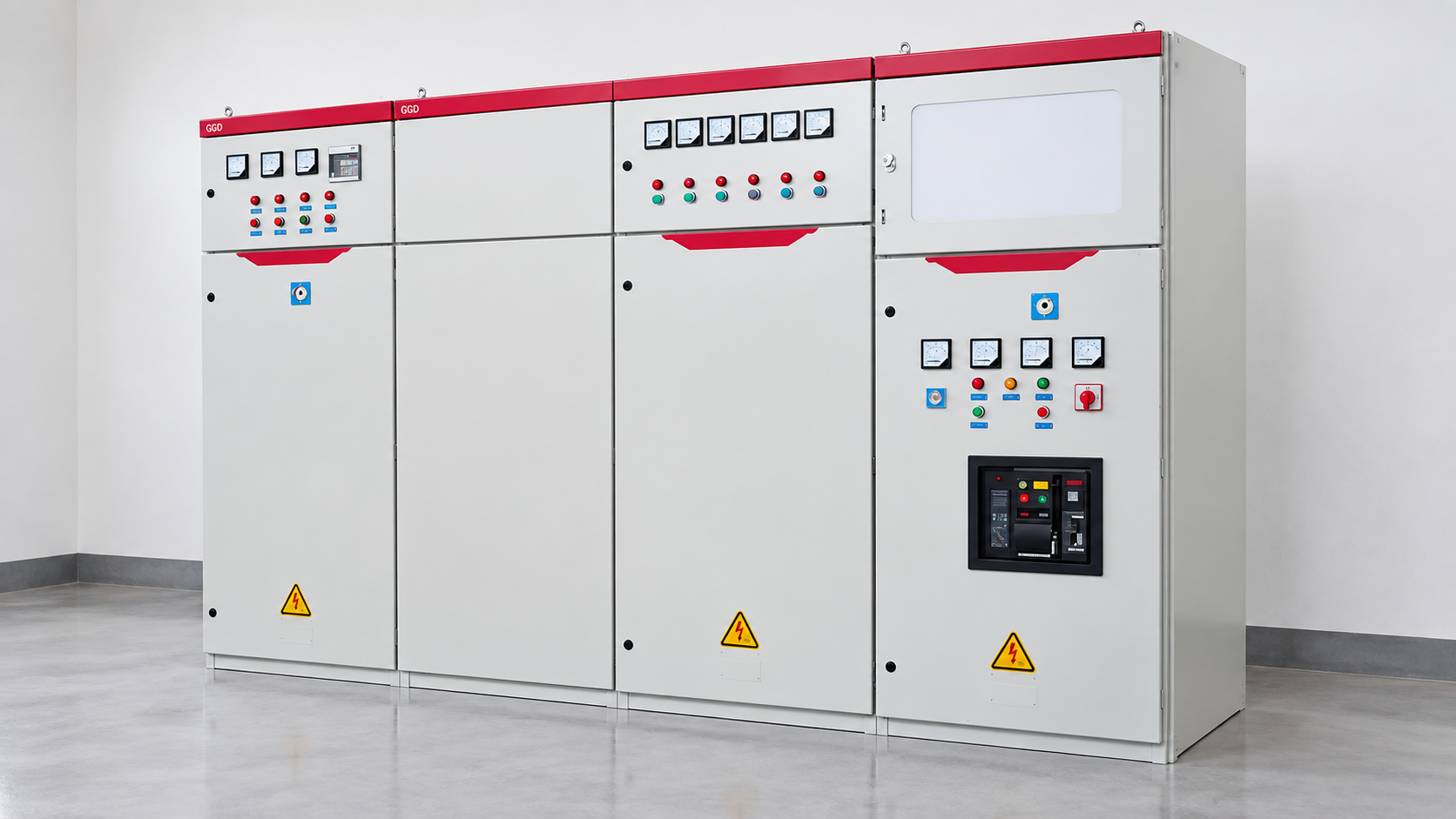
Low-voltage switchgear often places breakers, busbars, meters, contactors and withdrawable drawers behind accessible doors. A fault may be contained by the enclosure and cleared by an electronic trip or fuse. The exact short-circuit rating, withstand duration, internal-arc classification and enclosure design still need verification. A large LV lineup can be more complex than a small MV cabinet because it may contain many feeders, drives and control circuits.
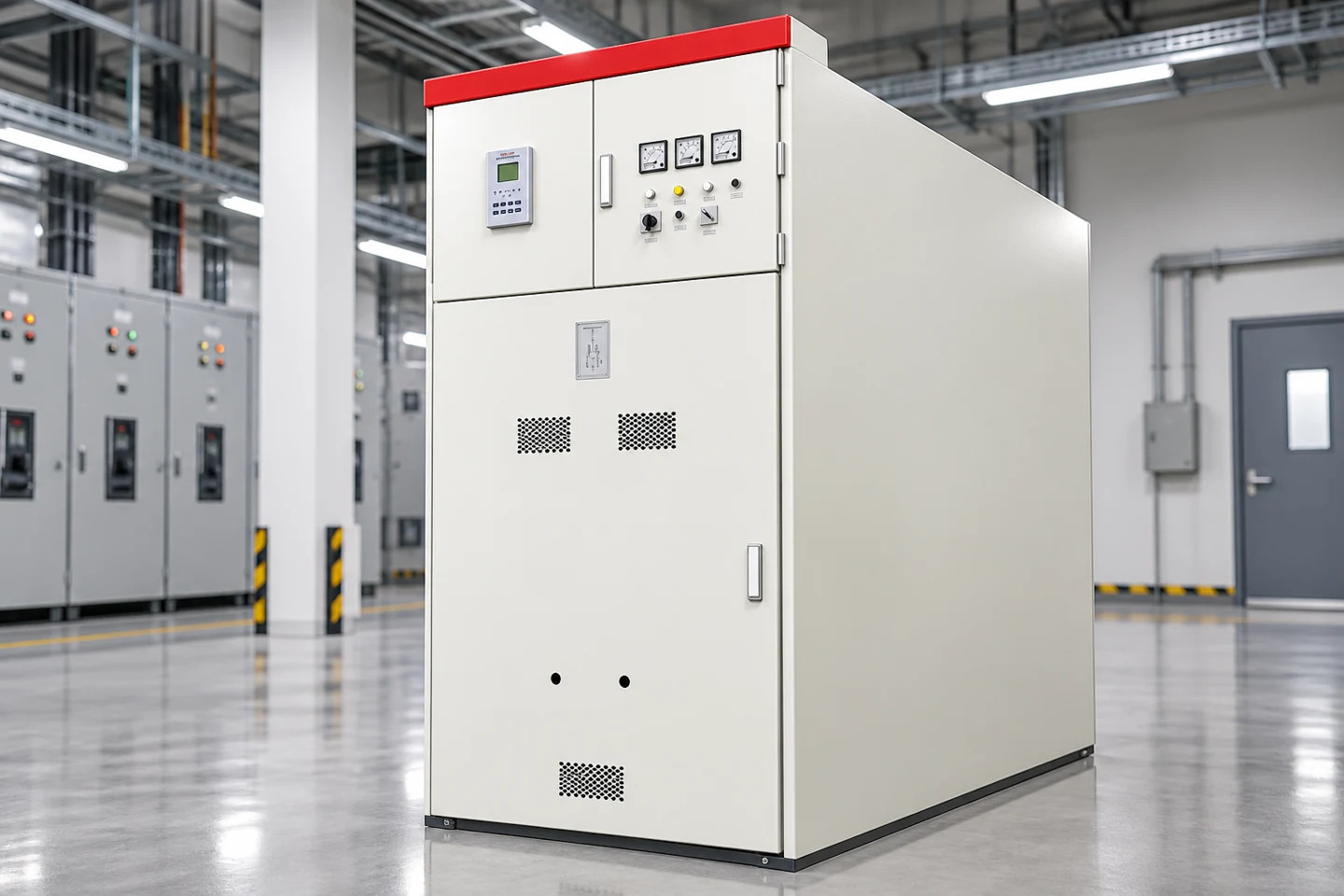
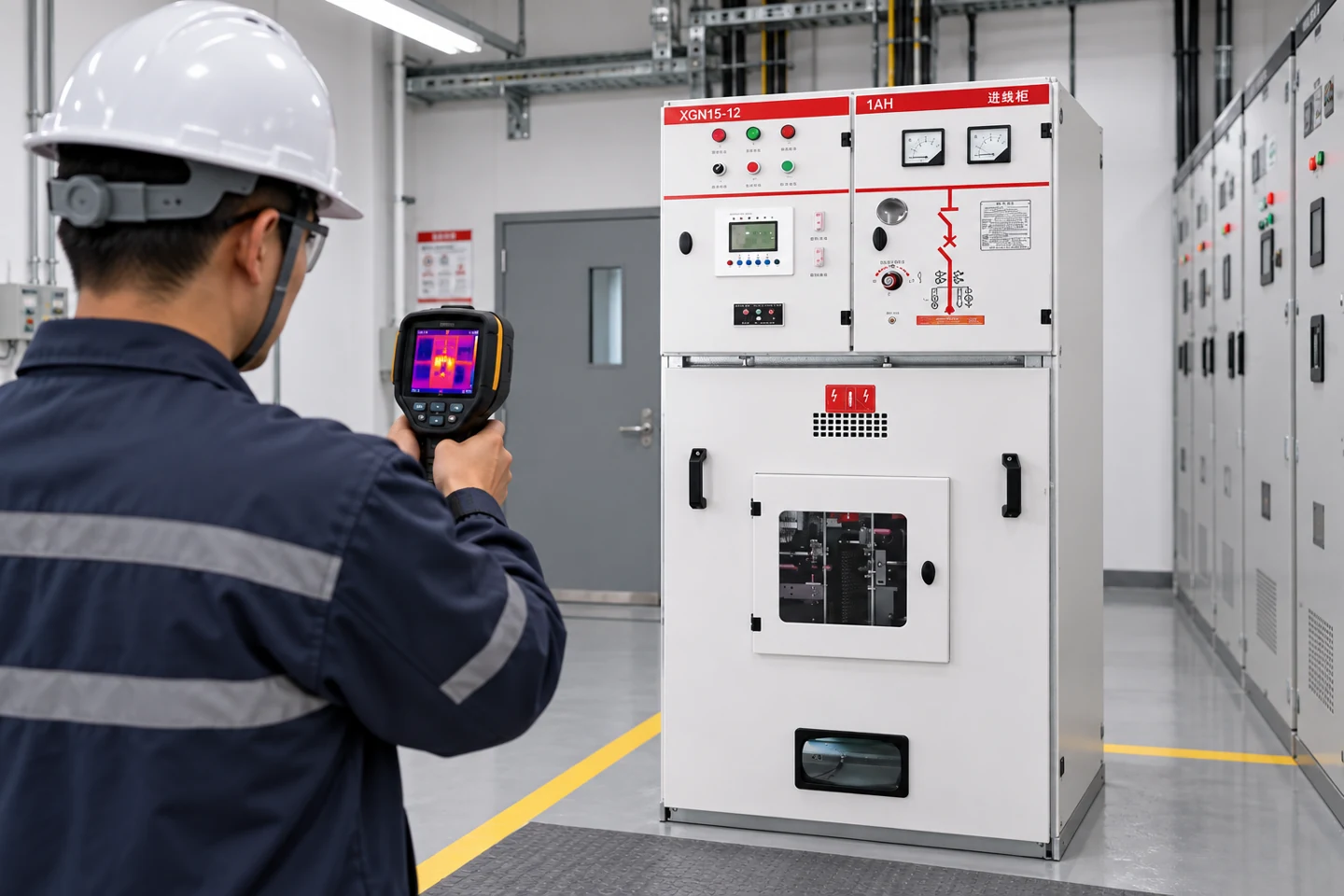
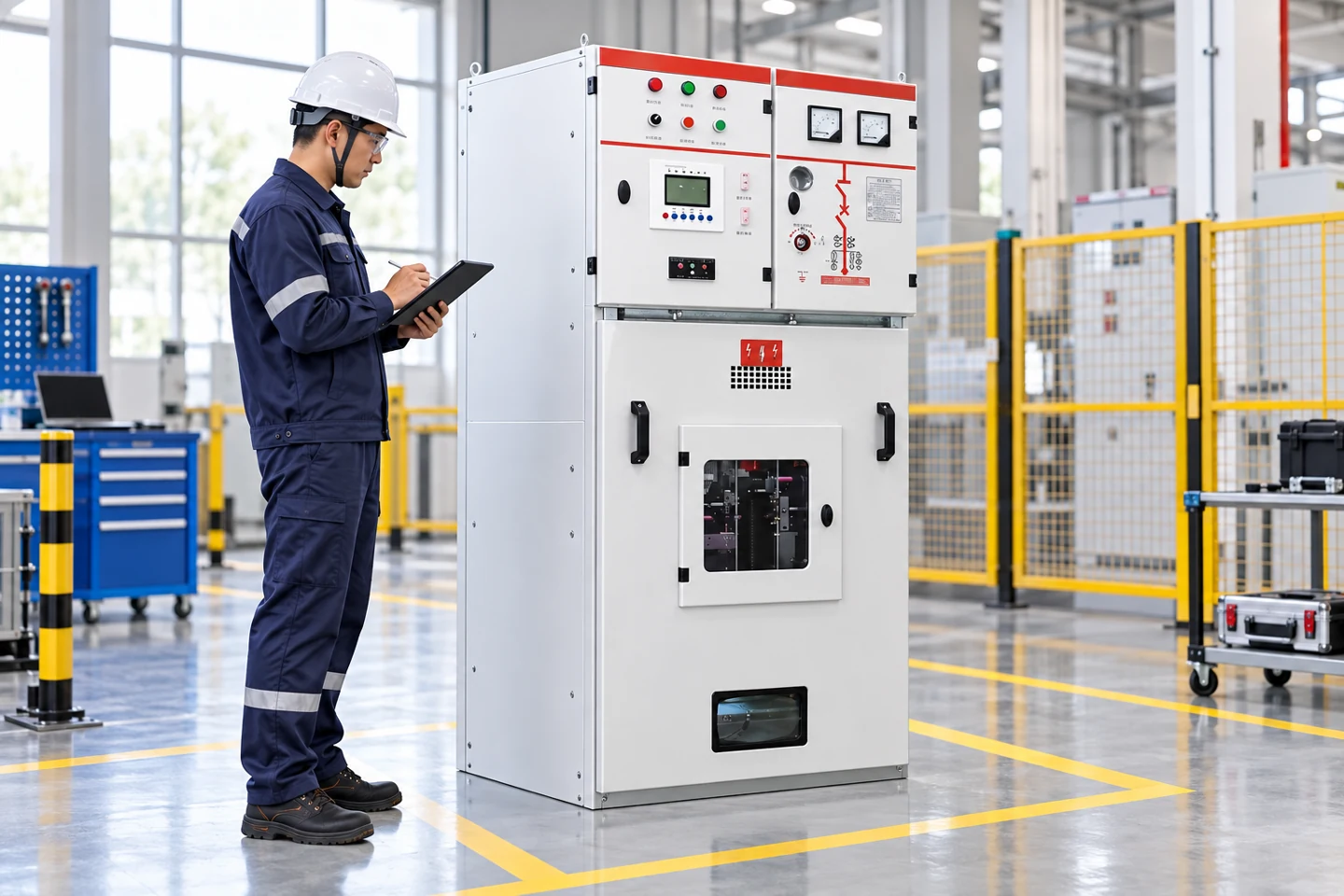
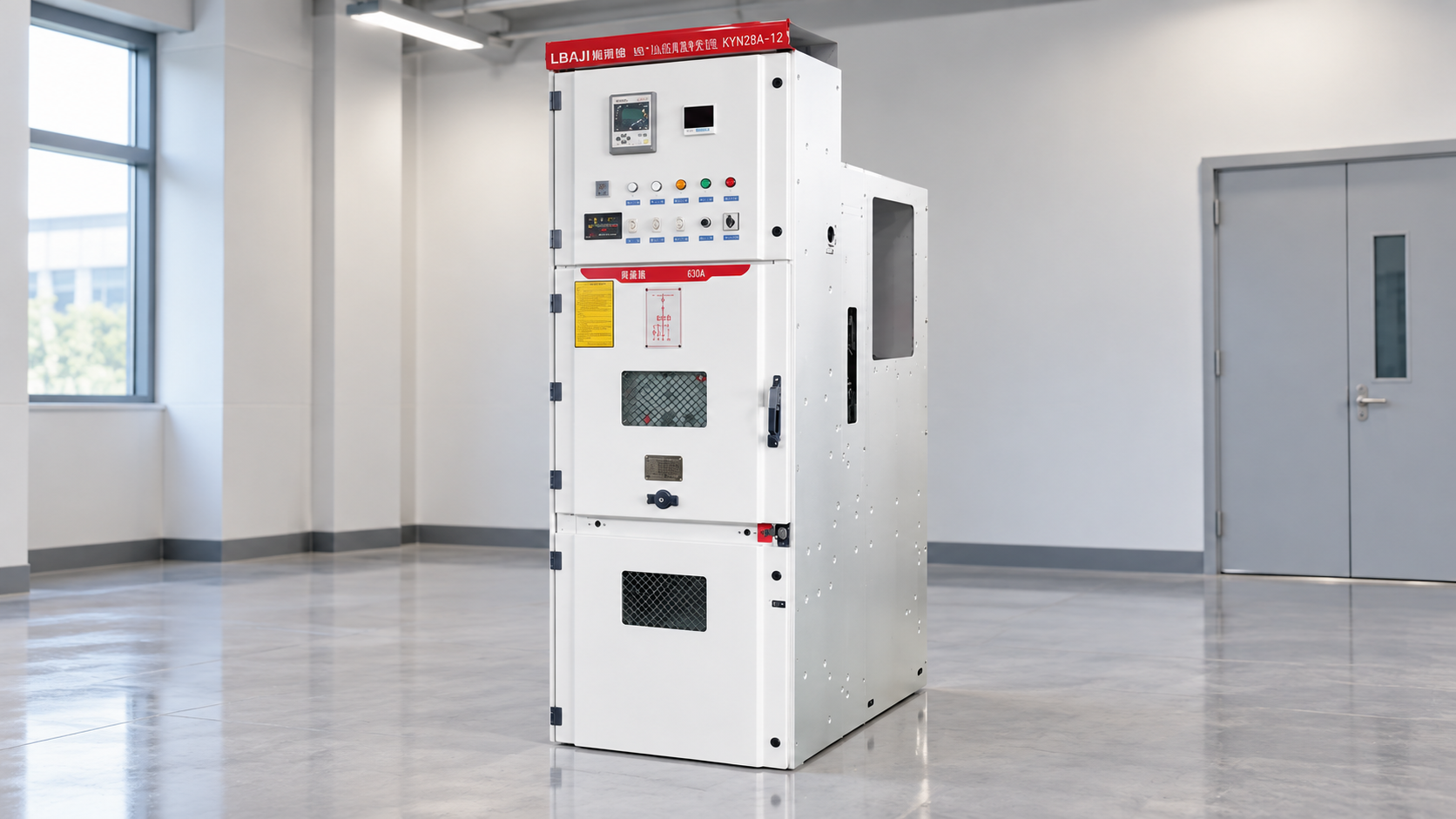
Higher-voltage equipment adds insulation coordination, shutters, screened or insulated connections, interlocks and earthing functions. A withdrawable KYN28A-12 cabinet, for example, has a physical breaker compartment and interlocked positions that a one-line symbol cannot show. A compact HC ring-network cabinet has another architecture again. Product names such as “12 kV” or “40.5 kV” identify a class, not every current, fault or environmental rating.
Protection and fault energy
At both voltage levels, a protective device must interrupt the prospective fault current within its rating and coordinate with upstream and downstream devices. At higher voltage, fault interruption involves arc control and dielectric recovery as the current is interrupted. At lower voltage, an ACB, MCCB or fuse still needs the correct interrupting rating and let-through performance. A breaker selected only by continuous amperage can be dangerously underspecified.
Fault studies should include utility contribution, transformer impedance, generators, motors, cable impedance and credible alternate sources. Check the installed CT ratio, relay settings or trip unit and the time-current coordination. For an MV feeder, confirm the breaker duty, bus withstand, cable termination and earthing sequence. For an LV feeder, confirm conductor ampacity, SCCR, neutral treatment and the available fault current at the panel.
Insulation, clearances and environment
As voltage rises, the design must control electric-field stress, creepage, clearance, partial discharge risk and impulse withstand. Humidity, pollution, altitude and contamination can reduce insulation performance. An indoor dry-room product is not automatically suitable for an outdoor coastal site. Enclosure ingress protection, condensation control and cable interfaces matter at either voltage level, but the consequences of a weak insulation system become more severe as voltage increases.
Compare the equipment’s rated voltage, power-frequency withstand, lightning-impulse level, continuous current, short-time withstand, peak withstand and internal-arc classification where applicable. These values belong to the exact assembly and standard edition. Do not copy a rating from a similar product photograph. The LBAJI GGD low-voltage lineup و KYN28A-12 MV cabinet illustrate different product families, not interchangeable specifications.
Distribution applications
Low-voltage systems distribute power to final equipment, motors, lighting, small transformers and control systems. They are common downstream of a distribution transformer and inside factories, buildings and renewable-energy installations. Higher-voltage systems carry power between substations, transformers, large industrial loads and ring networks. They reduce current for a given power over long distances but require specialized switching and protection.
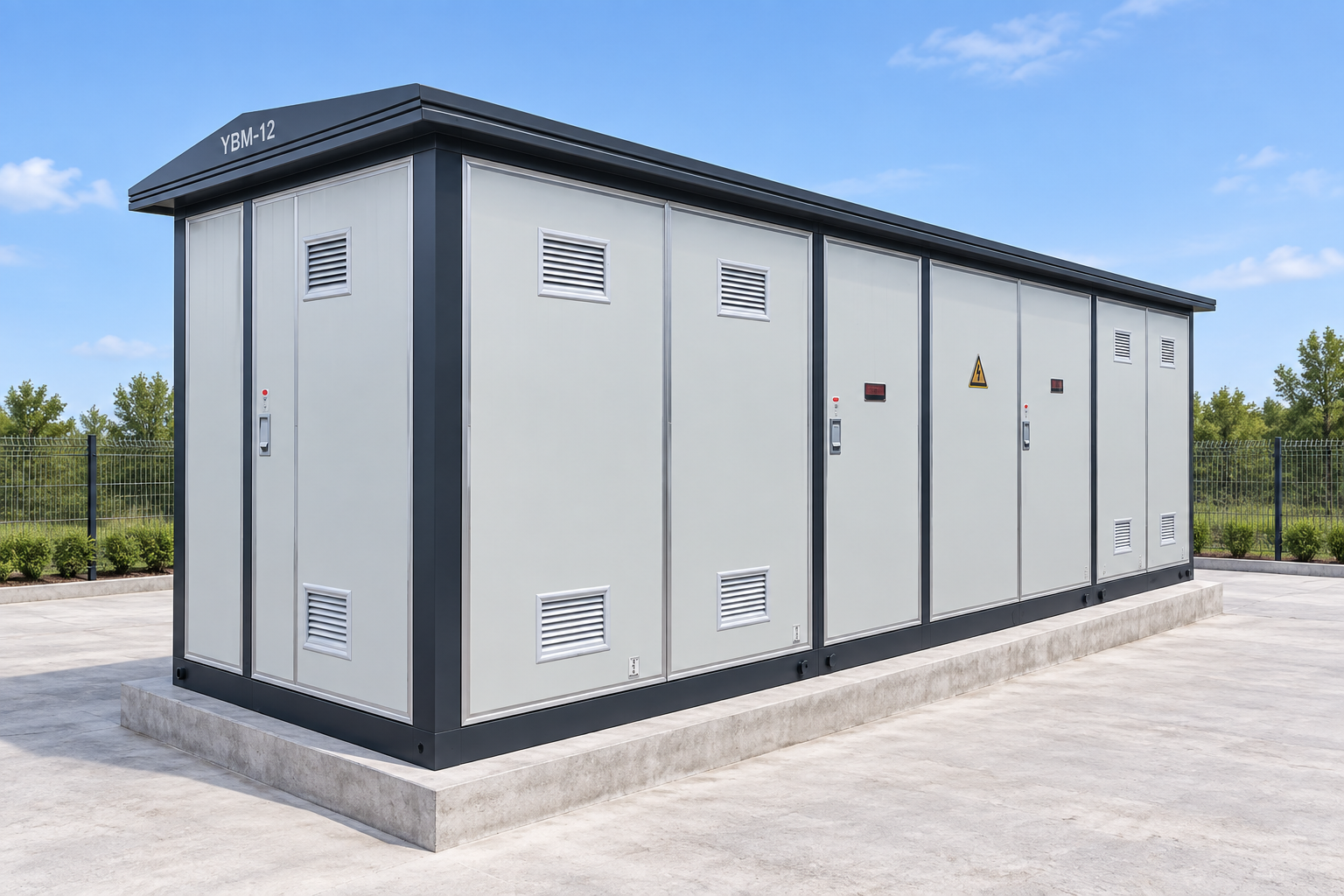
A prefabricated substation can place an MV section, transformer and LV section in one enclosure. The LBAJI YBM-12 product page shows the external form of such a package; the project drawing must still identify the actual MV, transformer and LV boundaries. Never infer internal voltage compartments from an exterior image alone.
Selection checklist
Before choosing a product, record nominal and highest system voltage, frequency, phases, continuous load, fault duty, insulation level, grounding method, enclosure location, altitude, ambient, cable entry, switching duty, protection scheme, maintenance access and applicable standard. Confirm whether the installation is radial, ring-fed, generator-backed or connected to a PV system. Then compare the offer against the single-line diagram, protection study and civil drawing.
For commissioning, verify labels, nameplates, breaker or switch operation, interlocks, protective settings, cable terminations and earthing. The دليل اختبار الأجهزة الكهربائية explains why visual, insulation, contact, timing and functional tests answer different questions. A voltage category does not tell you which tests are allowed on a particular model.
Do not confuse voltage with system importance
A low-voltage board can be the main supply for a hospital, data center or process line, while a higher-voltage feeder may be one section of a larger network. The operational consequence depends on load criticality, redundancy, protection and restoration time, not only voltage. Specify normal and emergency sources, transfer equipment, selective coordination and maintenance bypasses where the process requires them. The word “high” should never be used as a substitute for a documented risk assessment.
Renewable-energy projects make the boundary especially visible. An inverter may connect a low-voltage AC cabinet to a transformer and then to a medium-voltage collector system. DC strings, combiner boxes, inverter outputs and MV switchgear have different isolation and fault behavior. Trace each boundary in the single-line and label every source that can energize a bus. The LBAJI BWG-800 cabinet is a product reference for a grid-connected interface; its external image does not establish the complete voltage arrangement or protection settings.
When comparing supplier quotations, request a compliance matrix with the exact rated voltage, insulation, current, fault duty, enclosure rating, temperature range, altitude, cable termination and standard edition. Ask which values are guaranteed and which depend on options. Confirm that the proposed breaker, CTs, VTs, fuses and earthing switch are compatible with the assembly. A quotation that says only “LV” or “MV” is not sufficiently specific for approval.
Maintenance and operating boundaries
Maintenance plans should follow the equipment architecture. An LV lineup may need cleaning, torque verification, thermal scanning, breaker mechanism checks and trip-unit testing. An MV lineup may add cable-test limits, insulation interfaces, earthing-switch checks, interlock proving, relay injection and controlled switching. The exact sequence comes from the manufacturer and site procedure. A generic checklist can help organize records, but it cannot authorize opening a compartment or applying a test voltage.
Keep normal switching positions, alternate sources and backfeed paths visible on the current single-line diagram. A low-voltage board can be energized from a generator, UPS or PV inverter while its normal incomer is open. An MV ring unit can receive energy from either cable leg. Label isolation points and verify absence of voltage using the approved method. Treat the category as a design boundary, not as a shortcut around safe work.
Finally, compare total ownership requirements, not only purchase price. Check spare breakers, relay or trip-unit support, test equipment, training, replacement lead time, enclosure corrosion protection and documentation quality. A lower-voltage solution may require larger conductors or more parallel feeders, while a higher-voltage solution may reduce current but require specialized operators and protection studies. The best choice is the one that meets the complete electrical and operational brief.
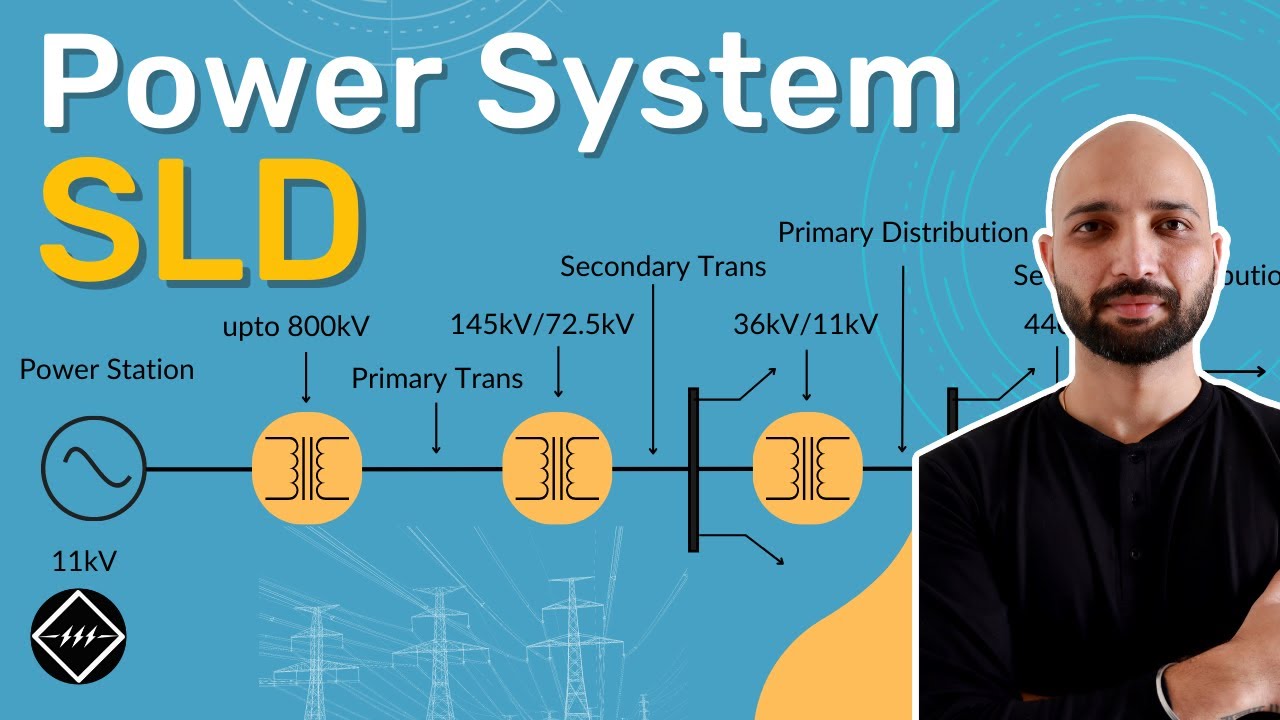
Further viewing: An educational power-system single-line lesson helps show where LV and MV sections sit in a distribution path; it is not an operating procedure.