
Switchgear condensation prevention begins with identifying moisture sources and temperature changes, then coordinating the room environment, enclosure interfaces, preservation measures and manufacturer-approved controls. A high ingress-protection designation does not automatically eliminate condensation inside equipment. The right approach depends on the actual service conditions and assembly design, including storage before installation. This guide helps owners and EPC teams build an assessment and monitoring plan; it does not specify a universal heater size, humidity limit or drying procedure. Visible moisture or suspected insulation contamination requires a supported technical decision before equipment is released for service.
Understand the mechanism before selecting a remedy
Condensation occurs when conditions allow water vapour to form liquid on a surface. A room and an enclosure can experience different temperature histories, particularly during shutdowns, overnight changes or incomplete building operation. The relevant observation is not simply that the site is humid, but when and where moisture appears in relation to those changes. An equipment photograph cannot establish the environmental conditions inside the installed assembly.
Collect the available room history, exposure observations and manufacturer’s service assumptions. Consider whether the equipment has been stored, recently moved or left without its intended environmental systems. Distinguish condensation from a direct leak or liquid introduced during cleaning. These sources may require different corrective measures. A remedy chosen from the word moisture alone can leave the underlying cause untouched, resulting in repeated incidents after a cabinet appears to have dried.
Look beyond the enclosure designation
Ingress classification concerns specified protection under defined conditions. It does not replace a review of humidity already present, temperature changes or the actual interfaces completed at the site. Even a closed enclosure may contain humid air, and opening doors during construction or maintenance can change conditions. Do not conclude that a particular IP designation makes all moisture management unnecessary. The equipment and environment need to be assessed together.
The IEC TS 62271-304 catalogue explicitly addresses particular indoor switchgear service conditions involving condensation and pollution within its stated scope. Its relevance is that such conditions deserve a specific equipment assessment, not that every assembly carrying a similar model name has passed the corresponding evaluation. Ask the manufacturer whether the actual proposed environment is covered by the supplied design and what evidence or measures are required. Keep any unsupported suitability claim open rather than treating the cabinet’s appearance as proof.
Survey moisture sources around the room
Check the building context through the appropriate authorized inspections. Roof leaks, incomplete doors, pipework, ground moisture and air drawn from humid adjacent areas can affect the equipment environment. Construction activities may introduce water or contamination that will not exist in the finished room. Identify which sources are temporary and which could remain during normal operation. The room owner must have a plan to correct building defects rather than rely on equipment controls to compensate indefinitely.
Record location, timing and severity of observations without inventing a numerical acceptance limit. Photographs should identify the cabinet or room area and the inspection date. Where monitoring is required, the engineer and manufacturer should determine the useful locations and measurements for the actual problem. A single reading taken after the room has been opened or heated may not represent the conditions that produced the moisture. History and repeated observations can be more informative than an isolated number.
Use an assessment table to connect causes and actions
The following table organizes a moisture investigation. It is a qualitative planning aid; actions affecting the equipment require the applicable approved procedures and technical assessment.
Referenzkontext: IEC TS 62271-304 condensation and pollution service conditions. Diese ursprüngliche qualitative Checkliste organisiert die Projektentscheidungen; sie ist keine reproduzierten Standardformel oder ein Ersatz für genehmigte Kriterien.
| Beobachtung | Question to investigate | Planning response |
|---|---|---|
| Moisture after a temperature change | What surfaces and operating states were involved? | Review environmental history and approved controls |
| Wet area below building services | Is there a leak or other direct liquid source? | Correct building exposure and assess affected equipment |
| Damp equipment after storage | Were preservation conditions maintained? | Review custody records and obtain release criteria |
| Recurring contamination | What brings dust or pollutants into the area? | Control the source and assess insulation exposure |
| Auxiliary control unavailable | Which approved measure depends on that supply? | Restore through the authorized process and record interruption |
| Uncertain equipment condition | What inspection or verification is required? | Hold technical release pending a supported decision |
Coordinate approved environmental controls
An assembly may use manufacturer-specified measures to manage its environment. Request the actual requirements, control arrangement and maintenance instructions for the ordered configuration. Do not select an improvised heater, fan or enclosure opening from a generic article. Such changes can affect insulation, cooling, enclosure protection and other aspects of the design. The equipment supplier should assess the proposed measure together with the room conditions it is intended to address.
Clarify who supplies any required auxiliary power and when it becomes available. Equipment can spend a long construction period without the permanent systems assumed in its service plan. If approved temporary measures are needed, document their installation responsibility, inspection and continuity. A control device included in the quotation does not provide a benefit if its supply is absent or its settings are unsupported. Preserve the distinction between a measure specified, a measure installed and a measure actually operating.
Review ventilation as part of a complete environment
Ventilation can affect both heat and moisture, so more airflow is not automatically a solution. The source air, temperature history and contaminants matter. Coordinate building-service decisions with the equipment’s environmental assumptions. If the room draws air from an uncontrolled area, the proposed arrangement may introduce conditions the switchgear design does not address. The responsible specialists should assess the complete system rather than treat the cabinet and room as independent products.
Do not drill additional ventilation openings or remove covers to solve a moisture complaint without manufacturer review. The original enclosure boundary and thermal design may depend on those parts. Record any approved change and its verification requirements. The operating owner also needs to know which building systems must remain available during shutdown or reduced-load periods. Environmental control can be important even when the main circuit is not carrying its normal duty, so the operating plan should address those states explicitly.
Preserve equipment during storage and construction
Storage conditions should follow the shipment and equipment instructions. Packaging may protect against a defined transport exposure without establishing long-term room suitability. Keep preservation records for the actual unit, including changes of location, unpacking and interruptions of approved measures. If equipment arrives before the building is weather-tight, resolve its protection plan before unloading rather than leaving the logistics team to assume a temporary corner is adequate.
Inspect according to the approved preservation schedule and record abnormal observations precisely. Keep accessories and documentation associated with the correct assembly. If the storage period extends, ask whether preservation measures or release checks need revision. An apparently dry exterior after weeks of exposure does not establish the internal condition. The final decision to release equipment for installation or service should refer to its known history and any required manufacturer-supported assessment, not merely to its appearance on the delivery date.
Respond to observed moisture with a hold point
When moisture or suspected contamination is found, identify the affected equipment and prevent an unsupported release into service. Inspection and any electrical work must follow the site’s authorized procedures. Collect evidence without entering an unsafe compartment or assuming a closed switch has removed every source of energy. The responsible technical authority should determine what access, inspection and verification are appropriate for the actual installation.
Do not energize equipment simply to make it warm or attempt an improvised drying process. Obtain the manufacturer’s assessment and approved method where required. Cleaning, drying and testing decisions depend on materials, contamination and the equipment design. Retain the original observation, corrective action and verification evidence. A record stating that the cabinet was dry afterward is incomplete if it does not explain how the affected condition was assessed and why the assembly was accepted for the next stage.
Create a monitoring and maintenance record
Monitoring should support decisions, not generate unexplained numbers. State the equipment reference, measurement location, method and observation interval established by the responsible parties. Link readings to room conditions and changes in operation where relevant. Record interruptions of approved environmental controls and any building incidents. This provides context for assessing whether a recurring problem is caused by the equipment, its environment or the way preservation and auxiliary systems are being maintained.
Review observations through a defined escalation route. The site team should know when to seek manufacturer or engineering assistance and who can restrict operation. Avoid creating an arbitrary limit in a maintenance spreadsheet without a technical basis. Where a criterion has been approved, retain its source and applicability. During periodic review, compare the current environment with the original service assumptions. A later building alteration can change exposure even though the switchgear itself has not been modified.
Specify moisture management in procurement
An RFQ should describe the actual location, expected construction-storage period and unusual environmental conditions. Request the manufacturer’s service assumptions, supported environmental measures, auxiliary requirements and relevant evidence. Identify the parties responsible for maintaining those conditions before and after handover. A clear scope makes it possible to compare offers that address the same problem, instead of comparing one cabinet with preservation included against another with the responsibility left undefined.
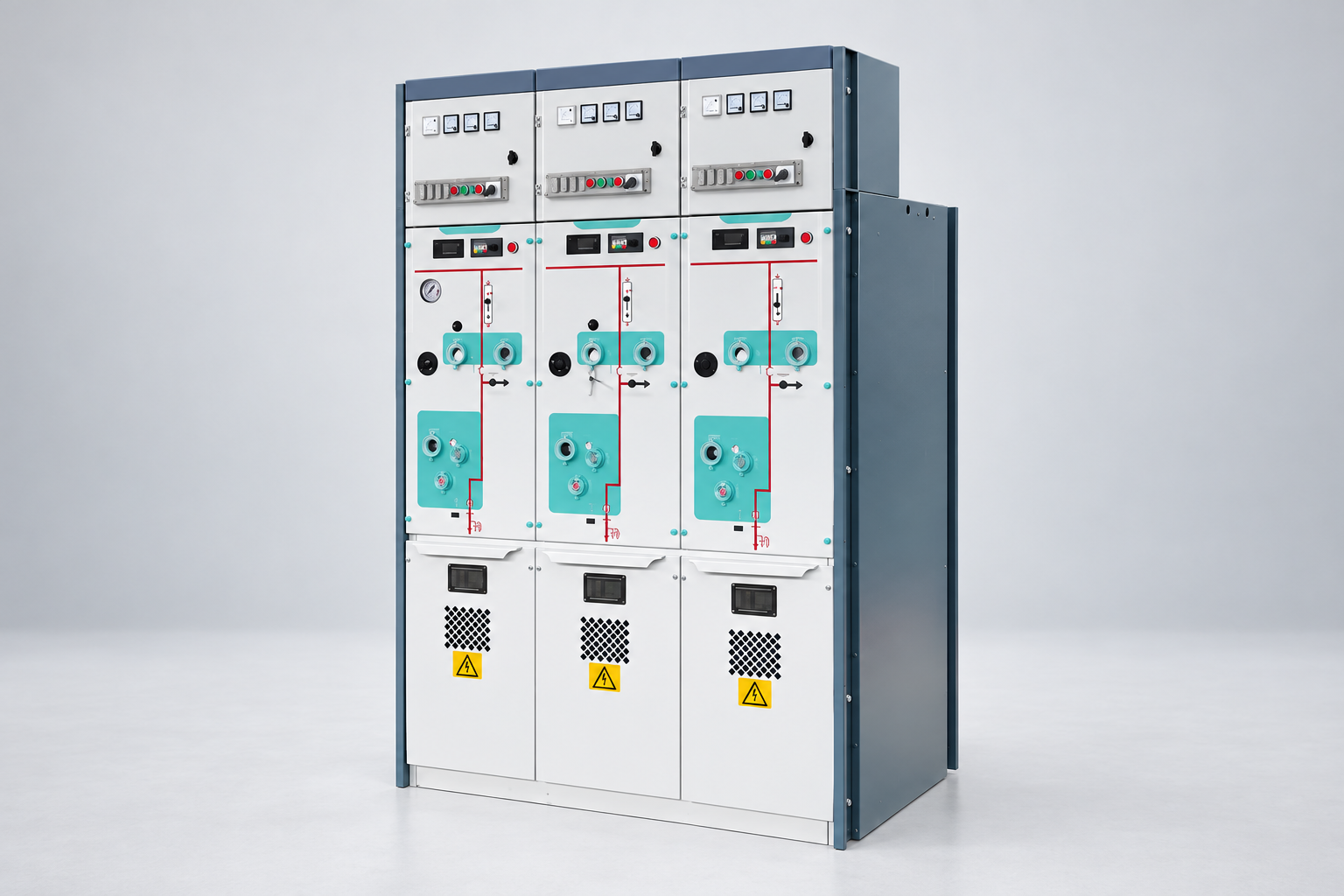
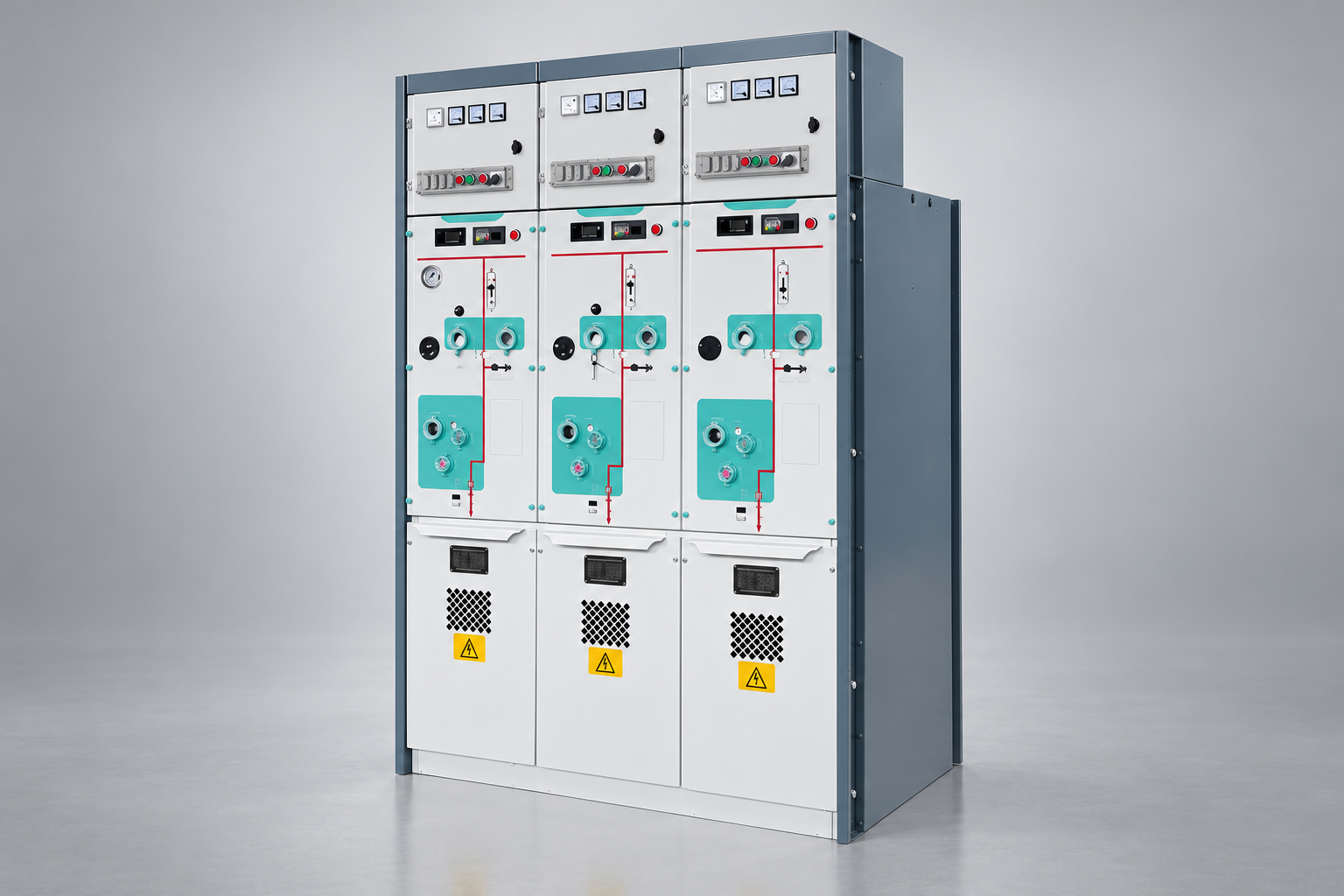
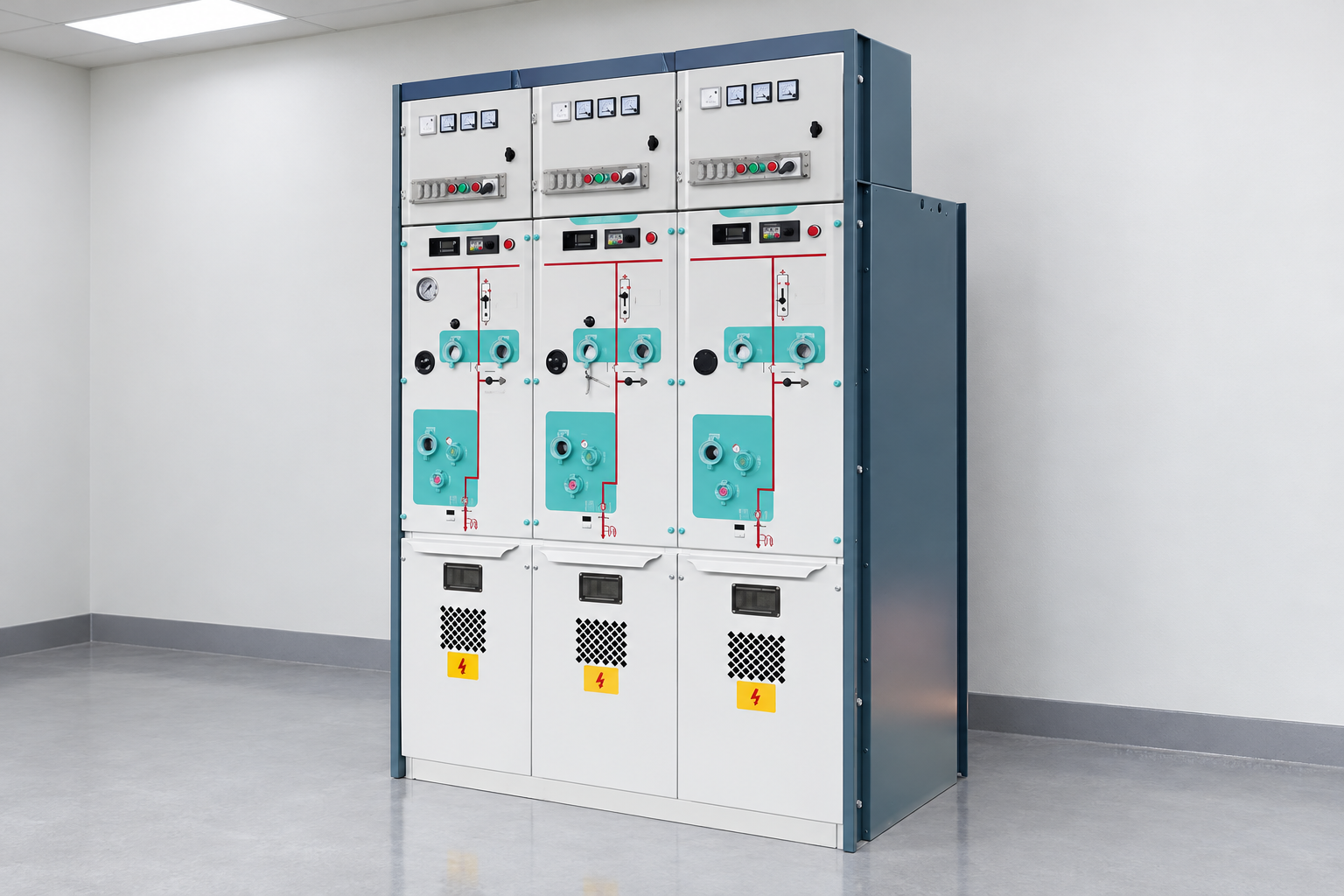
The LBHB-12(V)/630-20 reference used here shows a real LBAJI ring-main-unit exterior. Its product name and sealed-looking construction do not establish immunity to every condensation condition. The images do not fabricate heaters or expose unverified internal equipment. Ask for the actual assembly’s environmental assessment and instructions. Effective condensation prevention comes from evidence about the equipment and its environment, supported controls and a maintained record of conditions through storage, installation and operation.
Häufig gestellte Fragen
Does a high IP designation eliminate condensation?
Not automatically. Internal humidity, temperature history and completed interfaces need separate assessment alongside enclosure protection.
Can a generic heater size be selected from cabinet dimensions?
No. Use a manufacturer-supported design assessment for the actual assembly and environment, including controls and auxiliary requirements.
Is more ventilation always helpful?
No. The incoming air’s temperature, moisture and contamination can affect the result. Coordinate ventilation with the equipment and building environmental design.
Can wet switchgear be energized to dry it?
Do not use energization as an improvised drying method. Obtain the appropriate technical assessment and approved corrective procedure before release for service.
What should be included in a moisture incident record?
Identify the equipment, observation time and location, exposure history, control interruptions, corrective actions and the evidence supporting the final release decision.
Technische Quellen und damit verbundene Ausrüstung
Standardkatalogseiten legen den Dokumentenbereich fest; die Einhaltung und Annahme erfordern die vollständigen Dokumente und eine Projektüberprüfung.
- IEC TS 62271-304 condensation and pollution service conditions
- Bereich der IEC 62271-200 für metallisch geschlossene Wechselrichter
- LBAJI LBHB-12(V)/630-20 Eco-Friendly Gas-Insulated Ring Main Unit
- Grundlagen der Schaltanlagen-Ausrüstung
- Überprüfung und Prüfung der Schaltanlagen
- Checkliste für die Wartung von Schaltanlagen
Weiterführender Lernstoff: Gerätefunktionen
Diese unabhängige Bildungsunterlage erläutert die technischen Grundlagen der Geräte. Sie vermittelt jedoch keine sichere Arbeitsmethode für die jeweilige Montage. Quelle: Gaurav J – TheElectricalGuy.

Watch Switchgear Basics: Komplettanleitung für Einsteiger | TheElectricalGuy