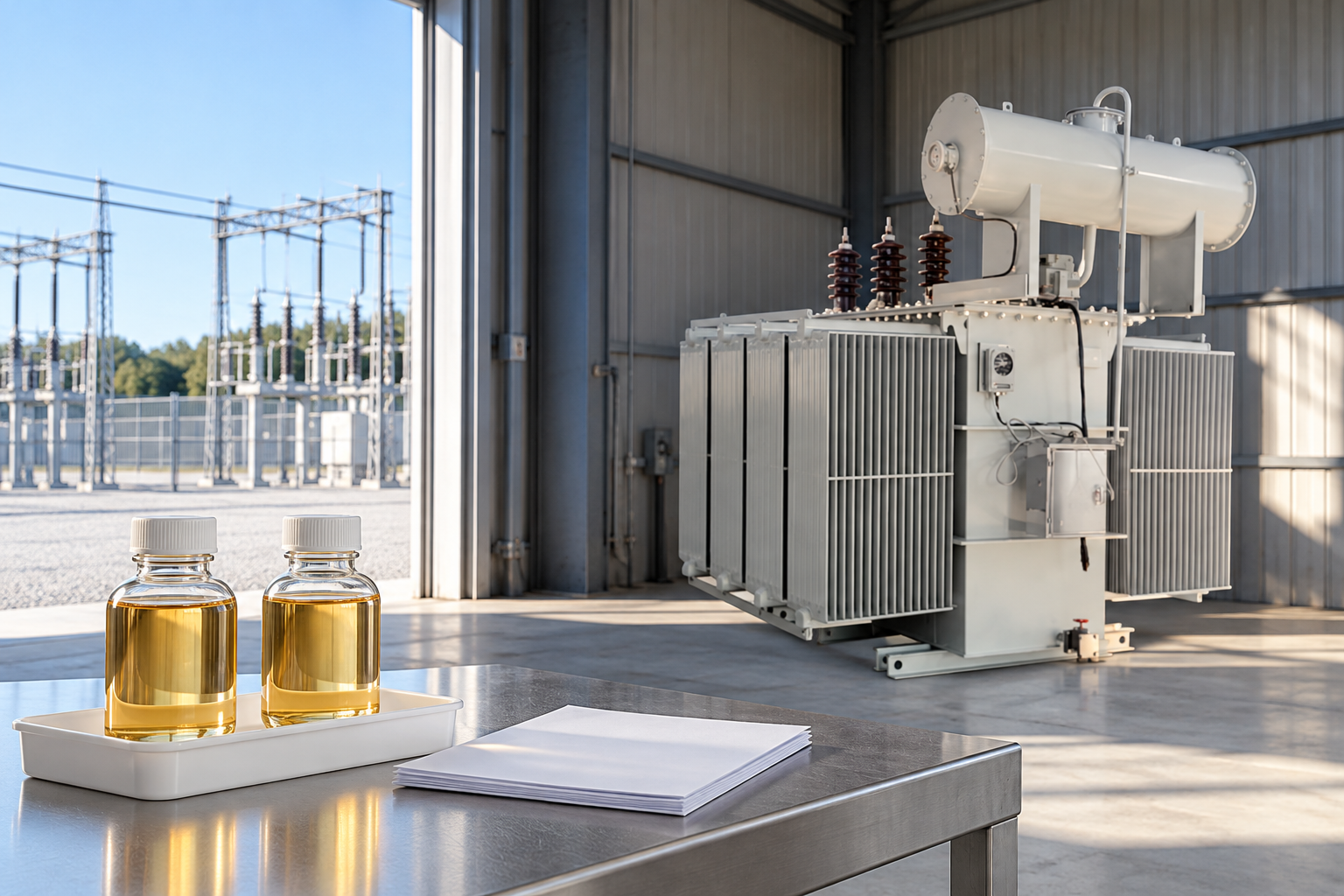

The transformer oil breakdown voltage test measures the voltage at which an insulating-liquid specimen breaks down electrically under a defined laboratory method. It helps assess the liquid’s dielectric condition, but the number is meaningful only alongside the method, electrode arrangement, sample handling and applicable acceptance criteria. It is not a direct measurement of the transformer’s complete insulation strength or remaining life. For buyers and maintenance engineers, the main task is to obtain a comparable, traceable report and decide what further evidence is needed. This guide explains how to specify that report without inventing a universal pass value.
Understand what the test actually evaluates
The laboratory applies the prescribed electrical stress to a liquid specimen in a test cell and records breakdown events according to the chosen method. Conditions in that cell are controlled differently from conditions inside a transformer. The result therefore describes the specimen tested under that arrangement. It does not reproduce every combination of oil, solid insulation, geometry, thermal conditions and service stress in the installed equipment.
This distinction matters when a report contains a reassuring average. A strong result does not rule out every transformer fault, and a weak result does not by itself identify the cause. The responsible engineer should connect the finding to the question being investigated, such as acceptance of a liquid delivery, review after maintenance or investigation of a condition change. Specify additional analyses when those questions cannot be answered by breakdown voltage alone.
Name the method before requesting the test
ASTM D1816 concerns breakdown voltage using VDE electrodes, while ASTM D877/D877M uses disk electrodes. IEC 60156 is another specified method for insulating-liquid breakdown testing. These names identify different test arrangements and procedures. Do not describe a report as simply an oil BDV test and then compare its number with an unrelated internet limit. Ask the laboratory to state the actual standard, edition and test configuration used.
The project specification should explain which method applies and where the acceptance requirements come from. Confirm this before the purchase order or sampling visit. If the owner accepts alternative methods, ask the engineer to define the comparison basis explicitly. A laboratory offering a different test is not automatically providing an equivalent result. Method changes should remain visible in the asset history rather than being hidden inside a continuous trend chart.
Separate the test method from the acceptance requirement
A test method explains how a measurement is performed; an acceptance specification explains how the result is judged for a particular duty. New liquid, liquid after handling and liquid in service can belong to different assessment situations. Equipment class, fluid type, contractual requirements and the owner’s maintenance policy also matter. A copied minimum voltage without this context can create either false reassurance or an unnecessary intervention.
When reviewing a quotation, ask for both references: the measurement method and the document establishing the acceptance criterion. If the laboratory supplies an interpretation, request its stated basis. Do not let an unexplained green tick replace that information. Where several documents apply, the asset engineer must resolve any conflict before the report is used to release equipment. This is especially useful in projects involving a manufacturer, importer, installation contractor and independent test laboratory.
Protect the specimen before discussing the result
Sampling and handling are part of the evidence chain. Agree the laboratory-approved container, required volume, collection arrangement and dispatch instructions for the intended test package. Record the equipment identity and compartment, sample point and relevant work history. If breakdown voltage is ordered with water, DGA or other analyses, confirm whether separate specimens are needed. Convenience is not a sound basis for assuming one container suits every analysis.
ASTM D923 provides the sampling framework for insulating liquids, and the laboratory should translate the specified requirements into its approved collection instructions. A sample taken through dirty equipment or delivered with a damaged closure may fail to represent the liquid of interest. Keep any known deviation with the report. If the specimen is questionable, the engineer needs that information before concluding that the transformer requires treatment.
Ask for a report that can be checked
Request the asset and sample identifiers, sampling and receipt dates, fluid identification, method and edition, test configuration and laboratory identification. Ask how individual breakdown observations, the reported summary and any deviations will be presented under the specified method. Where electrode gap is relevant to the chosen procedure, ensure it is stated rather than inferred. Laboratory comments should distinguish an observed result from a suggested equipment action.
The report should also identify its units and the acceptance basis where an assessment is included. Keep the original file with the sampling record. A summary spreadsheet is useful for comparing assets, but it should link back to the complete report. Otherwise important configuration changes or qualifications may disappear when someone copies only a single average into an asset register.
A practical report-review matrix
| Fragestellung der Studie | Erforderliche Beweislage | Consequence of a missing answer |
|---|---|---|
| Which liquid and asset were tested? | Specimen identity, compartment and fluid description | The result cannot reliably be assigned to equipment |
| Which method was used? | Standard, edition and applicable test configuration | Comparison with a limit or earlier report remains uncertain |
| Was specimen quality acceptable? | Sampling notes and laboratory receipt observations | Resampling or further clarification may be needed |
| How was the result reported? | Required observations, summary and units | A standalone number may conceal incomplete information |
| Which criterion supports the judgement? | Owner or project acceptance reference | A pass or fail label lacks a defined basis |
| Who reviewed the equipment implication? | Engineer’s decision and follow-up record | Laboratory measurement has not yet become an asset decision |
Use this matrix when writing the test request as well as when receiving the report. It is an original qualitative review tool, not a reproduced standard or a set of numerical limits. Agreeing the fields early is generally easier than trying to reconstruct them after a disputed result.
Interpret a low result as a question requiring evidence
A low result may prompt investigation of the specimen, contamination and liquid condition, but it does not identify a unique fault. Review the field and laboratory records, then consider the additional evidence required by the owner’s procedure. Water measurement and other physical or chemical tests answer different questions. DGA provides another diagnostic perspective. Select the combination with the laboratory and responsible engineer rather than ordering every available test without a decision objective.
Das Bureau of Reclamation‘s historical transformer manual recommends considering multiple results and trends rather than basing a decision on one test. Use that principle cautiously as background, not its older numerical recommendations as an automatic present-day acceptance rule. If equipment alarms or abnormal operating signs exist, respond through the owner’s established process while the oil result is being checked. Waiting for another sample does not independently establish that continued operation is appropriate.
Keep comparisons consistent over time
Before plotting successive results, check whether the liquid, specimen point, laboratory method and reporting basis remained comparable. Mark oil replacement, processing, topping up and significant maintenance on the same history. A change in method or condition can interrupt a simple trend. Preserve the earlier data, but annotate the break rather than presenting an apparent improvement or deterioration without explanation.
For a hypothetical example, suppose a report before an outage and another after oil processing show different averages. The comparison needs the methods, specimen records and treatment history before it can support a conclusion. Ask what the treatment was intended to change and which measurements verify that objective. A higher breakdown value alone is not proof that every diagnostic concern has been removed or that the solid insulation has returned to a known condition.

Distinguish liquid treatment from transformer repair
Filtering, drying, reclamation, oil replacement and equipment repair are different interventions. Their suitability depends on the investigated condition, fluid, transformer design and approved work plan. The article does not prescribe treatment equipment, processing temperature or operating sequence. Ask the specialist to identify the objective, the proposed process, compatibility requirements, oil handling controls and the evidence needed before the equipment returns to service.
Where treatment changes the liquid or diagnostic baseline, retain before-and-after reports and the complete work record. Ask the laboratory and engineer when a new baseline should be established under the approved plan. Avoid treating the completion of a contractor visit as proof of success. Define the acceptance evidence before work begins, so a maintenance decision can be checked against an agreed objective rather than a general statement that the oil has been improved.
Put the required documents in a transformer enquiry
For the LBAJI 35kV oil-immersed transformer series, request the proposed insulating liquid, factory oil-test package and supporting records appropriate to the project. Confirm which tests apply before shipment, after site handling and before energization. Ask who will supply the approved criteria and who will review the site results. Catalogue photographs do not establish a tested breakdown value, fluid specification or compliance with a particular project requirement.
Coordinate factory and site documentation so serial numbers and oil records remain connected after delivery. If an independent witness is required, define the hold points and reporting requirements in advance. Keep liquid-test evidence separate from the transformer’s other electrical and mechanical acceptance records. Each contributes to the decision, but none should silently substitute for another required check.
Close the review with a recorded decision
The useful output is a clear disposition: accepted on a stated basis, awaiting clarification, requiring confirmation sampling or needing further engineering investigation. Record the decision-maker, supporting reports and next action. A report with an unexplained value remains an open question, even when the laboratory has finished its work. Make that uncertainty visible to the people responsible for equipment operation and project handover.
Häufig gestellte Fragen
Is there one minimum breakdown voltage for all transformer oil?
No. The criterion depends on the specified method, test arrangement, liquid and equipment context, and the applicable owner or project requirements. A number without those details is not a reliable acceptance rule.
Are ASTM D1816 and ASTM D877 results interchangeable?
Do not assume interchangeability. They use different electrode arrangements and procedures. Ask the responsible engineer to establish the applicable comparison and acceptance basis.
Does a high oil BDV prove the transformer is healthy?
No. It describes the liquid specimen under the test conditions. Other transformer conditions require their own inspection, electrical tests and diagnostic evidence.
What should accompany a low test result?
Keep the complete laboratory report, sampling and receipt records, fluid identity, test method, relevant maintenance history and the engineer’s documented assessment of the next action.
Related equipment and guides
- LBAJI 35kV oil-immersed power transformer
- Komplettleitfaden zu den Grundlagen von Transformer-Modellen
- Transformer Testing: Methods, Procedures & Test Checklist
- Prüfung von Transformatorenöl vor der Inbetriebnahme: Welche Ergebnisse zählen
Technical references
- ASTM D1816: Breakdown Voltage Using VDE Electrodes
- ASTM D877/D877M: Breakdown Voltage Using Disk Electrodes
- IEC 60156:2025: Insulating-liquid breakdown-voltage test method
- Bureau of Reclamation: Transformers, Basics, Maintenance and Diagnostics (2005; historical background)
Further learning: Why insulating liquids break down
This independent engineering lecture from Simplified EEE Studies introduces liquid dielectrics and breakdown mechanisms. It supports the explanation of electrical stress in insulating liquids. It is background education, not a demonstration of ASTM D1816, ASTM D877 or IEC 60156, and supplies no acceptance limit for the illustrated transformer. Source: Simplified EEE Studies.