
Electrical distribution planning turns measured demand, future operating needs and supply constraints into a coordinated electrical design. A useful plan identifies which loads must operate together, how power reaches them, what happens during an outage, and which investments are needed first. It covers the utility connection as well as the customer’s installation. Selecting larger transformers or switchgear before this work is complete can lock a project into unnecessary cost or leave important limitations unresolved. This guide explains the planning sequence for an industrial facility or campus and the information that a buyer should establish before requesting equipment quotations.
Define the planning boundary and the decision
Start with a specific decision: expand production, replace an aging installation, connect a new building, or accommodate electrification. Record the intended operating date, approved planning horizon and consequences of delay. An equipment replacement project and a utility network expansion require different responsibilities, even when both are described as distribution planning. Identify the point of supply, ownership of transformers and switchgear, and the party responsible for protection settings and operating instructions.
Utility planning often considers multiple customers, distributed energy resources and long-term feeder investments. Facility planning concentrates on processes, buildings and equipment downstream of the supply boundary. The two plans still interact. A factory cannot assume that its requested capacity, connection arrangement or export operation is available until the utility confirms the conditions. The Department of Energy’s integrated distribution planning framework provides a useful wider context for connecting system needs, forecasts and staged investments.
Establish the present system before forecasting growth
Collect the current single-line diagram, equipment schedules, cable records, protection information and maintenance history. Compare the drawings with an authorized site survey rather than accepting an old drawing as a complete inventory. Record equipment identification, accessible nameplate information, known defects and any areas where access or documentation is incomplete. Qualified personnel must control inspection and electrical work; this planning exercise is not permission to open energized equipment.
Obtain interval demand data over a period that includes relevant seasonal and production conditions. A monthly electricity bill can identify overall consumption but may conceal short peaks, simultaneous motor starts or a process that operates only occasionally. Record data quality, meter location and missing periods. If measured data is unavailable, label preliminary assumptions and explain which decisions depend on later measurement. Otherwise an estimate can quietly become a procurement requirement without anyone confirming it.

Build a load register with operational meaning
The load register should connect electrical demand to the operation it supports. Include the process or building, normal schedule, starting behavior, expected expansion and consequence of interruption. Separate nameplate capacity from measured operating demand. Do not apply a single assumed diversity factor to unrelated processes. The engineer needs to understand which loads actually coincide and which operating changes could alter that relationship.
For example, a new electrically heated process may run at the same time as existing production, while a vehicle charging program may be scheduled outside the production peak. Those possibilities belong in different scenarios. Neither should be treated as a guaranteed reduction in required capacity until operational controls and their owners are established. Include small supporting loads when they can stop a large process, such as controls, cooling, communications or essential pumps. Criticality is not determined by electrical size alone.
Develop scenarios rather than one optimistic forecast
Prepare a base case that reflects approved operations, an expansion case that includes committed growth, and a stress case addressing a credible adverse condition. Describe what changes between them: production schedule, weather-sensitive demand, electric heating, charging, distributed generation or the loss of a supply path. The purpose is to expose decisions that remain acceptable across plausible conditions and decisions that depend on a particular forecast.
Keep the scenarios traceable. State who supplied the assumptions, when they were approved and when they must be reviewed. A staged plan can reserve practical space and interfaces for a later project while deferring equipment purchases until demand is confirmed. However, an empty position in a switchboard is not proof that busbars, protection, cables, ventilation and the utility supply can support the expansion. Each constraint needs its own assessment.
Convert demand into engineering studies
Load forecasts support the load-flow assessment, but current alone does not settle the design. The engineering scope may also include voltage performance, fault levels, protection coordination, grounding, power quality and applicable electrical safety assessments. Study normal operation and the credible alternative operating arrangements that the facility intends to use. Relevant study requirements depend on system characteristics and local rules; the procurement team should specify responsibility and deliverables rather than invent universal limits.
Fault duty and operating capacity are separate questions. An assembly may carry the expected load yet be unsuitable for the available fault conditions. Conversely, a high fault rating does not resolve voltage drop or poor protection selectivity. Ask the engineer to summarize limiting conditions in a way that can be carried into equipment schedules. Document the source information and study revision so that a later change to a transformer or generator triggers the appropriate review.
Compare distribution arrangements using operating needs
A radial arrangement often offers a clear supply path and straightforward isolation boundaries. Alternative arrangements may provide additional operating options, but they introduce more equipment, control requirements and verification work. The choice should follow acceptable interruption, maintenance access, operating capability and cost. More incoming supplies do not automatically provide continuity if they depend on the same upstream asset or cannot support the intended load after an outage.
Describe the intended normal state and each permitted alternative state in plain language. Identify which loads may remain supplied, which must stop and who authorizes changes. Any switching sequence, interlock requirement or generator integration needs an approved engineering design and operating procedure. Keep this article-level planning discussion separate from instructions for operating live equipment. A buyer’s role is to make the expected outcomes and responsibilities clear before selecting an arrangement.
Use a decision register to control the project
The following qualitative table is a planning checklist, not a set of electrical ratings. Its logic follows the need-assessment and staged-investment approach described by the Department of Energy; electrical acceptance criteria come from the project’s approved studies and applicable requirements.
Source context: U.S. Department of Energy integrated distribution system planning. The checklist is qualitative; project criteria require engineering approval.
| Planning question | Evidence to obtain | Decision that depends on it |
|---|---|---|
| Can the existing supply support the expansion? | Measured demand, utility conditions and approved load forecast | Supply upgrade scope and project sequence |
| Which operations must survive an interruption? | Process owner assessment, allowable downtime and supporting-load register | Supply arrangement and contingency scope |
| Is the present equipment a limiting asset? | Condition records, accessible rating data and engineering study results | Retain, replace or investigate further |
| Can a future stage be installed safely? | Layout, access route, isolation boundaries and interface drawings | Space reservation and phased installation plan |
| Is the budget comparison like for like? | Common equipment schedule, exclusions and required documentation | Comparable quotations and investment approval |
Plan space, routes and interfaces early
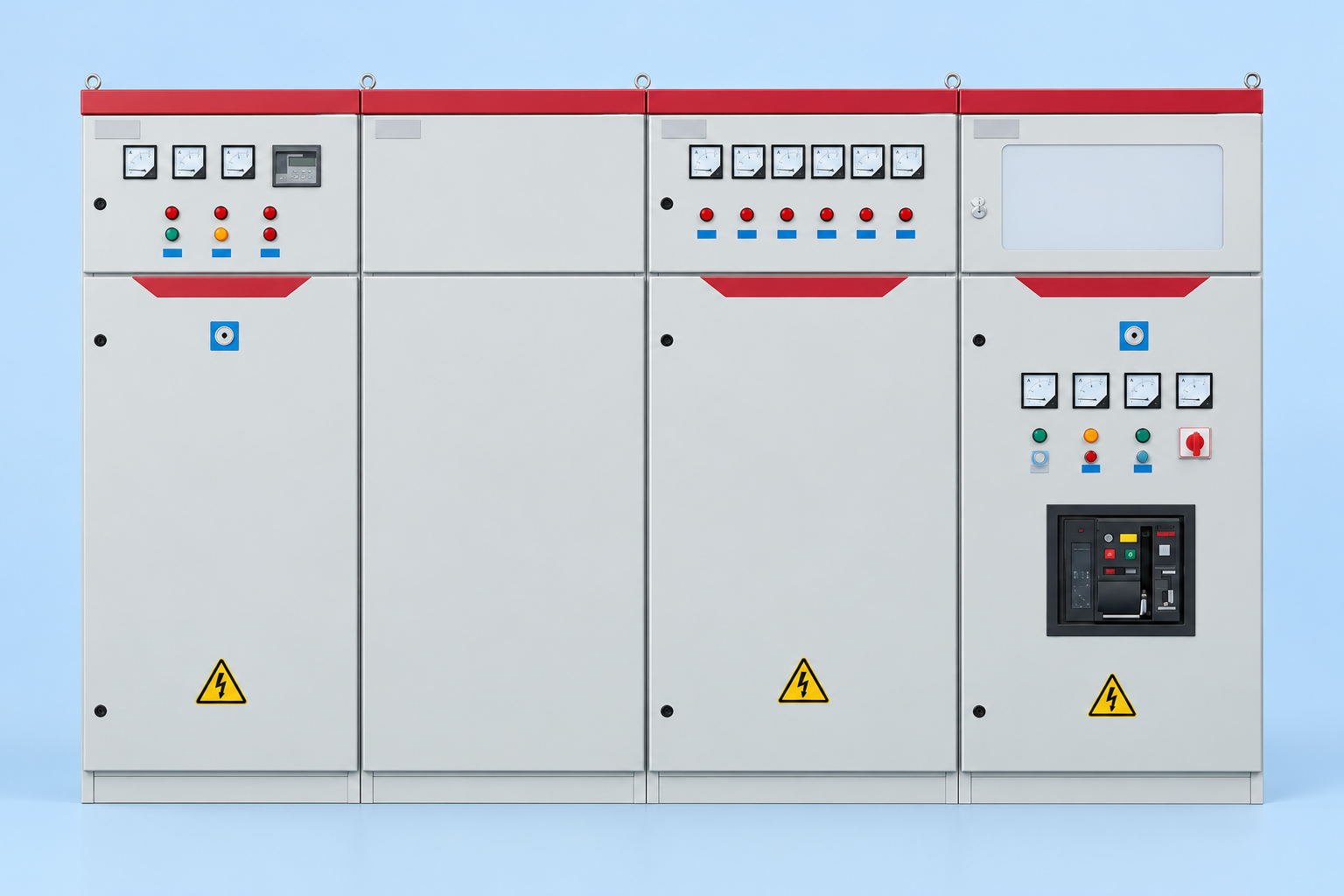
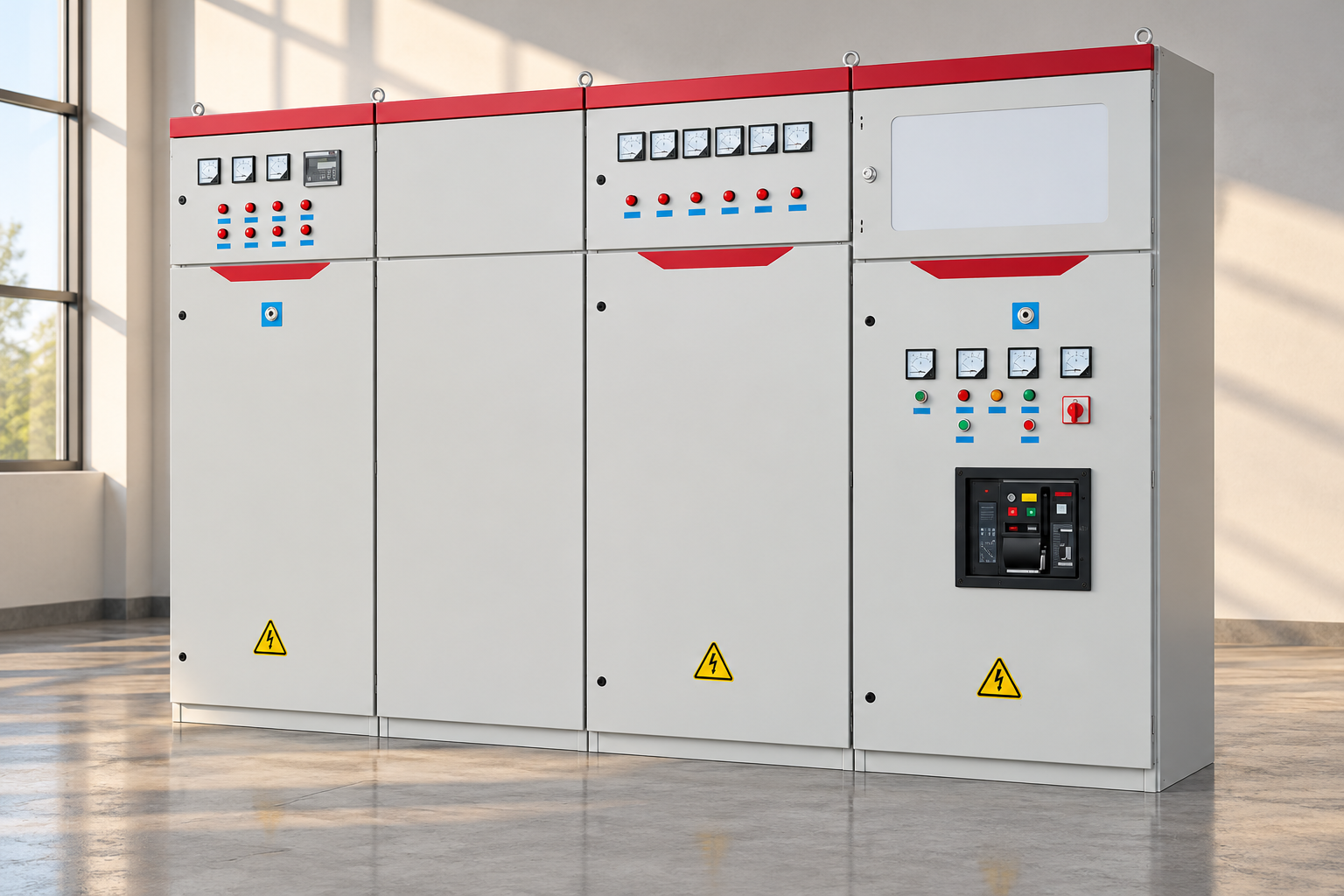
Electrical rooms, cable routes, foundations and equipment access can govern what can be installed. Check delivery dimensions against actual doors, turns and lifting arrangements. Confirm the space required for the manufacturer’s assembly and the applicable installation and maintenance requirements. A photograph of a cabinet illustrates its exterior; it cannot establish safe clearance, internal access or the dimensions of the proposed configuration.
The LBAJI GGD assembly linked below is an example of physical low-voltage distribution equipment that may form part of a facility plan. Its suitability depends on the selected configuration, project ratings and approved documentation. Request drawings before civil work is finalized. Cable entry direction, termination responsibilities, earthing connections, communication interfaces and future extension boundaries should appear in the coordinated scope. Resolving these items after equipment delivery can create expensive changes and delay installation.
Prepare a quotation package that preserves the design
Send suppliers a consistent equipment schedule and identify which information is preliminary. Specify supply conditions, circuit functions, environmental conditions, required documentation and the engineering responsibility for unresolved details. State whether transport, installation support, testing, commissioning assistance and spare parts are included. A supplier should list deviations clearly rather than treating a silence in the specification as approval for an alternative.
Compare quotations by scope before price. A lower equipment price may exclude interfaces or records needed to complete the project. Avoid asking a cabinet supplier to certify the performance of the entire distribution system when other parties control the supply, cables or operating arrangement. Establish review stages for drawings, protection interfaces, verification records and delivery readiness. These stages turn the planning assumptions into information that the buyer can check before committing to installation.
Stage delivery, verification and future review
The implementation plan should connect design approval, long-lead procurement, site readiness, outages and commissioning. Include dependencies outside the equipment order, especially utility work and production access. A phased project needs a verified boundary between new and existing equipment at every stage. Temporary arrangements require their own engineering review; they should not inherit approval merely because the final arrangement has been assessed.
At handover, retain final drawings, equipment records, accepted study revisions, operating instructions and verification results in an accessible location. Assign an owner to update the load register when production changes. Review the distribution plan after significant new loads, new supply sources, equipment replacements or recurring operating problems. Planning is most useful when the record remains connected to the facility’s actual operation rather than being filed away after the purchase order is issued.
Preguntas frecuentes
What is the first step in electrical distribution planning?
Define the project decision and supply boundary, then establish a reliable baseline of the existing installation and its measured demand. Equipment selection follows the load and operating requirements.
Is adding all nameplate ratings enough to size the system?
No. Nameplate information is an input, but simultaneous demand, operating schedules, starting behavior, future scenarios and engineering studies determine the requirements for the proposed arrangement.
How does facility planning differ from utility planning?
Facility planning addresses the customer’s processes and installation. Utility planning covers the wider network and multiple customers. Capacity, connection conditions and distributed generation require coordination across that boundary.
Should future capacity always be installed immediately?
No. Staged investment may be appropriate when growth is uncertain. Reserved space alone is insufficient; electrical capacity, protection, routes and extension interfaces must also be assessed.
What should accompany an equipment quotation request?
Provide the approved or clearly marked preliminary equipment schedule, supply conditions, circuit functions, environment, interface requirements, documentation scope and responsibility for unresolved engineering decisions.
Referencias técnicas y equipo relacionado
Las páginas de estándares vinculados describen su alcance; la conformidad con el proyecto requiere los documentos aplicables y una revisión técnica.
- IEC low-voltage assembly requirements scope
- 29 CFR 1910.333 prácticas de trabajo eléctrico (versión oficial de 2025)
- U.S. Department of Energy integrated distribution system planning
- LBAJI GGD Dispositivos de Conmutación de Baja Tensión
- Fundamentos de la automatización de la planta eléctrica
- building distribution diagram documentation
- electrical construction document package
Formación adicional: fundamentos de la maquinaria
Este vídeo educativo independiente complementa el análisis de las funciones de los equipos. No sustituye a los documentos de proyecto aprobados ni a los procedimientos de trabajo eléctrico cualificados. Fuente: Gaurav J – TheElectricalGuy.
Mira los conceptos básicos de los equipos de control | TheElectricalGuy