
Switchgear thermal imaging is a condition-assessment survey that records surface heat patterns under documented operating conditions. Its useful output is a traceable set of observations, limitations and follow-up decisions, rather than a colourful picture or an unsupported declaration that a board is safe. A survey specification should identify the equipment, permitted viewing arrangements, representative load, comparison method and person responsible for action. It must also distinguish what the camera actually observes from internal parts that remain hidden. This guide explains how a facility buyer can commission and review that work without prescribing energized access or treating an exterior illustration as a thermogram.
Define the question before booking a survey
Start with the decision the survey must support. A baseline for newly commissioned equipment, investigation of a reported anomaly and periodic trending of an established lineup have different evidence requirements. State which purpose applies to each asset. Asking a contractor to scan everything without a defined deliverable encourages inconsistent coverage and makes later comparisons difficult.
Create a register linking each assembly and accessible observation point to its asset identifier and latest drawing. Include ownership boundaries where a facility receives electricity through utility-controlled equipment. A shared room does not give a contractor authority to inspect every enclosure in it. Confirm the responsible operating organization and obtain an agreed survey scope before arranging attendance.
Understand what the instrument can observe
An infrared camera interprets radiation reaching its detector. The resulting image requires appropriate measurement settings and context; apparent surface temperatures are affected by surface properties and the viewing arrangement. NIST thermography publications explain why instrument readings and uncertainty need interpretation. They do not establish switchgear-specific alarm limits or certify an electrical installation.
A closed metal door is an observation of its exterior surface, not a direct image of every connection behind it. An infrared inspection window, where provided, also has a defined field of view and optical characteristics. Never assume that an ordinary viewing panel transmits the camera’s measurement band. Ask the equipment manufacturer and survey specialist to identify supported observation arrangements and record areas that cannot be assessed.
Establish the safe-work boundary
A survey purchase order does not authorize opening energized compartments, bypassing interlocks or changing the assembly. Site electrical safety procedures, manufacturer instructions and applicable rules govern access. The operating organization must determine the permitted method and assign appropriately qualified personnel. The survey report should record its access boundary without suggesting that a camera removes electrical hazards.
Where useful information cannot be obtained within the approved arrangement, record a limitation and propose an engineering-led follow-up. That might require a planned outage or a different supported monitoring method. It should not become an improvised request to remove covers while the survey team waits. U.S. electrical work-practice regulations are a relevant legal reference for U.S. sites; other jurisdictions require their own assessment.
Agree a survey evidence matrix
Contexto de referencia: NIST: Elements of thermography for nondestructive testing, foundational measurement background. Esta lista de verificación cualitativa original organiza las decisiones relacionadas con el proyecto; no se trata de una norma reproducida ni de un sustituto de los criterios aprobados.
| Survey item | Documentación para solicitar | Reason for keeping it |
|---|---|---|
| Equipment identity | Asset ID and matching visible image | Prevents a finding being assigned to the wrong feeder |
| Operating condition | Recorded load information and relevant time | Makes later comparisons more meaningful |
| Viewing arrangement | Permitted location and visibility limitations | Separates observed surfaces from hidden components |
| Measurement settings | Instrument identification and relevant interpretation settings | Allows a specialist to assess measurement confidence |
| Finding disposition | Named reviewer and documented next action | Prevents an image-only report being left unresolved |
This qualitative matrix is an original procurement checklist. It does not reproduce a standard or set a permissible temperature. The project team should add its own acceptance requirements, document references and reporting format. Where a field cannot be obtained safely or reliably, the report should say so explicitly rather than substitute an estimate presented as measured data.
Record load and environmental context
An observation under light load may not represent the condition during the facility’s most demanding duty. Ask how the survey team will record the actual operating state and explain whether it represents the intended baseline. Do not request that staff create unusual loading simply to make the images more dramatic. Any operational change belongs to the approved operating plan.
Record relevant ambient conditions, recent operating history and factors that could affect interpretation. Sunlight, nearby heat sources, airflow and reflections can influence what is seen. The useful question is whether the report provides enough context to distinguish an equipment concern from a measurement limitation. Avoid comparing two pictures solely because their colour scales look similar.
Build repeatable comparisons
Trend comparisons need a consistent asset location and a sufficiently comparable method. Ask the contractor to pair an ordinary visible-light image with each important thermal observation. Identify the observed surface and viewpoint so that a later survey can return to the same location without guessing. Retain the original measurement files where the instrument supports them, together with the issued report.
Comparisons between phases or similar equipment can help a competent reviewer, but differing loads and construction can undermine a simple comparison. Require the reviewer to state the basis used and its limitations. A warmer-looking component is a reason for assessment; it is not, by itself, proof of a particular loose joint or a universal repair instruction.
Review findings without inventing thresholds
The survey agreement should identify who determines severity and what approved criteria they will use. Do not insert a universal temperature table copied from an unrelated installation. Equipment ratings, service conditions, measurement uncertainty and the nature of the observation all matter. If the facility already has a condition-assessment policy, provide its current controlled version before the work starts.
Each finding should separate observation, interpretation and action. For example, an unexpected pattern may justify engineering review and a planned inspection under an approved outage. The report should not state that a hidden connection is defective unless further evidence supports that conclusion. Similarly, an inconclusive image must not be converted into a clean bill of health simply to close the work order.
Specify follow-up and closeout
A finding becomes useful when someone owns the next step. Record the asset, evidence reference, reviewer, operational decision and required follow-up. Where the operating organization identifies an urgent concern, its established response process applies. The article does not provide an energized repair method or replace the site’s decision about continued operation.
After an approved repair, decide whether a repeat observation under suitable conditions is necessary. Preserve the original finding, work records and comparison evidence instead of replacing the old image with the new one. A closeout statement should explain what changed, what was checked and which limitations remain. This creates a history that supports future maintenance planning.
Include equipment interfaces in procurement
For new switchgear, discuss inspection and monitoring requirements during specification rather than after installation. The manufacturer should confirm whether any proposed viewing feature is available and how it affects the assembly configuration and documented performance. An aftermarket opening is a design change, not merely an accessory purchase. Its implications require the responsible manufacturer’s review.
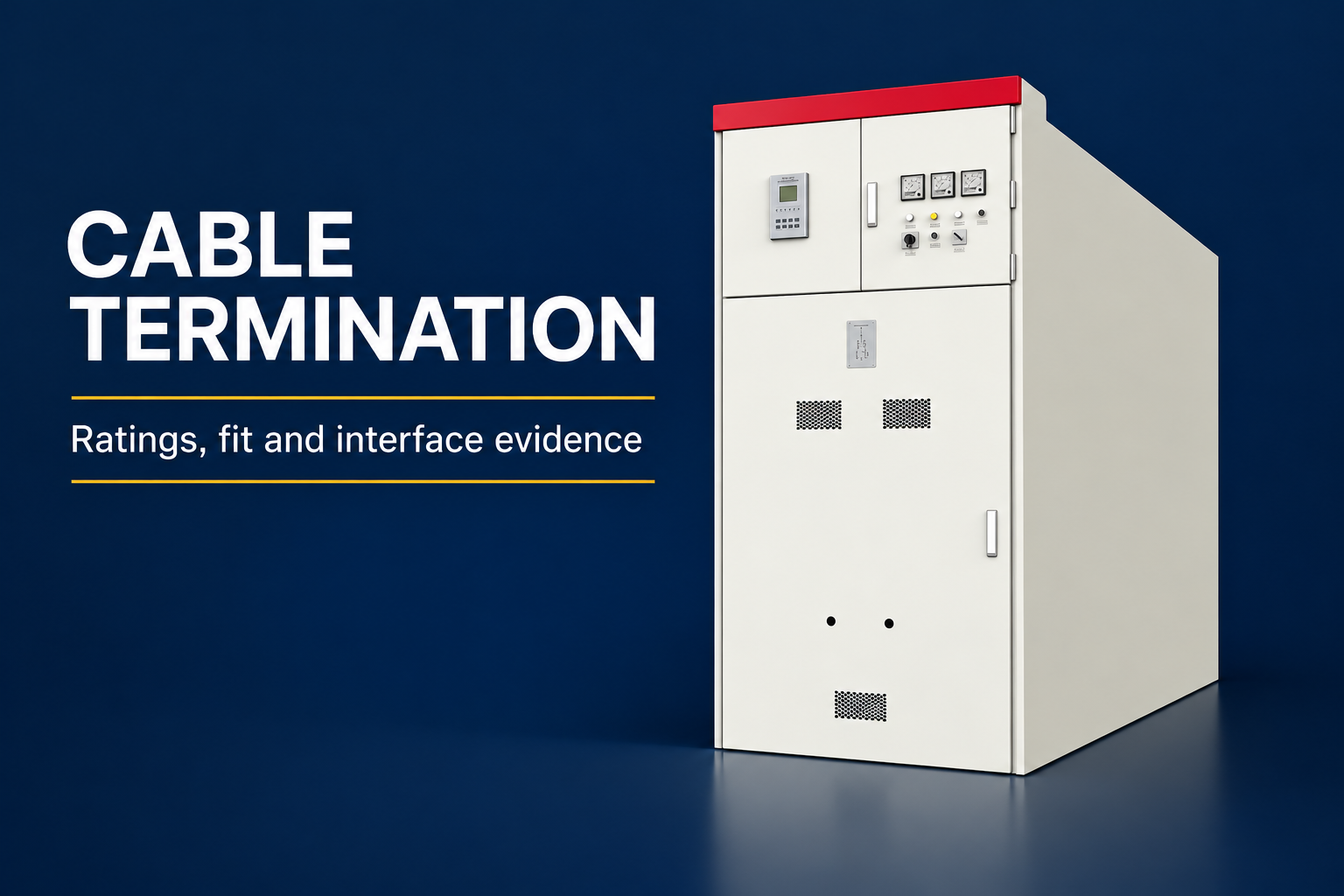
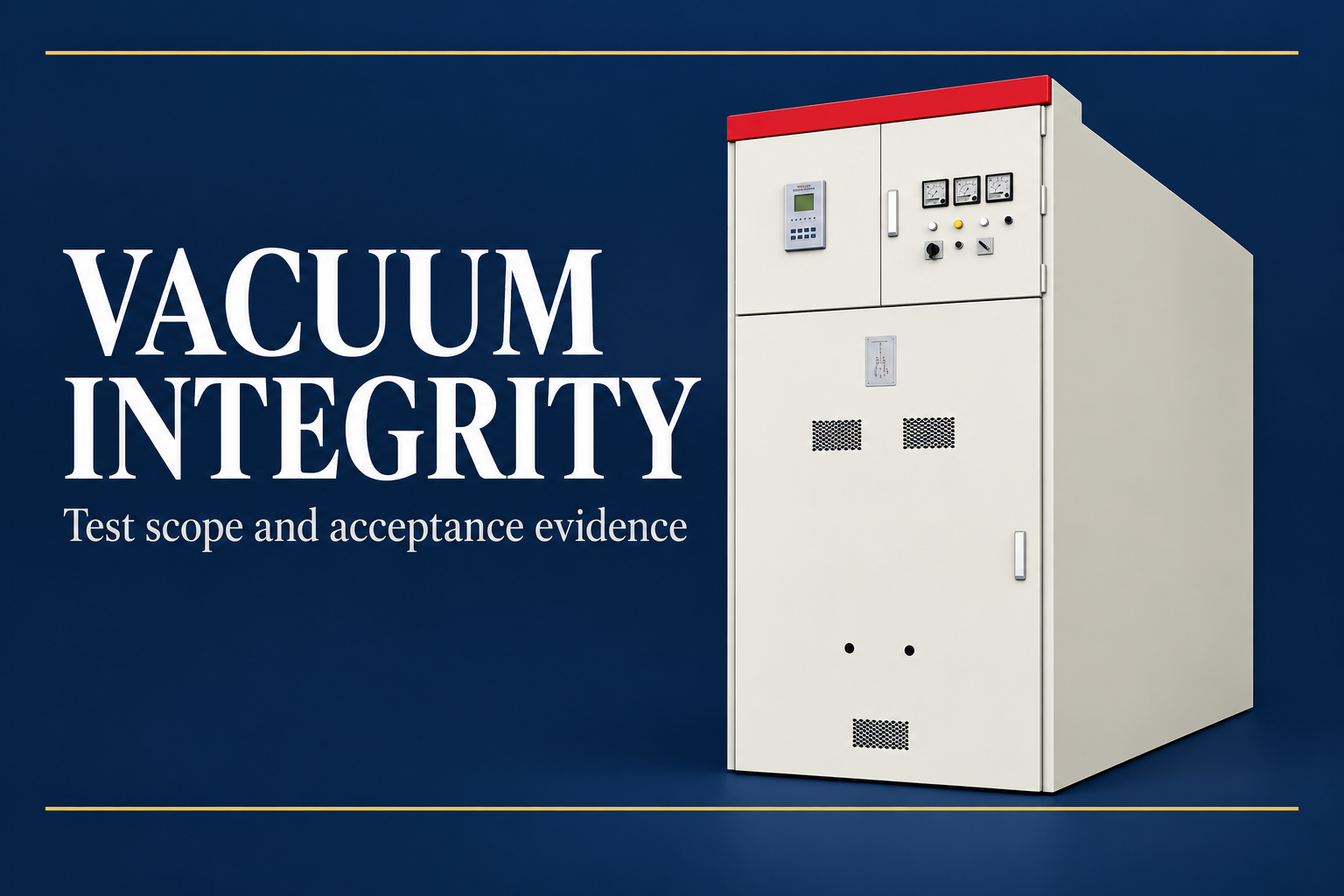
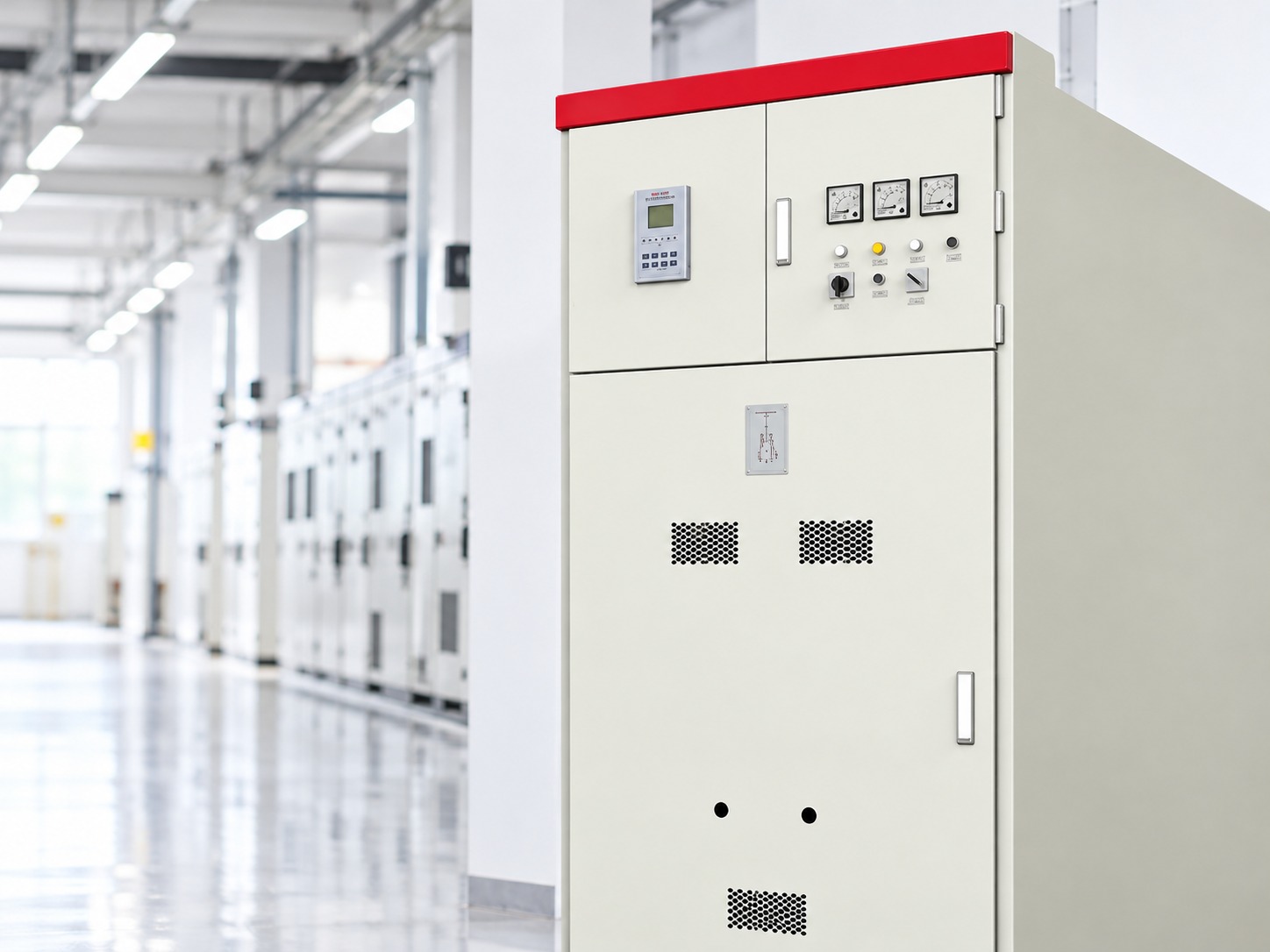
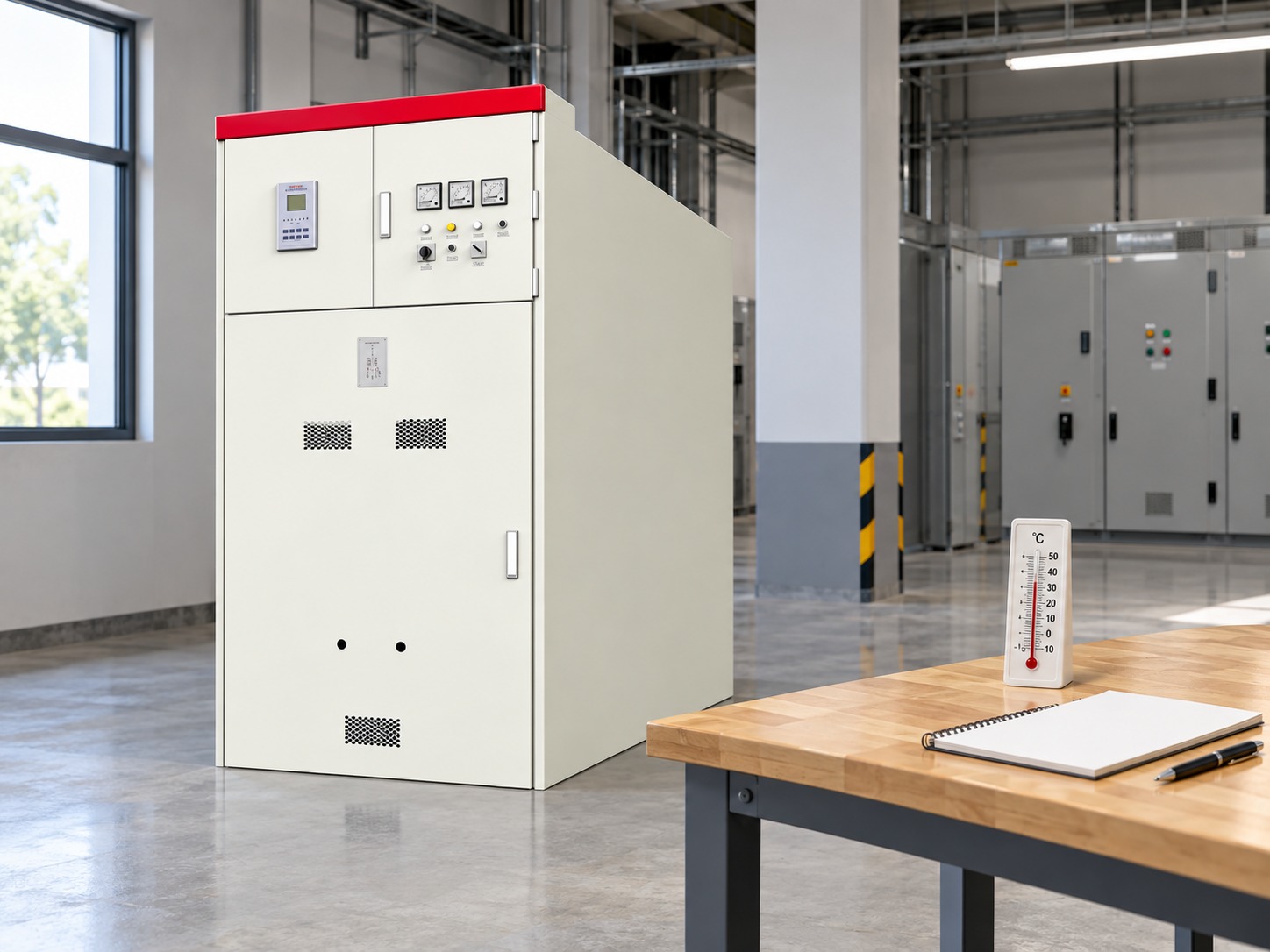
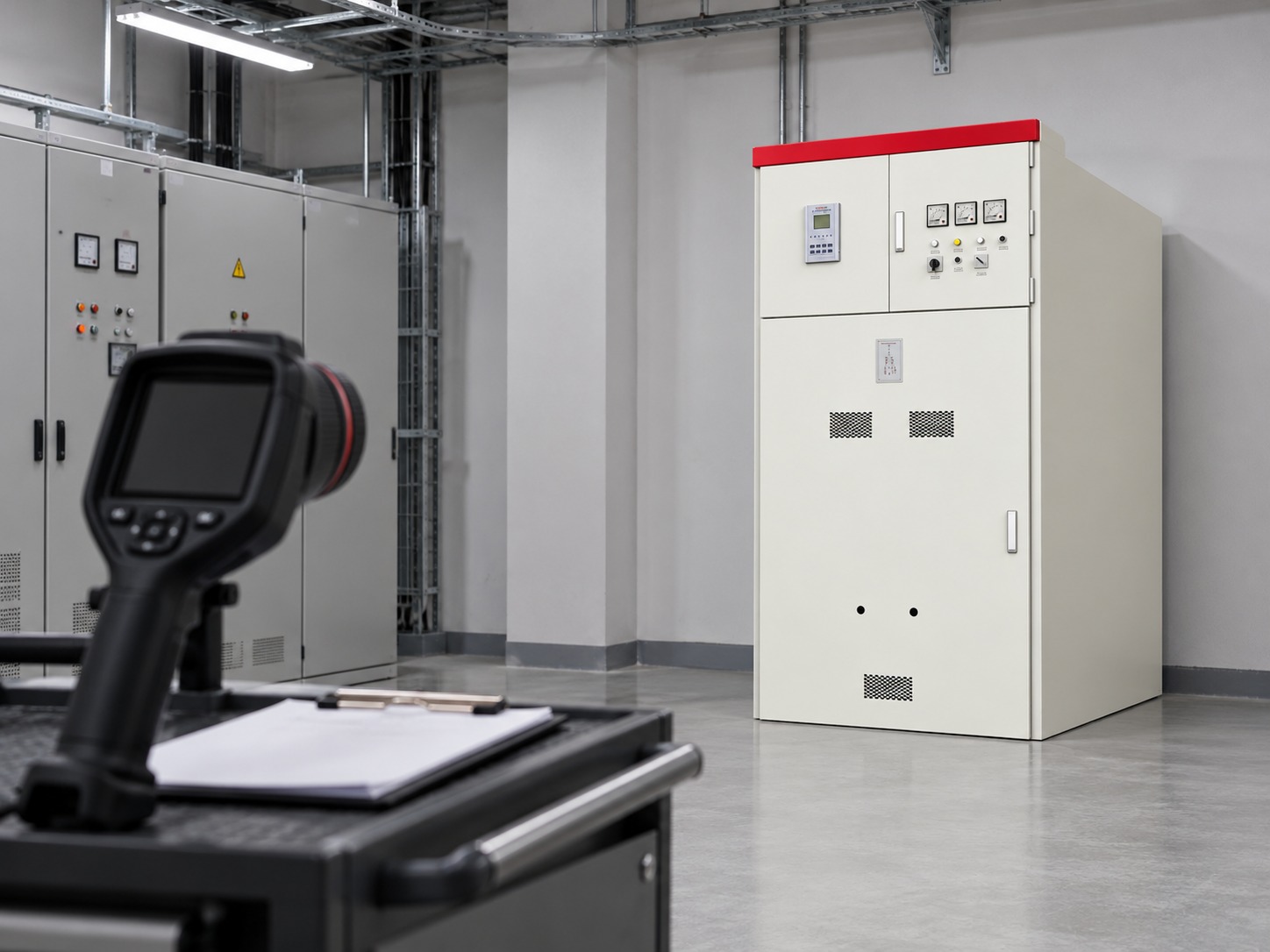
The illustrated LBAJI KYN61 assembly provides an exterior product reference for identifying the equipment class. The illustrations do not show an infrared window, internal thermal access or a measured hot spot. Actual observation arrangements must come from the supplied configuration, drawings and instructions. Keep that distinction in the purchase order so a product image is never mistaken for a promised feature.
Assess the contractor’s proposed deliverable
Request a sample anonymized report before awarding the survey. Look for clear asset identification, measurement context, visibility limitations and a follow-up register. Ask who reviews the results and how the facility can obtain the underlying files. The strongest proposal explains what cannot be concluded as clearly as what can be observed.
Agree how inaccessible or unavailable equipment will be recorded. A missing observation should remain an open item with a reason and proposed next opportunity. It should not disappear from the final register. If the site needs several visits to cover normal operating states, identify that scope and commercial responsibility in advance rather than presenting incomplete coverage as a complete survey.
Keep thermal imaging within a broader assessment
Thermal imaging addresses a different evidence stream from protection testing, insulation assessment and mechanical inspection. A favourable survey does not establish that protective settings are correct or that an interlock functions as designed. Keep the relevant test and maintenance records linked to the same asset so reviewers can consider them together.
For practical handover, the facility should receive the final register, the report, relevant image files, agreed limitations and a list of unresolved decisions. Store them in a location accessible to the people responsible for future maintenance. The purpose is a repeatable, accountable assessment process that supports equipment decisions, rather than a collection of impressive images that nobody can interpret later.
Preguntas frecuentes
Can a thermal camera see every connection through a closed switchgear door?
No. An exterior observation does not provide a direct view of every internal connection. The supported viewing arrangement and its limitations must be documented.
Does a normal-looking thermogram prove switchgear is safe?
No. It is one observation under recorded conditions and cannot replace protection, insulation, mechanical or electrical safety assessments.
Should a survey use one universal alarm temperature?
No universal value is provided here. The responsible reviewer must use applicable equipment information, approved criteria and measurement context.
What should a buyer request besides thermal pictures?
Request asset identification, operating context, viewing limitations, interpretation, a follow-up register and the relevant original measurement files.
Do the product illustrations show measured hot spots?
No. They are exterior equipment illustrations based on the real product reference and are not thermograms or evidence of an actual fault.
Fuentes técnicas y equipo relacionado
Las páginas estándar del catálogo establecen el alcance del documento; la conformidad y la aceptación requieren la revisión completa de los documentos aplicables y la ingeniería del proyecto.
- NIST: Elements of thermography for nondestructive testing, foundational measurement background
- UK HSE HSG85: Electricity at work, safe working practices
- IEC 62271-200:2021 con la Enmienda 1:2024 sobre el ámbito de aplicación de la norma
- LBAJI KYN61-40.5 Armadura de interruptores de metal desmontable con conexión eléctrica
- Fundamentos de la tecnología de automatización de la planta eléctrica
- Verificación y prueba de los equipos de control
- Registros de testigos de aceptación de fábrica
Formación adicional: formación técnica
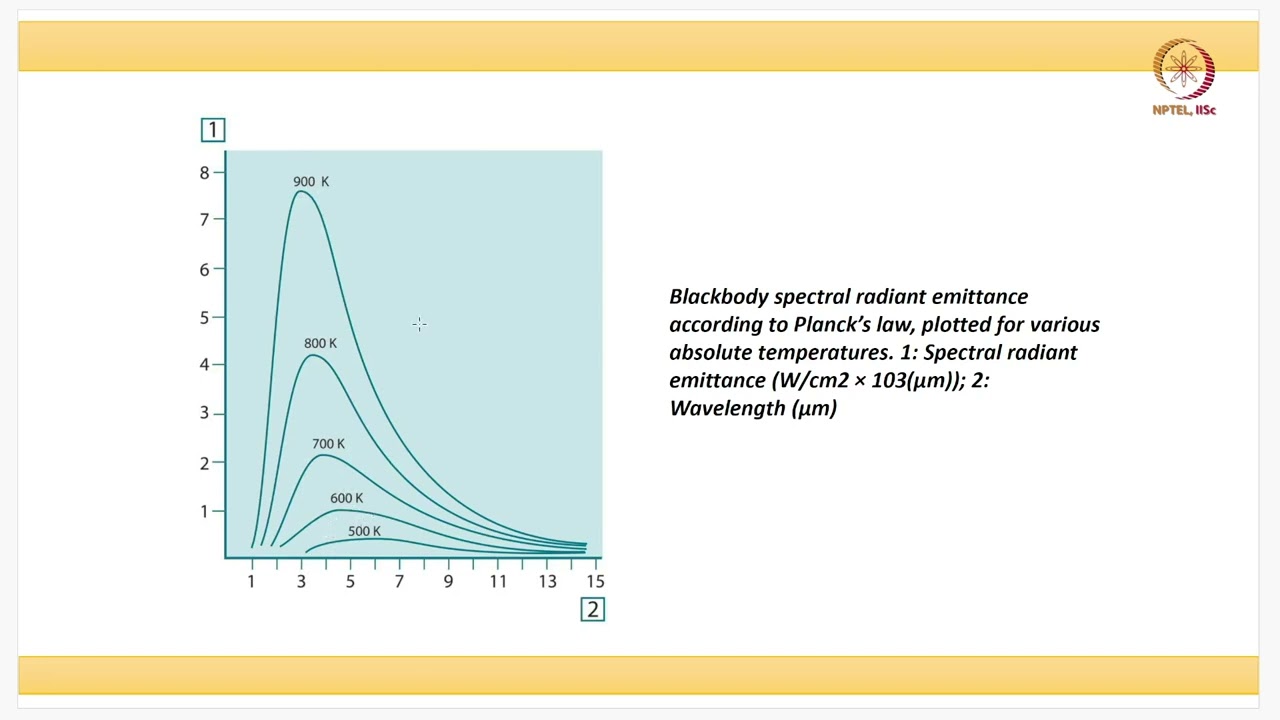
This independent educational video explains the measurement principles or equipment background discussed above. It does not demonstrate a safe work procedure for the specific assembly. Source: NPTEL – Indian Institute of Science, Bengaluru.