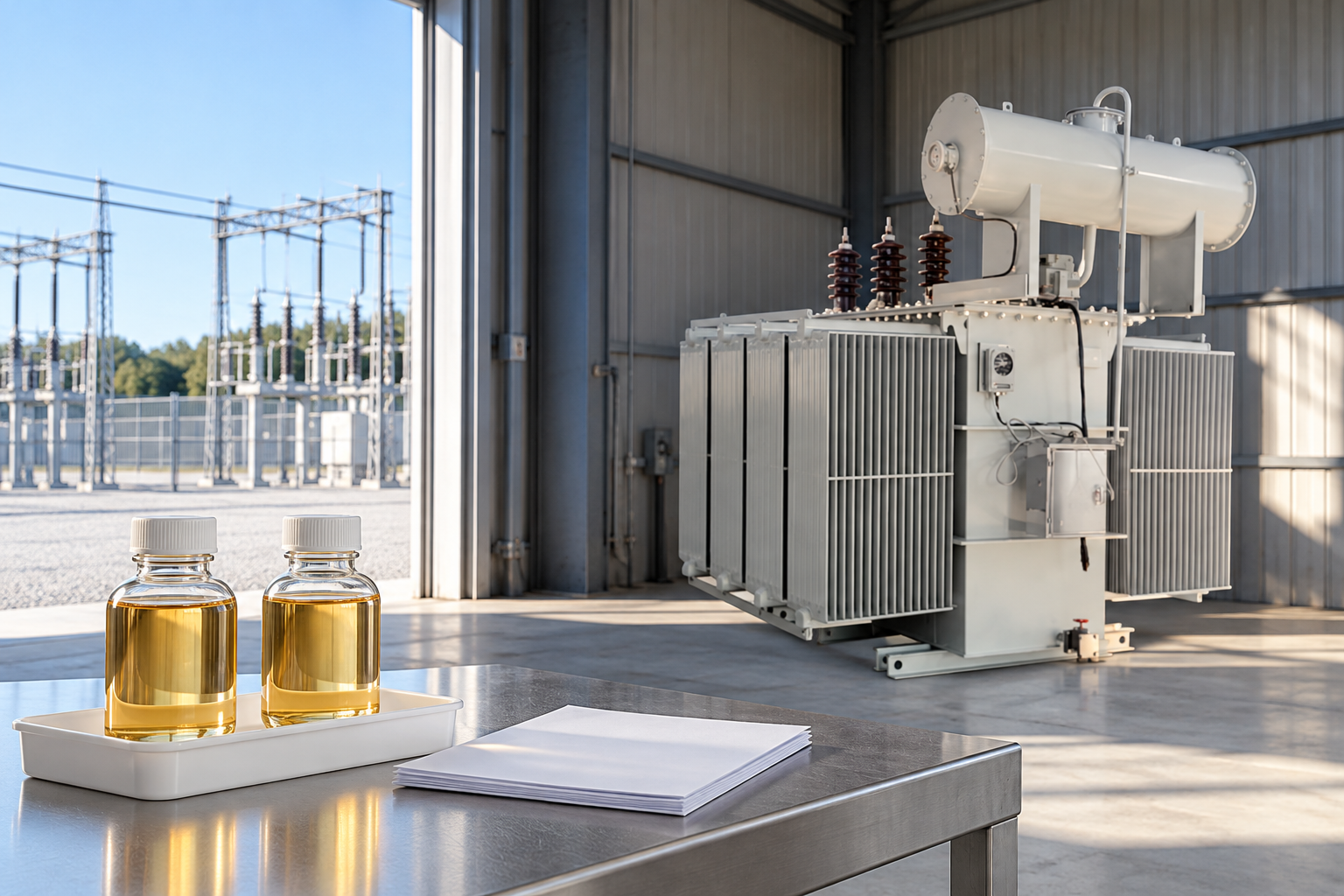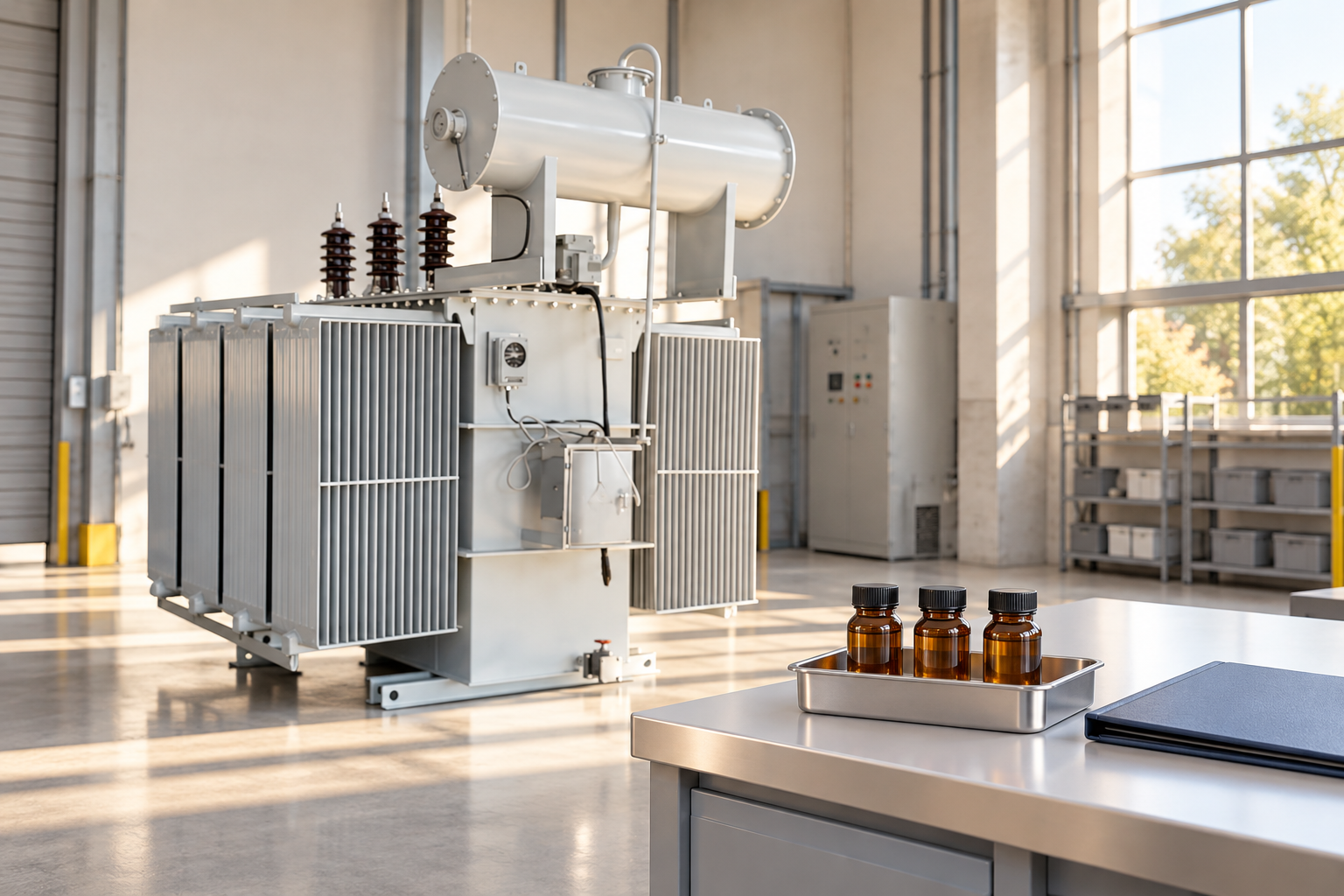

Transformer oil sampling is the controlled collection, identification and delivery of insulating liquid for a defined laboratory question. A useful sample must represent the correct transformer compartment and retain the properties the laboratory intends to measure. For dissolved gas analysis, moisture or particle assessment, that means agreeing the container, collection method and handling requirements before visiting the equipment. A convenient bottle of oil is not automatically a valid DGA sample. This guide helps maintenance planners, importers and asset owners specify a reliable sampling job and review its records; it does not authorize work on energized electrical equipment.
Start with the test request, not the sample bottle
Tell the laboratory what decision the result must support. A commissioning baseline, investigation of a changing gas trend and routine condition review may require different test packages and turnaround arrangements. Identify whether the liquid is mineral oil, an ester or another insulating fluid. Ask which methods the laboratory will use and whether each requested analysis needs a separate container. Confirm the required volume, closures, storage conditions and dispatch timing with that laboratory rather than copying a generic internet checklist.
ASTM D923 covers representative sampling of insulating liquids and includes special techniques for dissolved gases, water and particles. Its public scope distinguishes containers and handling arrangements for these purposes. The practical implication is to have the laboratory approve the sampling kit for the requested tests. Do not assume that a bottle suitable for a general oil assessment preserves dissolved gases equally well. Record the agreed instructions with the work order so the field team and receiving laboratory work to the same requirements.
Define the asset and the compartment precisely
An asset number alone may be insufficient when a transformer has separate oil systems. Record the manufacturer, serial number, location and compartment description, together with the approved sampling point. Keep main-tank and separate tap-changer samples distinguishable throughout the job. Their histories and diagnostic questions can differ. A report assigned to the wrong compartment can be misleading even if the laboratory measurements themselves are accurate.
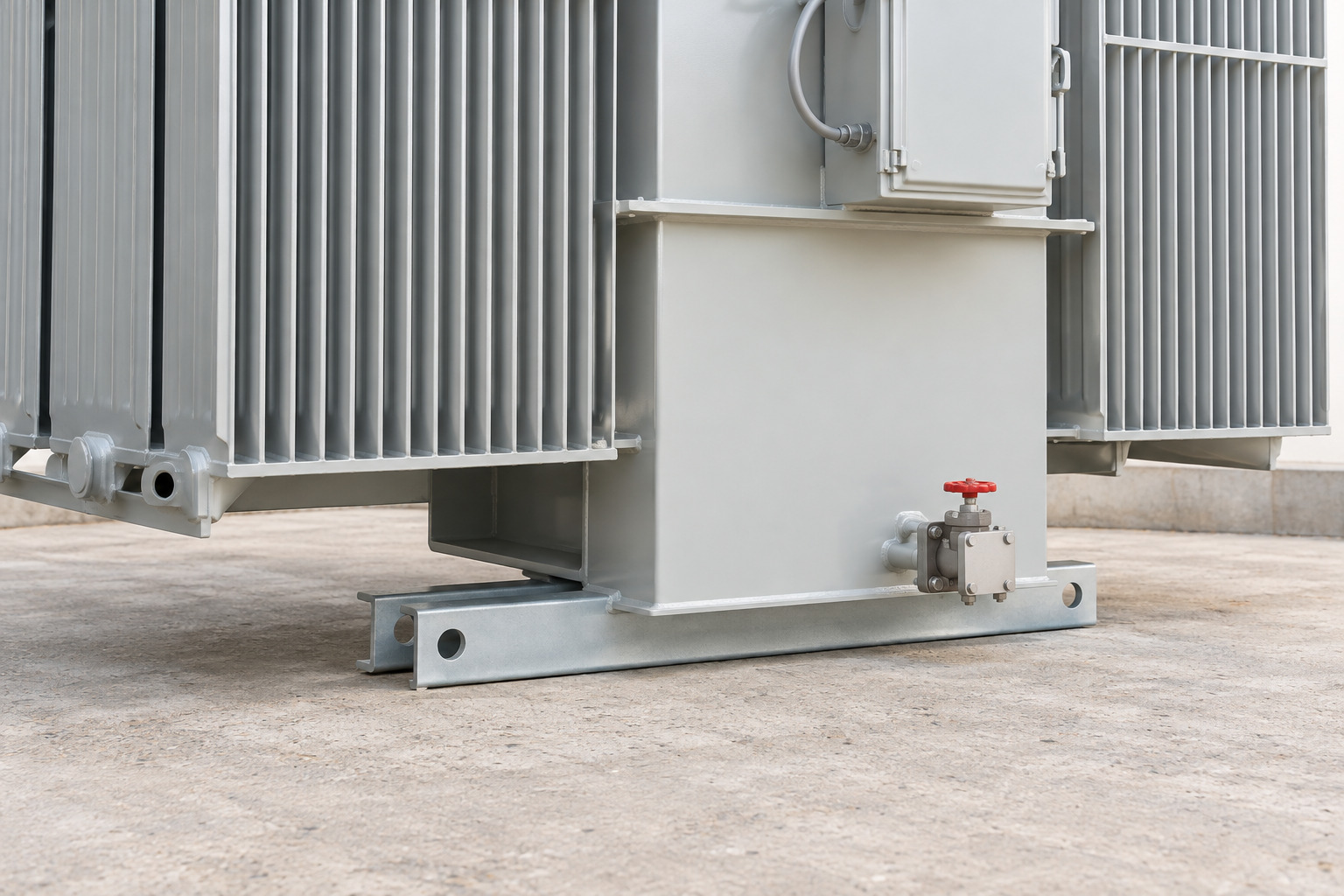
Build a simple identity check into the job plan: compare the work order with the equipment identification and the approved drawing before any connection is made. If the installed arrangement differs from the drawing, stop and resolve that discrepancy with the owner. A photograph can support location identification, but it should not replace a written sampling-point description. Avoid inferring an approved sampling connection from a product photograph; visible drain hardware does not establish that it is appropriate for every test or operating condition.
Confirm the access and safety boundary
Sampling requires an equipment-specific risk assessment, competent personnel and the owner’s authorization. The plan should address electrical approach limits, equipment status, pressure, hot oil, environmental containment and safe access. HSE HSG85 provides general electrical safe-working guidance; the actual task must also follow applicable local requirements and the equipment instructions. A general article or training video cannot determine whether a particular live sampling arrangement is acceptable.
Assign responsibility for approving the connection point and confirming the permitted operating state. Include a stop condition for unfamiliar hardware, inaccessible fittings, unexpected leakage, uncertain pressure or missing documentation. The crew should not improvise by loosening a plug or opening a cover because the planned valve is absent. Resolve the work method before scheduling travel, because discovering an unsuitable connection at the equipment can otherwise encourage an unsafe workaround.
Separate sample integrity checks from field convenience
Use clean, compatible equipment and the laboratory-approved container. Keep closures protected from dirt and unnecessary exposure. Consider the weather, dust, rain and workspace conditions when planning the visit. The issue is not simply whether the outside of the bottle looks clean; the sample must remain suitable for the analyses ordered. Preparation should therefore include checking the kit, its condition and its instructions before the team approaches the transformer.
For DGA, inappropriate exposure to air, leakage or unsuitable handling can compromise the representativeness of the gases being measured. Water analysis also needs particular care against contamination. The U.S. Bureau of Reclamation‘s transformer maintenance manual discusses sampling and handling as important sources of diagnostic error. Treat that older manual as technical background, while obtaining the actual collection sequence from the laboratory, equipment manufacturer and specified current method. Do not substitute a generic flushing quantity or filling rule for those instructions.
Sampling job acceptance checklist
| Item to agree | Evidence to keep | Reason to stop or clarify |
|---|---|---|
| Requested analyses and liquid identity | Laboratory request and approved methods | An unspecified test package or unidentified fluid |
| Asset, compartment and sample point | Work order matched to equipment records | A drawing or asset-label discrepancy |
| Container and collection arrangement | Laboratory-approved kit instructions | Damaged closure, unsuitable container or missing kit |
| Authorized access and operating state | Approved work method and owner release | Uncertain electrical, pressure or temperature boundary |
| Field conditions and treatment history | Sampling record linked to the bottle identity | A missing temperature record or undocumented oil addition |
| Packaging and laboratory receipt | Dispatch record and receipt condition | Leakage, broken container or mismatched identification |
The checklist is a planning aid, not a replacement for the sampling standard. Use it to identify missing agreements before the work begins. Have the laboratory confirm how it will flag a suspect specimen and whom it will contact if the sample arrives damaged. A rapid laboratory response is valuable only when the sample identity and condition can be trusted.
Record conditions that help explain the result
Agree the field record with the laboratory and asset engineer. Useful entries include sampling date and time, equipment and compartment identity, point description, oil temperature with its measurement source, ambient conditions and relevant operating context. Distinguish a measured value from an estimate. If a requested value cannot be obtained, state that explicitly rather than entering a plausible number. The engineer can then decide how that limitation affects interpretation.
Record oil additions, processing, repairs, a recent outage and other changes that could affect comparison with earlier reports. A sample following treatment may belong to a changed baseline. Keep the sampling personnel and work-order references traceable without crowding the bottle label with illegible detail. Use a unique specimen identifier linking the container, field sheet and laboratory request; do not rely on a date alone when several transformers are sampled during one visit.
Protect the link between collection and laboratory receipt
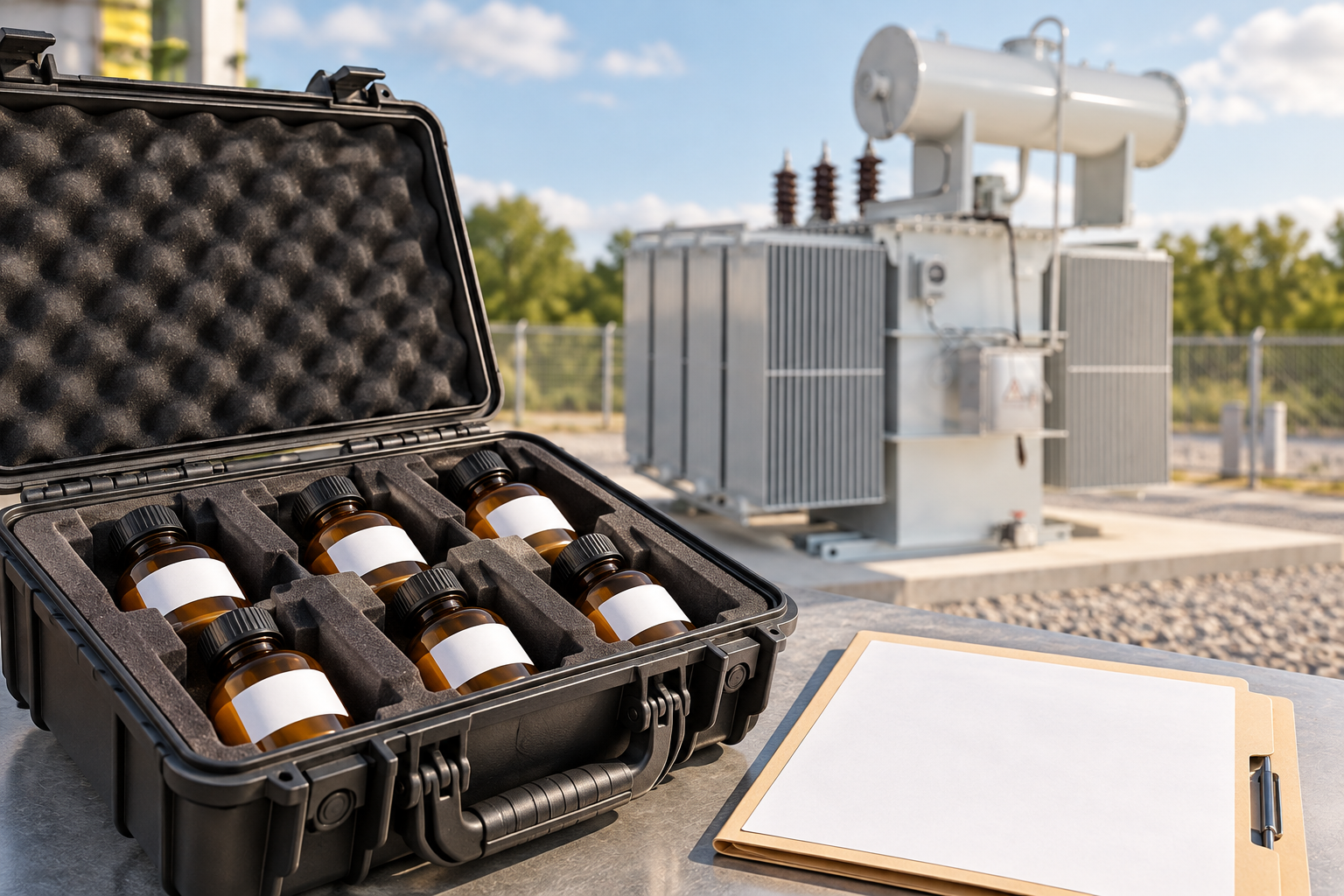
Packaging should follow the laboratory’s requirements and applicable transport rules. Protect fragile containers, maintain closures and keep the correct paperwork associated with each specimen. Record the dispatch date, courier reference where applicable and any known delay or abnormal handling. The laboratory should be able to reconcile received containers with the requested analyses before starting work. Shipping a second unlabelled bottle as an informal spare creates more ambiguity than reassurance.
Ask the laboratory to record receipt condition and deviations, including leakage, a broken closure, insufficient volume or uncertain identification. Decide in advance which defects require resampling and who has authority to make that decision. If a sample is rejected, retain its record and the reason. Repeated transport problems can then be corrected at the kit or logistics stage instead of being rediscovered after every sampling visit.
Investigate an unexpected result without dismissing it
An abrupt change can reflect equipment condition, sampling problems, laboratory differences or several factors together. Review asset identity, sample-point consistency, handling notes, analytical method and recent work before comparing the numbers. Escalate independent alarms or abnormal equipment behavior through the owner’s response process immediately; a resampling request is not permission to ignore another warning. The responsible engineer should determine the urgency and equipment operating decision.
When confirmation is appropriate, request a clearly identified new sample using an approved method and give the laboratory the reason for the repeat. Keep both reports rather than replacing the first with the more comfortable result. Ask for a documented interpretation that distinguishes confirmed observations, unresolved differences and recommended next actions. This preserves the diagnostic trail and makes future trending more useful than a folder containing only selected results.
Include sampling access in a transformer enquiry
For a new oil-immersed transformer, ask for the proposed sampling arrangement, its location on the general arrangement drawing and the maintenance instructions. Confirm whether separate compartments require separate points. Ask how site access, containment and laboratory kit compatibility will be addressed. Do not add a sampling valve to a drawing without the manufacturer’s review; pressure integrity, accessibility and the original design all matter.
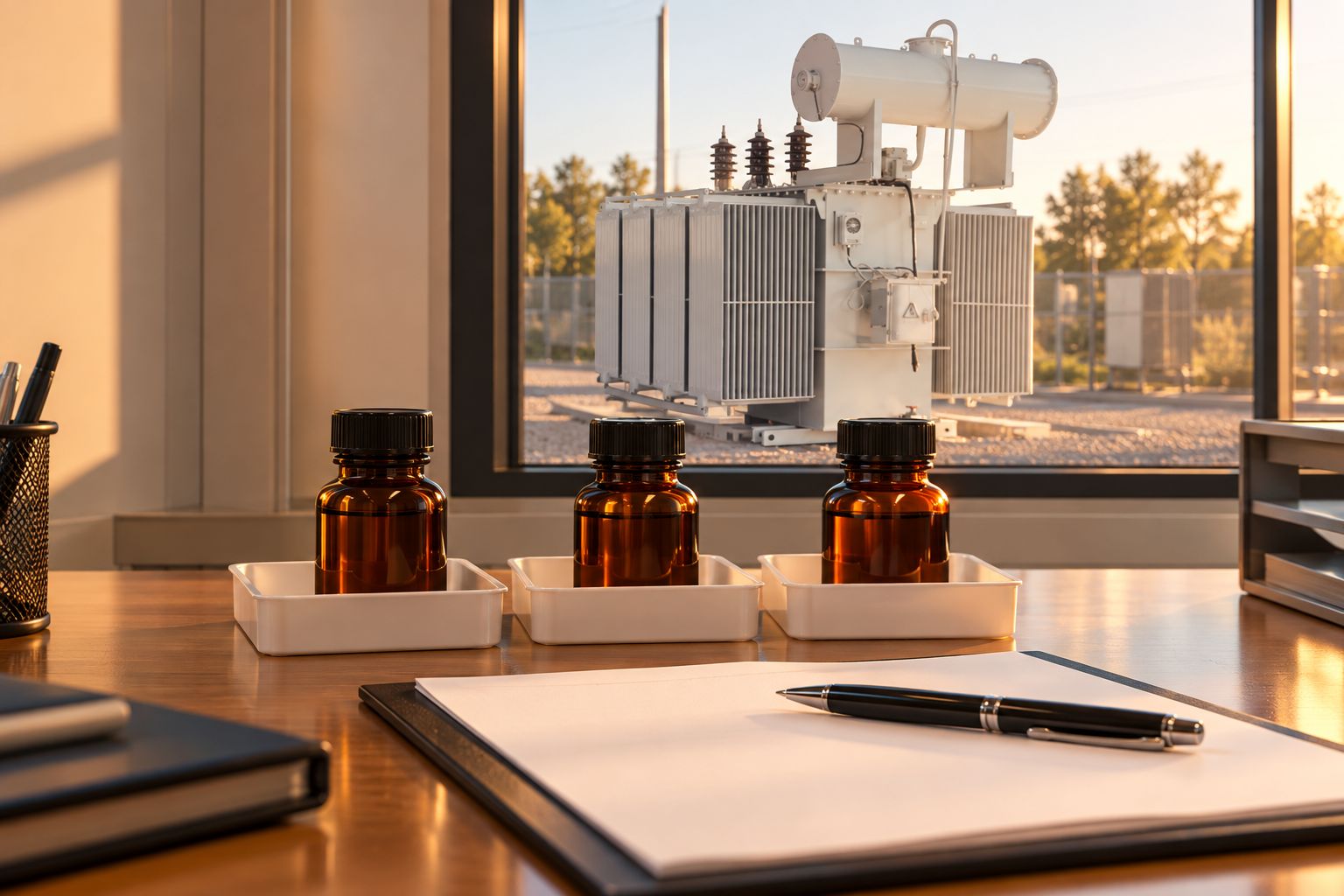
El LBAJI 35kV oil-immersed series is a relevant equipment starting point for this discussion, but the catalogue image does not confirm a sampling procedure or connection specification. Put the required analyses and access expectations in the enquiry and ask for project-specific confirmation. Request the commissioning sample records, any factory oil processing history and the handover documents needed to establish the first site baseline.
Decide what counts as a completed sampling job
A completed visit and a usable diagnostic record are different milestones. Close the job after reconciling specimen identity, laboratory receipt, requested analyses and the reviewed report. Record who accepted the results and what follow-up was assigned. If information is missing, leave a specific open item such as unconfirmed oil temperature or damaged transport packaging. Avoid a general green status that hides an unresolved limitation.
For repeat work, review recurring problems before booking the next round. The improvement may be a clearer point description, a different approved container, better dispatch arrangements or updated equipment drawings. These changes are often more useful than simply increasing sampling frequency. A reliable programme connects the physical specimen to an asset decision, with enough evidence for another engineer to understand how that decision was reached.
Preguntas frecuentes
Can the same bottle be used for every transformer oil test?
Do not assume so. Ask the receiving laboratory to approve the container, closure, volume and handling for each requested analysis. DGA, water and particle measurements have specific sampling considerations.
Does a drain valve prove a transformer can be sampled safely?
No. The approved point, equipment condition, electrical access, pressure and temperature boundaries require equipment-specific review and an authorized work method.
Should an unexpected DGA result be ignored until a second sample arrives?
No. Escalate it through the owner’s process and consider independent alarms and operating evidence. The responsible engineer decides whether confirmation sampling and other actions are needed.
What should an importer request before the sampling visit?
Obtain the equipment identity, compartment and point drawings, maintenance instructions, approved laboratory kit requirements, recent oil-treatment history and a clear field-record template.
Related equipment and guides
- LBAJI 35kV oil-immersed power transformer
- Guía completa de los fundamentos de los Transformers
- Transformer DGA Monitoring: Fault Gases & Trend Analysis
- Pruebas de aceite de transformadores antes de la puesta en servicio: qué resultados importan
Technical references
- ASTM D923: Sampling Electrical Insulating Liquids
- HSE HSG85: Electricity at work, safe working practices
- Bureau of Reclamation: Transformers, Basics, Maintenance and Diagnostics (2005; historical background)
- ASTM D3612: Dissolved Gases in Electrical Insulating Oil by Gas Chromatography
Further learning: How laboratory gas separation supports DGA
DGA uses gas analysis to obtain information from an oil specimen. ASTM D3612 identifies gas chromatography as an analytical method for dissolved gases. In this IIT Madras NPTEL lecture, the instructor explains gas chromatography, providing background for understanding why sample identity and preservation matter before analysis. This is analytical-principles education, not a transformer sampling demonstration or a substitute for the approved field procedure. Source: NPTEL-NOC IITM.

Watch mod11lec44-Practice of Chromatography – Gas Chromatography