
An effective switchgear temperature rise test shows how a defined assembly configuration behaves thermally under specified test conditions. For procurement, the essential evidence is the connection between the tested arrangement, the measured temperatures, the applicable acceptance criteria and the equipment being supplied. A report showing that one component passed is not automatically evidence for a complete lineup. Ask the manufacturer to identify the assembly, current paths, ambient conditions, measurement locations and applicable standard. Then review whether the proposed installation or later modifications change the conditions on which the conclusion depends. This article focuses on evidence review, not instructions for performing high-current tests.
Temperature rise and absolute temperature are different
Temperature rise is the difference between a measured temperature and the relevant ambient reference. If a location is measured at 70 degrees Celsius and the applicable ambient reference is 30 degrees Celsius, the arithmetic difference is 40 kelvin. This example illustrates subtraction only; it is not an acceptance limit for a switchgear contact, conductor or enclosure.
Absolute temperature remains important because insulation, accessible surfaces, devices and connections can have different constraints. A report needs to make clear what quantity is being assessed and which criterion applies at each location. Never compare every measurement with a single convenient number found in a general article. The applicable standard, material, equipment design and test arrangement determine the assessment.
Establish the assembly standard and test purpose
Medium-voltage metal-enclosed AC assemblies and low-voltage assemblies have different product-standard frameworks. IEC 62271-200 and IEC 62271-1 provide relevant scope for qualifying high-voltage AC equipment, while IEC 61439 addresses low-voltage assemblies. A temperature-rise statement should identify the applicable documents and editions rather than referring vaguely to “the international standard.”
Also establish why the report is being requested. Design qualification, evaluation of a modification and routine factory checks are different activities. Do not assume that every production assembly undergoes a complete temperature-rise qualification test. Ask the supplier which evidence supports the offered design and which production inspections confirm that supplied units remain consistent with the approved configuration. Keep those two evidence chains distinguishable.
Connect the report to the offered current paths
The rated current of a main busbar does not describe every branch or device in the assembly. Review the relevant current paths, switching devices, joints and terminals for the offered functional units. The report or supporting assessment should explain how the tested arrangement represents those paths. Include the main circuit and relevant auxiliary equipment where they affect the thermal conclusion.
Record conductor arrangements, enclosure construction, partitions, ventilation provisions and installed components using controlled drawings. A report without a traceable specimen identity is difficult to use responsibly. If the supplier relies on an assessment extending earlier evidence to another configuration, request the applicable method, technical justification and responsible approval. Similar appearance alone cannot demonstrate equivalent temperature performance.
Read the test conditions as part of the result
Current, frequency, ambient conditions, enclosure arrangement and connecting conductors affect the interpretation of a temperature-rise result. Ask how the test conditions were established and documented. The report should describe the measurement method and the criteria for reaching the required thermal condition. Obtain the actual relevant records rather than accepting a pass mark with no supporting context.
External conductor connections deserve attention because they can influence heat transfer at the equipment terminals. Test conditions may not be identical to every site arrangement, which is why the engineering review needs to establish applicability. Changes to cable size, termination arrangement or adjacent heat sources should be assessed by the responsible designer and manufacturer before anyone assumes that the original conclusion still applies unchanged.
Use an evidence review table
An original qualitative review matrix helps buyers separate missing documents from a genuine technical mismatch. Assign every open item to someone who can resolve it, and record the decision before approval. Do not turn the matrix into a universal test procedure or a substitute for the applicable standard.
سياق المراجع: IEC 62271-1:2017 with Amendment 1:2021 common specifications scope. تُعد هذه القائمة المرجعية النوعية الأصلية منظمةً للقرارات المتعلقة بالمشروع؛ وهي ليست معيارًا مُعاد تصنيفه أو بديلًا للمعايير المعتمدة.
| منطقة المراجعة | أدلة للطلب | Question to resolve |
|---|---|---|
| Test specimen | Assembly identifiers and configuration drawings | Does the tested arrangement represent the offered equipment? |
| Loading and environment | Current paths, loading conditions and ambient records | Are the reported conditions relevant to the declared rating? |
| Measurement | Sensor locations, method and supporting records | Are important temperatures captured and interpreted correctly? |
| Acceptance | Applicable criteria and assessment for each location | Was each result assessed against the correct requirement? |
| Configuration changes | Documented comparison or other applicable assessment | Do project variations remain covered by the evidence? |
| Production consistency | Approved drawings and manufacturing verification records | How will the supplied units match the accepted design? |
Do not confuse a heat run with a thermographic survey
A temperature-rise qualification test evaluates a specified arrangement under controlled conditions. An operating thermographic survey observes accessible surfaces and depends on operating load, visibility, emissivity and other measurement factors. Both can contribute useful information, but they answer different questions. A thermal image of a cabinet door does not validate every internal joint or establish the assembly’s rated current.
Likewise, a satisfactory qualification result does not guarantee that an installed connection will remain healthy after damage, poor installation or years of service. Keep design evidence and condition monitoring in separate records with a clear link between them. When an operating survey finds a concern, use competent investigation and the manufacturer’s guidance rather than treating the type-test report as a reason to dismiss the observation.
Review the installation environment
Actual ambient conditions, enclosure exposure and ventilation arrangements matter to equipment selection. A site with elevated temperature, restricted airflow or nearby process heat needs an engineering review against the declared service conditions. Obtain the supplier’s guidance for the proposed installation. Do not infer a new continuous current rating by simply subtracting an ambient difference from a published temperature limit.
The switchgear room layout should preserve approved clearances and airflow paths. Filters, louvers, walls and nearby equipment can change conditions, while dust accumulation can create additional maintenance concerns. Record which environmental controls are required and who maintains them. If a project depends on a cooling or ventilation system, include its availability, alarms and maintenance responsibility in the operational review rather than leaving it outside the equipment specification.
Treat ventilation changes as design changes
Adding an opening or fan can appear to be a quick response to heat, but it may affect more than temperature. Enclosure protection, internal arc performance, compartment boundaries and ingress control can also be involved. Any modification should be assessed through the manufacturer and the responsible project engineer. A lower observed door temperature does not prove that all relevant requirements remain satisfied.
For an extension, replacement device or added instrument, ask whether heat generation and heat dissipation have changed. Retain the accepted configuration and its assessment so future teams can trace the basis of the rating. If evidence no longer covers the final design, resolve that gap explicitly. Do not carry an old approval forward merely because the cabinet model name has stayed the same.
Understand what the report cannot promise
A report supports conclusions within its stated scope. It does not predict every future operating condition, installation defect or maintenance outcome. Buyers should be cautious with claims that a test proves unlimited overload capacity or guarantees a fixed service life. Those claims require separate evidence and a clearly defined basis that a temperature-rise result alone cannot provide.
Protection coordination and short-circuit duty also require separate review. Continuous-current thermal performance does not establish interruption capability or the ability to withstand a specified fault duty. Keep these ratings in a coordinated equipment schedule with separate supporting evidence. This prevents a strong result in one area from obscuring an unresolved requirement elsewhere in the assembly specification.
Plan factory review without improvising hazardous tests
High-current testing involves significant hazards and requires an appropriate facility, approved methods and competent personnel. A buyer witness should review the agreed inspection and test plan, reporting scope, equipment identity and acceptance responsibility before attending. This article does not provide a current-injection sequence or authorize test work on an energized or partially assembled cabinet.
Where a witness activity is agreed, establish how deviations, interruptions and unsuccessful results will be recorded. If a test configuration changes during the work, the final report must make the change clear. Retain supporting records and the closure of any nonconformity. A demonstration video, informal photograph or shortened sales certificate is not a replacement for an accountable report tied to the delivered design.
Include a useful thermal evidence package in the RFQ
Request the declared continuous-current ratings, applicable standards, report identification, configuration coverage and project service conditions. Ask suppliers to list departures and the evidence needed to resolve them. Include current paths, cable interfaces and installation constraints that could affect applicability. Require a controlled response to substitutions so a cheaper replacement does not silently change the thermal basis of the order.
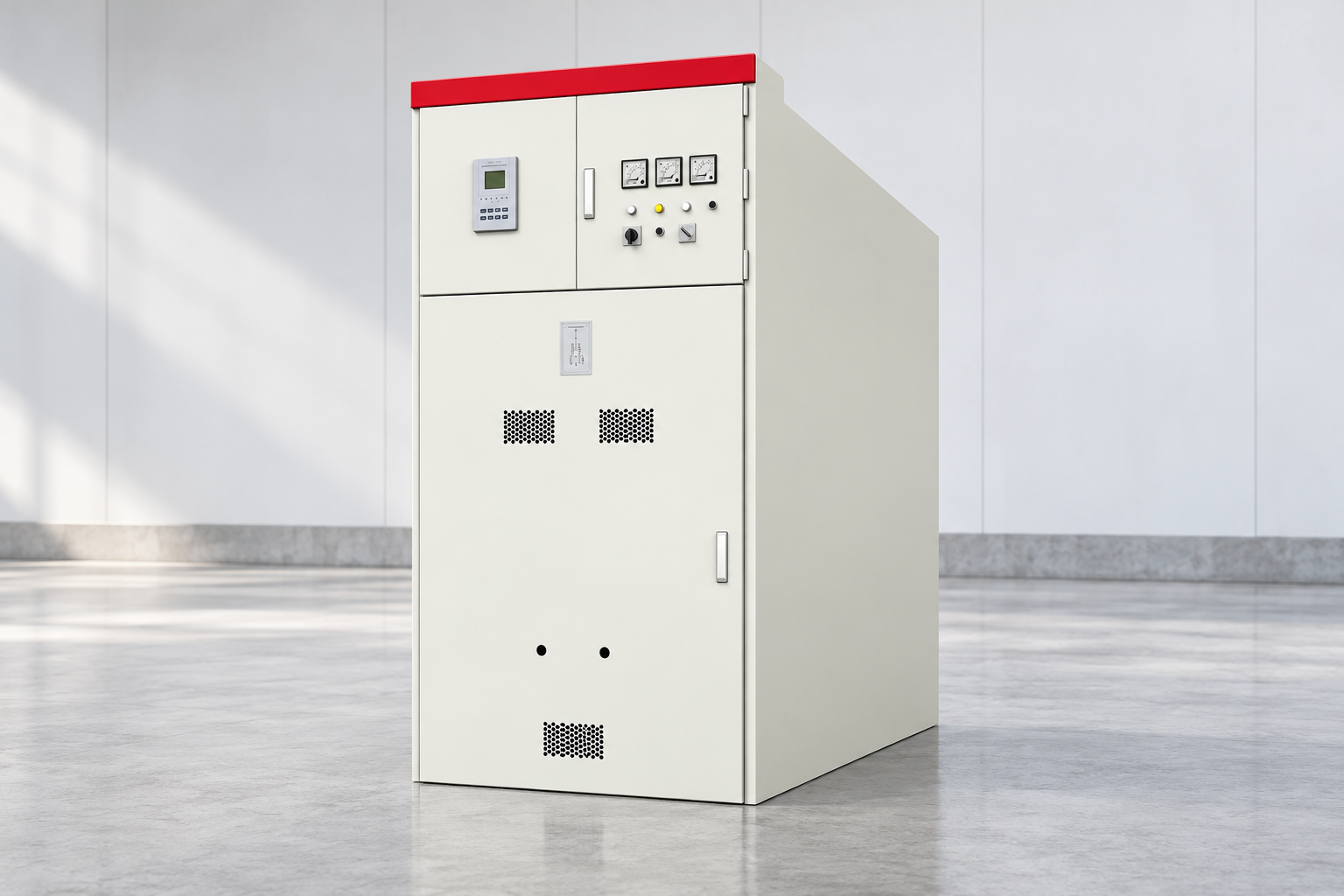
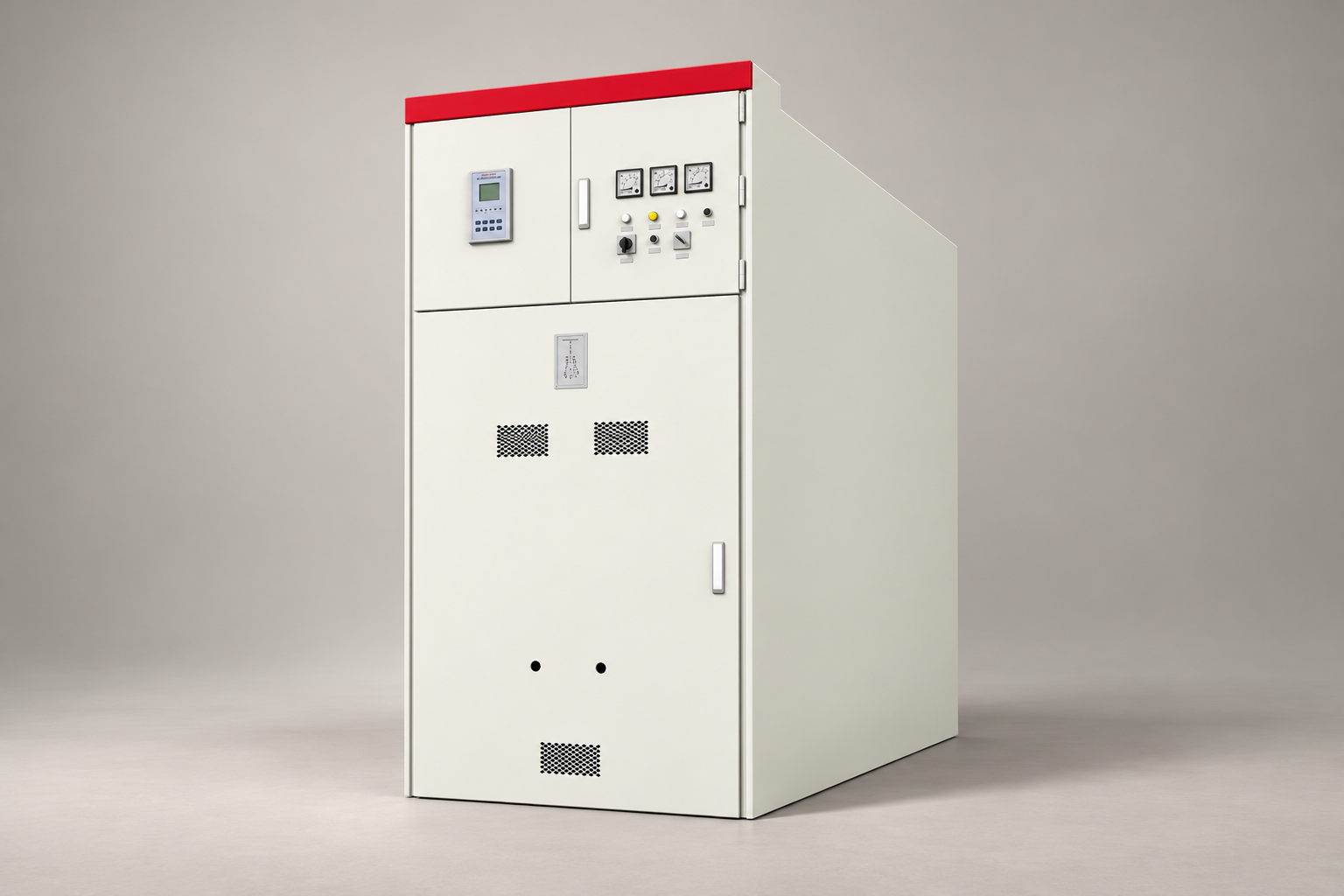
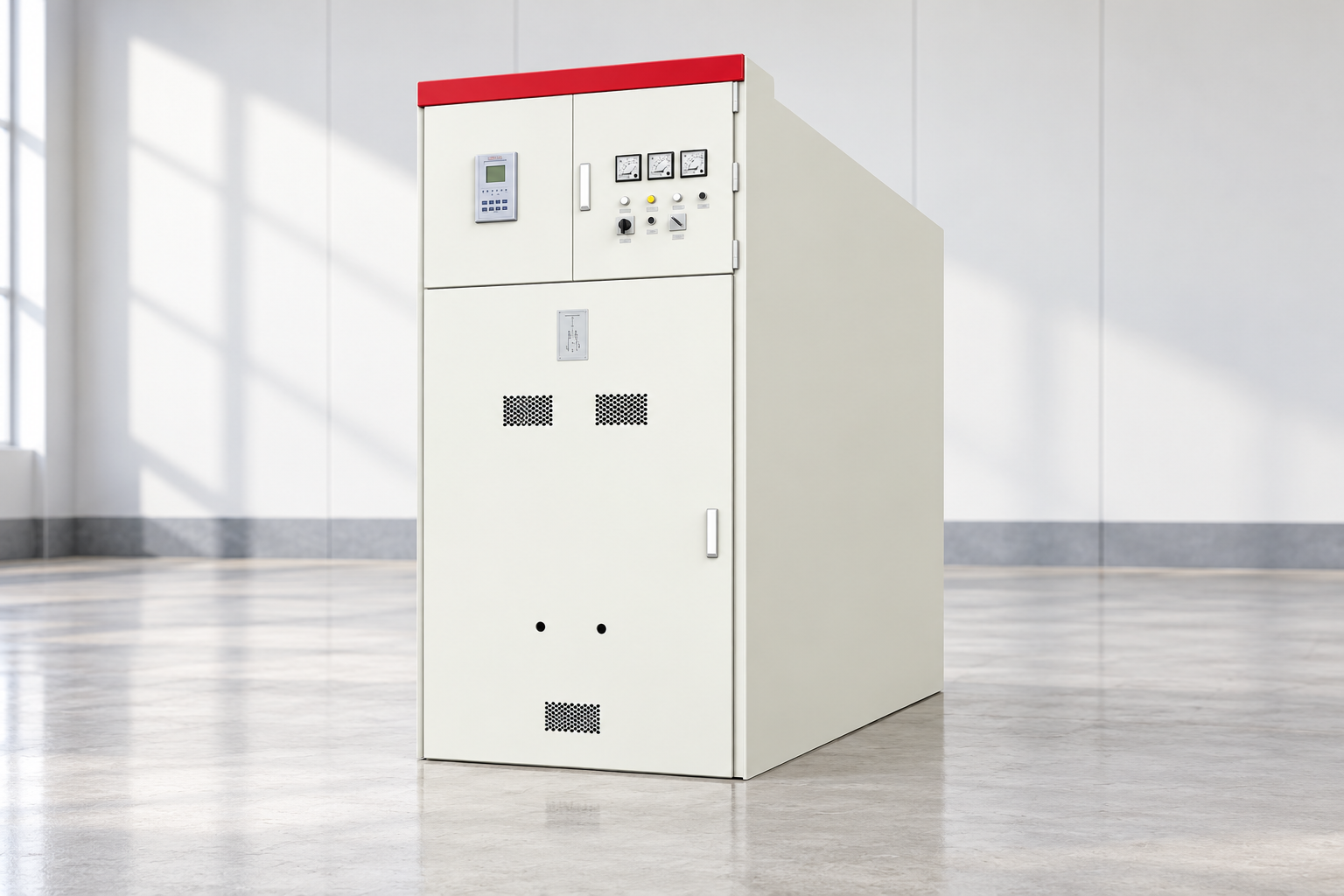
The KYN61 exterior illustrations on this page identify a relevant LBAJI product family; they show no test arrangement, temperature result or verified rating. Obtain the current offered configuration and its supporting evidence directly. A good procurement decision connects the report, equipment schedule, site conditions and handover records, then preserves that connection for maintenance and later modifications.
الأسئلة الشائعة
What does a switchgear temperature rise test demonstrate?
It provides thermal-performance evidence for a defined assembly arrangement under specified conditions, assessed against the applicable requirements. Its usefulness depends on how clearly the tested configuration represents the offered equipment.
Is temperature rise the same as absolute temperature?
No. Temperature rise is a difference relative to the relevant ambient reference. Absolute temperature is the measured temperature itself, and both quantities may matter in the applicable assessment.
Does every manufactured cabinet need the same full heat-run test?
Do not assume that design qualification and routine production verification are identical. Ask the manufacturer which evidence supports the design and which production checks confirm consistency with it.
Can thermal imaging replace temperature-rise qualification?
No. An operating survey observes conditions within its measurement limits, while qualification addresses a defined arrangement and test scope. The two records support different decisions.
Can a buyer add a fan to increase the current rating?
A fan or enclosure modification requires a responsible design assessment. It can affect thermal behavior and other assembly requirements, so an observed temperature change alone does not establish a new rating.
المصادر التقنية والمعدات ذات الصلة
تقوم صفحات الكتالوج القياسية بوضع نطاق الوثيقة؛ ويقتضي الامتثال والقبول استعراض الوثائق الكاملة المعمول بها ومراجعة هندسة المشروع.
- IEC 62271-1:2017 with Amendment 1:2021 common specifications scope
- IEC 62271-200 assembly scope
- IEC 61439-1 low-voltage assembly scope
- UK HSE HSG85: Electricity at work, safe working practices
- LBAJI KYN61-40.5 معدات التجهيز الكهربائي القابلة للإزالة مع المكونات المعدنية
- أساسيات معدات التبديل
- تحقق وتجربة المعدات الكهربائية
- قائمة المراجعة اللازمة لصيانة أجهزة التحكم
التعلم الإضافي: الخلفية الفنية
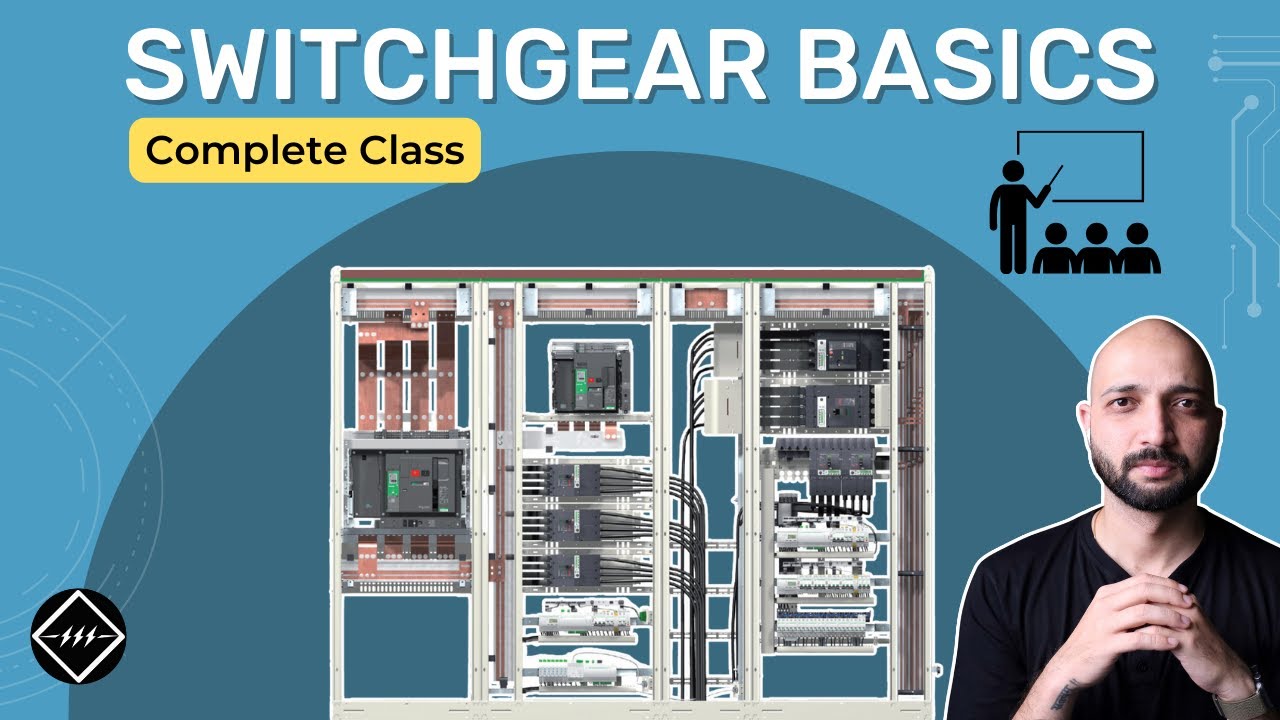
يتناول هذا الفيديو التعليمي المستقل مبادئ القياس أو خلفية المعدات المذكورة أعلاه. ولكنه لا يوضح إجراءات العمل الآمنة الخاصة بالتركيب المحدد. المصدر: غاوراف ج – TheElectricalGuy.
شاهد أساسيات التبديل الكهربائي: دليل المبتدئين الشامل | TheElectricalGuy