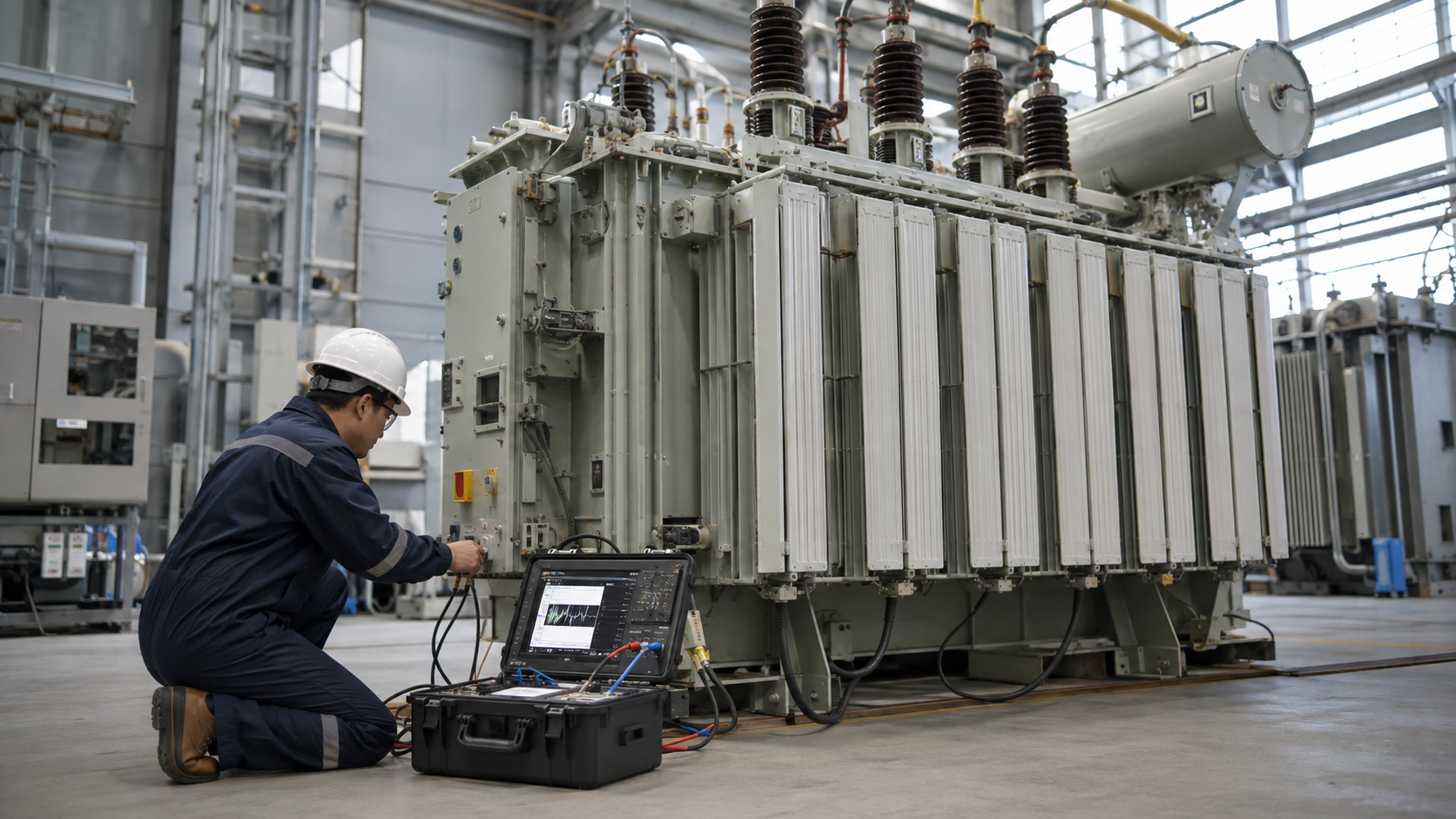

Eine Dreieck-Stern-Transformatorverbindung verwendet eine geschlossene Dreieckschaltung auf einer Wicklung und eine geerdete oder ungeerdete Sternschaltung auf der anderen, wodurch eine Phasenverschiebung von 30 Grad erzeugt und ein Neutralleiter bereitgestellt wird, wenn der Sternpunkt herausgeführt wird. Die Schaltung ist bei der Dreiphasen-Verteilung üblich, aber die Schaltgruppe, Phasenfolge, Erdungsmethode, Nullsystem-Pfad und Schutzkompensation müssen gemeinsam spezifiziert werden. Eine einfache Skizze reicht für die Parallelschaltung oder Relaiskonfiguration nicht aus.
Die wichtigsten Erkenntnisse
- Leiter- und Strangspannungen unterscheiden sich auf der Sternseite um $\sqrt{3}$.
- Die Uhrenzeigerschaltung definiert, ob die Sekundärwicklungen nacheilen oder voreilen, und ist für die Parallelschaltung unerlässlich.
- Erdungsverhalten und Mitsystem- bzw. Nullsystemverhalten beeinflussen Fehler und Schutzmaßnahmen.
Spannungsbeziehungen in Dreiecks- und Sternschaltung
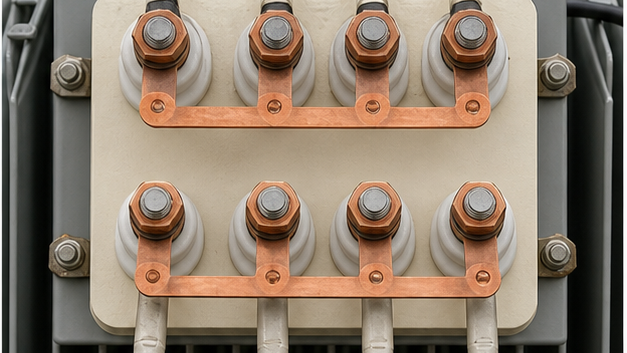
Bei der Schaltung im Dreieck ist jede Wicklungsphase an eine verkettete Spannung angeschlossen, sodass die Wicklungsspannung gleich der Leiterspannung ist. Bei der Sternschaltung ist jede Wicklungsphase von Phase zu Neutralleiter angeschlossen, sodass die verkettete Spannung das $\sqrt{3}$-Fache der Strangsspannung beträgt. Das Übersetzungsverhältnis muss daher anhand der Wicklungsphasenspannungen verglichen werden, nicht durch Division zweier Leiterspannungen ohne Berücksichtigung der Schaltung.
Bei einem Transformator von 480-V-Dreieck zu 208Y/120-V sieht die Dreieckwicklung 480 V pro Phase und jede Sternwicklung liefert 120 V von Phase zu Neutralleiter. Die sekundäre Spannung zwischen den Außenleitern beträgt ungefähr 120 × √3 = 208 V.
Dreißig-Grad-Phasenverschiebung und Schaltgruppen
Eine Schaltgruppe in Stern-Dreieck-Schaltung erzeugt eine Phasenverschiebung von 30 Grad zwischen primären und sekundären Leiterspannungen. Ob die Niederspannungsseite vorauseilt oder nacheilt, hängt von den Klemmenpolaritäten und der Verschaltung ab. Die IEC-Zeigerdiagramm-Bezeichnung drückt dieses Verhältnis aus, wie zum Beispiel Dyn1 oder Dyn11, zusammen mit den Wicklungsanschlüssen und dem zugänglichen Sternpunkt.
Transformatoren, die für den Parallelbetrieb bestimmt sind, müssen kompatible Übersetzungsverhältnisse, Polaritäten, Phasenfolgen, Schaltgruppen und Impedanzen aufweisen. Einheiten mit unterschiedlichen Uhrzeitangaben (Schaltgruppenindizes) können beim Zusammenschalten ihrer Sekundärseiten schwere Kreisströme oder einen Phase-Phase-Kurzschluss verursachen.
Neutral-, Erdungs- und Nullsystemstrom
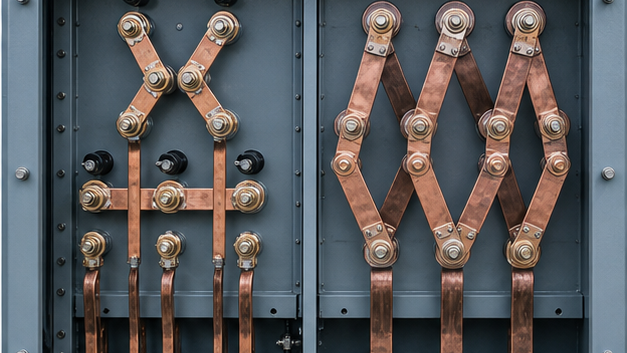
Ein herausgeführter Sternpunkt (Neutralleiter) kann Außenleiter-Sternpunkt-Lasten versorgen und geerdet werden, um eine Systemreferenz herzustellen. Die Erder, der Neutralleiter, die Potenzialausgleichsstelle und die Regeln für getrennt abgeleitete Systeme müssen dem geltenden Regelwerk und der Systemstudie entsprechen. Fügen Sie downstream keine unbeabsichtigte zweite Neutralleiter-Erde-Verbindung hinzu.
Das Dreieck bietet einen internen Pfad für Verdreifachungsoberschwingungen und einen Teil des Nullstroms, während es gleichzeitig verhindert, dass Nullstrom als Strom über die Leitung zur Dreiecksquelle fließt. Dieses Verhalten beeinflusst Fehlerpegel und Relauswahl.
Delta-Stern-Schaltungs-Entwurfsprüfungen
| Designobjekt | Deltaseite | Wye-Tal | Warum es wichtig ist |
|---|---|---|---|
| Wicklungsspannung | Entspricht der Netzspannung | entspricht der Sternspannung | Berechnung des Windungsverhältnisses |
| Neutral | Nicht verfügbar | Verfügbar, wenn herausgebracht | Einphasige Lasten und Erdung |
| Phasenverschiebung | Teil einer Vektorgruppe | Um 30 Grad verschoben | Parallelschaltung und Differenzialschutz |
| Nullsystem | Interne Zirkulation | Hängt von der Neutralleitererdung ab | Fehlerstrom und Relais |
| Typische Notation | D | j oder j/n | Definiert den Anschluss und den Neutralleiterzugang |
Schutz, Prüfung und Inbetriebsetzung
Transformerdifferentialrelais müssen das Übersetzungsverhältnis und die Phasenverschiebung von 30 Grad entweder über die Wandlerankopplung oder numerisch kompensieren. Der Erdschlussschutz sollte widerspiegeln, ob der Sternpunkt geerdet ist und wo die Stromwandler platziert sind. Einschaltstromstabilisierung und Überstromkoordination bleiben erforderlich.
Vor der Inbetriebnahme sind das Leistungsschild, die Schaltgruppe, die Klemmenkennzeichnungen, die Phasenfolge, das Übersetzungsverhältnis an jeder Anzapfung, der Wicklungswiderstand und die Isolationsergebnisse zu überprüfen. Ein Phasenwinkel- oder Schaltgruppentest liefert aussagekräftigere Nachweise als eine reine Durchgangsprüfung.
Technische Validierung und Sicherheitsgrenze
Dieser Leitfaden unterstützt bei Spezifikation und Beschaffung; er ersetzt weder eine Projektstudie, die geltenden Vorschriften, die Herstelleranweisungen noch die Arbeit von qualifiziertem Elektrofachpersonal. Überprüfen Sie Folgendes vor der Auswahl, Prüfung, Verdrahtung oder Inbetriebnahme der Ausrüstung:
- Bestätigen Sie Klemmenpolarität, Phasenfolge und Schaltgruppe aus den Prüfprotokollen.
- Berechnen Sie die Wicklungsspannungen, bevor Sie das Windungsverhältnis oder die Prüfspannung auswählen.
- Überprüfen Sie Erdung und Neutralleiterbelastung, einschließlich Oberschwingungen nichtlinearer Lasten.
- Koordinieren Sie den Differenzial- und Erdschlussschutz mit dem tatsächlichen Anschluss.
- Das Parallelschalten ist zu untersagen, bis die Kompatibilität von Übersetzungsverhältnis, Phasenwinkel und Impedanz nachgewiesen ist.
Informationen, die in die Angebotsanfrage (RFQ) aufzunehmen sind
Ein nützliches Angebot muss für jeden Lieferanten auf derselben technischen Abgrenzung basieren. Fügen Sie die folgenden Informationen ein und fordern Sie, dass alle Abweichungen ausdrücklich aufgeführt werden:
- Primär- und Sekundärleinenspannungen, kVA, Frequenz und Anzapfbereich.
- Erforderliche Schaltgruppe und ob der Sternpunkt herausgeführt ist.
- Erdungsmethode, Neutralleiterstrom und Lastunsymmetrie.
- Impedanz, Fehlerpegel und Anforderungen an den Parallelbetrieb.
- Klemmenplan, Phasenwinkel-Prüfbericht und Daten der Schutzschnittstelle.
Von technischen Daten zu einer genehmigten Entscheidung
Verwenden Sie eine stufenweise Überprüfung, anstatt den ersten Katalogtreffer zu genehmigen. Beginnen Sie mit den Delta- und Stern-Spannungsverhältnissen und bringen Sie dann die dreißiggradige Phasenverschiebung und Vektorgruppen mit Neutralleiter, Erdung und Nullsystemstrom in Einklang. Schließen Sie die Überprüfung mit Schutz, Prüfung und Inbetriebsetzung ab. Protokollieren Sie in jeder Phase das Quelldokument, die Einheiten, den Betriebsfall und die für die Freigabe verantwortliche Person. Dies verhindert, dass ein aus einer alten Zeichnung, einem nominalen Systemetikett oder einem nicht zusammengehörenden Produkt kopierter Wert zu einer unkontrollierten Planungsvorgabe wird.
Vor der Abnahme ist die Lieferantenantwort Zeile für Zeile mit der Anfrage zu vergleichen und jede Abweichung zu kennzeichnen. Es ist zu bestätigen, dass Zeichnungen, Berechnungen, Einstellungen, Zertifikate und Prüfberichte sich auf genau das angebotene Modell und die Revision beziehen. Der genehmigte Einreichungsplan, die Typenschilddaten, die Werksergebnisse und die Inbetriebnahmemessungen sind als Instandhaltungsbasis aufzubewahren. Wenn sich eine Bemessung, ein Anschluss, eine Umgebung oder eine Prüfbedingung ändert, ist die betroffene Prüfung zu wiederholen, anstatt anzunehmen, dass die ursprüngliche Schlussfolgerung weiterhin gültig bleibt.
Die Dokumentenlenkung muss den Revisionsstand, den Freigabestatus und ersetzte Dateien kennzeichnen. Die Teams vor Ort sollten dieselben freigebenden Werte erhalten, die für die Beschaffung verwendet wurden, während Inbetriebnahmeprotokolle jede während der Installation vorgenommene autorisierte Änderung erfassen müssen. Diese Rückverfolgbarkeit ist besonders wichtig, wenn Anlagen Jahre später ersetzt werden: Der nächste Ingenieur benötigt verifizierte Schnittstellen und die Testhistorie und keine unvollständige Beschreibung, die von einer Bestellung kopiert wurde.
Durch aktuelle Suchergebnisse fundierte Berichterstattung
Die aktuellen Top-20-Rezensionen bei Google in den USA zeigten wiederholt Themen wie Sternschaltung (Y), Dreieckschaltung (Δ), Stern-Stern (Y-Y), „Ich habe zwei Dreieck-Stern-Transformatoren in einer Haupt-Kuppel-Haupt-Konfiguration installiert. Einer ist ausgefallen, kann ich den defekten durch einen Stern-Stern ersetzen?“ sowie „Was sind die Unterschiede zwischen Dreieck- und Sternsystemen?“. Der Artikel geht auf diese Nutzerbedürfnisse in einer originellen Engineering- und Beschaffungsreihenfolge ein; die Navigation zu Konkurrenzmarken und irrelevantem Verkaufsmaterial wurde ausgeschlossen.
Zugehörige LBAJI-Ressourcen
Weiter mit Leitfaden für Transformatorspannungen und Schaltgruppen Anleitung zum Anschließen von Transformatoren Dreiphasentransduktorenprodukte. Diese Ressourcen helfen dabei, die Berechnung oder Komponentenentscheidung mit einer vollständigen Transformator-, Schaltanlagen-, Steuerungs- oder Verteilungsspezifikation zu verknüpfen.
Technische Referenzen und Weiterführende Literatur
- IEC 60076-1 Leistungstransformatoren — Anschlusssymbole und Transformatoranforderungen.
- IEEE-Transformatornormen — Normen für Transformatoranschaltung, -prüfung und -schutz.
- NFPA-Vorschriften und -Normen — Anforderungen an die elektrische Erdung und Installation.
Fazit
Eine Dreieck-Stern-Schaltung sollte durch die Schaltgruppe spezifiziert werden, nicht bloß durch die Wörter Dreieck und Stern. Korrekte Phasenwinkel-, Neutralleitererdungs-, Nullsystem- und Schutzentscheidungen sind vor der Verdrahtung, Prüfung oder Parallelschaltung erforderlich.