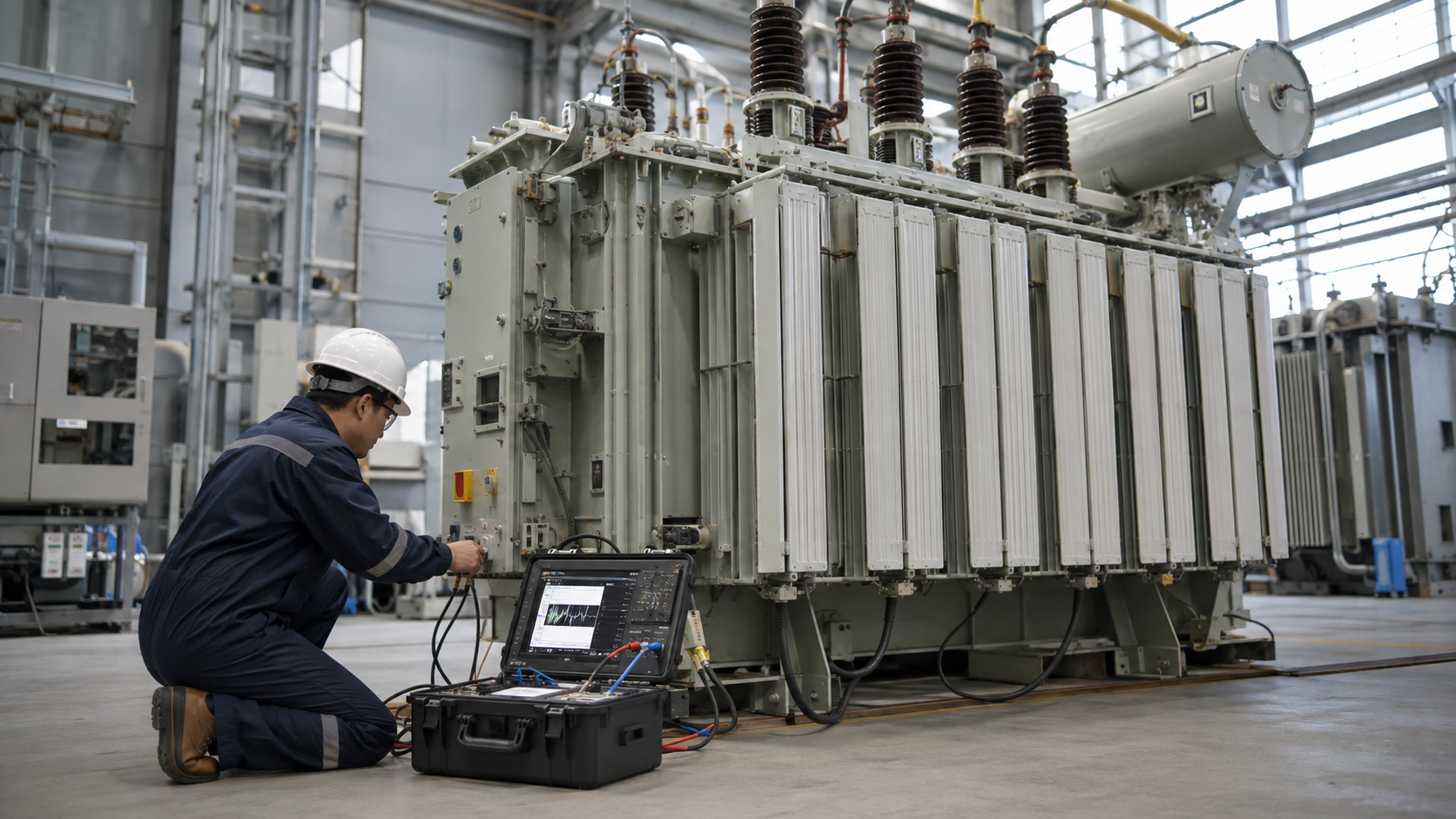

Una conexión de transformador delta-estrella utiliza una delta cerrada en un devanado y una estrella conectada a tierra o no conectada a tierra en el otro, lo que crea un desfase de 30 grados y proporciona un neutro cuando se saca el punto de estrella. La conexión es común en la distribución trifásica, pero el grupo vectorial, la secuencia de fases, el método de puesta a tierra, la trayectoria de secuencia cero y la compensación de protección deben especificarse conjuntamente. Un simple croquis no es suficiente para la puesta en paralelo o los ajustes de los relés.
Puntos clave
- Las tensiones de línea y de fase difieren por √3 en el lado en estrella.
- La notación horaria define si los devanados secundarios están adelantados o atrasados y es esencial para el funcionamiento en paralelo.
- El comportamiento de puesta a tierra y de secuencia cero afecta a las fallas y a la protección.
Relaciones de voltaje en delta y estrella
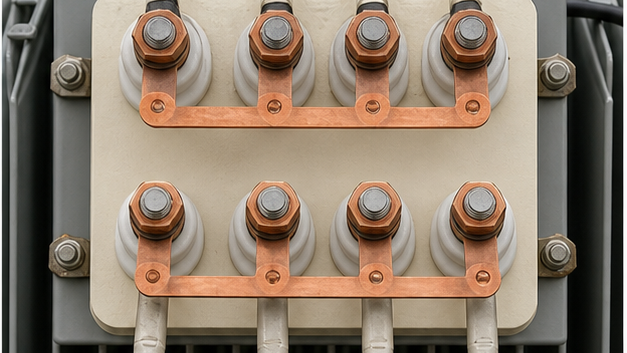
En delta, cada fase del devanado está conectada a una tensión de línea a línea, por lo que la tensión del devanado es igual a la tensión de línea. En estrella, cada fase del devanado está conectada de línea a neutro, por lo que la tensión de línea a línea es igual a √3 veces la tensión de fase. Por lo tanto, la relación de transformación debe compararse utilizando las tensiones de fase del devanado, y no dividiendo dos tensiones de línea sin considerar la conexión.
Para un transformador de delta de 480 V a 208Y/120 V, el devanado en delta ve 480 V por fase y cada devanado en estrella suministra 120 V de fase a neutro. El voltaje secundario entre líneas es aproximadamente 120 × √3 = 208 V.
Desfasaje de treinta grados y grupos de conexión
Un banco delta-estrella introduce un desfase de 30 grados entre las tensiones de línea del primario y del secundario. Que el lado de baja tensión esté en adelanto o en atraso depende de la polaridad de los terminales y de la conexión. La notación de reloj de la IEC expresa esta relación, como Dyn1 o Dyn11, junto con las conexiones de los devanados y el neutro accesible.
Los transformadores destinados a operación en paralelo necesitan relaciones, polaridad, secuencia de fases, grupo vectorial e impedancia compatibles. Unidades con diferentes números horarios pueden crear una corriente circulante severa o un cortocircuito entre fases cuando sus secundarios están conectados.
Corriente de neutro, de puesta a tierra y de secuencia cero
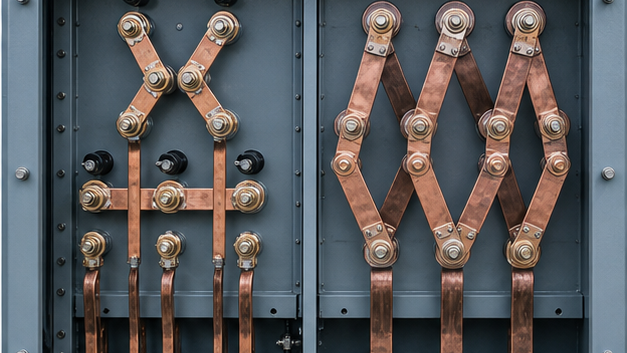
Un neutro en estrella con salida puede alimentar cargas de línea a neutro y puede conectarse a tierra para establecer una referencia del sistema. El electrodo de puesta a tierra, el conductor neutro, el lugar de unión y las reglas del sistema derivado por separado deben seguir el código y el estudio del sistema aplicables. No añada una segunda unión no intencionada entre el neutro y la tierra aguas abajo.
La conexión en triángulo proporciona una trayectoria interna para los armónicos de orden triple y cierta corriente de secuencia cero, a la vez que impide que la corriente de secuencia cero pase como corriente de línea hacia la fuente en triángulo. Este comportamiento influye en los niveles de falla a tierra y en la selección de los relés.
Comprobaciones de diseño de conexión en estrella-triángulo
| Elemento de diseño | Lado Delta | Ribere del Wye | Por qué importa |
|---|---|---|---|
| Tensión de devanado | Iguala la tensión de línea | Equivale a la tensión entre línea y neutro | Cálculo de la relación de espiras |
| Neutral | No disponible | Disponible si se saca | Cargas monofásicas y puesta a tierra |
| Desplazamiento de fase | Parte del grupo vectorial | Desplazado 30 grados | En paralelo y protección diferencial |
| Secuencia cero | Circula internamente | Depende de la puesta a tierra neutral | Corriente de falla a tierra y relés |
| Notación típica | D | y o yn | Define la conexión y el acceso neutral |
Protección, Pruebas y Puesta en Servicio
Los relés diferenciales de transformadores deben compensar la relación y el desfasaje de 30 grados, ya sea en las conexiones de los TCs o numéricamente. La protección contra fallas a tierra debe reflejar si el neutro en estrella está conectado a tierra y dónde se ubican los TCs. La restricción por corriente de inyección (inrush) y la coordinación de sobrecorriente siguen siendo necesarias.
Antes de la energización, verifique el grupo vectorial de la placa de características, las marcas de los terminales, la rotación de fase, la relación en cada toma, la resistencia de los devanados y los resultados de aislamiento. Una prueba de ángulo de fase o de grupo vectorial proporciona evidencia más sólida que la mera continuidad.
Validación de ingeniería y límite de seguridad
Esta guía respalda la especificación y la adquisición; no reemplaza un estudio de proyecto, el código aplicable, las instrucciones del fabricante o el trabajo de personal eléctrico calificado. Verifique lo siguiente antes de la selección del equipo, las pruebas, el cableado o la energización:
- Confirmar polaridad de los terminales, secuencia de fases y grupo vectorial a partir de los registros de prueba.
- Calcule las tensiones de los devanados antes de seleccionar la relación de transformación o la tensión de prueba.
- Revise la puesta a tierra y la carga del neutro, incluidos los armónicos de cargas no lineales.
- Coordine la protección diferencial y contra fallas a tierra con la conexión real.
- Prohíbase el funcionamiento en paralelo hasta que se demuestre la compatibilidad de relación, ángulo e impedancia.
Información que se debe incluir en la RFQ
Una cotización útil debe basarse en el mismo límite técnico para cada proveedor. Incluya la siguiente información y exija que todas las desviaciones se enumeren explícitamente:
- Tensiones de línea primaria y secundaria, kVA, frecuencia y rango de derivación.
- Grupo vectorial requerido y si se saca o no el neutro en estrella.
- Método de puesta a tierra, corriente de neutro y desequilibrio de carga.
- Requisitos de impedancia, nivel de falla y operación en paralelo.
- Diagrama de bornes, informe de prueba de ángulo de fase y datos de la interfaz de protección.
De datos técnicos a una decisión aprobada
Utilice una revisión por etapas en lugar de aprobar la primera coincidencia del catálogo. Comience con las relaciones de voltaje en delta y estrella, luego reconcilie el desfasaje de treinta grados y los grupos vectoriales con el neutro, la puesta a tierra y la corriente de secuencia cero. Complete la revisión con la protección, las pruebas y la puesta en marcha. En cada etapa, registre el documento de origen, las unidades, el caso operativo y la persona responsable de la aprobación. Esto evita que un valor copiado de un plano antiguo, una etiqueta de sistema nominal o un producto no relacionado se convierta en un dato de diseño no controlado.
Antes de la aceptación, compare la respuesta del proveedor línea por línea con la solicitud de cotización (RFQ) y marque cada excepción. Confirme que los planos, cálculos, ajustes, certificados y los informes de prueba se refieren al modelo y revisión exactos ofrecidos. Conserve la presentación aprobada, los datos de la placa de características, los resultados de fábrica y las mediciones de puesta en marcha como base de referencia para el mantenimiento. Si cambia una clasificación, conexión, entorno o condición de prueba, repita la revisión afectada en lugar de asumir que la conclusión original sigue siendo válida.
El control de documentos debe identificar la revisión, el estado de aprobación y los archivos reemplazados. Los equipos de campo deben recibir los mismos valores aprobados utilizados para las adquisiciones, mientras que los registros de puesta en marcha deben capturar cualquier cambio autorizado realizado durante la instalación. Esta trazabilidad es especialmente importante cuando se reemplaza el equipo años después: el próximo ingeniero necesita interfaces verificadas e historial de pruebas, no una descripción incompleta copiada de una orden de compra.
Cobertura informada por los resultados de búsqueda actuales
Las 20 principales reseñas de Google en EE. UU. revelaron repetidamente temas que incluyen Conexión en Estrella (Y), Conexión en Delta (Δ), Estrella-Estrella (Y-Y), Tengo dos transformadores Delta-Estrella instalados en un sistema principal-enlace-principal. Uno falló, ¿puedo reemplazar el dañado por uno Estrella-Estrella?, ¿Cuáles son las diferencias entre los sistemas Delta y Estrella? El artículo aborda esas necesidades del usuario en una secuencia original de ingeniería y adquisiciones; se excluyeron la navegación de marcas de la competencia y material de ventas no relacionado.
Recursos relacionados de LBAJI
Continúa con guía de tensión y grupo de conexión de transformadores guía de diagramas de cableado de transformadores productos de transformadores trifásicos. Estos recursos ayudan a conectar la decisión de cálculo o de componentes con una especificación completa de transformadores, aparamenta, control o distribución.
Referencias técnicas y lecturas adicionales
- Transformadores de potencia IEC 60076-1 — Símbolos de conexión y requisitos del transformador.
- normas de transformadores de la Asociación de Estándares de la IEEE — Normas de conexión, pruebas y protección de transformadores.
- Códigos y normas de la NFPA — Requisitos de instalación y puesta a tierra eléctrica.
Conclusión
Una conexión triángulo-estrella debe especificarse por grupo vectorial, y no meramente por las palabras triángulo y estrella. Se requieren decisiones correctas sobre el ángulo de fase, la puesta a tierra del neutro, la secuencia cero y la protección antes del cableado, las pruebas o la puesta en paralelo.