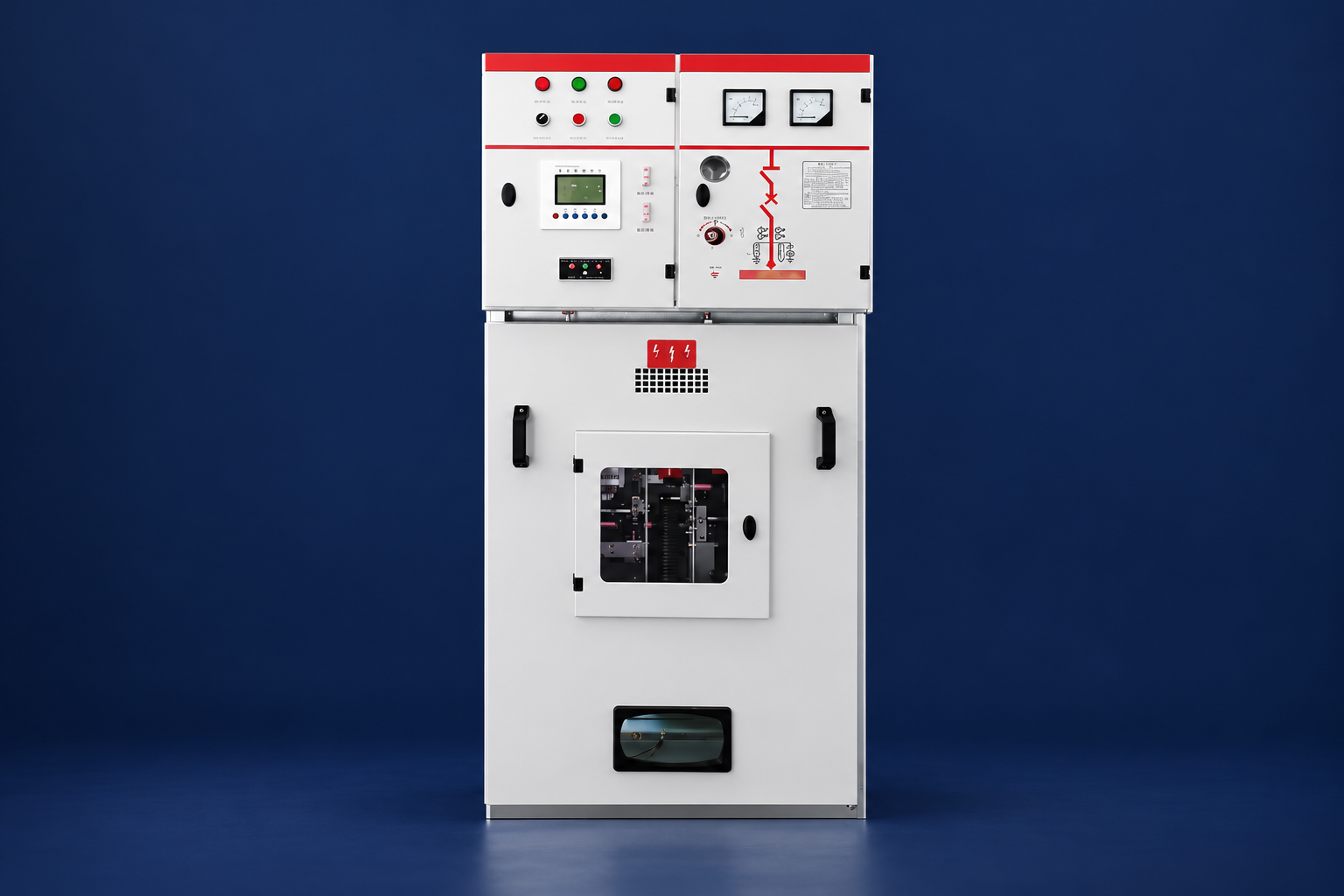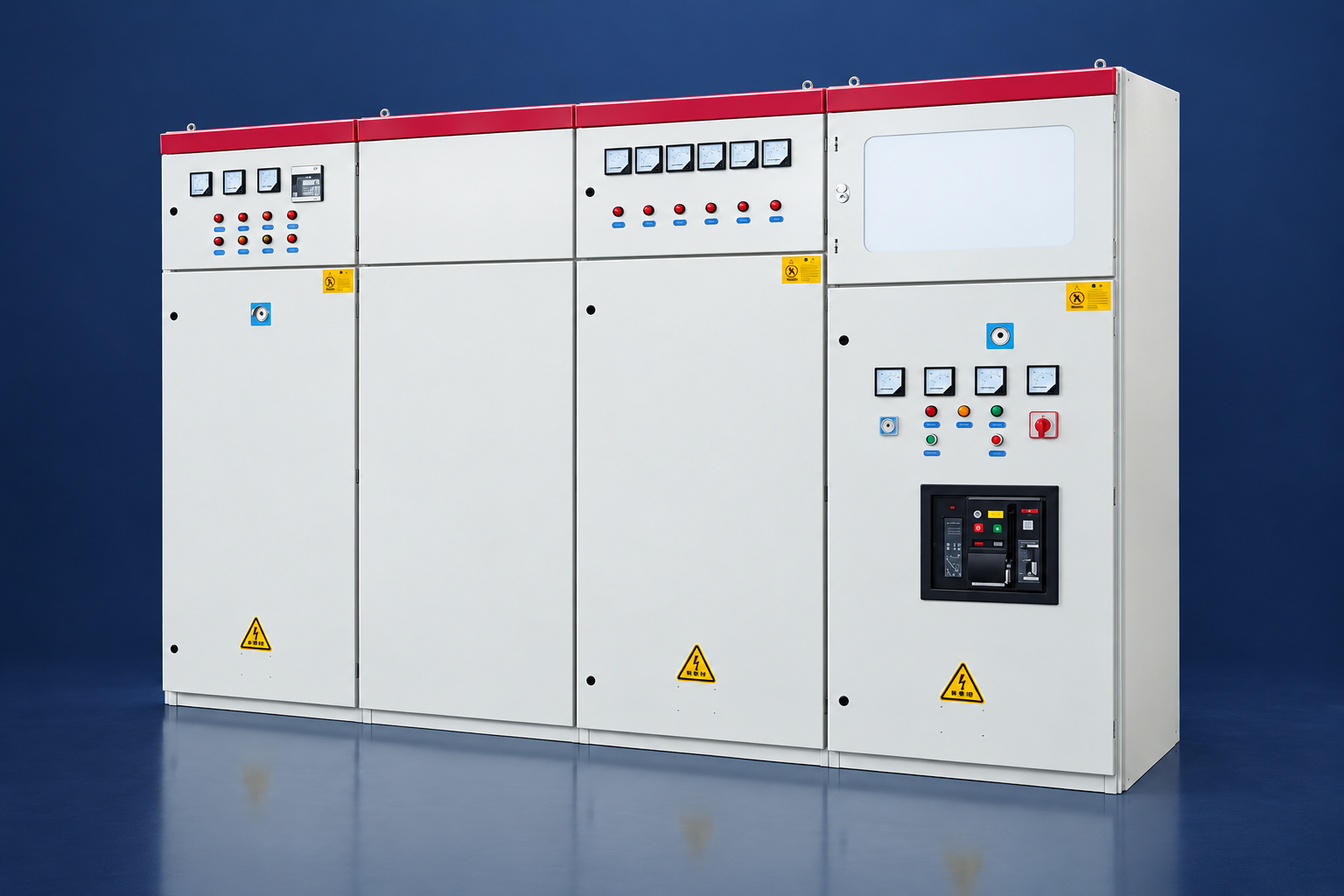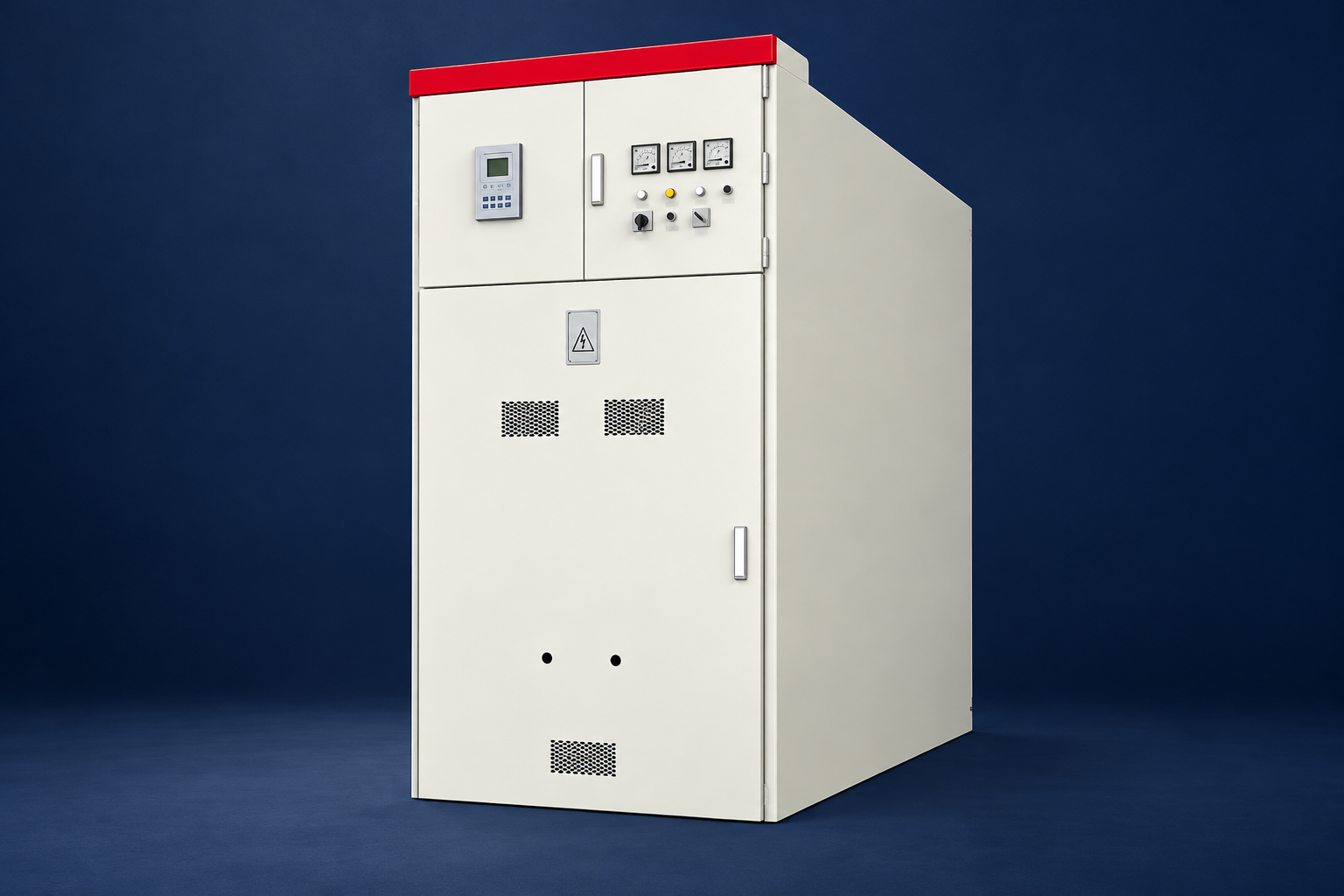

La aparamenta de media tensión aislada en aire utiliza aire atmosférico como aislamiento principal entre fases y tierra, mientras que los compartimentos metálicos contienen interruptores, barras colectoras, transformadores de medida, cables y equipos de control. La aparamenta aislada en aire (AIS) es fácil de mantener y familiar, pero requiere más espacio que las alternativas selladas. La selección debe basarse en la tensión asignada, el nivel de aislamiento, la corriente continua y de cortocircuito, la estrategia de arco interno, la continuidad de servicio, el entorno y el acceso para mantenimiento.
Puntos clave
- No seleccione aparamenta de media tensión basándose únicamente en la tensión nominal.
- La compartimentación, los enclavamientos y la clasificación de arco afectan el riesgo para el personal y la continuidad.
- La altitud, la contaminación, la condensación y el acceso pueden alterar el diseño correcto.
Construcción y compartimentado AIS
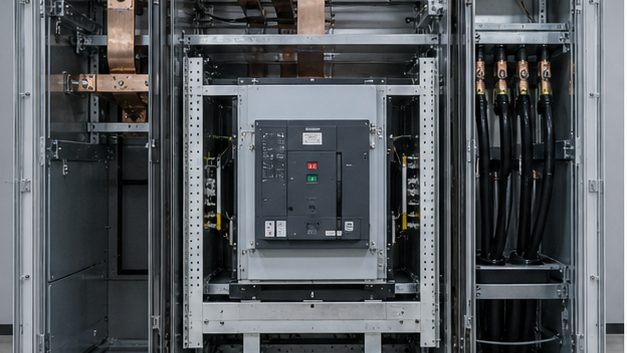
Un conjunto típico revestido de metal separa el interruptor automático extraíble, el barraje principal, las terminaciones de cables y los controles de baja tensión con barreras metálicas conectadas a tierra. Las persianas cubren las desconexiones primarias cuando se retira el interruptor. Los transformadores de corriente y tensión alimentan la medición y los relés, mientras que los interruptores de puesta a tierra o carros soportan el mantenimiento cuando se especifica.
El equipo de distribución encerrado en metal es un término más amplio y puede ofrecer menor segregación que la construcción revestida de metal. La especificación del proyecto debe indicar la norma de construcción y los requisitos de servicio en lugar de depender de nombres comerciales.
Clasificaciones eléctricas que controlan la selección
La tensión nominal máxima y la resistencia a frecuencia industrial o a impulso deben adecuarse al sistema y a la coordinación de aislamiento. La corriente continua se aplica al embarrado y a cada unidad funcional. La corriente de corta duración admisible y su duración describen la solicitación térmica; la corriente de cresta admisible describe la fuerza electrodinámica. Las capacidades de interrupción y cierre del interruptor deben superar el régimen de falta estudiado.
La frecuencia, la puesta a tierra, el tipo de carga, la carga de los cables, la conmutación de condensadores, la corriente de irrupción del transformador y el servicio del motor pueden afectar la selección del disyuntor. El crecimiento futuro del nivel de cortocircuito debe evaluarse en lugar de ocultarse mediante redondeos.
Arco interno, enclavamientos y continuidad de servicio
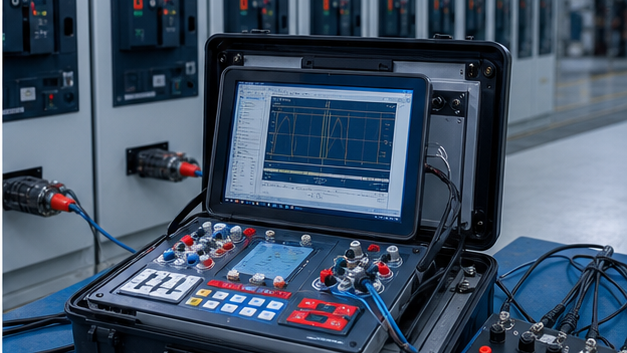
Una clasificación de arco interno indica los lados accesibles probados, la corriente de arco y la duración en condiciones definidas. No es una garantía de que todos los eventos de arco posibles sean inofensivos. Las rutas de alivio de la sala, los conductos de escape, la fijación, la instalación y las condiciones de mantenimiento deben coincidir con la configuración probada.
Los enclavamientos mecánicos y eléctricos deben impedir operaciones inseguras, tales como la extracción o inserción de un interruptor cerrado, el acceso a compartimentos energizados o el cierre sobre un seccionador de puesta a tierra mal posicionado. Los enclavamientos por llave deben estar documentados en todos los equipos conectados.
Lista de verificación de construcción y clasificación AIS
| Artículo | Especificar | Error común | Verificación |
|---|---|---|---|
| Aislamiento de voltaje | Tensión máxima, BIL/LIWV y resistencia a frecuencia industrial | Utilizando solo la tensión nominal | Placa de características y informe dieléctrico |
| Capacidad de cortocircuito | Corto tiempo, de pico, interrupción del disyuntor y duración | Ignorando el crecimiento futuro de fallas | Certificados de estudio y pruebas de cortocircuito |
| Rendimiento de Arc | Accesibilidad, corriente, duración y disposición de escape | Tratar el diseño resistente a arcos como universal | Informe de clasificación y diseño de habitaciones |
| Compartimentos | Segregación de interruptores, barras, cables y baja tensión | Asumiendo que todo equipo encerrado en metal es de gabinete metálico | Planos de construcción |
| Entorno | Altitud, contaminación, humedad y temperatura | Sin control de condensación | Datos del sitio y reducción de potencia del fabricante |
Medio ambiente, Mantenimiento y Pruebas de Fábrica
El polvo, la sal, la humedad, la condensación, la altitud y la temperatura afectan al aislamiento y a la corrosión. Pueden ser necesarios calefactores espaciales, ventilación, salas filtradas o una mayor distancia de fuga. La altitud puede requerir una reducción de potencia o de aislamiento según la norma y el diseño del equipo.
El mantenimiento rutinario incluye limpieza, operación mecánica, inspección de contactos, comprobaciones de aislamiento, pruebas de relés y verificación de la extracción y los obturadores. La aceptación en fábrica debe cubrir pruebas dieléctricas, de resistencia, mecánicas, de cableado, de protección y funcionales con registros trazables.
Validación de ingeniería y límite de seguridad
Esta guía respalda la especificación y la adquisición; no reemplaza un estudio de proyecto, el código aplicable, las instrucciones del fabricante o el trabajo de personal eléctrico calificado. Verifique lo siguiente antes de la selección del equipo, las pruebas, el cableado o la energización:
- Utilice los estudios de cortocircuito, flujo de carga y protección más recientes.
- Confirme el espacio para la terminación de cables, el radio de curvatura, la secuencia de fases y la dirección de entrada.
- Coordinar los espacios libres de las habitaciones, el alivio de presión y la salida de emergencia.
- Verificar los enclavamientos mediante una secuencia funcional documentada.
- Mantenga las puertas, cubiertas y elementos de fijación en las condiciones probadas durante el servicio.
Información que se debe incluir en la RFQ
Una cotización útil debe basarse en el mismo límite técnico para cada proveedor. Incluya la siguiente información y exija que todas las desviaciones se enumeren explícitamente:
- Tensión del sistema, frecuencia, puesta a tierra y corriente de falla disponible.
- Corrientes de barras y alimentadores, capacidades de interruptores y funciones de protección.
- Norma de construcción, clase de compartimento y requisito de arco interno.
- Ambiente interior/exterior, altitud, temperatura y exposición a la corrosión.
- Unifilar, listado de conexiones, listado de cables, comunicación, pruebas y documentación.
De datos técnicos a una decisión aprobada
Utilice una revisión por etapas en lugar de aprobar la primera coincidencia del catálogo. Comience con la construcción de AIS y los compartimentos, luego concilie las clasificaciones eléctricas que controlan la selección con el arco interno, los enclavamientos y la continuidad de servicio. Complete la revisión con el entorno, el mantenimiento y las pruebas de fábrica. En cada etapa, registre el documento de origen, las unidades, el caso operativo y la persona responsable de la aprobación. Esto evita que un valor copiado de un dibujo antiguo, una etiqueta nominal del sistema o un producto no relacionado se convierta en una entrada de diseño no controlada.
Antes de la aceptación, compare la respuesta del proveedor línea por línea con la solicitud de cotización (RFQ) y marque cada excepción. Confirme que los planos, cálculos, ajustes, certificados y los informes de prueba se refieren al modelo y revisión exactos ofrecidos. Conserve la presentación aprobada, los datos de la placa de características, los resultados de fábrica y las mediciones de puesta en marcha como base de referencia para el mantenimiento. Si cambia una clasificación, conexión, entorno o condición de prueba, repita la revisión afectada en lugar de asumir que la conclusión original sigue siendo válida.
El control de documentos debe identificar la revisión, el estado de aprobación y los archivos reemplazados. Los equipos de campo deben recibir los mismos valores aprobados utilizados para las adquisiciones, mientras que los registros de puesta en marcha deben capturar cualquier cambio autorizado realizado durante la instalación. Esta trazabilidad es especialmente importante cuando se reemplaza el equipo años después: el próximo ingeniero necesita interfaces verificadas e historial de pruebas, no una descripción incompleta copiada de una orden de compra.
Cobertura informada por los resultados de búsqueda actuales
La actual reseña de los 20 principales de Google en EE. UU. sacó a la superficie repetidamente temas que incluyen APARAMENTA CON AISLAMIENTO DE AIRE, cartera de aparamenta aislada con gas (GIS), ¿Qué es la aparamenta de media tensión?, OFERTA RELACIONADA, Disyuntores de tanque vivo (LTB). El artículo aborda esas necesidades del usuario en una secuencia original de ingeniería y adquisiciones; se excluyeron la navegación por marcas de la competencia y material de ventas no relacionado.
Recursos relacionados de LBAJI
Continúa con guía de aparamenta de media tensión aparamenta aislada por gas frente a aparamenta aislada por aire aparamenta eléctrica LBAJI. Estos recursos ayudan a conectar la decisión de cálculo o de componentes con una especificación completa de transformadores, aparamenta, control o distribución.
Referencias técnicas y lecturas adicionales
- IEC 62271-200 — Aparamenta bajo envolvente metálica de corriente alterna y clasificación de arco interno.
- Asociación de Estándares de IEEE — Normas C37 para aparamenta e interruptores automáticos.
- Seguridad eléctrica de OSHA — Prácticas de trabajo en torno a equipos eléctricos.
Conclusión
Una especificación de AIS sólida combina clasificaciones eléctricas, construcción de compartimentos, estrategia contra arcos eléctricos, entorno del sitio y facilidad de mantenimiento. Exija al proveedor que demuestre cada clasificación e interfaz con planos y evidencia de pruebas en lugar de una descripción de catálogo.