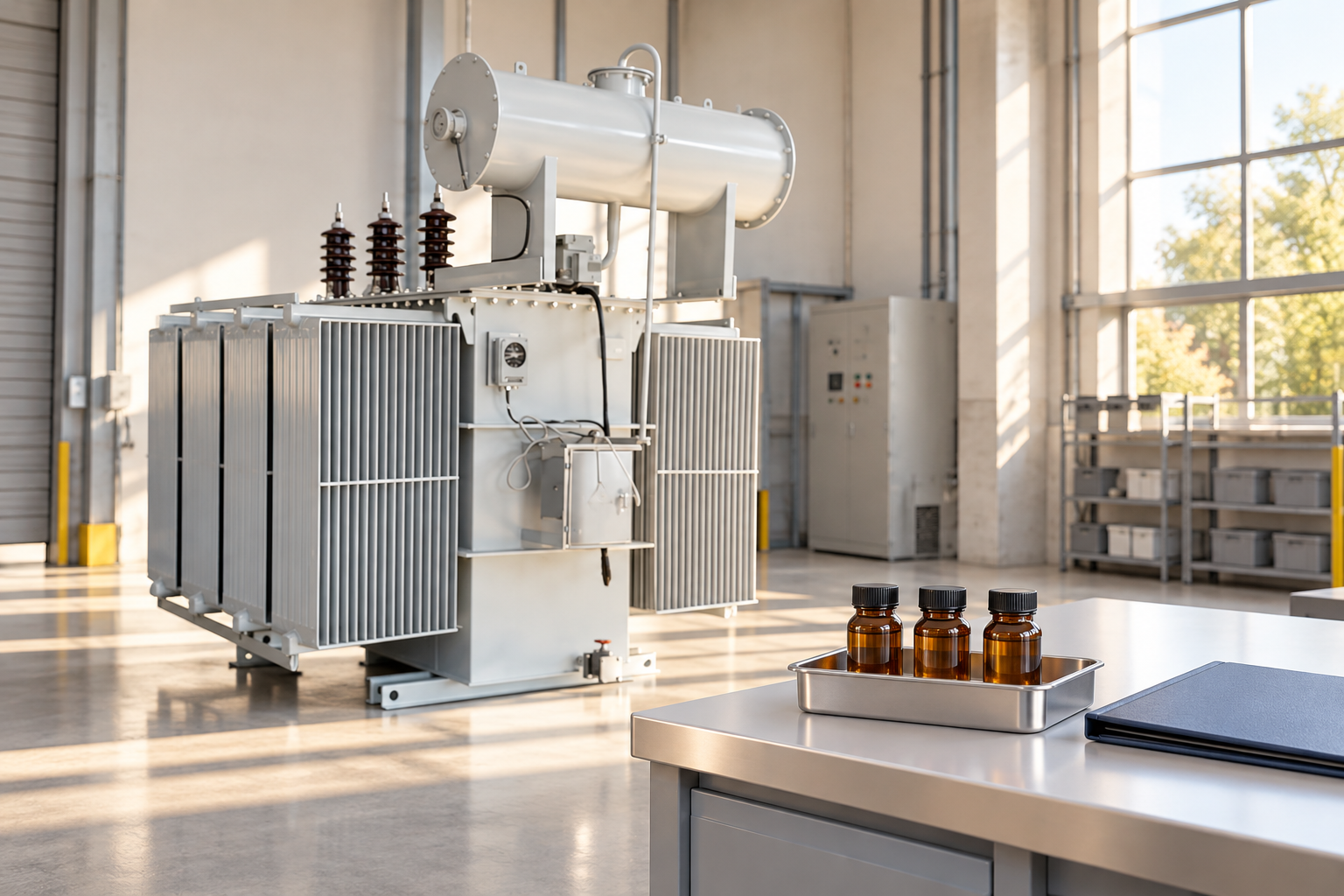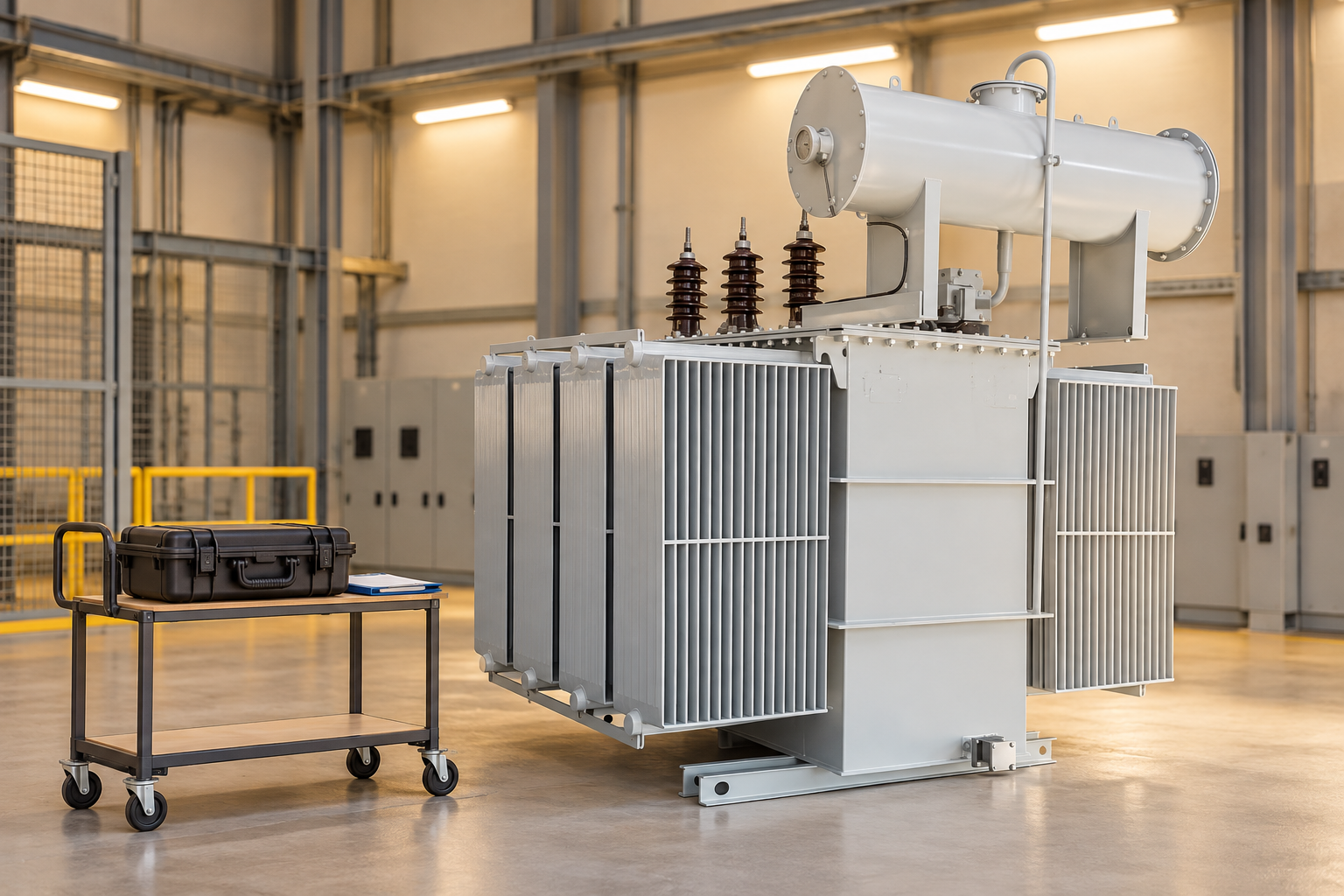

A transformer oil interfacial tension test assesses the force associated with the boundary between an insulating-liquid sample and water under a defined method. The result is commonly reported in mN/m. For mineral insulating oil, it can help identify changes associated with undesirable polar contamination and oil deterioration. It is not the same measurement as oil acidity, moisture or dielectric breakdown voltage. Interpret the result using the fluid type, laboratory method, comparable history and applicable maintenance criteria. A low reading warrants review of the evidence; it does not independently establish an internal fault or require transformer replacement.
Understand the interface being measured
Interfacial tension concerns the boundary between two liquids. Surface tension usually refers to a liquid boundary with a gas. These concepts are related, but the words should not be substituted casually in a laboratory order. Ask specifically for the oil-against-water measurement required by the maintenance programme, with its test method and reporting conditions.
The result is a property of a prepared laboratory sample under controlled conditions. It is not a direct measurement of the insulation clearance or electrical strength inside the installed transformer. A photograph of a clean-looking oil sample cannot establish its interfacial tension, and a diagram showing two liquid layers is not evidence that the laboratory followed the specified procedure.
Why transformer owners include IFT in an oil programme
IFT gives a complementary view of oil condition. It is useful when an owner wants to examine deterioration or contamination alongside chemical and dielectric measurements. ASTM D971‘s scope and significance describe why the oil-water interface is informative for mineral insulating liquids. Keep that application boundary visible when specifying the test.
The practical value comes from combining a credible measurement with an identified fluid population and its maintenance history. The same numerical value can raise different questions for unused oil, oil in service and oil after treatment. Do not build one alarm rule that ignores those distinctions simply because the instrument reports the same unit for every sample.
Define the method before comparing numbers
ASTM D971 addresses the ring-method determination of insulating-liquid interfacial tension against water. The public standard listing identifies the measurement scope; the laboratory needs the applicable full procedure and a suitable quality system. A report should state its method clearly enough that another assessor can determine whether earlier results are comparable.
Other interfacial-tension techniques exist, but that does not make their output automatically interchangeable for a contractual assessment. If a provider proposes another method, resolve its suitability and the acceptance basis before ordering. Record the reason for any method transition. A maintenance chart should never hide a change in measurement technique behind an uninterrupted trend line.
Make sample identity the first quality check
A technically competent analysis cannot repair an uncertain asset identity. Record the transformer serial number, compartment, sampling point and fluid family. Where a tap changer has separate oil, maintain a separate record. Do not assume that all bottles collected beside one transformer represent the same fluid population.
Preserve the connection between the bottle label, collection sheet and laboratory accession number. If the laboratory flags a mismatch, resolve it before the report is released into the asset system. Guessing which transformer was intended creates a larger risk than delaying an administrative conclusion while the sample identity is checked.
Protect the oil-water measurement from handling uncertainty
Obtain the laboratory’s container, volume and handling instructions in advance. Discuss suitability for the planned test package rather than assuming that a container chosen for another analysis is automatically acceptable. Contamination introduced through collection or storage can undermine the question the test is intended to answer.
Use trained personnel and equipment-specific safe-work procedures. HSE HSG85 supplies general guidance for safe electrical work, but it is not a valve sequence or permission to sample energized equipment. The collection team should understand the actual pressure, temperature, access and environmental controls. Record any departure from the approved plan so the laboratory and assessor can judge its relevance.

Review the result before reading the alarm colour
Check the report’s identity, method, units, observations and dates. Then look at the actual number and the applicable criteria. A colour-coded condition label is a summary; it cannot replace the information needed to understand why a particular category was assigned. Ask the laboratory to explain any criterion that differs from the owner’s agreed maintenance basis.
| Report question | Documents à demander | Review consequence |
|---|---|---|
| Is this the intended fluid? | Asset serial number, compartment and liquid family | Exclude another compartment or fluid from the comparison |
| Is the test comparable? | Named method, reporting conditions and units | Resolve technique changes before interpreting movement |
| Is sampling credible? | Laboratory container instructions and collection record | Resample if handling uncertainty prevents a useful conclusion |
| Was the oil altered? | Top-up, mixing, treatment or replacement history | Mark a new baseline where the fluid population changed |
| What supports the action? | Applicable criteria, companion results and engineering assessment | Separate investigation from a committed treatment decision |
This qualitative checklist supports report review; it does not set pass/fail values. The relevant analytical scope is described by ASTM D971. Broader oil-diagnostic context is available in the Bureau of Reclamation reference, which is historical guidance and should not be treated as a current universal acceptance specification.
Keep units and reporting resolution consistent
An IFT report commonly uses millinewtons per metre. Historical records may use dynes per centimetre; the numerical values of those two units are equivalent. Check the label rather than assuming that differently written units indicate a different property. Do not confuse either of them with the mg KOH/g unit used for oil acidity.
Reporting precision also deserves attention. A small apparent change may require discussion of laboratory capability and repeatability before it is described as deterioration. Avoid adding decimal places in the asset database that were not present in the laboratory result. The displayed precision should reflect the source record, not a spreadsheet’s default number format.
Combine IFT with acidity without merging their meanings
IFT and acid number can support a broader review of oil deterioration, but they measure different properties. One does not calculate the other. A result that appears inconsistent with expectations is a reason to inspect the sample history, methods and companion evidence, rather than to overwrite one value so that the pair looks tidy.
Consider a hypothetical case where IFT drops while the reported acid number remains similar. The appropriate review asks whether there was mixing, contamination, a method change or a sampling issue, and whether follow-up analysis is warranted. It does not assign a specific cause from that pair alone. Preserve the original evidence and document the assessor’s reasoning.

Distinguish fluid deterioration from electrical-fault diagnosis
An IFT result cannot locate a winding fault or prove that paper insulation has adequate mechanical strength. Dissolved-gas analysis, dielectric tests and other diagnostics answer different questions. Select additional tests according to the suspected condition and equipment history, with an explanation of how each result could affect the maintenance decision.
A transformer may need attention for a reason that IFT does not measure. Conversely, a concern about fluid contamination does not automatically demonstrate an active electrical defect. The condition report should identify which concern is supported by which evidence. This makes communication clearer for operations, maintenance and purchasing teams who must decide what work is justified.
Evaluate treatment proposals against a defined objective
If treatment is proposed, ask what process is intended and which properties it is expected to improve. Different processes address different problems. A description such as oil purification is too broad to establish that an IFT concern will be resolved. Request the contractor’s proposed verification and the conditions for accepting the work.
Record treatment dates, oil additions and any replacement volume information that is available. Establish a documented post-intervention baseline rather than treating the next result as directly continuous with the old population. An improved fluid result is evidence about that fluid measurement; it is not proof that all internal insulation ageing has been reversed.
Write an enquiry that produces usable evidence
Include the asset identity, fluid family, sampled compartment, required method, reporting units and reason for testing. Request sample instructions and the laboratory’s process for unexpected or amended results. Where comparison with older reports is central, provide those reports before the assessment rather than asking for an interpretation after the quotation has been finalized.
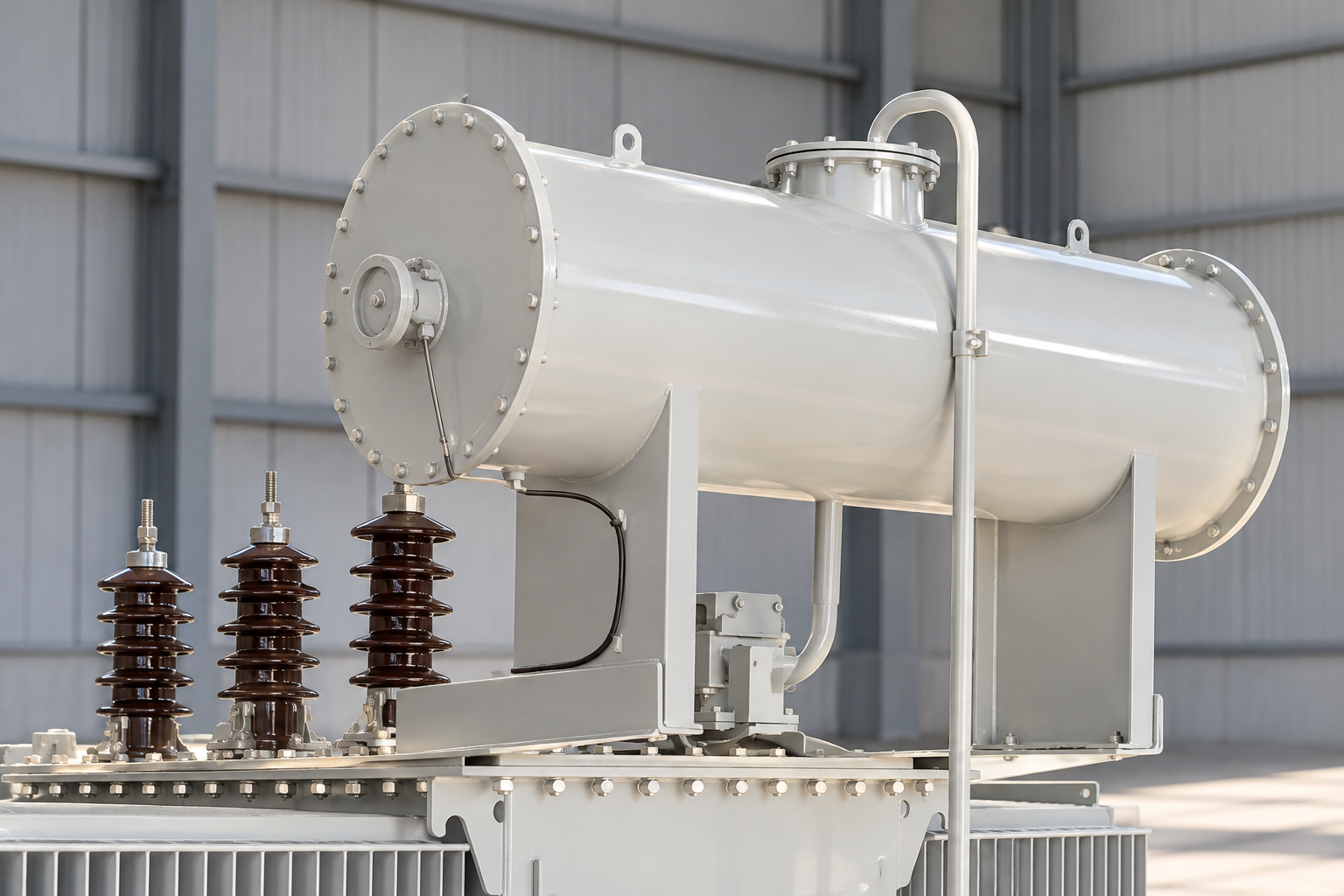
For an LBAJI 35kV oil-immersed transformer, the unit-specific documents should define the equipment and supplied liquid. The catalogue product photograph is useful for external equipment recognition, but it cannot establish the current oil chemistry or its maintenance requirement. Specify the service using the installed unit’s records and the owner’s requirements.
Turn the assessment into a clear follow-up
End the review with a recorded conclusion: continue the established trend, verify an uncertain sample, request a laboratory explanation or develop a justified maintenance response. Identify the responsible person and next trigger. Avoid a vague instruction to improve oil without stating which property requires attention and how improvement will be verified.
Retain the report, criterion source and supporting records together. If the condition is unresolved, say what information is missing and why that information matters. This approach makes IFT useful as part of a practical maintenance programme while preserving the distinction between a laboratory measurement, an interpretation and an authorized equipment intervention.
Foire aux questions
Is interfacial tension the same as surface tension?
No. This transformer-oil test concerns the oil-water boundary. Surface tension normally refers to a liquid-gas boundary, so the test request should identify the intended measurement.
Can IFT replace an acidity test?
No. The two tests measure different fluid properties. They can support a combined assessment, but one result does not calculate or replace the other.
Does low IFT mean a transformer has failed?
No. Review fluid identity, sampling, method, history and applicable criteria. IFT alone cannot identify an internal electrical fault or determine remaining transformer life.
Should results after oil treatment use the old baseline?
Retain the old history but mark the intervention. Establish whether the changed fluid population and method support direct comparison or require a new documented baseline.
Related equipment and guides
- LBAJI 35kV oil-immersed power transformer
- Guide complet des fondamentaux des transformers
- Transformer Oil Sampling: DGA Containers, Records and Sample Integrity
- Moisture in Transformer Oil: PPM, Saturation and Maintenance Decisions
Technical references
- Bureau of Reclamation: Transformers, Basics, Maintenance and Diagnostics (2005; historical background)
- ASTM D971: Interfacial Tension of Insulating Liquids Against Water by the Ring Method (method scope)
- HSE HSG85: Electricity at work, safe working practices
Further learning: The liquid-liquid interface
This IIT Guwahati NPTEL lecture explains interfacial tension and its applications. It supports the meaning of a liquid-liquid interface, not a site sampling instruction or transformer-oil acceptance criterion. Source: NPTEL IIT Guwahati.