wp_kexun

wp_kexun

How Much Oil Does a 160 KVA Transformer Hold?

In understanding how a 160 kVA transformer operates, one of the major parts of its specifications is oil capacity. The oil cools the transformer and insulates electrical components from each other. This is vital for operating the transformer at maximum efficiency for a long lifetime. So the question is, how much oil is there in a 160 kVA transformer?

Understanding Distribution Transformers: Types and Applications

A distribution transformer is the final link between the power grid and end users, stepping down high transmission voltages to safe, usable levels for homes, businesses, and industries. Available primarily as pole-mounted or pad-mounted units, each type serves distinct environments: pole-mounted transformers suit rural and overhead applications with easy installation and elevated security, while pad-mounted transformers are built for underground urban networks, offering higher capacity, tamper-proof enclosures, and aesthetic integration. Selecting the right distribution transformer depends on factors like location, load demand, and accessibility. Whether powering a remote farm or a dense commercial complex, the proper distribution transformer ensures reliable voltage conversion, operational safety, and long-term efficiency across any electrical distribution system.

What is a 10KVA Transformer?

Thanks to its flexible configuration, a 10KVA transformer serves numerous settings. It handles household voltage distribution for appliances like HVAC units and refrigerators. In commercial buildings, it corrects voltage imbalances and powers office equipment, servers, and lighting. Industrial applications rely on it to provide stable voltage for machines, tools, and motors. Within renewable energy systems, such as wind and solar setups, it efficiently manages and distributes power to connected loads. Temporary construction sites also use these step-down transformers to safely power large machinery and equipment.

How Does a Dry Type Electric Transformer Work?

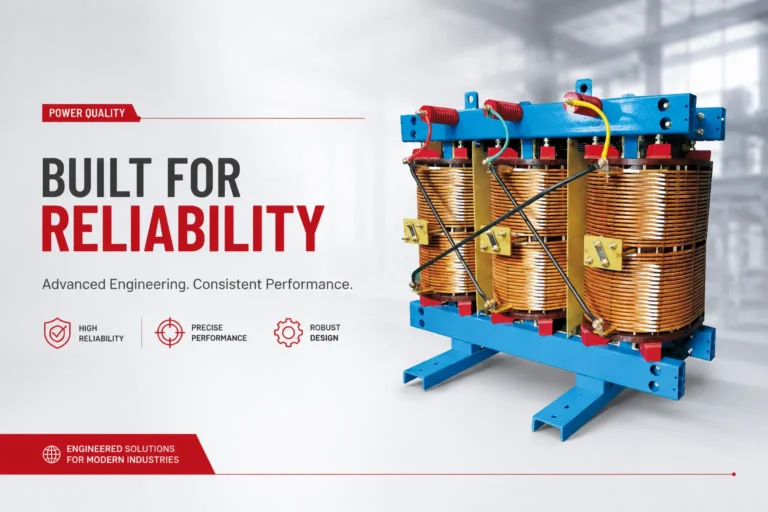
The dry type electric transformer offers a safe and eco-friendly alternative to oil-filled models by using air and solid insulation for cooling. Ideal for indoor spaces like schools and hospitals, it reduces fire hazards, eliminates the risk of oil leaks, and requires less maintenance. However, it tends to be bulkier, more expensive upfront, and has lower thermal limits compared to liquid-filled units. Understanding these trade-offs in safety, cost, and performance will help you decide if a dry type electric transformer is the right fit for your electrical needs.

Electrical Transformer: Function, Types, and Applications

Transformers are electricity devices that convert AC (Alternating Current) to either a higher (step-up transformer) or lower (step-down transformer) voltage. They do so by changing the current voltage from one circuit to another which allows power to be transferred over longer distances more efficiently, minimizing power losses during that distance. A very important part of delivering power (electricity) to homes, companies and industrial sites of all kinds since different voltage levels are required for each of these types of facilities to operate properly.

Apa itu Trafo Isolasi: Keamanan, Penggunaan, dan Pemilihan

An isolation transformer transfers AC power through magnetic coupling between electrically separate primary and secondary windings. Its purpose is galvanic separation: there is no intended conductive connection through the windings from the source circuit to the load circuit. Many isolation transformers have a 1:1 voltage ratio, but separation and voltage conversion are independent design choices. An isolated secondary can still deliver hazardous voltage and current. The correct selection therefore depends on the intended grounding arrangement, load, insulation rating and application—not simply the word “isolation” on a label.

Apa yang Dilakukan Trafo Listrik?

Tujuan utama dari trafo listrik adalah untuk mengubah level tegangan—baik menaikkannya atau menurunkannya agar memungkinkan transmisi daya yang aman dan efisien. Dengan menggunakan induksi elektromagnetik, trafo mentransfer listrik antar sirkuit tanpa menghasilkan daya sendiri. Tegangan tinggi digunakan untuk transmisi jarak jauh guna meminimalkan kehilangan energi, lalu diturunkan untuk penggunaan yang aman di rumah dan bisnis. Sebaliknya, industri berat mungkin memerlukan tegangan yang dinaikkan untuk mesin-mesin besar. Dengan mengatur tegangan secara tepat, trafo memastikan sistem kelistrikan beroperasi secara andal di berbagai aplikasi perumahan, komersial, dan industri.

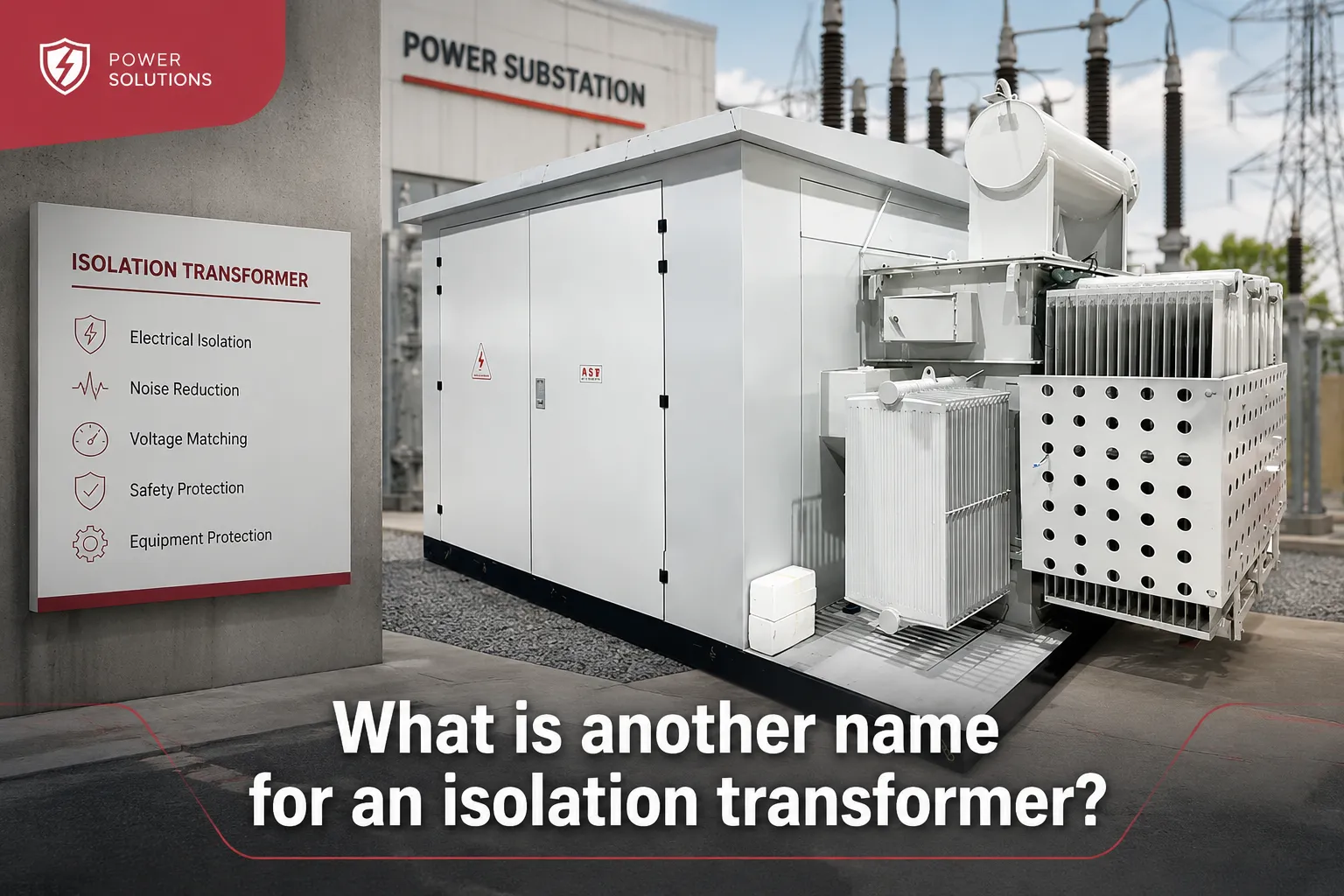
Apa Nama Lain dari Trafo Isolasi?

Trafo isolasi adalah perangkat listrik yang dirancang khusus untuk mentransfer listrik ke suatu perangkat melalui induksi elektromagnetik tanpa menghubungkan perangkat tersebut secara langsung ke sistem kelistrikan yang menyuplai dayanya. Dengan demikian, trafo isolasi menyediakan isolasi listrik antara perangkat yang diberi daya dan sumber listrik yang menyuplainya. Trafo isolasi juga dapat digunakan untuk melindungi peralatan sensitif agar tidak rusak oleh derau elektronik dari perangkat lain. Selain itu, perangkat ini umum digunakan untuk menyediakan transmisi data yang bebas distorsi melalui kabel dengan memanfaatkan sirkuit terisolasi.

Prinsip Dasar Trafo Daya

Bagian ini menjelaskan prinsip kerja inti (induksi elektromagnetik), komponen utama (belitan primer dan sekunder, inti magnetik, bahan isolasi), dan mekanisme fundamental di balik penaikkan atau penurunan tegangan. Bagian ini berfungsi sebagai pusat pengetahuan untuk memahami cara kerja trafo daya, dan semua bagian lainnya—definisi, parameter kinerja, aplikasi, dan kesimpulan—dibangun atas prinsip-prinsip dasar yang diletakkan pada bagian ini.