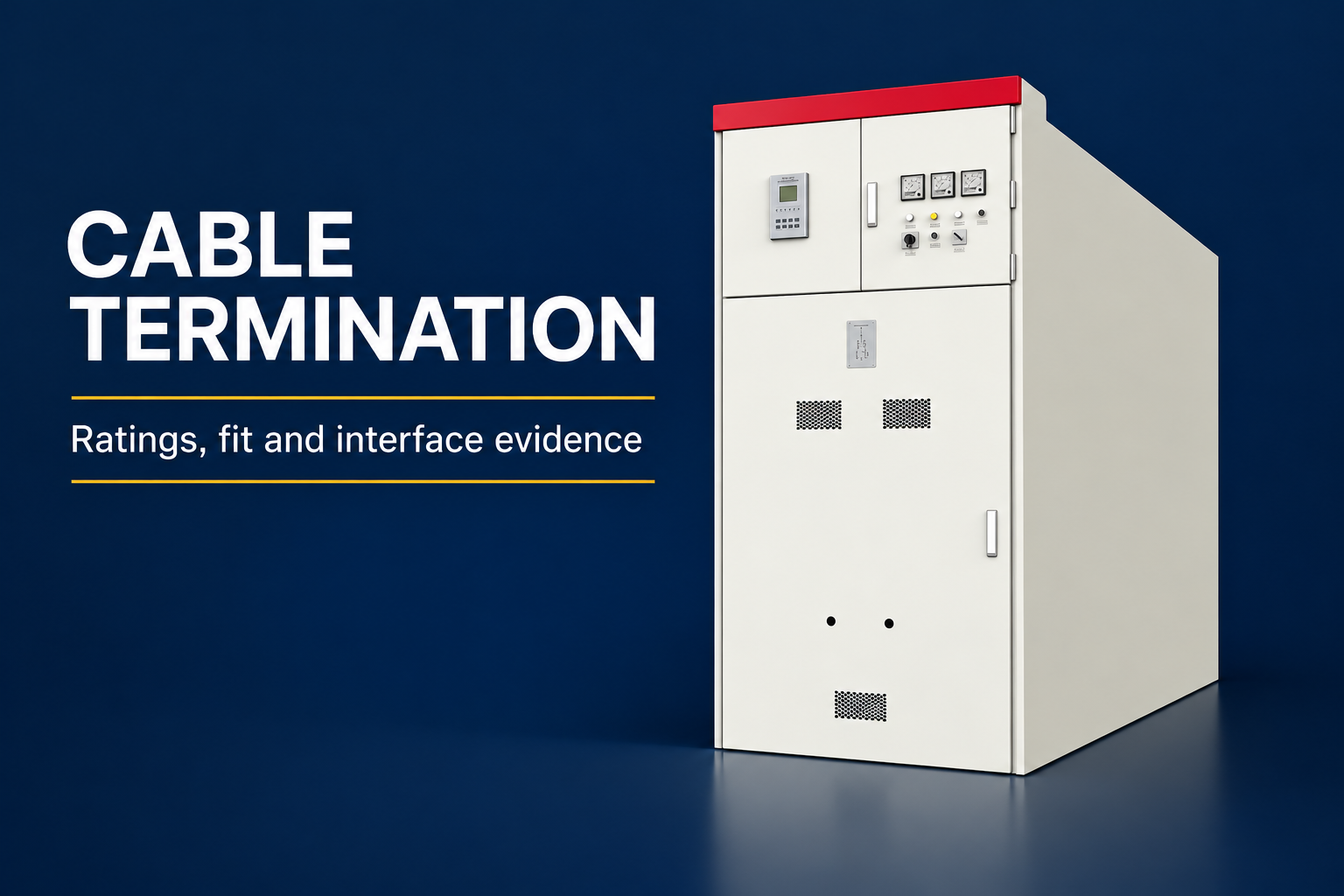

Switchgear nameplate ratings identify the declared characteristics of a particular assembly or device, but they must be read together with the equipment records and project conditions. The assembly rating is not automatically the rating of its largest breaker, and a current value alone does not establish suitability for a circuit. Review equipment identity, applicable assembly scope, voltage, frequency, current duties, short-circuit characteristics and service conditions as separate checks. When a label is unclear or missing, obtain supported documentation from the manufacturer rather than reconstructing a rating from cabinet size or appearance.
Establish whether the label belongs to the assembly
A switchgear lineup can contain an assembly identification plate, device labels, circuit references and operating notices. These labels serve different purposes. A breaker nameplate describes that device; a relay label identifies a protection or control component. Neither necessarily states the complete assembly’s verified characteristics. Begin by locating the equipment identification used in the manufacturer’s project records and determining what object each plate describes.
Record the assembly designation, serial or project reference where provided, manufacturer identity and relevant drawing revision. These details allow the supplier to retrieve the correct configuration and supporting evidence. Do not assume that a catalogue family name fully describes the delivered equipment. Two visually similar assemblies can have different circuit arrangements, components and duties. A photograph is useful for communicating a question, but it should be accompanied by records that identify the actual installation and the label being discussed.
Keep low- and medium-voltage scopes distinct
The applicable assembly context affects how ratings are declared and verified. IEC 61439 addresses low-voltage assembly requirements, while IEC 62271-200 addresses metal-enclosed AC switchgear within its stated scope. These catalogue references help identify the relevant document family; they do not certify a particular LBAJI product or make different rating terms interchangeable. Use the edition and requirements applicable to the project and the offered equipment.
If the procurement documents mix rating language from different equipment scopes, ask the engineer and supplier to resolve the ambiguity. A device may comply with its own product requirements while the assembly needs separate design and verification evidence. The final submittal should state which characteristics belong to the assembly, which belong to individual devices and how the overall configuration meets the installation requirements. This prevents a favourable component label from being used as unsupported evidence for the entire lineup.

Read voltage and frequency in context
Voltage declarations can describe different aspects of equipment duty, so preserve their full names and units when recording them. Do not combine operating, insulation or withstand information into a single number labelled voltage. The correct interpretation depends on the actual equipment scope and the manufacturer’s documents. Review the intended supply system, circuit arrangement and operating conditions against the declared characteristics, including any project-specific restrictions.
Frequency also belongs in the compatibility review. An assembly or component selected for one declared operating condition should not be assumed suitable for another without confirmation. Where the project supply differs from a catalogue assumption, identify that difference explicitly. Avoid asking the supplier only whether the equipment can work: request a documented statement tied to the actual supply and the ordered configuration. This is more useful than an informal answer that omits the conditions under which the rating remains valid.
Distinguish assembly current from circuit current
A lineup can include incoming circuits, busbar sections and outgoing circuits with different declared duties. The current value on an individual device does not automatically establish the permitted current through every part of the assembly. The thermal performance of the configuration depends on its design and specified operating conditions. Ask for the assembly and circuit schedule rather than collecting the largest visible current value and applying it across the whole installation.
For low-voltage assemblies, review any declared loading assumptions and the relationship between simultaneous circuit use and verified thermal performance. A project with many heavily loaded circuits may differ from the assumptions behind a generic arrangement. Provide the load information required by the engineer and manufacturer. This article does not calculate an allowable operating current for an unknown assembly; its purpose is to ensure that the current values used in procurement and operation refer to the correct object and conditions.
Use a rating review table
The following qualitative table helps organize a submittal or existing-equipment review. It does not supply acceptance values. Final criteria must come from the applicable equipment documents and the project’s electrical studies.
Bối cảnh tham khảo: IEC 61439-1 low-voltage assembly scope. Danh sách kiểm tra chất lượng gốc này tổ chức các quyết định của dự án; nó không phải là một tiêu chuẩn được sao chép hoặc thay thế cho các tiêu chí đã được phê duyệt.
| Information category | What to confirm | Common interpretation error |
|---|---|---|
| Assembly identity | Actual model, project reference and verified configuration | Treating a generic family name as the delivered design |
| Voltage declarations | Full rating names, units and intended system conditions | Using one voltage number for every duty |
| Current declarations | Assembly, bus section and circuit boundaries | Taking breaker current as the whole lineup rating |
| Short-circuit characteristics | Declared duty and associated conditions | Confusing different short-circuit rating terms |
| Service conditions | Temperature, location and environmental assumptions | Applying a rating outside its declared conditions |
| Verification evidence | Supporting records for the offered configuration | Treating a device certificate as assembly approval |

Examine short-circuit characteristics separately
Short-circuit characteristics describe specific equipment duties. Different terms can refer to making, interruption, withstand or conditional performance, depending on the equipment and its applicable requirements. They should not be substituted for one another because their numerical values look similar. Preserve the complete designation and the conditions attached to it. The project engineer must compare the appropriate declared characteristics with the system study and the required protective arrangement.
Where a characteristic depends on a specified protective device or other condition, that condition is part of the evidence. Replacing the associated device may require review even if the replacement has a higher individual rating. Likewise, an assembly’s withstand declaration should not be treated as an instruction to interrupt a fault through an unspecified component. Ask the supplier to explain the relevant relationships in the circuit schedule and submittal. This review requires engineering judgement; a nameplate photograph alone cannot resolve it.
Check service conditions and installation assumptions
Declared characteristics can rely on specified environmental and installation conditions. Request the relevant assumptions for ambient conditions, location, ventilation and the configured enclosure. High elevation, unusual contamination or a change in cooling arrangements may require an engineering assessment. Do not invent a universal correction factor or assume that a larger device automatically compensates for a changed environment. The manufacturer should establish the effect on the actual assembly.
The supplied installation arrangement also matters. Cable interfaces, access requirements and enclosure completion must follow the approved design. A rating plate remains physically attached after a contractor modifies the assembly, but its presence does not justify an unreviewed modification. Keep changes under control and ask what verification is needed to preserve the declared performance. At handover, the record should describe the completed configuration and unresolved deviations, so that future operators do not mistake the original label for approval of every later change.
Reconcile nameplates with the circuit schedule
Compare the assembly identification and circuit labels with the approved single-line diagram and equipment schedule. Look for discrepancies in circuit duty, supplied devices, project references and stated conditions. This is a document review followed by the appropriate authorized inspection, not a reason to open energized equipment. Record the exact difference rather than reporting that the plate is wrong. The supplier needs enough evidence to determine whether the label, drawing or delivered configuration requires correction.
Resolve discrepancies before equipment acceptance or a change in duty. A conflicting rating may reflect a document revision, a substituted component or a more substantial design issue. The technical authority should determine the required action and retain the evidence. Do not remove a label and replace it with an owner-created value based on an assumption. Equipment identification is part of traceability, and a correction should come through a supported process tied to the actual assembly and its verified characteristics.

Handle missing or unreadable information
For existing equipment, a damaged label can make maintenance and procurement difficult. Collect the accessible identification, historical drawings, previous inspection records and device information without creating an unsafe access condition. Contact the manufacturer or qualified assessment provider with the actual equipment reference. Explain which information is missing and which decision it is needed to support, such as spare compatibility or a proposed change in circuit loading.
If supported records cannot establish the required characteristic, record the uncertainty instead of assigning a guessed rating. A cabinet dimension, colour or visible busbar description is not sufficient evidence. The owner may need a formal assessment before the proposed change proceeds. Keep the distinction between an established original characteristic and a new assessment conclusion visible in the record. This allows future engineers to understand what was confirmed, what was inferred and what still requires verification.
Request a useful supplier data package
An RFQ should ask for the assembly rating schedule, device schedule, applicable document scope and supporting verification records. Include the site’s electrical and environmental requirements so that the manufacturer can assess the offered configuration. Require the final identification and circuit references to remain consistent with the delivered drawings. Where a rating depends on a particular arrangement or protective device, request a clear description of that condition rather than a detached numerical value.
The GGD reference used in this article illustrates a real LBAJI low-voltage cabinet lineup. Its exterior meters and device windows help identify the equipment category, but the images intentionally do not fabricate a legible project nameplate. The ordered assembly’s characteristics must be obtained from its actual records. That distinction is central to a sound procurement decision: images communicate equipment form, while documented ratings establish whether the offered configuration is appropriate for the intended service.
Các câu hỏi thường gặp
Is the breaker current the rating of the whole switchgear lineup?
Not automatically. Confirm the assembly, bus-section and circuit declarations and the configuration’s verified operating conditions.
Can different short-circuit rating terms be compared directly?
Only after confirming their meanings, equipment scope and associated conditions. Similar numerical values do not establish equivalent duties.
Does a device certificate prove assembly compliance?
No. Device evidence and assembly verification address different objects. The supplier must establish the applicable evidence for the complete configuration.
What should be done when the plate and drawing disagree?
Record the exact discrepancy and obtain a supported technical resolution. Do not choose the more convenient value or relabel equipment from an assumption.
Can a rating be reconstructed from cabinet dimensions?
No. Size and appearance do not establish declared characteristics. Use manufacturer records or an appropriate qualified assessment for missing information.
Nguồn thông tin kỹ thuật và thiết bị liên quan
Các trang danh mục tiêu chuẩn xác định phạm vi tài liệu; việc tuân thủ và chấp nhận yêu cầu các tài liệu đầy đủ áp dụng và việc đánh giá kỹ thuật dự án.
- IEC 61439-1 low-voltage assembly scope
- Phạm vi của thiết bị chuyển mạch AC có vỏ bọc bằng kim loại theo tiêu chuẩn IEC 62271-200
- LBAJI GGD Thiết bị chuyển mạch điện áp thấp
- Những nguyên tắc cơ bản về thiết bị điều khiển
- Kiểm tra và thử nghiệm thiết bị chuyển mạch
- Danh sách kiểm tra bảo trì thiết bị chuyển mạch
Tiếp tục học tập: chức năng của thiết bị
Giáo trình giáo dục độc lập này giải thích về cơ sở thiết bị. Nó không trình bày quy trình làm việc an toàn cho quá trình lắp ráp cụ thể. Nguồn: Gaurav J – TheElectricalGuy.
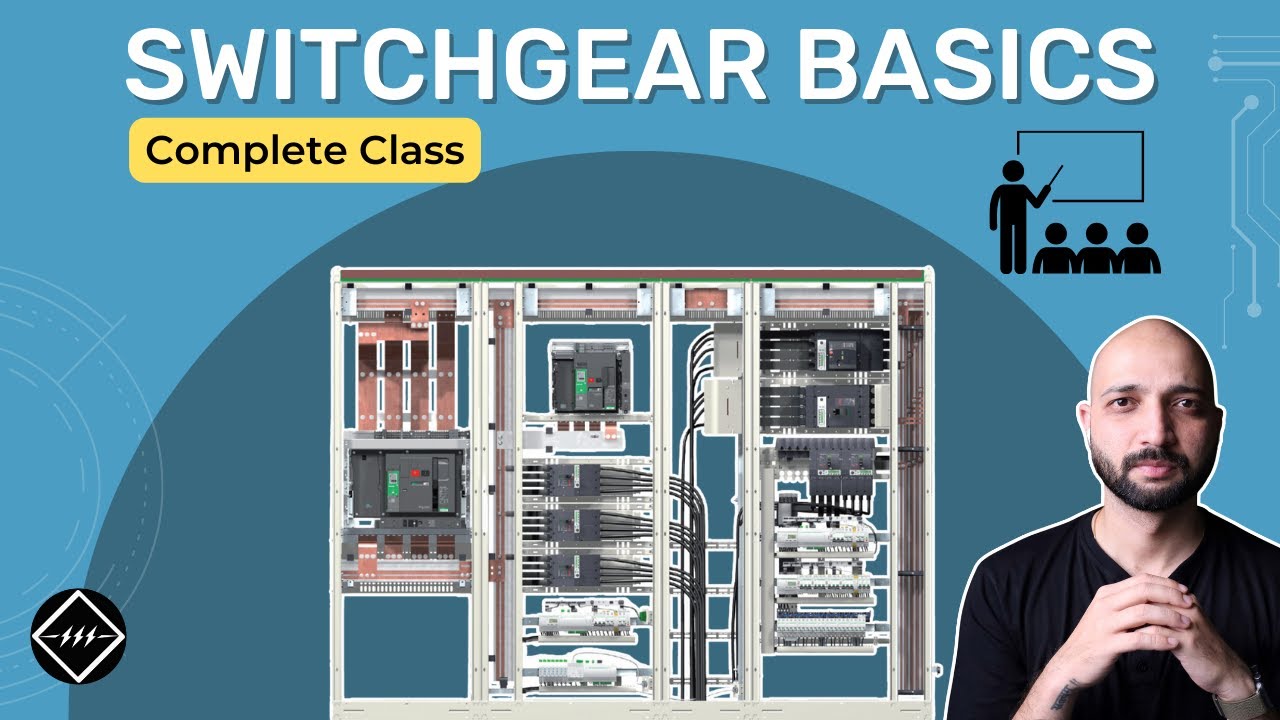
Xem video Giới thiệu về thiết bị điện: Hướng dẫn dành cho người mới bắt đầu | TheElectricalGuy