
A 63 kVA transformer can carry up to 63 kVA of apparent load at its rated conditions. In real power, that equals 50.4 kW at 0.8 power factor, 56.7 kW at 0.9 power factor, or 63 kW at unity power factor. Its full-load current also depends on phase and voltage: a balanced three-phase 63 kVA unit supplies about 90.9 A at 400 V or 75.8 A at 480 V. Those numbers are calculations, not a universal guarantee for every transformer, feeder or duty cycle. Check the actual nameplate, load profile, cooling and installation before choosing equipment.
What Does 63 kVA Mean?
The nameplate rating is apparent power. It combines voltage and current without assuming a particular load power factor. A 63 kVA rating therefore does not mean a fixed 63 kW output for every load. Real power is calculated as kW = kVA × power factor. If a balanced load operates at 0.8 power factor, 63 × 0.8 = 50.4 kW. At 0.9 power factor, the same apparent-power loading represents 56.7 kW. A power factor of one gives a mathematical 63 kW, subject to the transformer’s own losses and rated operating conditions.
For sizing, add the coincident apparent-power demand of the connected loads. A motor’s mechanical kW or a facility’s energy use in kWh is not interchangeable with transformer kVA. Account for demand, starting conditions, harmonics and any planned growth. The useful question is whether the highest expected operating duty fits within the unit’s verified rating, not whether a simple list of nameplate kW adds to less than 63.

63 kVA Load Capacity in kW
| Load power factor | Calculated real power at 63 kVA | How to read it |
|---|---|---|
| 1.00 | 63.0 kW | Mathematical unity-power-factor case |
| 0.95 | 59.9 kW | Example of a high power-factor load |
| 0.90 | 56.7 kW | Common illustration for a mixed industrial load |
| 0.80 | 50.4 kW | Example only; not an automatic continuous-load limit |
These rows describe the real power associated with the same 63 kVA apparent load. They do not say that a transformer must always be limited to 80% loading. A protective-device rule, an engineering allowance for future growth and a transformer’s thermal nameplate rating are different decisions. The permissible duty depends on the manufacturer’s data, cooling, ambient temperature and the governing installation rules. Avoid turning a worked example into a universal operating limit.
63 kVA Transformer Full-Load Amps
For a single-phase winding, full-load current is I = 63,000 ÷ V, where V is the winding voltage. For a balanced three-phase transformer, line current is I = 63,000 ÷ (√3 × V), where V is line-to-line voltage. The same kVA produces a different current at each voltage, which is why an answer such as “a 63 kVA transformer is 100 amps” is incomplete. Schneider Electric’s transformer capacity guidance and the Electrical Installation Guide show these relationships.
| Winding voltage | Single-phase full-load current | Three-phase full-load line current |
|---|---|---|
| 208 V | 302.9 A | 174.9 A |
| 230 V | 273.9 A | 158.2 A |
| 240 V | 262.5 A | 151.6 A |
| 400 V | 157.5 A | 90.9 A |
| 415 V | 151.8 A | 87.6 A |
| 480 V | 131.3 A | 75.8 A |
A 400 V three-phase secondary carrying about 90.9 A is not interchangeable with a 400 V single-phase winding carrying 157.5 A at the same 63 kVA. Likewise, a 480-to-208 V step-down transformer has different full-load currents on its primary and secondary sides. For three-phase equipment with a 208Y/120 V secondary, use 208 V line-to-line in the three-phase formula; 120 V is the line-to-neutral voltage.
Worked Examples
400 V Three-Phase Load
If the secondary nameplate says 400 V three phase, divide 63,000 VA by √3 × 400 V. The result is approximately 90.9 A of full-load line current. At a load power factor of 0.8, the associated real power at that apparent-power limit is 50.4 kW. These are two descriptions of the same operating point: one in current and the other in real power.
480 V Three-Phase Supply
If a balanced 480 V three-phase load draws 60 A, its apparent power is √3 × 480 × 60 ÷ 1,000 = about 49.9 kVA. That is below 63 kVA before allowing for any other loads. If the same load rises to 80 A, the apparent power is about 66.5 kVA, above the nameplate rating. This comparison is a screening calculation, not a complete thermal or protection study.
240 V Single-Phase Load
At 240 V single phase, 63,000 ÷ 240 = 262.5 A. A 240 V three-phase unit would have a lower line current of about 151.6 A at the same kVA. Always write “single phase” or “three phase” next to the number when sharing a current result with a buyer or installer.
What Can a 63 kVA Transformer Actually Run?
A 63 kVA transformer can serve a combination of loads whose coincident apparent-power demand, starting behavior and operating environment fit its verified rating. Examples may include lighting and small distribution circuits, commercial equipment or industrial auxiliary loads. The equipment names alone do not prove suitability. A bank of motors with a modest steady load can create a starting voltage dip, while a power-electronics load can introduce harmonics that require a closer thermal review.
Start with a load schedule that records each load’s voltage, phase, running kW or kVA, power factor, demand and starting method. Separate loads that run simultaneously from those that are mutually exclusive. Convert each relevant load to kVA using its actual data, then assess the maximum simultaneous operating case. For a replacement, also compare the historic loading and any planned expansion with the current transformer nameplate.

Why Nameplate Rating Alone May Not Be Enough
The transformer may be rated for particular ambient and cooling conditions. A hot room, restricted ventilation or high altitude can change the design decision. Motor acceleration can draw more current for a short period than its running value. Nonlinear loads can produce harmonic currents that heat windings and may require a different design. Voltage regulation, allowable losses, impedance and fault duty also matter when the transformer is part of a wider distribution system.
For a project decision, compare the load profile and site conditions with the manufacturer’s rating and instructions. Do not assume that a 63 kVA unit of any construction can be operated continuously at the same temperature and duty. Likewise, do not assume that a short motor start above the nominal line current is automatically unsafe: the manufacturer and engineer should evaluate its magnitude and duration.
The Electrical Installation Guide notes that power factor, future extension and installation constraints affect transformer-rating choice. IEC 60076-1 is the general power-transformer standard; the exact standard set and project requirements must be identified for the offered unit.
What to Ask a Supplier Before Buying
Send the supplier the required kVA, primary and secondary voltages, phase, frequency, connection, installation location, ambient conditions and operating load. State whether motors, variable-speed drives or other harmonic-producing loads are present. Request a technical schedule covering losses, impedance, temperature rise, cooling, dimensions, mass, taps, accessories and tests. A quoted price without these data cannot be compared reliably with a competing design.
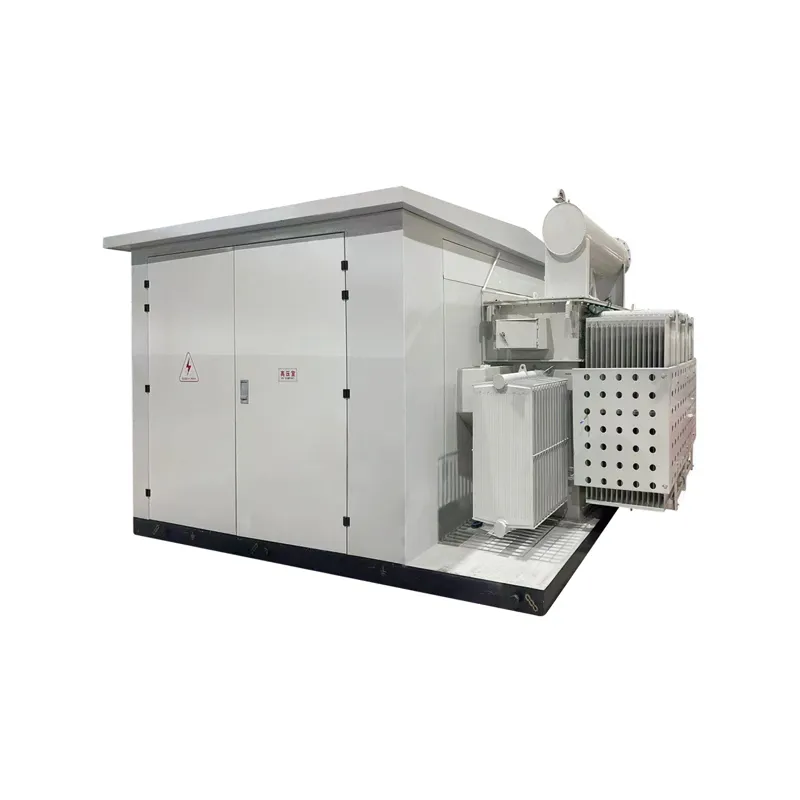
Ask for the approved drawing and final nameplate details before installation. If the application needs a substation assembly, specify the interfaces among transformer, medium-voltage protection and low-voltage distribution. The oil-immersed transformer product page shows one equipment family; its photograph is an example, not a claim that every rating is available. For broader sizing, read the transformer sizes guide, the 75 kVA current chart and the amps-to-kVA formula guide.
Three-Phase Transformer Video Lesson
NPTEL’s university lecture explains the underlying three-phase transformer connections. Use the tables above for the direct 63 kVA current calculations, then verify the selected unit’s actual winding data.
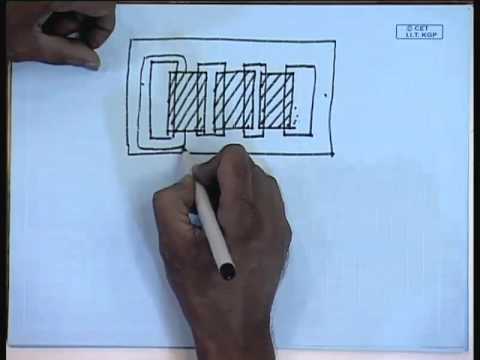
Watch NPTEL’s Introduction to Three Phase Transformer on YouTube.
Frequently Asked Questions
How much load can a 63 kVA transformer handle in kW?
At 0.8 power factor, 63 kVA corresponds to 50.4 kW; at 0.9 power factor it corresponds to 56.7 kW. The actual permissible duty depends on the transformer and installation.
How many amps is a 63 kVA transformer at 400 V three phase?
Approximately 90.9 A of full-load line current, calculated as 63,000 divided by the square root of three times 400 V.
How many amps is 63 kVA at 480 V three phase?
Approximately 75.8 A of full-load line current.
Does a 63 kVA transformer always supply 63 kW?
No. Real power equals kVA multiplied by the connected load’s power factor. Losses and rated operating conditions also matter.
Can a 63 kVA transformer handle a motor starting above rated current?
It depends on the current magnitude, duration, voltage dip, cooling and manufacturer data. A qualified engineer should review the starting duty.