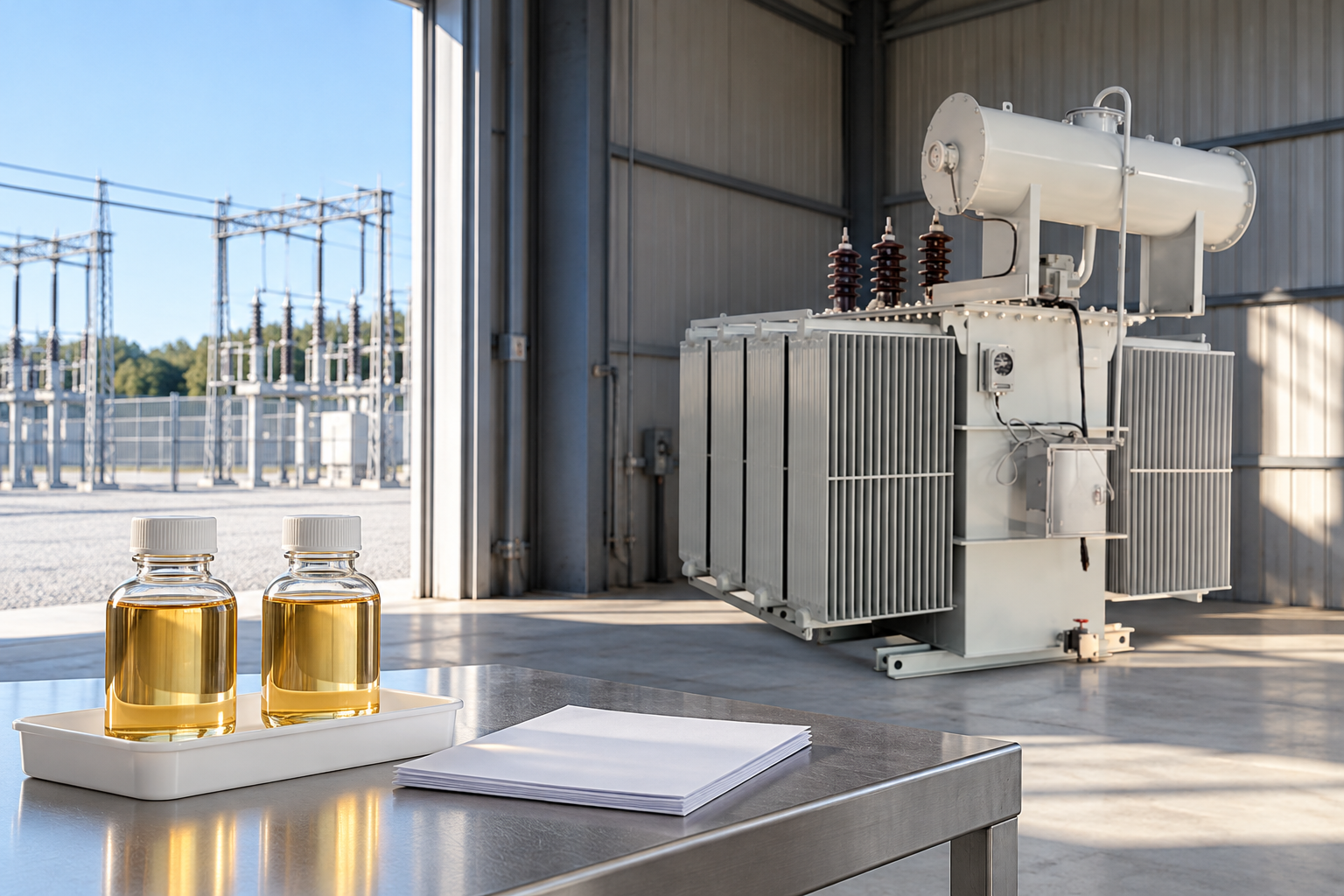

Careful oil-immersed transformer installation protects a long-lead asset during its riskiest week—the one between delivery and first energization.
Foundations, clearances, oil handling, and pre-energization checks each look routine, yet many early failures trace back to shortcuts in exactly these steps. This guide gives project teams a sequence to follow and the records to keep.
Coordinate civil works, electrical crews, and factory documentation before the unit ships.

Part 1. Planning inputs before the unit arrives
Match the foundation design to the final GA drawing: tank footprint, filled weight, jacking points, and anchor positions.
Confirm the delivery route, crane capacity, and laydown space against the shipping dimensions.
For related context, see the ultimate guide to oil immersed distribution transformers.
For related context, see the loading guide for oil immersed power transformers.
Part 2. Foundation and civil works
Civil readiness decides whether delivery day ends with a mounted transformer or a stored problem.
| Item | What to verify |
|---|---|
| Level and load capacity | Pad flatness and bearing per the issued foundation drawing |
| Oil containment | Bund or collection volume where the site standard requires it |
| Drainage | Water cannot pond around the tank base |
| Anchoring | Seismic or transport restraint per the project specification |
| Cable trenches | Positions match the LV and HV cable box entries |
Pour and cure schedules should finish before delivery; a transformer waiting on temporary supports is an avoidable risk.
Part 3. Clearances and access
Keep working clearance around the tank for radiator removal, bushing replacement, and sampling valves—not just electrical distance.
Preserve fire separation from buildings and neighboring equipment per the site standard.
Leave staging space for oil processing equipment; filtration hoses and a vacuum rig need room near the valves.
Part 4. Oil handling and accessories
Units shipped oil-filled need level checks, gas cushion pressure verification where fitted, and leak inspection on arrival; units shipped dry need controlled filling under vacuum per the manual.
Fit and verify accessories before energization: conservator breather, Buchholz relay, temperature indicators, pressure relief device, and fresh gaskets on every reassembled joint.
Test a pre-energization oil sample for dielectric strength and moisture even when the factory filled the tank.
Part 5. Pre-energization checks
Work through the electrical and protection checklist with signatures against each line.
| Check | Acceptance basis |
|---|---|
| Insulation resistance and ratio tests | Match factory routine test values within agreed limits |
| Vector group and polarity verification | Consistent with nameplate and network |
| Protection and alarm loop tests | Buchholz, temperature, and pressure devices trip correctly |
| Earthing connections | Tank, neutral, and surge arresters per drawings |
| Oil test results | Dielectric strength and moisture within commissioning limits |
| Tap changer position | Set and recorded per the energization plan |
Energize at no load where the network allows, monitor for several hours, then load in steps while logging temperatures.
Part 6. Product recommendation and Fit Boundary
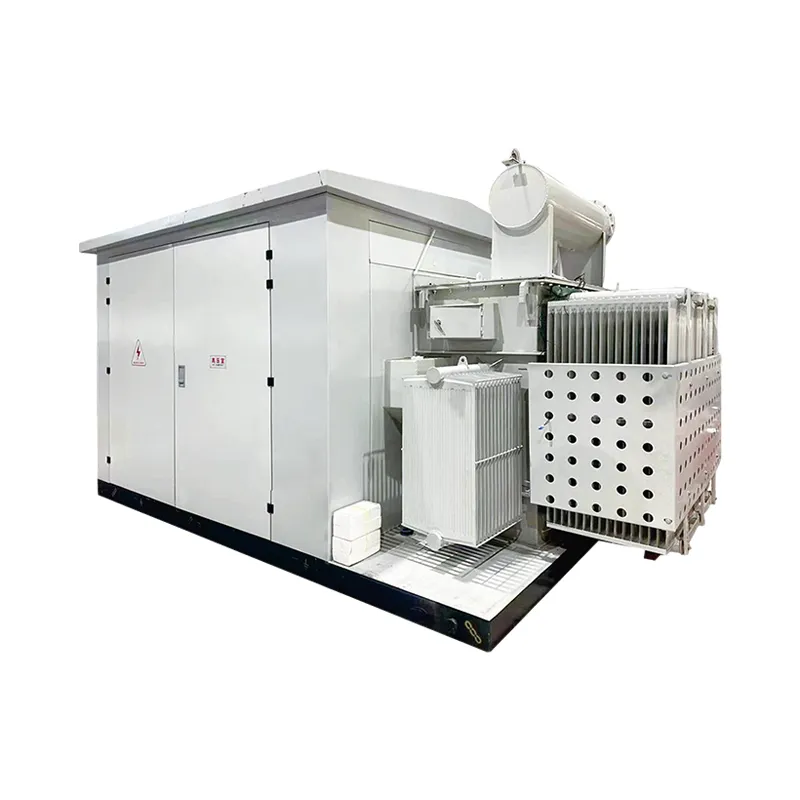
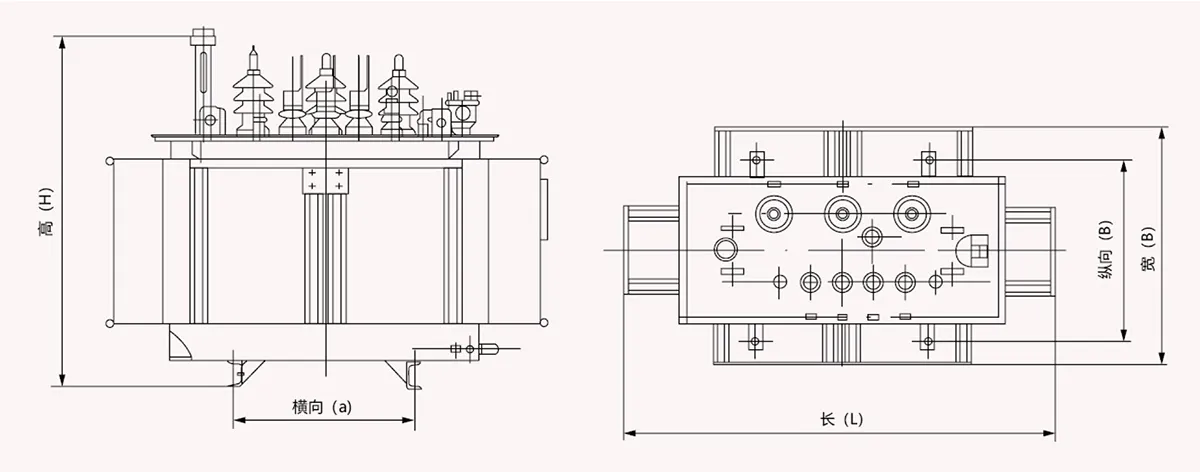
Product recommendation: Installation scope depends on tank design and fittings—review series documentation early. Start at the transformer product category, then review the S□-M oil-immersed power transformer series and the SC(B) resin insulated dry transformer series against the approved specification.
| Better fit | Poor fit without extra study |
|---|---|
| Teams with civil works finished before delivery | Improvised foundations poured after arrival |
| Sites with oil handling and testing arranged | Energizing without a commissioning oil sample |
| Projects recording every check against drawings | Verbal sign-offs without commissioning records |
Submit the rated kVA and voltage combination, vector group and tap range, no-load and load losses, cooling method and enclosure, and short-circuit impedance target through Contact Us for model-specific confirmation.
Part 7. Common installation mistakes
- Pouring foundations from catalog dimensions instead of issued drawings.
- Skipping the arrival inspection and losing transport damage evidence.
- Reusing gaskets on reassembled joints to save schedule days.
- Energizing before protection and alarm loops are proven.
- Ignoring the breather and leaving the conservator sealed.
- Loading to full rating on day one without staged temperature logging.
FAQ
What foundation does an oil-immersed transformer need?
A level pad sized for the filled weight per the issued foundation drawing, with containment and drainage per the site standard.
What clearance should be kept around the tank?
Enough for radiator and bushing work, sampling access, and the fire separation distance your site standard defines—whichever is larger.
Which checks come before first energization?
Ratio and insulation resistance tests, vector group and polarity verification, protection loop tests, earthing checks, oil results, and tap position recording.
Should oil be tested before energization?
Yes—dielectric strength and moisture at minimum, even for factory-filled units; site filling adds a full commissioning test set.
How long can a transformer sit before energization?
Follow the manual: storage beyond a few months typically requires breather maintenance, periodic oil checks, and documented inspections.
What accessories need commissioning checks?
Buchholz relay, temperature indicators, pressure relief device, breather, gas cushion where fitted, and all alarm and trip wiring.
Who should approve the installation records?
The commissioning engineer of record; keep signed checklists together with factory test reports in the asset file.