
Choosing switchgear companies in the USA starts with defining the equipment and the support your project needs. A multinational manufacturer, a regional assembler, a distributor and a service contractor may all appear in a supplier search, yet each has a different role. Compare their proposed assembly, applicable certification, engineering responsibility, delivery scope and service arrangements before comparing price. This guide offers a verification method rather than an unsupported ranking of companies. It also explains how to assess an overseas supplier for a U.S. project without assuming that an export catalogue automatically satisfies local installation requirements.
Define what kind of company you need
A manufacturer develops or produces equipment within a stated product scope. An assembler builds an ordered configuration using an approved design system and components. A distributor supplies equipment and may coordinate a manufacturer quotation. A service contractor may inspect, maintain or commission equipment without being responsible for the original assembly design. Some businesses combine these roles, so ask who performs each activity for your order rather than relying on the company’s marketing description.
Identify the legal contracting entity, manufacturing location and engineering contact. Confirm whether the quotation covers a new assembly, refurbished equipment or a replacement part. If the seller uses another factory, request the factory identity and a clear responsibility chain. A local office can help communication, but its address does not establish where the equipment is built or who holds the applicable certification.
Write a technical brief before requesting prices
Provide system voltage, frequency, earthing, load schedule, fault-duty requirements, source arrangement and installation conditions. Include the desired lineup, incoming and outgoing functions, cable interfaces and auxiliary power. Share available system studies and explain which studies remain to be completed. Request a documented assumption where an input is unknown. Suppliers quoting different assumptions cannot be compared reliably using the final price alone.
Separate mandatory requirements from preferences. Mandatory items might include assembly classification, project-approved protection functions, enclosure service and a defined certification route. Preferences may include a familiar relay platform or a particular paint finish. Do not let an attractive optional feature distract from a missing mandatory requirement. Ask every bidder to return the same response schedule, with explicit deviations and exclusions instead of scattered email promises.
Check the assembly classification and standard scope
Terms such as switchboard, switchgear and panelboard refer to different equipment classes. For example, UL identifies UL 891 with switchboards and UL 1558 with metal-enclosed low-voltage power circuit breaker switchgear. The correct scope depends on the proposed assembly. Request the relevant standard, edition or project basis and supporting evidence from the bidder. A component rating should not be presented as the short-circuit rating of an entire lineup.
Coordinate acceptance with the responsible engineer and authority having jurisdiction. Requirements vary with the installation, local adopted rules and owner specifications. An assembly built to an IEC framework may be technically relevant to an international project, but that description alone does not prove acceptance for a U.S. installation. Resolve the verification route early, especially when custom construction or modifications are proposed. Certification work can affect cost and schedule.
Verify certification records rather than collecting logos
A useful claim identifies the certification organization, file or record, product category, assembly scope and permitted configuration. Request documentation that matches the quoted model and manufacturing location. A logo on a presentation, the certification of a breaker, or a certificate belonging to another company does not establish the status of the proposed complete assembly. Record what has been verified and what remains conditional.
UL’s information about its switchboard programs describes design parameters, component use and quality-control arrangements. This illustrates why the final configuration matters. Ask whether a proposed customization stays within the applicable scope and who approves it. If a field evaluation is planned, define responsibility, access, timing and potential corrective work before shipment. Do not treat a future evaluation as an already issued approval.

Compare engineering support through an actual design review
Ask each shortlisted company to explain how it will review the single-line diagram, ratings, arrangement and interfaces. A practical supplier should identify missing inputs, clarify assumptions and describe its drawing approval process. Evaluate the clarity of those questions. A fast quotation that ignores an unknown fault level or generator interface can create expensive revisions later, even when the initial response feels convenient.
Discuss protection and controls separately from enclosure manufacture. Identify who prepares coordination studies, who selects relay settings, who verifies control logic and who approves changes. Define the owner of communications integration, including point lists, protocols and acceptance tests. The supplier may provide hardware and standard drawings while another engineer owns system-level performance. Put that division of responsibility in the order documents.
Review production capacity and delivery evidence
Request an order-specific schedule covering design approval, long-lead procurement, assembly, factory testing and shipment. Ask which milestones depend on buyer decisions and which components currently constrain delivery. A general statement about factory capacity does not establish an available slot for your order. Where delivery is critical, require written milestone updates and a procedure for identifying delays early.
Compare quotation validity and the treatment of substitutions. A company may offer a short lead time based on a component that changes before you release the order. Require confirmation of the agreed configuration at the point of commitment. Clarify whether the schedule begins at purchase-order receipt, deposit, drawing approval or final technical release. Those definitions can change the practical delivery date by weeks without changing the advertised number.
Assess local service and lifecycle support
Find out who will respond after delivery and where support is located. Ask about commissioning attendance, warranty administration, spare-parts identification and access to manuals or drawings. A sales representative and a qualified field service team are different resources. Obtain the service scope in writing, including what is included in the equipment price and what requires a separate contract.
Review maintainability with the site team. Consider access, replacement procedures, compatible spares and the expected availability of technical support. Ask how the company handles obsolete components and future extensions. Do not assume a larger company automatically supports every legacy product indefinitely, or that a small assembler lacks useful expertise. Evaluate the actual support arrangement for the quoted equipment and document its limits.

Calculate the complete delivered scope
The equipment price may exclude transport, unloading, site assembly, inspection, testing, commissioning, taxes or certification activities. Build a comparison that assigns each item to a party and identifies its cost basis. For an imported order, clarify shipping terms, customs responsibilities, packing and storage. Avoid mixing a factory-gate quotation with a fully installed domestic quotation and describing the difference as a manufacturing cost saving.
Record the currency, payment milestones, warranty starting point and change-order process. A low initial price with unresolved engineering exclusions is not a completed proposal. Give preference to bids that make assumptions and responsibility boundaries easy to inspect. If a supplier cannot confirm a critical requirement, mark it unresolved and request evidence. Do not silently score an unverified claim as if it were a confirmed capability.
Evaluate LBAJI as an overseas product source
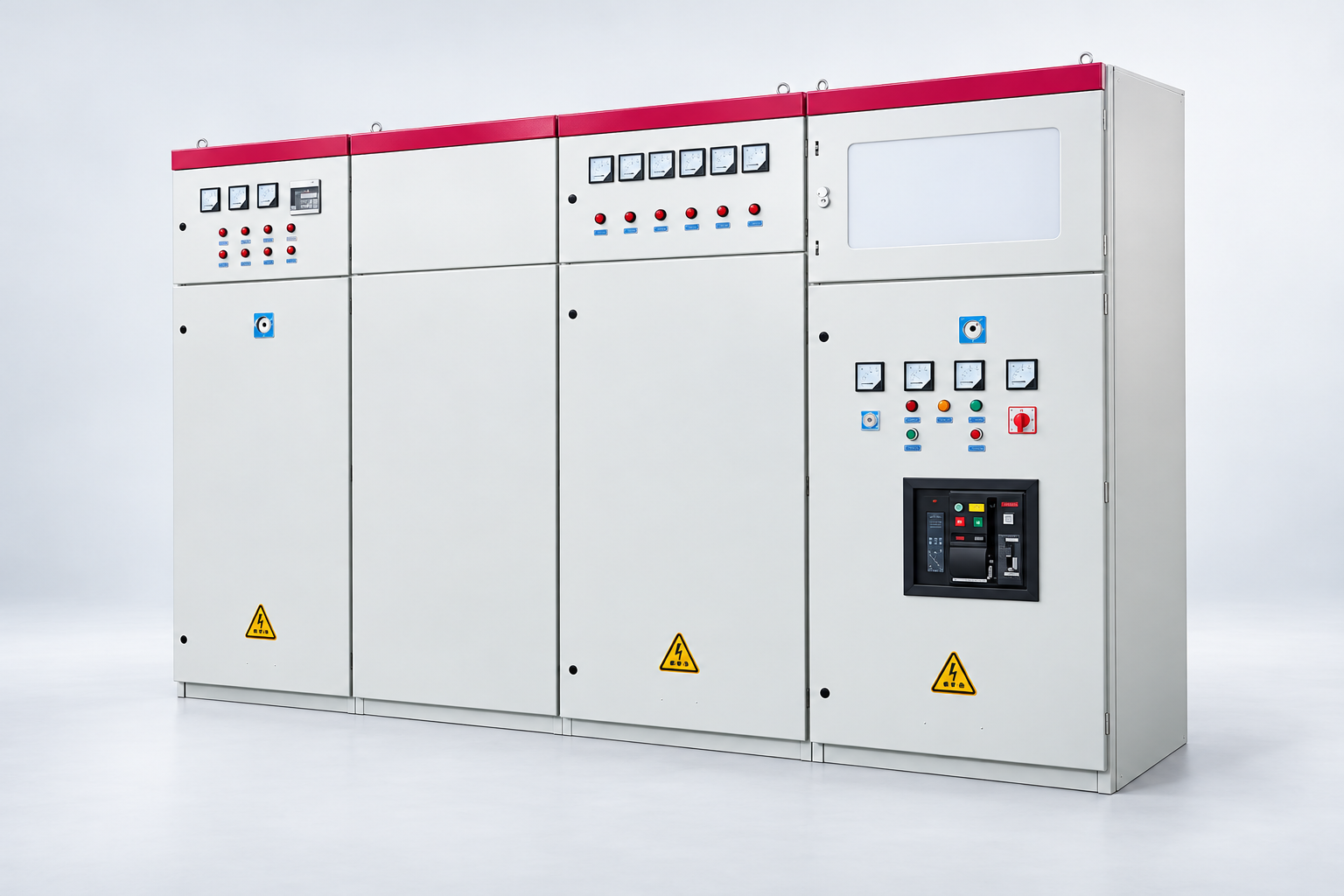
LBAJI’s GGD low-voltage switchgear is a product-category starting point for discussing a distribution lineup. Share the project requirements and request the exact configuration and applicable documentation. This article does not claim that the pictured catalogue equipment is U.S.-listed, locally stocked or accepted for a particular installation. Those questions must be answered using the actual proposed assembly and project acceptance process.
An overseas supplier may fit a project when engineering, documentation, verification, shipping and support responsibilities are workable. A domestic company may fit better when local service or a specific approved product platform is essential. Make that decision from the project brief and verified response schedule. A country label alone does not determine assembly quality or suitability. The procurement file should show why the selected supplier meets the agreed requirements.
Supplier comparison worksheet
| Comparison item | Question to ask | Evidence to retain |
|---|---|---|
| Role | Who designs, builds and sells the assembly? | Named contracting entity and manufacturing responsibility |
| Acceptance | What proves the quoted configuration is acceptable? | Matching certification or agreed evaluation route |
| Engineering | Who owns studies, settings and interfaces? | Responsibility matrix and approved drawing process |
| Delivery | What triggers the promised lead time? | Order-specific milestones and component assumptions |
| Service | Who supports the equipment at the site? | Written commissioning, warranty and spare-parts scope |
| Total scope | Which costs are excluded? | Normalized commercial comparison and accepted exclusions |
Frequently asked questions
Should I choose the largest switchgear company?
Size can influence resources, but it does not answer whether the proposed assembly fits your project. Compare the exact equipment, engineering support, acceptance evidence, delivery commitments and service arrangements. A large business may quote through a partner, while a smaller specialist may offer a useful configuration. Verify the responsibility chain and judge the proposal against the same technical brief.
Is a U.S. address proof that switchgear is made in the USA?
No. A company may have domestic sales or service offices while manufacturing equipment elsewhere. Ask for the proposed manufacturing location and legal entity responsible for the assembly. If domestic-origin requirements apply to the project, obtain the relevant evidence and contract commitments. Do not infer origin from a website address, telephone number or distributor location.
Does a UL-listed breaker make the complete lineup UL-listed?
Component certification and assembly certification are different questions. Ask for documentation covering the finished assembly and its quoted configuration. Confirm whether modifications or substitutions are permitted within that scope. The responsible engineer and authority having jurisdiction should review the acceptance route, particularly for a custom or imported assembly. A component logo alone is insufficient evidence.
Why is there no ranked list of American companies here?
A reliable ranking would need a defined scoring method and current, comparable evidence on each company. A buyer verification guide is more useful when projects have different equipment and support needs. Use the worksheet to create a shortlist, then verify the specific proposals. Avoid interpreting search visibility, advertising claims or an unsupported “top ten” label as proof of suitability.
What makes quotations comparable?
They need the same technical assumptions, equipment functions, verification requirements and commercial scope. Request a consistent response schedule and explicit deviations. Identify exclusions for delivery, site work, studies, testing and support. Once those boundaries are clear, compare price and lead time. An unexplained low price is a question to investigate, rather than a complete buying decision.
Related LBAJI resources
LBAJI GGD Low-Voltage Switchgear. switchgear fundamentals. switchgear testing guide. switchgear maintenance checklist.
Technical sources
Use these references for the relevant equipment and work-practice scope. Confirm the edition and project requirements with the responsible engineer.
- IEC metal-enclosed AC switchgear scope
- OSHA electrical work practices
- UL switchboard certification program
Further viewing
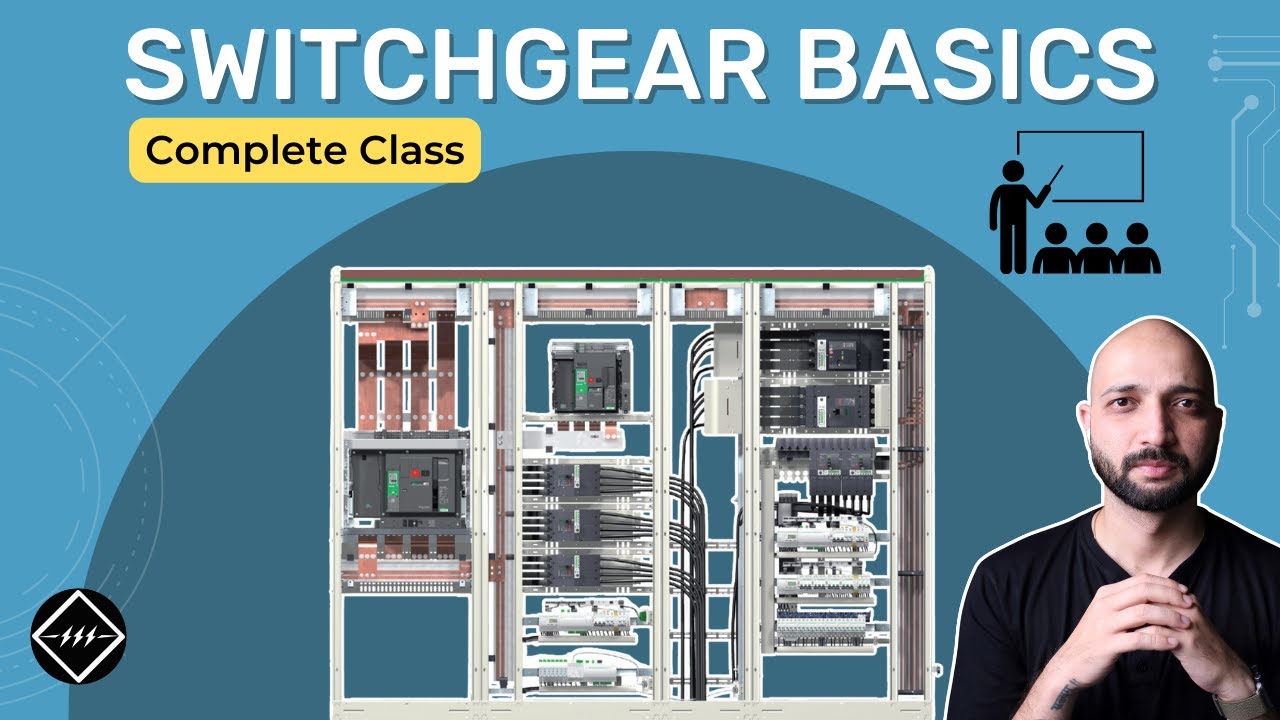
Gaurav J – TheElectricalGuy — Switchgear Basics: Complete Beginner’s Guide | TheElectricalGuy. This independent educational video provides background principles; it does not specify LBAJI equipment ratings or replace a project procedure.