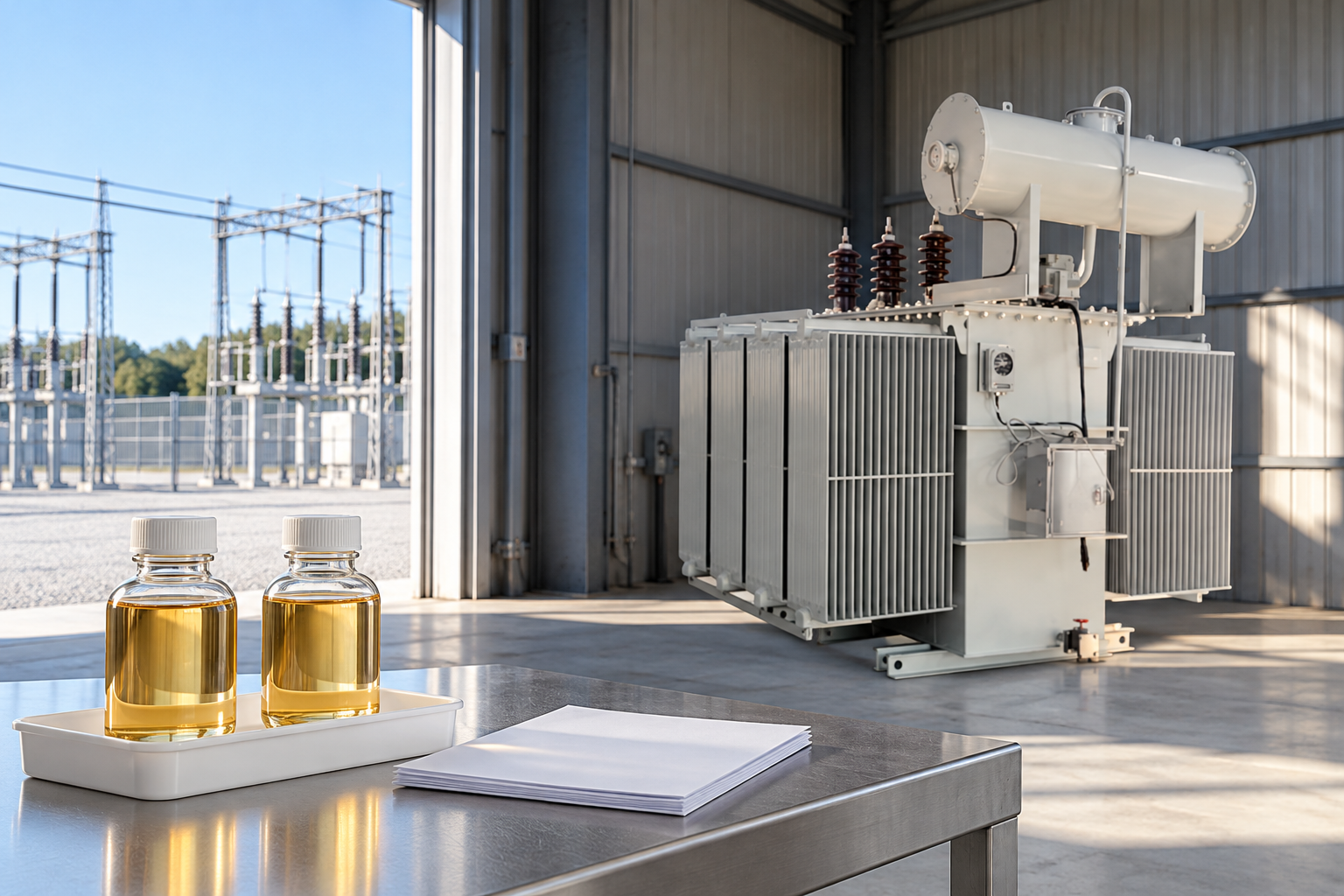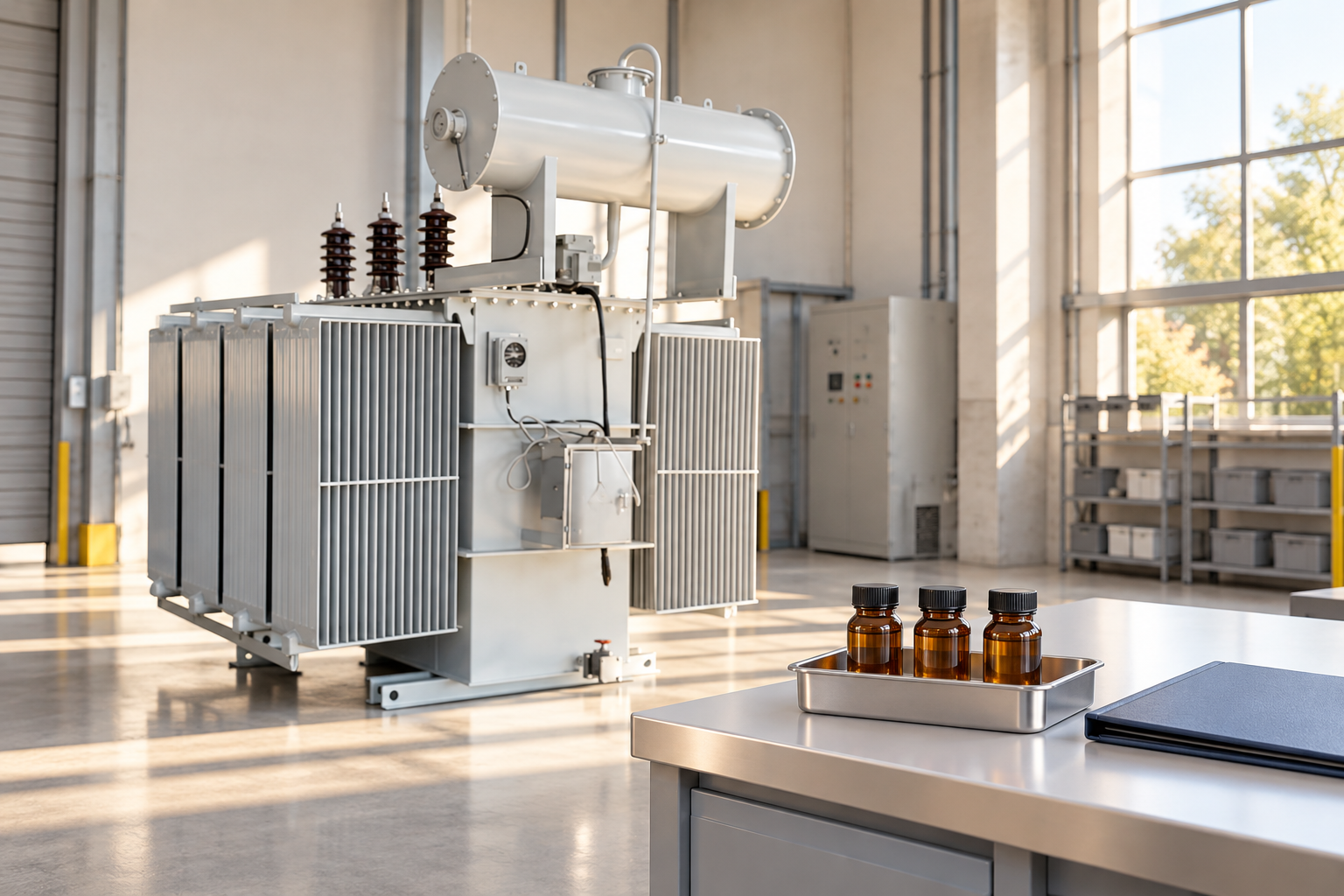

Transformer harmonics and K-factor selection decides whether VFD, UPS, and rectifier feeders overheat a unit that looked correctly sized on fundamental amps alone.
Buyers who quote only linear kVA often discover hot spots, nuisance trips, or early insulation aging after nonlinear loads grow. This guide covers what to put in the RFQ, which data change the rating, and which claims to reject.
Capture the load spectrum—or a conservative envelope—before freezing transformer kVA.
Part 1. When nonlinear loads change the transformer job
VFDs, UPS systems, chargers, and LED-dense feeders inject harmonic currents that raise winding and structural heating.
Fundamental ampacity alone understates thermal stress when the spectrum is rich.
Untuk catatan perencanaan yang berdampingan, tinjau panduan perhitungan kVA transformator distribusi dan transformer impedance buyer guide.
Penting: A K-factor or nonlinear rating describes heating capability under a stated spectrum. It is not a substitute for filters, reactors, or a system harmonic study (IEEE C57.110).
Part 2. RFQ data that make harmonic bids comparable
Ask suppliers to quote against the same load description and the same rating basis.

| Item RFQ | Mengapa itu penting | Kirim dengan kutipan |
|---|---|---|
| Kombinasi kVA terukur dan tegangan | Continuous fundamental basis | Ya |
| Nonlinear / K-factor requirement | Heating capability under harmonics | Ya |
| Rugi tanpa beban dan rugi beban | Loss heat under distorted current | Ya |
| Impedansi hubung singkat | Fault and interaction with filters | Ya |
| Metode pendinginan dan penutup | Thermal margin and ventilation | Ya |
| Grup vektor dan rentang tap | Electrical package confirmation | Ya |
Attach a measured spectrum when available; otherwise state a conservative envelope.
Part 3. K-factor versus filters and system studies
K-factor describes transformer heating capability under a defined harmonic profile; it does not remove harmonics from the network.
Filters, reactors, and IEEE 519-style system limits remain separate decisions.
Do not use a transformer label as a substitute for a harmonic mitigation plan.
Part 4. Neutral, impedance, and parallel equipment notes
Four-wire nonlinear loads can overload neutrals; confirm winding and terminal provisions with the supplier.
Impedance interacts with filter design and fault levels—keep the same Z% basis across bids.
If APF/AHF equipment shares the feeder, document coordination assumptions in the RFQ.
Part 5. Documents before order release
Request GA drawings, loss data basis, and any nonlinear rating statement on the same spectrum used for design.
Confirm temperature rise class and cooling stages match the indoor or outdoor room plan.
Keep authority-facing harmonic assumptions in the project file, separate from marketing claims.
Part 6. Shortlist series after the spectrum is written
Rekomendasi produk: After harmonic duty is written down, open the kategori produk transformator and narrow to the Seri transformator kering berisolasi resin SC(B) for indoor nonlinear feeders or the Seri transformator daya terendam minyak S□-M for outdoor yards with defined cooling.

| Kesesuaian yang lebih baik | Butuh lebih banyak penelitian |
|---|---|
| Spectrum or K-factor stated in RFQ | Linear kVA only on VFD-heavy sites |
| Cooling and rise class fixed early | Assuming oversize alone solves heating |
| Neutral and impedance documented | Treating K-factor as a system filter |
Send the ratings table and load notes through Hubungi Kami for series confirmation.
Part 7. Harmonic-selection mistakes that overheat units
- Ordering on fundamental kVA only for VFD-dense feeders.
- Treating K-factor as harmonic mitigation.
- Omitting neutral duty on four-wire nonlinear loads.
- Comparing bids without the same spectrum assumption.
- Ignoring cooling class when nonlinear heating is expected.
- Adding large rectifier loads after the transformer is already purchased.
FAQ
What does a transformer K-factor mean?
It describes heating capability under a defined nonsinusoidal load profile; it is not a harmonic filter rating.
Can I just oversize the transformer instead?
Oversizing can help but does not replace stating the spectrum, cooling class, and loss basis in the RFQ.
Do dry type units handle harmonics better than oil immersed?
Technology labels do not decide the outcome—spectrum, cooling, and design details do; compare on the same RFQ basis.
Which electrical data still belong in the quotation?
For harmonic feeders, still list kVA/voltage, vector/tap range, loss figures, cooling/enclosure, and short-circuit impedance on every bid.
When is a system harmonic study required?
When compliance limits, filter design, or large nonlinear groups affect the network—not only when buying a transformer.
Can K-factor replace active filters?
No—filters and transformers solve different problems; document both scopes separately.
What should buyers send for VFD feeders?
Send load list, spectrum or envelope, duty cycle, cooling limits, and required documents with the RFQ.