

High voltage switchgear suppliers must be evaluated using the actual system voltage, equipment class and required circuit functions, because the term high voltage has different boundaries in different markets and documents. A supplier offering distribution switchgear is not automatically offering transmission equipment. Start with the project design basis and ask each supplier to identify the exact assembly it proposes, its supported duties and its verification records. This guide explains how to qualify that scope without relying on a broad product label or an unverified supplier ranking. It does not certify any manufacturer’s equipment for a particular network.
Resolve the voltage terminology first
Specify the nominal system voltage and the required equipment characteristics using the applicable project standards. Do not use high voltage as the only voltage description in an inquiry. An equipment category described as high-voltage switchgear in an IEC context can overlap with equipment called medium voltage in everyday distribution discussions. Commercial search results also mix those categories with higher-voltage transmission equipment.
The LBAJI KYN61-40.5 exterior illustrated here is a real distribution-switchgear reference. It is not an illustration of a transmission GIS installation, and its product name does not establish suitability for another voltage class. A buyer seeking transmission equipment needs the relevant equipment and evidence for that project. Keeping this boundary explicit prevents a superficially relevant supplier list from becoming a technically incorrect shortlist.
Identify the complete purchasing scope
State whether the purchase is for a complete switchgear assembly, individual switching devices, a packaged substation or a retrofit. Define the required circuit functions and interfaces on the single-line drawing. The supplier response should identify what is included, what is supplied by others and what requires further engineering. A collection of component catalogues is not necessarily a proposal for a verified assembly.
An equipment supplier may also offer installation or service support, but those activities need their own scope. Ask where factory supply ends and project integration begins. Protection studies, civil works, cable terminations and commissioning may belong to different organizations. Clear boundaries make both technical review and quotation comparison more reliable than a generic promise of a turnkey solution.
| Câu hỏi đánh giá | Bằng chứng để yêu cầu | Boundary to confirm |
|---|---|---|
| Which voltage and equipment class? | Design basis and applicable standard scope | Distribution equipment versus transmission scope |
| Which circuit functions are included? | Single-line and function schedule | Switching, protection, isolation and measurement duties |
| What supports claimed performance? | Relevant assembly verification documents | Evidence applies to the proposed design |
| How does it connect to the site? | Arrangement, cable and control interface drawings | Supplier scope versus site responsibilities |
| How will the project accept it? | Factory and site acceptance plan | Design verification, factory checks and commissioning remain distinct |

Match the proposal to network duties
The responsible engineer should define the relevant current, insulation and fault duties, together with the network operating arrangements. The supplier must respond to those requirements explicitly. Do not infer the assembly’s capability from a breaker catalogue or from a similar cabinet previously installed elsewhere. The proposed configuration and the conditions attached to its ratings are essential parts of the review.
Changes to the network can affect the design basis. Additional sources, different operating arrangements or new loads may change the relevant studies and requirements. A replacement or expansion project should therefore use current engineering records. A supplier should identify any dependency on those records instead of treating an old panel nameplate as a complete specification for the expanded system.
Require evidence for the actual configuration
Ask for verification information relevant to the offered assembly design and the applicable requirements. The evidence should identify the equipment, scope and conditions clearly enough for qualified review. General management-system certificates or component certificates may be useful supporting documents, but they do not automatically prove the performance of every complete switchgear configuration.
Where evidence refers to a family of designs, request an explanation of how the proposed arrangement is covered. Deviations and limitations should be stated. A document’s title or a photograph of a laboratory test does not provide that explanation. The buyer needs a traceable link from the purchase requirement to the proposed design and its supporting evidence, with outstanding questions assigned for resolution.
Compare insulation arrangements by project needs
Air-insulated, gas-insulated and other equipment arrangements have different installation and maintenance considerations. The appropriate choice depends on the network, space, environment, service approach and applicable requirements. Avoid choosing a technology because it appears more advanced in a brochure. Ask how the supplier’s proposed arrangement addresses the actual project constraints.
For equipment involving an insulating gas, request accurate information about the gas, handling requirements and applicable environmental responsibilities. Do not infer those details from an enclosure photograph or a generic product-family description. This guide does not make an unsupported environmental or regulatory claim for any illustrated product. The supplier’s documented configuration and the project’s current rules govern the review.

Protection and control interfaces need an owner
List the required measurement, protection, control, indication and communication functions. Ask which devices and interfaces the supplier includes and who owns the settings and logic. A relay supplied in a cabinet does not mean the network protection study is complete. The proposed hardware must fit the approved scheme, and the implementation must be verified within the project acceptance plan.
For remote operation, define command authority, status indications, communications and auxiliary supplies. State what happens when communications or auxiliary power are unavailable. Those behaviors belong in an approved operating narrative and engineering design, not an improvised purchasing decision. Assign the responsibility for integration tests so that a communications port is not mistaken for completed control-system integration.
Review the physical installation before approval
Use the arrangement drawings to review access, operating positions, maintenance space and cable interfaces. The supplier should provide the installation constraints needed by the project designers. State the environmental conditions and any transport or handling restrictions. A compact footprint is useful only when the required installation and service space are also feasible.
The final interface review should include other contractors. Cable routes, civil supports, auxiliary power and communications cannot be left as disconnected assumptions. Record the accepted interface information and drawing revisions. If a proposed change affects those interfaces, obtain review before manufacture or delivery. Avoid scaling dimensions or working clearances from a marketing image.
Treat deviations as reviewable information
Ask every supplier to submit a clear compliance and deviation schedule. A difference from the inquiry may be acceptable, but it must be visible and supported. Separate confirmed compliance from assumptions and unanswered questions. This helps the buyer compare different standard designs without forcing them into an inaccurate claim that all offers are identical.
The accepted schedule becomes part of the purchase record. If a component is substituted later, identify its effect on ratings, interfaces, instructions and verification. A supplier’s statement that the alternative is similar is insufficient for a safety-critical interface. The responsible engineer should close the technical question and the supplier should update the documents to match the final delivered configuration.
Build an acceptance plan before placing the order
Define which documents require approval, which factory checks are witnessed or reported and how findings are closed. Identify the responsibilities for site inspection and commissioning. Design verification, factory acceptance and site acceptance answer different questions. None should be represented as automatically replacing the others.
Factory inspection should relate to the ordered assembly and its agreed scope. Record equipment identity, results and corrective actions. A remote photographic review may support visible checks but cannot establish every internal or functional condition. The acceptance plan should state those limits and use the required records and qualified checks. A shipment date is not a reason to leave unresolved findings undocumented.

Evaluate support against the actual service life
Ask about maintenance instructions, component availability, approved replacement options and the response boundary for technical support. For critical equipment, review the consequences of unavailable spares or specialist service. A broad warranty statement should be read alongside exclusions, responsibilities and the procedure for obtaining support. Do not assume that a sales office provides every type of field service.
Keep the final records usable for the operating organization. Drawings, component schedules, settings records and accepted deviations should be organized by equipment identity. That information supports future maintenance and replacement decisions. A supplier that provides clear, controlled records reduces the need for the plant to reconstruct its equipment configuration from old quotations and photographs.
Shortlist by evidence rather than a published ranking
No independently verified ranking of current suppliers is presented here. Search results may emphasize brand recognition, promotional lists or broad product categories, but those do not establish suitability for an individual network. Use a shortlist matrix based on scope, evidence, interfaces, delivery and support. Record which items are confirmed and which still need review.
A first inquiry should include the design basis, single-line, environment, interface requirements and document list. Ask the supplier to identify the equipment class and any limitations clearly. LBAJI’s relevant product page can support an initial distribution-equipment discussion; final acceptance requires the actual project proposal and engineering review. The purchasing decision should follow confirmed scope and evidence, not the wording of a category label.
Các câu hỏi thường gặp
Is high voltage a sufficient specification for an inquiry?
No. State the actual system voltage, equipment characteristics, circuit functions and applicable standards because terminology varies across markets and documents.
Does the 40.5kV product illustration show transmission switchgear?
No. It is a reference for a distribution-switchgear enclosure and must not be treated as proof of a transmission-equipment scope.
Can a breaker certificate establish the whole assembly rating?
Not by itself. The complete proposed assembly and the relevant verification scope must be reviewed.
Should protection settings be included in the equipment order?
The project must assign ownership and deliverables explicitly. Supplying a relay does not complete the network protection study or settings approval.
What is the strongest basis for shortlisting a supplier?
A confirmed equipment scope, relevant verification evidence, resolved interfaces, clear deviations and a usable acceptance and support plan provide a practical basis.
Tham khảo kỹ thuật và thiết bị liên quan
Các trang tiêu chuẩn liên kết này mô tả phạm vi của chúng; việc tuân thủ dự án yêu cầu có các tài liệu áp dụng và sự đánh giá kỹ thuật.
- Phạm vi thiết bị chuyển mạch AC có vỏ bọc bằng kim loại của IEC
- 29 CFR 1910.333 về các quy trình làm việc trong ngành điện (phiên bản chính thức năm 2025)
- LBAJI KYN61-40.5 Thiết bị chuyển mạch có thể tháo rời bằng thép không gỉ
- Những điều cơ bản về thiết bị chuyển mạch
- Kiểm tra và thử nghiệm thiết bị chuyển mạch
- Kế hoạch bảo trì thiết bị chuyển mạch
Tiếp tục học tập: các nguyên tắc cơ bản về thiết bị
Video giáo dục độc lập này hỗ trợ phần thảo luận về chức năng của thiết bị. Nó không thay thế các tài liệu dự án đã được phê duyệt hoặc quy trình thi công điện đạt tiêu chuẩn. Nguồn: Gaurav J – TheElectricalGuy.
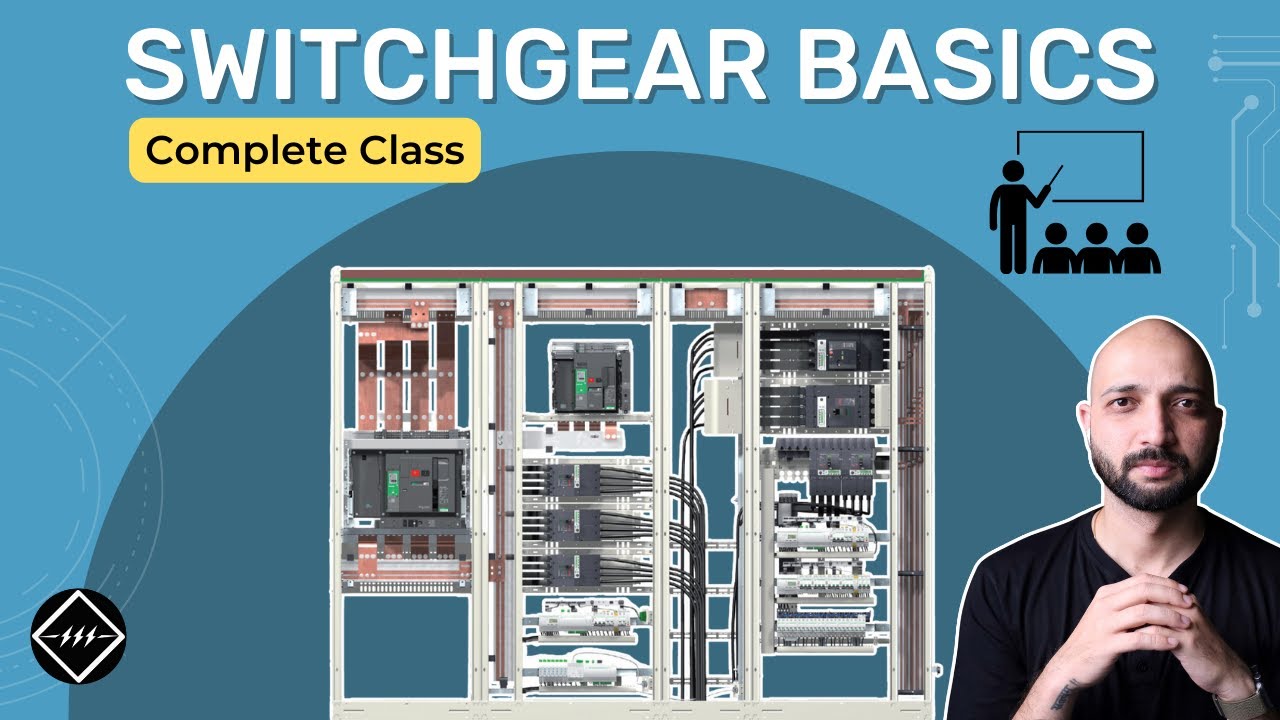
Xem video Giới thiệu về thiết bị điện: Hướng dẫn dành cho người mới bắt đầu | TheElectricalGuy