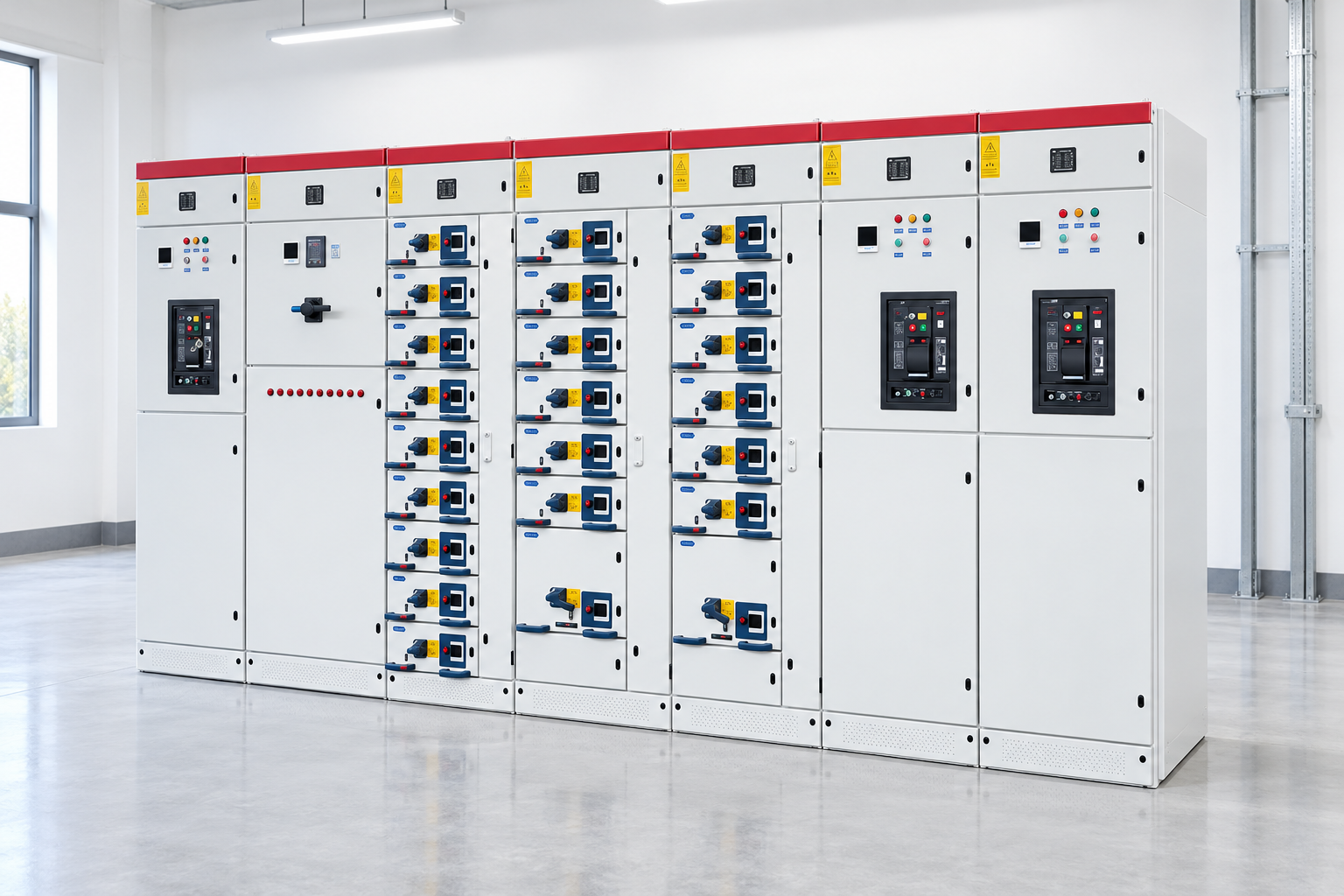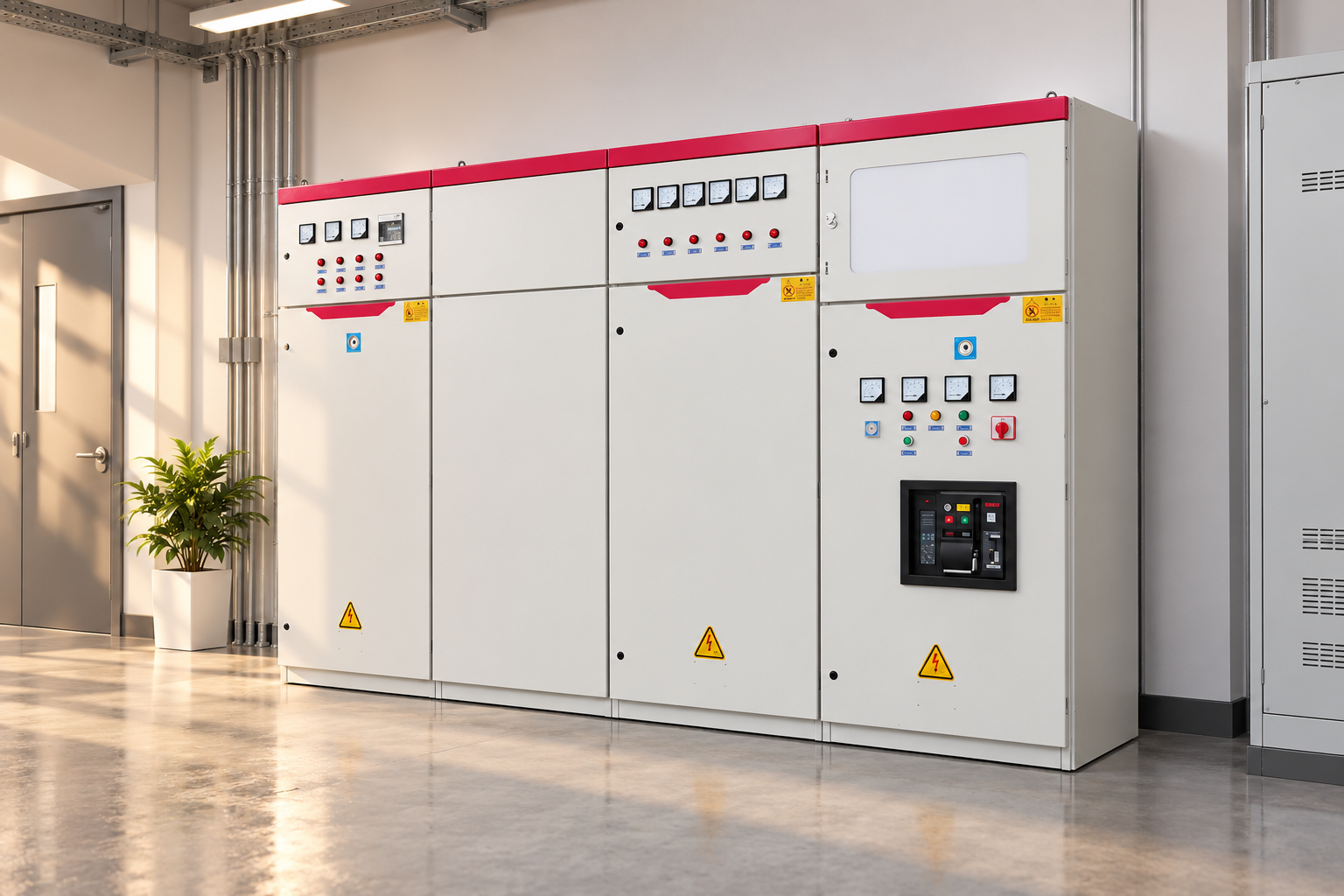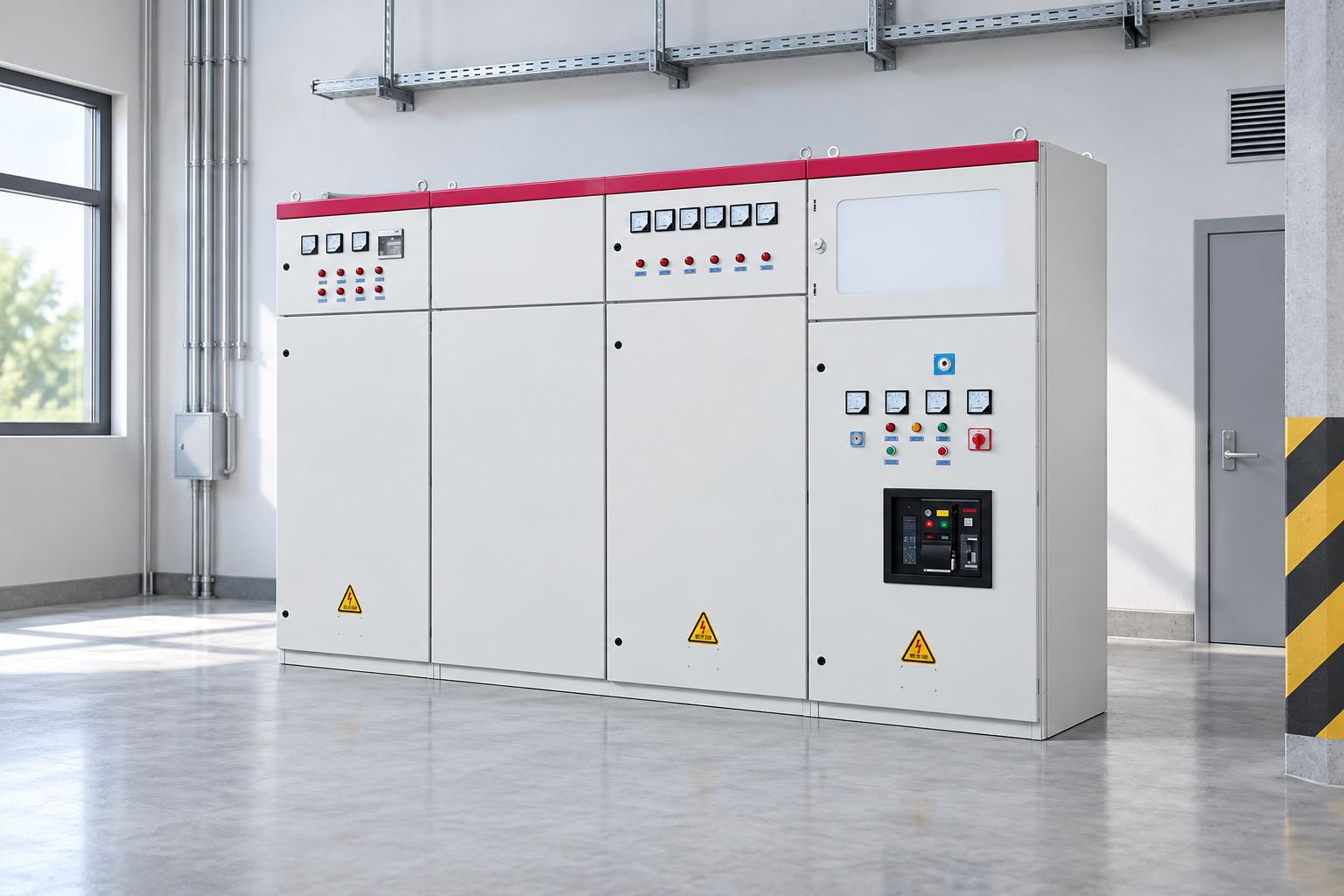

A power distribution box receives one incoming supply and divides it into protected branch circuits through breakers, busbars, terminals and an enclosure. Selection starts with voltage, phase, load current, fault level, environment and the number of outgoing ways—not enclosure size alone.
Key Takeaways
- Start with verified system data and the governing standard.
- Coordinate ratings, protection, environment and maintenance as one decision.
- Use drawings, calculations and test records to support procurement.
What Is a Power Distribution Box?
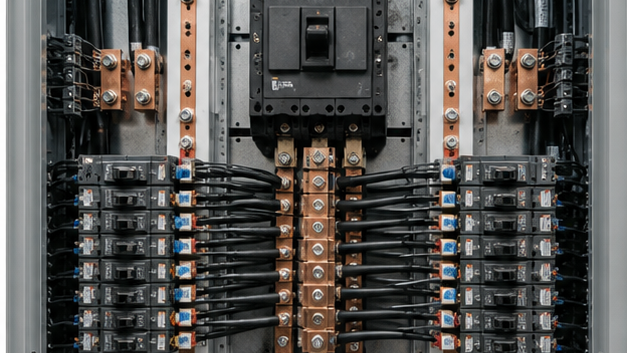
Distribution boxes sit between an upstream source and multiple loads. Depending on the market and application, the same family may be called a distribution board, panelboard, temporary power box or splitter box. A box normally provides isolation, overcurrent protection, a neutral bar where required, and a protective-earth bar. It does not replace upstream protection or a proper grounding design.
Quick Comparison and Selection Table
Use this table as a quick review of the main engineering and procurement decisions explained in the article.
| Decision area | Practical meaning | What to verify |
|---|---|---|
| What Is a Power Distribution Box? | Distribution boxes sit between an upstream source and multiple loads. | Depending on the market and application, the same family may be called a distribution board, panelboard, temporary power box or splitter box. |
| Main Components and Their Functions | The incomer provides isolation or protection; copper or aluminum busbars distribute current; branch breakers protect outgoing conductors; terminals provide controlled cable interfaces; and the enclosure limits contact… | Metering, surge protection, residual-current protection, interlocks and sockets are application-dependent. |
| Fixed, Portable, 12 V and Custom Types | Fixed building boards prioritize code compliance and service access. | Construction-site boxes need rugged enclosures, portable cable entries and appropriate residual-current protection. |
| How to Size a Distribution Box | List continuous, intermittent and motor loads; apply demand and diversity only where permitted; calculate phase current; then select busbar, incomer and feeder ratings with ambient and grouping corrections. | Verify prospective short-circuit current against the assembly and device ratings. |
| Enclosure, IP Rating and Heat | Indoor clean locations may need only basic touch protection, while rain, dust, washdown or corrosive areas require a higher IP or NEMA enclosure and compatible glands. | A high IP rating does not guarantee corrosion resistance or thermal performance. |
Main Components and Their Functions
The incomer provides isolation or protection; copper or aluminum busbars distribute current; branch breakers protect outgoing conductors; terminals provide controlled cable interfaces; and the enclosure limits contact and environmental exposure. Metering, surge protection, residual-current protection, interlocks and sockets are application-dependent. Every component must share compatible voltage, short-circuit and temperature ratings.
For a project-specific comparison, record assumptions and have the final design reviewed by qualified electrical personnel. This is especially important where fault energy, medium voltage, utility interfaces or energized work are involved.
Fixed, Portable, 12 V and Custom Types
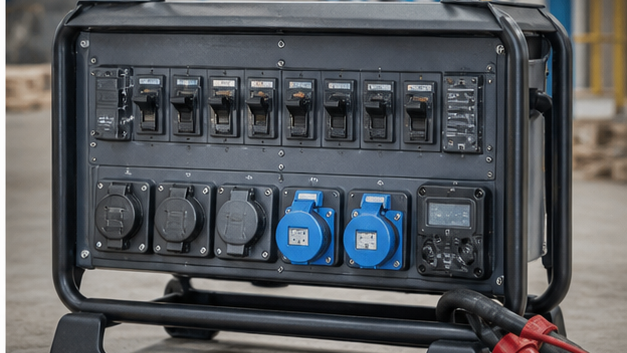
Fixed building boards prioritize code compliance and service access. Construction-site boxes need rugged enclosures, portable cable entries and appropriate residual-current protection. A 12 V DC box uses DC-rated fuses or breakers because AC devices may not interrupt DC safely. Custom boxes are justified when circuit count, connectors, monitoring, dimensions or environmental conditions cannot be met by a standard assembly.
How to Size a Distribution Box
List continuous, intermittent and motor loads; apply demand and diversity only where permitted; calculate phase current; then select busbar, incomer and feeder ratings with ambient and grouping corrections. Verify prospective short-circuit current against the assembly and device ratings. Reserve practical spare ways, but do not oversize protection beyond conductor ampacity.
For a project-specific comparison, record assumptions and have the final design reviewed by qualified electrical personnel. This is especially important where fault energy, medium voltage, utility interfaces or energized work are involved.
Enclosure, IP Rating and Heat
Indoor clean locations may need only basic touch protection, while rain, dust, washdown or corrosive areas require a higher IP or NEMA enclosure and compatible glands. A high IP rating does not guarantee corrosion resistance or thermal performance. Estimate internal losses and solar gain; use spacing, ventilation, heat exchangers or cooling where component temperature limits would otherwise be exceeded.
Specification Checklist for an RFQ
State the one-line diagram, system voltage and frequency, phase and neutral arrangement, maximum demand, fault level, incoming and outgoing device schedule, cable sizes and entry direction, enclosure material and rating, metering, surge protection, labeling, applicable standard, routine tests and documentation. This information lets a manufacturer quote an assembly rather than guess from a box dimension.
What the Current Google Results Commonly Emphasize
Our review of the current U.S. top-20 results found recurring coverage around Mini X-Treme Box™ Temporary Power Distribution Center – 30A 125/250V…, Beetle Box Spider Boxes, Main Menu, WHAT ARE THE BENEFITS OF USING A TEMPORARY POWER DISTRIBUTION BOX?, Continue Reading. This guide incorporates those decision points while keeping the scope focused on industrial procurement and engineering use.
Related LBAJI Equipment
Review the relevant LBAJI product range and the supporting Distribution Panels, Boards & Cabinets pillar guide. Send the one-line diagram, ratings, quantity and environment for a project-specific configuration.
Practical Evaluation Workflow
For power distribution box, use a documented workflow rather than a catalogue-only choice. First freeze system inputs and operating limits. Next compare the available construction or service options against the actual environment. Then verify calculations, protection interfaces and acceptance tests. Finally, record approved deviations and preserve baseline results for commissioning and maintenance.
- Review main components and their functions and record the project-specific decision.
- Review fixed, portable, 12 v and custom types and record the project-specific decision.
- Review how to size a distribution box and record the project-specific decision.
- Review enclosure, ip rating and heat and record the project-specific decision.
Acceptance Records to Keep
Retain the approved data sheet, drawings, deviation list, material certificates where applicable, routine and special test reports, protection settings, commissioning results, photographs and final nameplate details. Record test conditions as well as values, because temperature, instrument method and connection can affect comparison. These documents establish the baseline used to investigate later alarms, loading changes or deterioration. They also prevent replacement equipment from being ordered from an incomplete description after personnel or suppliers change.
Technical References and Further Reading
Conclusion
A power distribution box receives one incoming supply and divides it into protected branch circuits through breakers, busbars, terminals and an enclosure. Selection starts with voltage, phase, load current, fault level, environment and the number of outgoing ways—not enclosure size alone. Use project data and documented acceptance criteria before purchase, installation or service.