
EPC teams sizing a 2000KVA dry type distribution transformer usually coordinate civil, electrical, and procurement packages before the PO is released. For the broader construction and project-selection overview, see our dry-type transformer design and selection guide.
At 2000 kVA, align voltage class, cooling, impedance, and documented losses with your single-line diagram and utility requirements before issuing an RFQ. This guide focuses on practical evaluation steps for buyers—measurement, documentation, and lifecycle support—not generic marketing claims.
Cross-check public catalog data on lbajiele.com and confirm project-specific limits with your utility or consulting engineer.
Part 1. What a 2000KVA unit does in your network
Resin-encapsulated windings suit indoor substations where fire risk and maintenance access drive technology choice. At 2000 kVA, room ventilation, cable entry, and shell clearance often decide feasibility before price.
Whether specified as power or distribution duty, nameplate kVA, tap range, and vector group are binding design inputs—not marketing labels.
Buyers at this rating usually coordinate prospective fault current, downstream protection, and demand profile before finalizing transformer specifications.
Treat selection as a lifecycle decision: rated kVA, losses, and impedance should match documented site behavior after commissioning.
For related context, see the 2500KVA dry type selection guide.
For related context, see the what is a dry type power transformer.
Part 2. Key specifications at 2000 kVA
Fix primary class and secondary voltage on the approved single-line diagram before comparing vendor catalogs.
Include prospective fault level and relay coordination when reviewing short-circuit impedance with your protection engineer.
LBAJI publishes catalog reference data for 10 kV SC(B)11-2000 (catalog reference) on the SC(B) resin insulated dry transformer series page. Compare no-load and load losses at the agreed reference temperature before normalizing bids. Treat the table below as a quotation starting point; issued drawings and type-test reports govern the final PO.
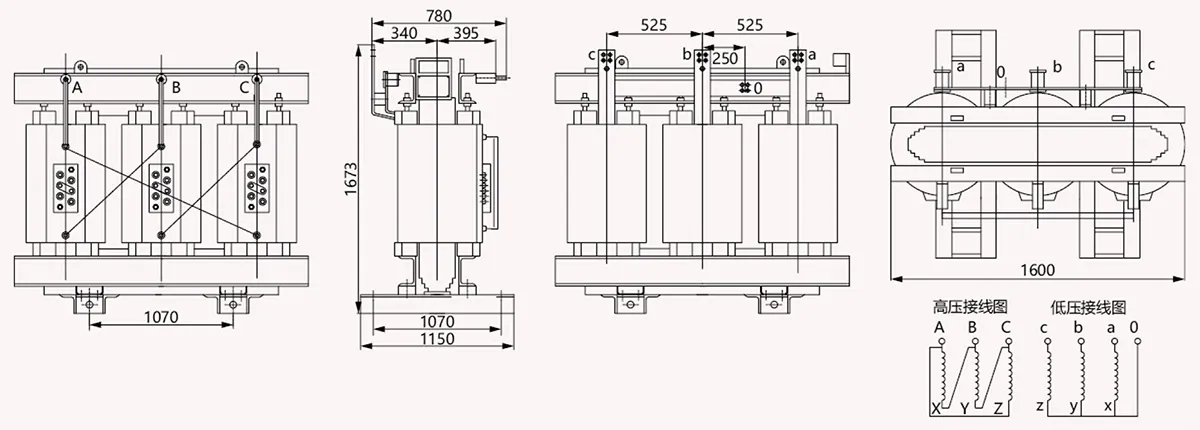
| Parameter | Catalog reference (2000 kVA) | Why it matters |
|---|---|---|
| Rated capacity | 2000 kVA | Continuous duty basis |
| Rated kVA and voltage combination | 6–11 kV / 0.4 kV typical (confirm on PO) | Protection and cable sizing |
| Vector group and tap range | Dyn11 or Yyn0; ±5% or ±2×2.5% typical | Grounding and voltage regulation |
| No-load loss | 2.75 kW | Lifecycle energy cost |
| Load loss | 15.5 kW at 155°C (B) reference temperature | Thermal and efficiency planning |
| No-load current | 0.7% | Magnetizing design check |
| Short-circuit impedance | 6% | Protection coordination |
| Cooling method and enclosure | dry type resin insulated | Site layout and fire planning |
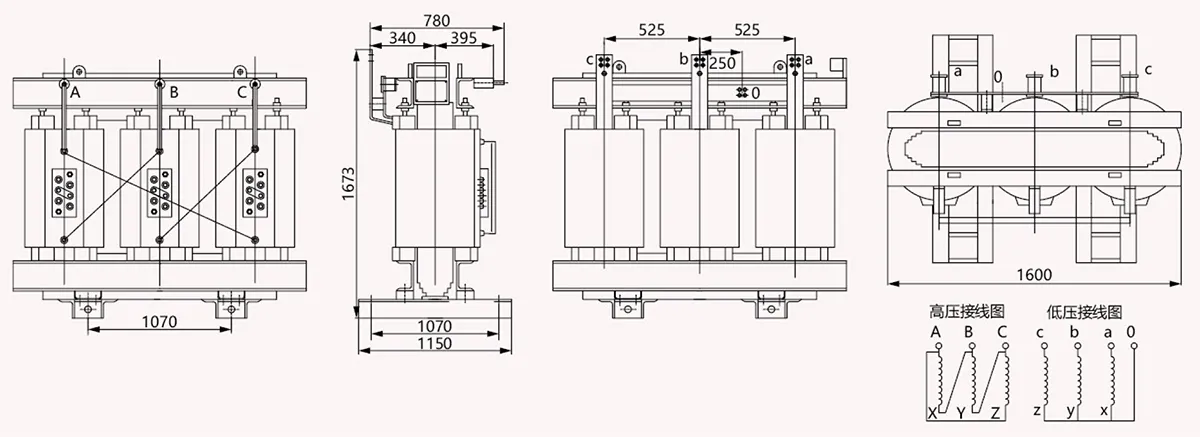
| Overall dimensions | 1490 × 1120 × 1620 mm | Civil and lifting planning |
| Weight | 3600 kg | Foundation and transport |
Confirm the exact voltage combination, vector group, and tap steps required by your interconnection agreement.
Part 3. Loading, environment, and compliance notes
Loading above nameplate without documented approval can affect warranty and operating margin.
Harmonic-rich loads may require study before energization; record measured THD at the point of common coupling when drives dominate the profile.
Altitude, ambient temperature, and enclosure influence derating. State elevation, average and maximum ambient, and indoor versus outdoor installation in every RFQ.
Fire separation, spill containment, or ventilation rules depend on local codes and the selected cooling class—confirm with the authority having jurisdiction before room layout freeze.
Bid comparisons should normalize loss figures at the same reference temperature and vector group. Civil teams need GA drawings before foundation pour—catalog weights exclude crates and oil volume until drawings are issued.
Part 4. Documentation and RFQ checklist
Use the checklist below as an RFQ attachment. Your EPC contract or utility may require additional items.
| Document / item | Purpose | When to request |
|---|---|---|
| Factory type or routine test report | Verify kVA, voltage, losses, impedance | Before purchase order |
| GA drawing and foundation load | Civil and lifting design | Design phase |
| Wiring / connection diagram | Termination and grounding | Before shipment |
| Loss and impedance certificate | Bid normalization | Tender comparison |
| Spare parts list | Bushings, gaskets, fans, sensors | Contract negotiation |
| Commissioning checklist | Ratio, polarity, grounding tests | Before energization |
RFQ inputs to include: primary and secondary voltage, vector group, tap range, altitude, ambient range, required cooling class, impedance target, delivery Incoterm, witness-test requirement, and language for nameplate markings.
Part 5. Commissioning, monitoring, and long-term operations
Commissioning should verify ratio, polarity, grounding, and protective relay coordination before loading the transformer to production demand.
Functional tests typically include insulation resistance and, for liquid-filled units, oil dielectric strength under agreed procedures.
After energization, monitor temperature, load profile, and abnormal gas or hot-spot trends according to manufacturer guidance.
Schedule post-warranty reviews when plant expansion is planned—2000 kVA feeders often need tap review within a few years of major load additions.
Maintain as-built single-line diagrams after feeder changes. Baseline load and temperature readings taken at commissioning simplify future troubleshooting.
Part 6. Product recommendation and Fit Boundary
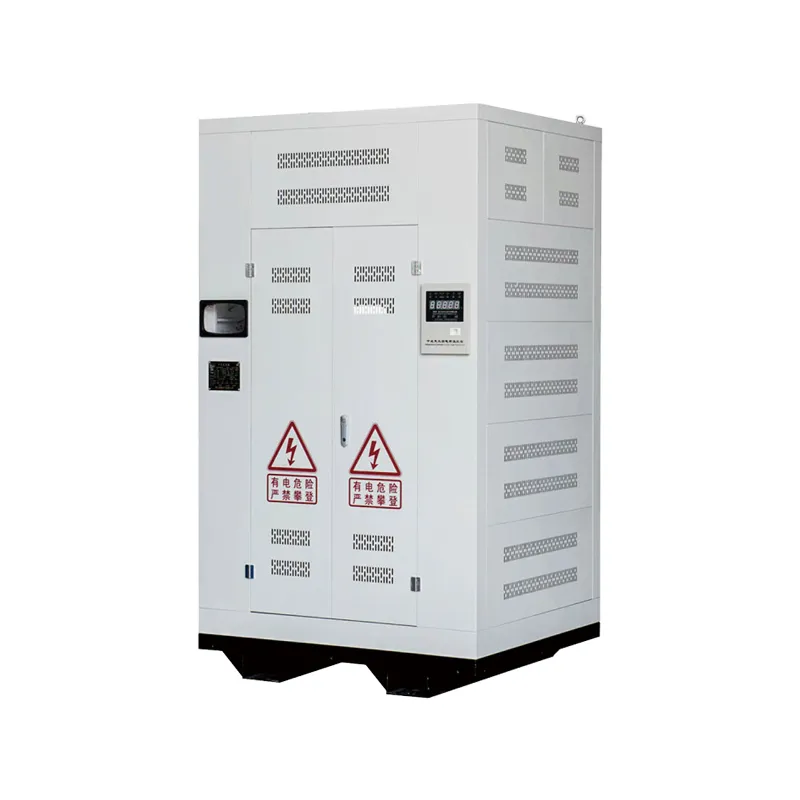
Product recommendation: For 2000 kVA class projects, start engineering review with the SC(B) resin insulated dry transformer series and the broader transformer category.
| Better fit | Poor fit without extra study |
|---|---|
| Industrial/commercial MV-LV distribution with documented load | Unknown harmonic profile with no mitigation plan |
| Buyers who can supply SL diagram and protection data | Rush PO without voltage class confirmation |
| Projects accepting catalog-to-drawing confirmation cycle | Assumed utility approval without interconnection review |
Submit primary/secondary voltage, vector group, ambient conditions, altitude, and required test documents through Contact Us for model-specific confirmation.
Part 7. Common specification mistakes
- Comparing quotations that use different impedance bases or reference temperatures for losses.
- Using catalog weight for foundation design without the issued GA drawing.
- Ignoring altitude or ambient derating on outdoor installations.
- Selecting vector group without confirming grounding philosophy.
- Treating marketing brochures as substitutes for type-test or routine-test reports.
- Mixing 2000 kVA nameplate with downstream panel ratings that assume a different secondary voltage.
FAQ
What is a 2000KVA transformer used for?
It typically steps medium voltage to low-voltage distribution for industrial campuses, utility secondary networks, and large commercial plants at the 2000 kVA rating.
What cooling is typical at 2000 kVA?
Dry-type units rely on natural air (AN) with optional forced-air cooling for overload strategies—confirm enclosure and ventilation on the datasheet.
What primary voltages are common?
Public LBAJI catalogs list 6–11 kV class primaries for many distribution units; confirm with your single-line diagram and utility rules.
What impedance should I expect?
Catalog reference for 2000 kVA is about 6%; verify with your protection study before final approval.
What documents should I request?
Type or routine test reports, GA drawings, wiring diagrams, loss certificates, tap data, and spare-parts lists.
Can this rating be used outdoors?
Indoor ventilated electrical rooms are typical; outdoor dry-type requires purpose-built enclosures—confirm IP rating and HVAC on drawings.
How do I compare dry type vs oil at this size?
Compare fire risk, maintenance, ventilation or oil containment, lifecycle losses, and indoor/outdoor constraints—not headline kVA alone.