
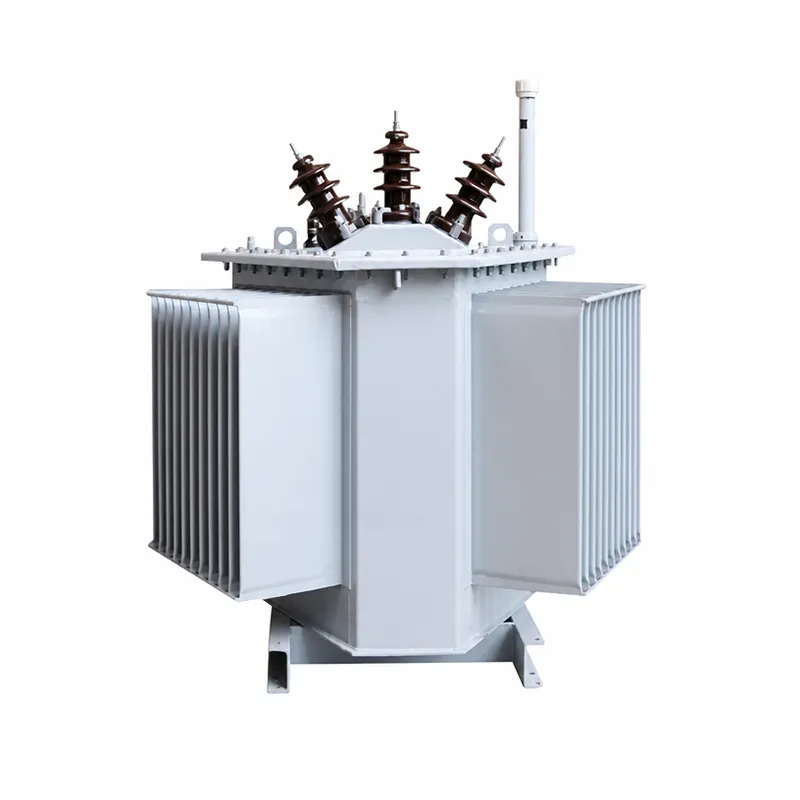
A 630KVA oil immersed power transformer should be compared only after the voltage ratio, connection group, loss basis, impedance, site arrangement and documentation requirements are on the same project sheet. The kVA label establishes rated capacity, but it does not settle the required construction or the bid’s technical completeness.
Use a public product table to narrow the discussion, then hold the final configuration to the approved datasheet, drawings and agreed test documentation.
Part 1. Define the 630KVA duty before comparing hardware
The rated capacity is one input in a distribution design, not a substitute for the single-line diagram. Establish the required primary and secondary voltage, frequency, load profile, grounding approach and downstream protection interfaces before reviewing a supplier’s product range.
At this rating, two quotations can both say 630KVA while serving different voltage systems or connection arrangements. The Transformer category is the product-line starting point; the existing 630KVA electrical transformer applications article gives separate application context.
Part 2. Put voltage, vector group and taps on one comparison sheet
The public S-M oil-immersed power transformer series tables list 630KVA entries, including options such as 6-11kV primary and 0.4kV secondary, connection groups and tap ranges. Treat all values below as catalog references until the selected series and drawing are confirmed.

| Field | Catalog or project question | Why it matters | Quote input |
|---|---|---|---|
| Rated capacity | 630KVA | Establishes the duty basis | load schedule and operating profile |
| Voltage ratio | Published tables list several primary options and 0.4kV secondary | Must fit the approved network | required primary and secondary voltage |
| Connection group | Dyn11 and Yyn0 are published options | Affects grounding and downstream compatibility | vector group required by the project |
| Tap range | Published tables show tap alternatives | Supports voltage regulation planning | required tap positions and control method |
| Impedance | 4.50% is a public S11-M 630KVA reference | Must align with protection coordination | fault-level and relay-study inputs |
| Mechanical data | Dimensions and weight differ by selected series | Drives civil and handling review | GA drawing and lifting-data request |
Part 3. Read loss and impedance figures in their stated conditions
Losses should be compared with the same series, voltage combination, connection group and stated reference conditions. The LBAJI S11-M 630KVA row publishes 810W no-load loss and 6200W load loss as references; those figures are not interchangeable with another series or a differently configured unit.
Impedance belongs in the protection discussion, not just in a catalog comparison. Give the system fault level and the protection engineer’s required assumptions to every bidder, then compare the returned value on the same basis.
Important: A public catalog value does not prove that a specific transformer is suitable for a utility interconnection, foundation or local installation rule. Confirm the ordered configuration against the approved technical specification and drawings. Source: IEC 60076-1.
Part 4. Turn physical layout inputs into an installation review
Oil-immersed equipment needs a site review that connects the product drawing to cable entries, access, lifting, ventilation, drainage or containment provisions and maintenance space. A preliminary footprint is useful for budgeting, but it cannot replace the issued GA drawing.
Project teams should also identify indoor or outdoor placement, ambient conditions, elevation, cable approach and any site-specific safety requirements. Those conditions can alter the accessories, termination arrangement and civil work that must be evaluated with the selected design.
The 500KVA oil immersed transformer selection guide and 800KVA oil immersed transformer RFQ checklist cover adjacent capacity decisions without replacing the 630KVA project review.
Part 5. Ask vendors for evidence that matches the bid
Make each quotation respond to the same evidence request. This exposes whether a price difference comes from a changed voltage, loss basis, connection arrangement, accessory scope or document commitment.
Request these items with the inquiry:
- a datasheet showing the proposed voltage ratio, rated capacity, vector group, taps, losses and impedance;
- a GA drawing with terminal orientation, overall dimensions, weight and lifting points;
- connection and nameplate information consistent with the single-line diagram;
- the applicable routine-test or agreed test-document plan;
- a clear list of supplied accessories, exclusions and any conditions requiring engineering confirmation.
Part 6. Start an oil-immersed series review with clear boundaries
For an oil-immersed 630KVA distribution inquiry, begin with the S-M oil-immersed power transformer series and map the project inputs to a proposed series. The product page is useful for identifying the available discussion fields, while the quote and drawing establish the ordered unit.

| Better fit | Requires additional confirmation |
|---|---|
| A documented distribution duty with voltage and protection information | A request without a voltage ratio or single-line diagram |
| Buyers able to compare losses and impedance on matching assumptions | A layout based solely on a public catalog footprint |
| Projects with a defined oil-immersed installation concept | An assumed approval, containment arrangement or accessory package |
Send the electrical and site inputs through Contact Us for a configuration-specific review.
Part 7. Stop false like-for-like comparisons early
- Do not compare loss figures that use different configurations or reference conditions.
- Do not leave vector group and tap requirements to be inferred by a supplier.
- Do not treat a published weight as final lifting or foundation data.
- Do not compare impedance without the system’s protection and fault-level context.
- Do not assume that a generic oil-immersed description defines the accessories or installation provisions.
- Do not issue a purchase order before the selected datasheet, drawings and test-document scope match the bid.
FAQ
What is a 630KVA oil immersed power transformer used for?
It is considered for a defined three-phase distribution duty where the approved voltage, load and installation conditions support that capacity. The project electrical design determines the final arrangement.
What voltage should be placed on a 630KVA transformer RFQ?
State both the required primary and secondary voltage from the single-line diagram. Public catalog options are useful for screening, but the RFQ must state the project’s actual ratio.
Why does vector group matter in a 630KVA selection?
The vector group affects the phase relationship and grounding approach used by connected equipment. Name the required group in the inquiry instead of comparing quotes with different connection arrangements.
Can I compare the listed no-load and load losses directly?
Only when the selected series, voltage combination, connection group and stated loss conditions match. Ask suppliers to identify the basis of every quoted figure.
Do catalog dimensions establish a final foundation layout?
No. Catalog dimensions support preliminary planning. The issued GA drawing, terminal orientation, handling method and site clearances must be reviewed before construction is released.
Which documents should accompany the bid?
Request a proposed datasheet, GA drawing, connection information, accessory scope and the agreed test-document plan. The exact requirements depend on the project specification.