
A power distribution block accepts one or more incoming conductors and divides power into several outgoing circuits. It creates a compact, organized alternative to stacking multiple cable lugs on a breaker or busbar. Correct selection depends on current, voltage, conductor material and size, short-circuit rating, insulation, branch protection and enclosure conditions. This guide covers industrial electrical distribution blocks, fused designs, terminal blocks and 12 V applications.
What Is an Electrical Power Distribution Block?
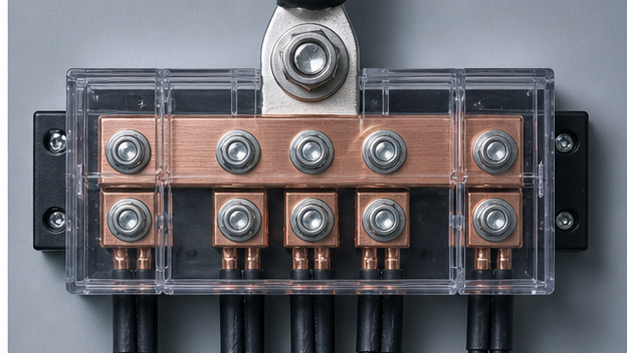
The conductive body is usually copper, tin-plated copper, brass or aluminum and is enclosed or covered with insulating material. A large incoming terminal connects to several smaller outgoing terminals. The block does not automatically provide switching or overcurrent protection; an unfused block is mainly a connection and current-sharing component.
Typical uses include control panels, machinery, distribution cabinets, battery systems, solar equipment and vehicle electrical systems. The block must be installed inside a suitable enclosure unless its own construction is approved for the environment.
Power Distribution Block vs Busbar vs Terminal Block
A distribution block concentrates one-to-many connections in a compact insulated device. A busbar is a larger common conductor designed to collect or distribute higher current across multiple feeders. A terminal block primarily provides orderly point-to-point connections and may use jumpers to create a common potential.
There is overlap, so selection should rely on certified ratings and the manufacturer’s intended use rather than the product name. In a complete panel, a main busbar may feed molded-case breakers, while smaller distribution blocks and DIN-rail terminals serve branch or control circuits.
Quick Comparison and Selection Table
Use this table as a quick review of the main engineering and procurement decisions explained in the article.
| Decision area | Practical meaning | What to verify |
|---|---|---|
| What Is an Electrical Power Distribution Block? | The conductive body is usually copper, tin-plated copper, brass or aluminum and is enclosed or covered with insulating material. | A large incoming terminal connects to several smaller outgoing terminals. |
| Power Distribution Block vs Busbar vs Terminal Block | A distribution block concentrates one-to-many connections in a compact insulated device. | A busbar is a larger common conductor designed to collect or distribute higher current across multiple feeders. |
| Types of Power Distribution Blocks | Open blocks provide easy access but require barriers or an enclosure to prevent accidental contact. | Covered blocks add a removable insulating shield. |
| Conductor and Terminal Compatibility | Never assume a terminal accepts both copper and aluminum. | Dissimilar metals, oxide films and thermal expansion can create overheating. |
| Protection and Panel Integration | An unfused block downstream of a main breaker is protected only within the limits of that breaker and the conductors. | If outgoing conductors have lower ampacity, branch protection may be required at the split. |
Types of Power Distribution Blocks
Open and covered blocks
Open blocks provide easy access but require barriers or an enclosure to prevent accidental contact. Covered blocks add a removable insulating shield. A clear cover helps inspection but must still meet the required touch-safe and flammability rating.
Finger-safe distribution blocks
Finger-safe designs recess conductive parts and limit access with a standardized test finger. They reduce accidental contact during normal panel access, but they do not make energized work safe.
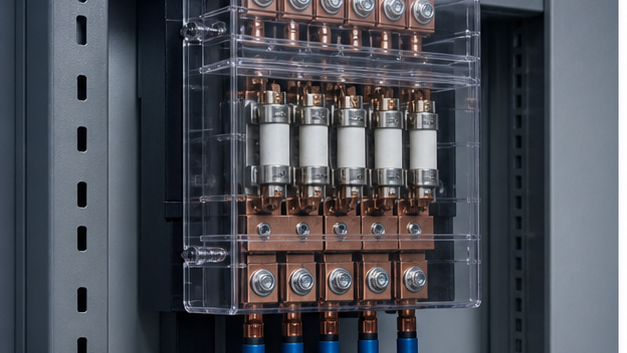
Fused power distribution blocks
A fused block places a fuse in each branch or at defined outputs. It can protect smaller outgoing conductors when the upstream device is too large for them. Fuse class, voltage, interrupting rating and coordination must match the available fault current.
DIN-rail distribution terminals
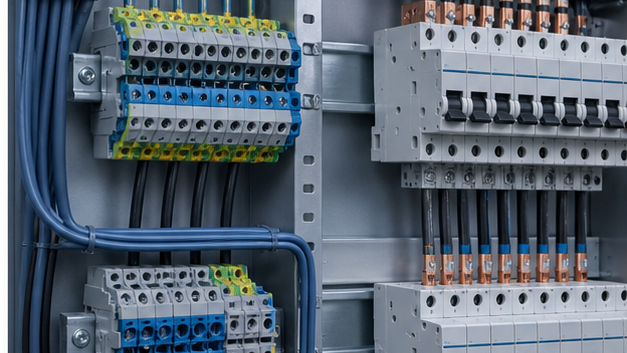
Modular DIN-rail blocks are useful for lower-current power and control distribution. Accessories include bridges, markers, test points and protective-earth terminals. Verify current with the actual conductor size and number of adjacent loaded terminals, because enclosure temperature can affect allowable current.
12 V and automotive distribution blocks
A 12 V power distribution block is common in battery, marine and vehicle systems. Low voltage does not mean low risk: battery fault current can be extremely high. Use DC-rated fuses close to the source, correct cable size, secure insulation and corrosion-resistant terminals. Automotive audio blocks are not automatically suitable for industrial or photovoltaic DC duty.
How to Select a Power Distribution Block
- Rated voltage: match AC or DC system voltage and insulation category.
- Continuous current: account for load, ambient temperature and enclosure heating.
- Incoming and outgoing conductors: verify number, material, cross-section and strand class.
- Terminal method: confirm set-screw, stud, clamp or lug compatibility and tightening torque.
- Short-circuit rating: coordinate the block and protection with available fault current.
- Branch protection: determine whether each smaller conductor requires a fuse or breaker.
- Touch protection: specify covers, barriers and finger-safe construction.
- Environment: consider vibration, moisture, pollution, corrosion and enclosure IP rating.
Conductor and Terminal Compatibility
Never assume a terminal accepts both copper and aluminum. Dissimilar metals, oxide films and thermal expansion can create overheating. Use only listed conductor combinations, preparation methods and compounds. Fine-stranded flexible cable may require a ferrule or approved lug rather than direct clamping.
Tighten terminals to the stated torque with a calibrated tool. Under-torque increases resistance; over-torque can damage strands or the block. After commissioning, thermal imaging under representative load can reveal poor joints.
Protection and Panel Integration
An unfused block downstream of a main breaker is protected only within the limits of that breaker and the conductors. If outgoing conductors have lower ampacity, branch protection may be required at the split. A short-circuit and coordination study should verify the protective device clears faults within the block’s withstand rating.
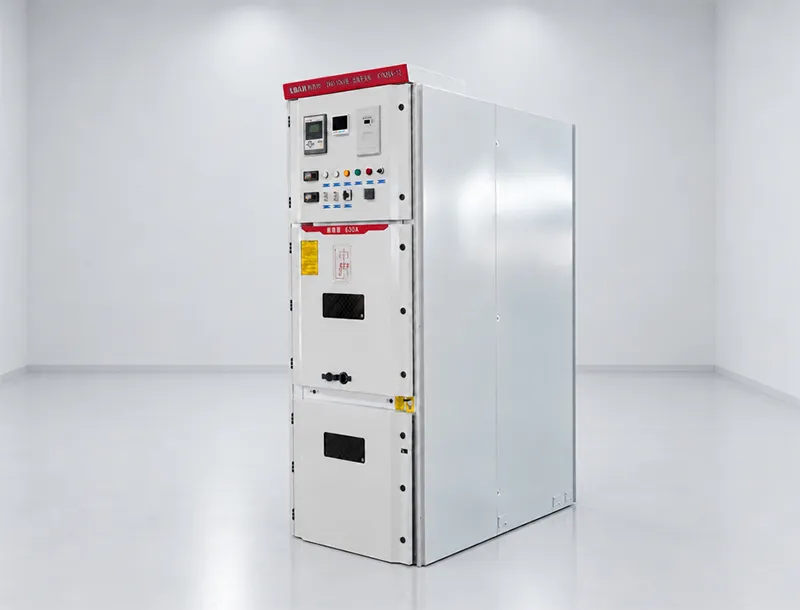
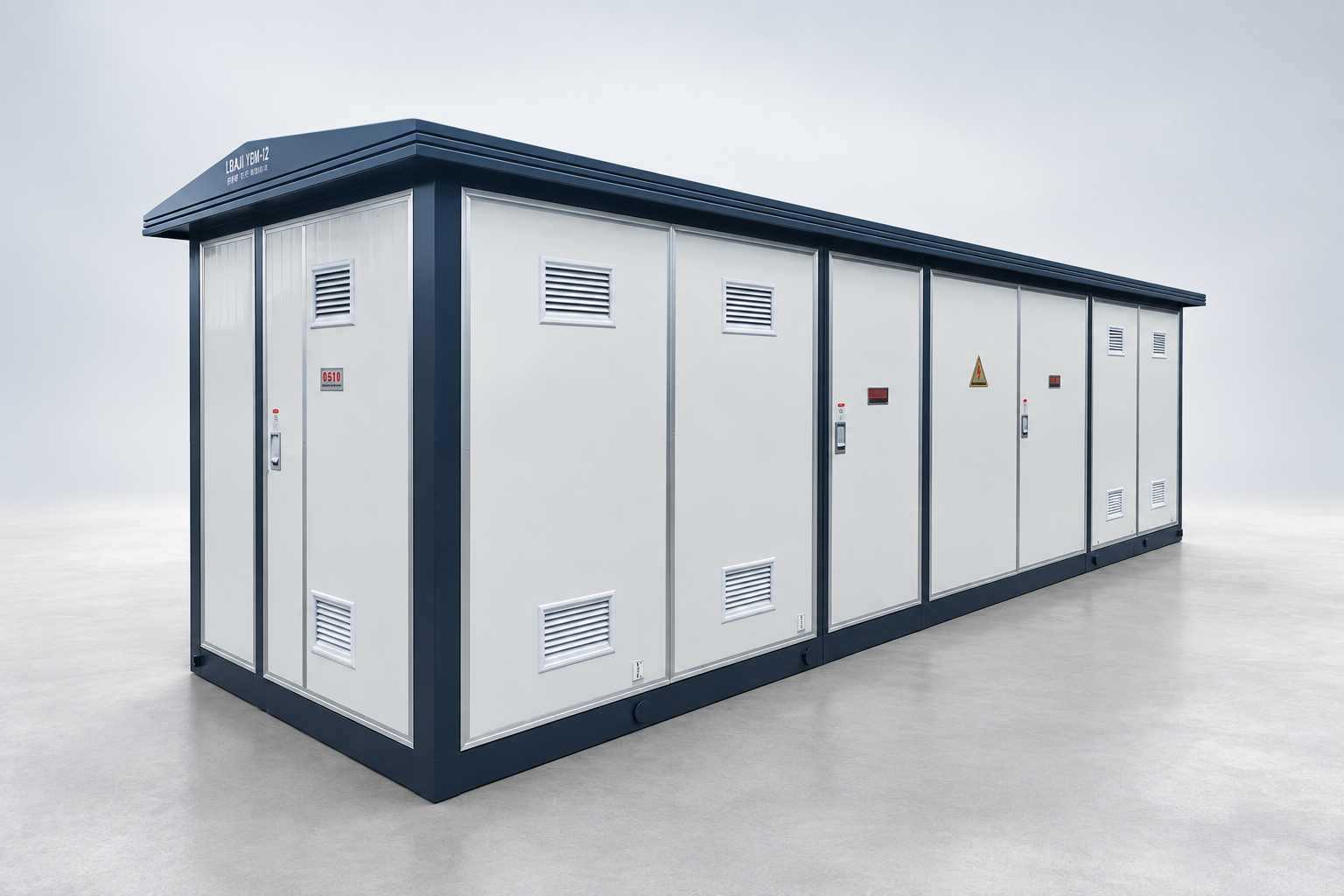
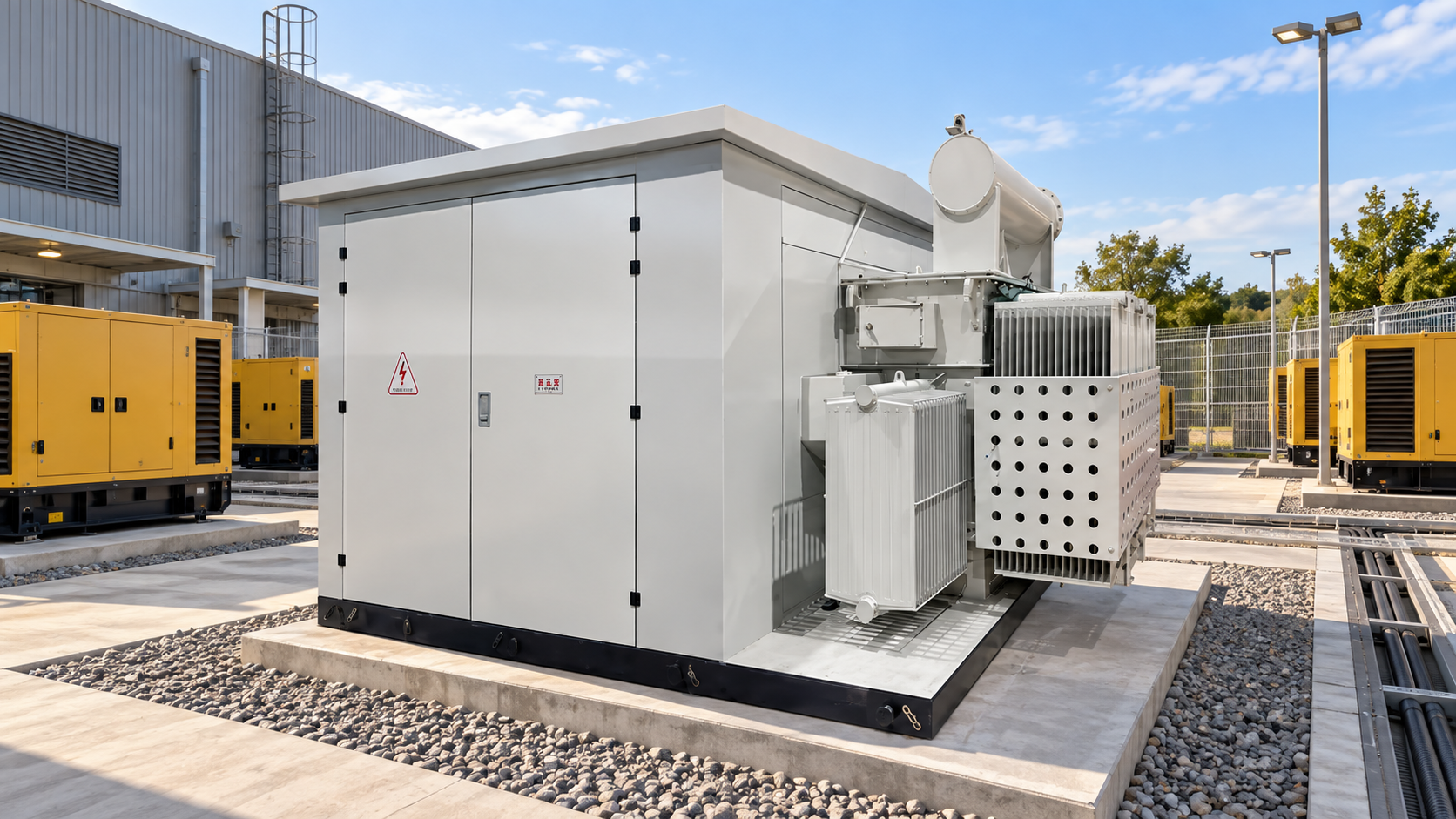
In larger systems, distribution blocks sit downstream of equipment such as YBM-12 prefabricated substations and low-voltage distribution cabinets. Medium-voltage feeders may originate from KYN28A-12 switchgear, while compact networks use an LBHB-12 RMU. Each voltage level needs purpose-rated components.
Installation Checklist
- De-energize, isolate and verify absence of voltage before work.
- Mount the block securely with required creepage and clearance.
- Keep one conductor per terminal unless multiple conductors are explicitly approved.
- Strip to the specified length without damaging strands.
- Apply the manufacturer’s torque and install all covers.
- Label incoming and outgoing circuits and update panel drawings.
- Inspect and thermally scan after commissioning under load.
SCCR and upstream protection
A distribution block must withstand the available fault current in its final combination with conductors and upstream protection. The marked short-circuit current rating may depend on a particular fuse or breaker. Using a larger protective device or a different conductor arrangement can reduce the assembly rating even when normal current is acceptable.
Terminal and conductor compatibility
Confirm copper or aluminum suitability, conductor size and class, number of conductors per port, strip length and tightening torque. Fine-stranded flexible conductors may require ferrules or a terminal specifically approved for that class. Covers and finger-safe construction reduce accidental contact but do not replace enclosure and isolation requirements.
Technical references and further reading
The following independent sources support the standards, terminology, calculations, and safety context discussed in this guide:
- IEEE C37.121 unit substation requirements — Guidance for coordinating transformer, incoming, outgoing, and transition equipment in distribution substations.
- NIST SI units for electric current — Reference definitions for current, voltage, resistance, and power used in distribution calculations.
- OSHA power transmission and distribution safety — Official overview of important safety differences and practices in transmission and distribution systems.