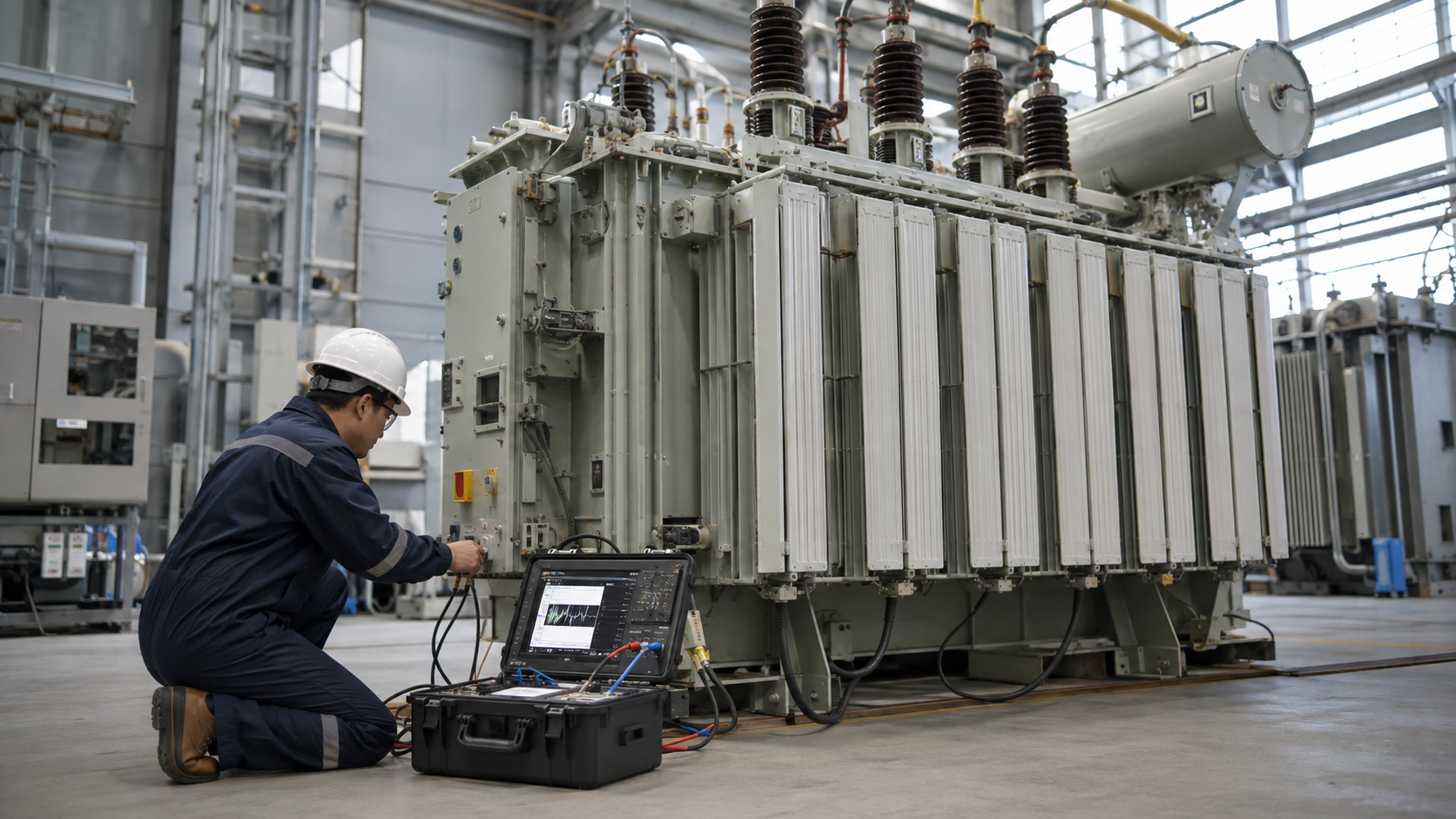

An electrical transformer transfers alternating-current energy between circuits through electromagnetic induction. It can raise or lower voltage, provide isolation, create a neutral and match equipment to a power system. This guide explains transformer operation and compares power, distribution, single-phase, three-phase, oil-filled, dry-type, isolation, buck-boost, pole-mounted and pad-mounted designs.
How an Electric Transformer Works
Alternating current in the primary winding creates changing magnetic flux in the core. That flux induces voltage in the secondary winding. Voltage ratio is approximately equal to turns ratio:
V₂/V₁ = N₂/N₁
For nearly constant apparent power, current changes inversely with voltage. A step-up transformer raises voltage and reduces current; a step-down transformer lowers voltage and increases current, excluding losses.
Power vs Distribution Transformer
Power transformers transfer bulk energy at substations and are optimized around system loading, losses, regulation and reliability. Distribution transformers supply final networks and spend long periods energized, making no-load loss important. The distinction is functional rather than a single universal kVA boundary.
Quick Comparison and Selection Table
Use this table as a quick review of the main engineering and procurement decisions explained in the article.
| Decision area | Practical meaning | What to verify |
|---|---|---|
| How an Electric Transformer Works | Alternating current in the primary winding creates changing magnetic flux in the core. | That flux induces voltage in the secondary winding. |
| Power vs Distribution Transformer | Power transformers transfer bulk energy at substations and are optimized around system loading, losses, regulation and reliability. | Distribution transformers supply final networks and spend long periods energized, making no-load loss important. |
| Single-Phase vs Three-Phase | Single-phase transformers serve residential, control and smaller commercial loads. | Three-phase transformers serve industrial and utility systems and may use one three-limb core or a bank of three single-phase units. |
| Oil-Immersed Transformers | Insulating liquid provides dielectric strength and transfers heat to the tank and radiators. | Mineral oil is common; higher-fire-point alternatives may be selected for specific risks. |
| Dry-Type Transformers | Dry units use air and solid insulation, including cast-resin or ventilated constructions. | They avoid large volumes of combustible liquid and suit many indoor locations. |
Single-Phase vs Three-Phase
Single-phase transformers serve residential, control and smaller commercial loads. Three-phase transformers serve industrial and utility systems and may use one three-limb core or a bank of three single-phase units. Three-phase connection and vector group affect neutral, grounding and phase displacement.
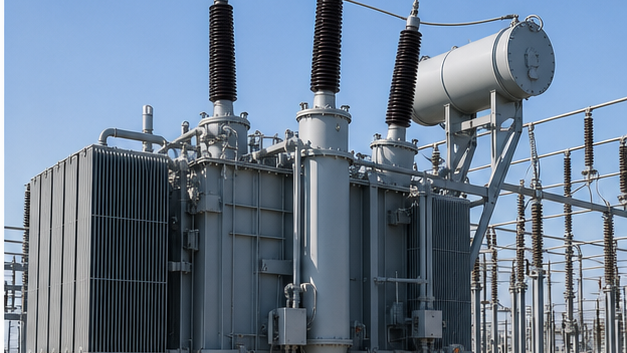
Oil-Immersed Transformers
Insulating liquid provides dielectric strength and transfers heat to the tank and radiators. Mineral oil is common; higher-fire-point alternatives may be selected for specific risks. Conservator or sealed-tank systems manage expansion. Oil testing tracks moisture, acidity, dielectric strength and dissolved gases.
Dry-Type Transformers
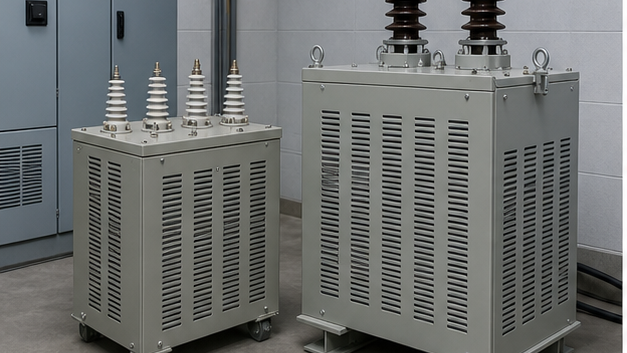
Dry units use air and solid insulation, including cast-resin or ventilated constructions. They avoid large volumes of combustible liquid and suit many indoor locations. Room ventilation, dust, humidity, sound and fire requirements still need design attention.
Isolation Transformer
An isolation transformer normally has separate primary and secondary windings and may have a 1:1 ratio. It provides galvanic separation and can create a separately derived grounding arrangement. It does not eliminate electrical hazards; secondary grounding and protection remain necessary.
Buck-Boost Transformer
A buck-boost transformer makes a modest voltage adjustment, such as correcting 208 V toward 240 V, often using an autotransformer connection. Because windings are electrically connected in autotransformer use, it does not provide isolation. Load kVA, input voltage, desired output, phase and wiring arrangement determine size.
Pole-Mounted Transformers
Pole units supply overhead distribution networks and usually serve residential or small commercial loads. Utilities define lightning arresters, cutouts, grounding, mounting and conductor clearances. Only utility-qualified personnel should work near them.
Pad-Mounted Transformers
Padmount transformers connect to underground distribution cables in a tamper-resistant enclosure. Dead-front or live-front interfaces, loop/radial feed, fusing, grounding and working space must match the utility system.

Transformer Oil and Insulation
Insulating oil must remain dry and clean. Cellulose paper provides solid winding insulation but ages with temperature, moisture and oxygen. Seals, breathers, conservator systems and oil processing control contamination. Never mix fluids without compatibility review.
Differential Transformer Protection
Differential relays compare current entering and leaving a transformer after compensating ratio and vector group. They operate for internal faults while remaining stable for external faults and magnetizing inrush. Restricted earth fault, overcurrent, temperature, pressure and gas devices provide additional coverage.
How to Select an Electrical Transformer
- Calculate diversified kVA and load profile.
- Define primary/secondary voltage, phase and frequency.
- Choose connection, vector group and grounding.
- Specify impedance, taps and regulation.
- Select liquid or dry construction and cooling.
- Apply ambient, altitude, harmonics and fire requirements.
- Check losses, sound, fault strength and protection.
- Define enclosure, terminals, accessories and tests.
LBAJI Transformer Solutions
For higher-voltage projects, review LBAJI’s 35 kV oil-immersed power transformer. Integrated distribution can use a YBM-12 prefabricated substation or 35 kV new-energy box substation.
Ideal transformer versus real transformer
An ideal transformer has no winding resistance, leakage flux, core loss or magnetizing current. Real units have copper loss, core loss, leakage reactance and finite excitation current, producing voltage regulation and heat. Efficiency and impedance data quantify these practical effects.
Bushings, cooling and auxiliary parts
Bushings carry energized conductors through the grounded enclosure. Cooling may be natural or forced air/oil depending on rating. Tap changers, temperature devices, pressure protection and level indication support voltage control and safe operation. Accessory requirements should follow duty and criticality, not a generic list.
Technical references and further reading
The following independent sources support the standards, terminology, calculations, and safety context discussed in this guide:
- IEC 60076-1 power transformer standard — Scope, terminology, ratings, connection symbols, testing, safety, and general requirements for power transformers.
- U.S. Department of Energy: Distribution Transformers — Official definitions, efficiency requirements, test procedures, and regulatory resources for distribution transformers.
- OSHA electric power transmission and distribution requirements — Safety requirements relevant to construction and work around electric power transmission and distribution equipment.