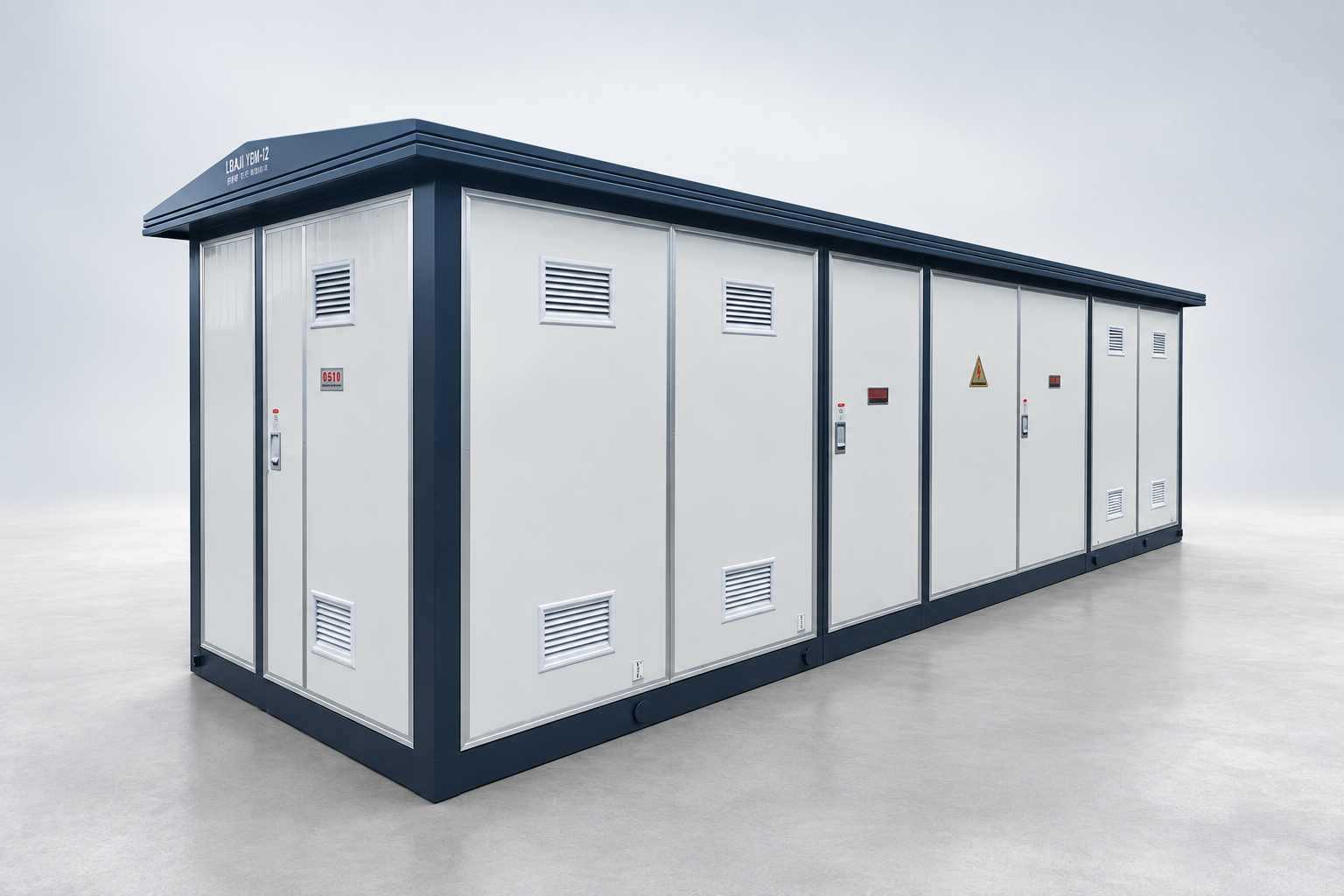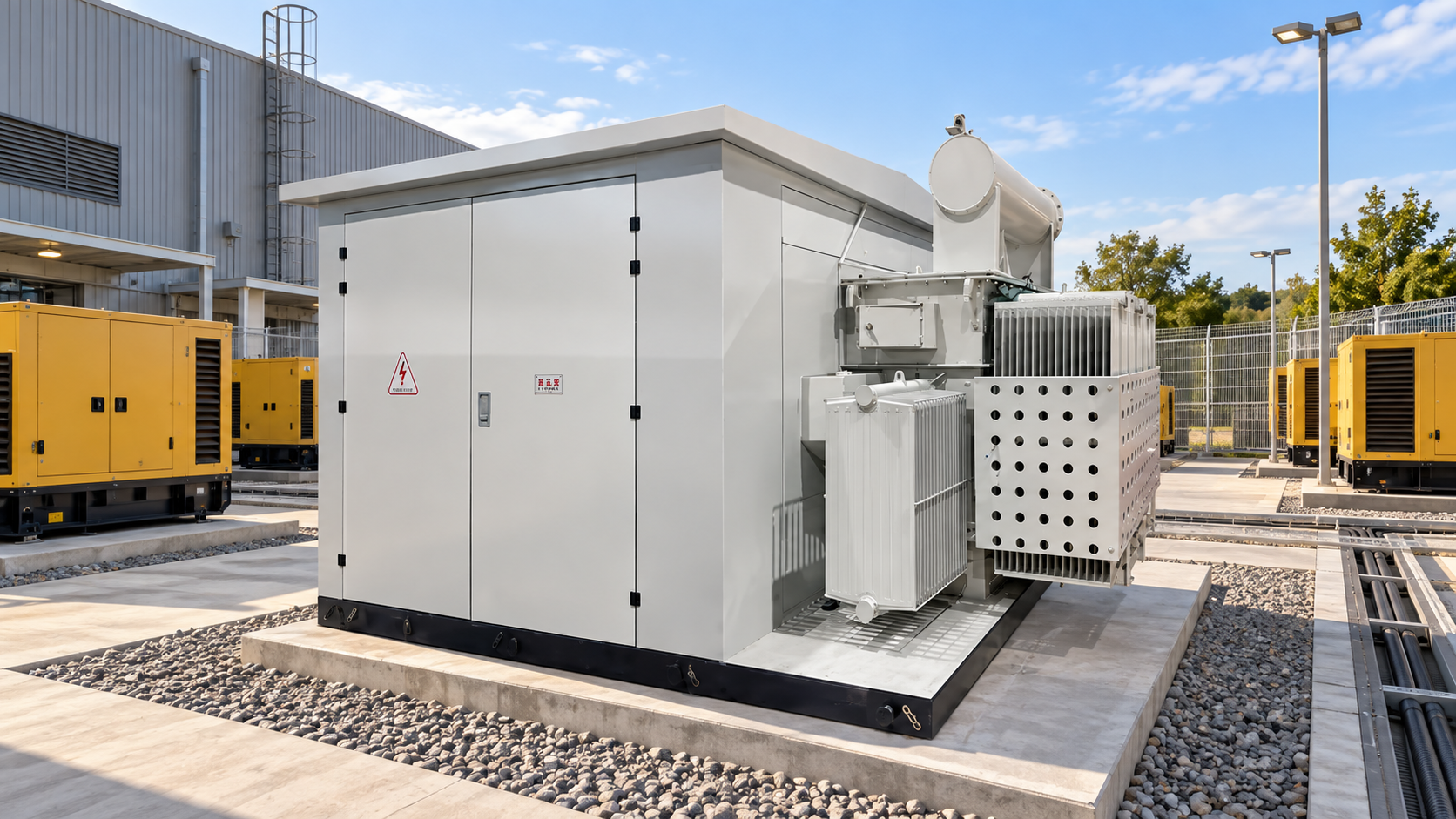

A portable power distribution unit safely divides a temporary source into protected outlets or feeders for construction, events, maintenance and emergency work; its ratings must match source voltage, phase, current, grounding, fault duty, connectors and environment. Portable does not mean informal. Cables, plugs, enclosures, residual-current protection, overcurrent devices, strain relief, impact resistance, inspection and source coordination form one temporary-power system.
Key Takeaways
- Match every connector and device to voltage, phase and current.
- Coordinate upstream protection, branch breakers and GFCI/RCD requirements.
- Inspect enclosure, cables and connectors before every deployment.
Input, Distribution and Outlet Architecture
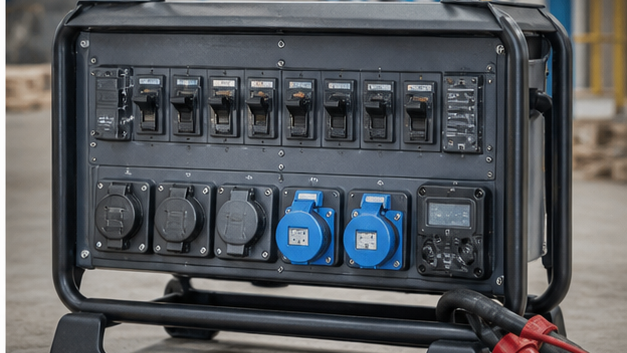
The input may be a hardwired feeder, pin-and-sleeve connector or other listed industrial interface. An isolator or main breaker feeds busbars and branch breakers, which supply receptacles or outgoing connectors. Neutral and protective-earth bars must fit the source grounding arrangement.
Label outlet voltage, phase and breaker clearly. Mechanical keying and color are helpful but cannot replace electrical verification.
Protection and Ground-Fault Requirements
Branch overcurrent protection must protect conductors and receptacles while coordinating with the upstream source. GFCI or RCD protection depends on jurisdiction, application and outlet type. Test functions do not prove the integrity of the entire grounding path.
Available fault current can exceed a small portable assembly’s rating when connected close to a large transformer or generator. Verify SCCR or conditional rating and upstream limitation.
Cable, Connector and Enclosure Selection
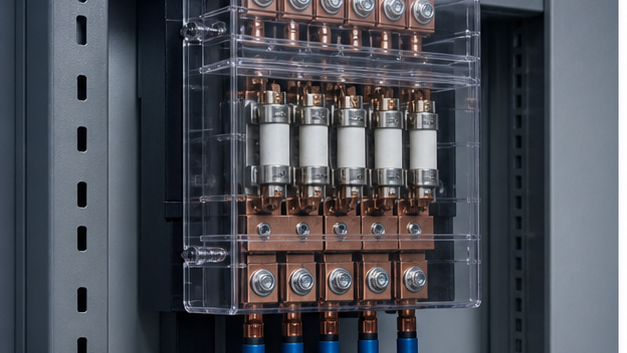
Flexible cable ampacity depends on conductor, insulation, ambient, bundling and duty. Voltage drop can become significant over long temporary runs, especially during motor starting. Strain relief must transfer pulling force away from terminals.
Outdoor units need appropriate ingress, UV, corrosion and impact resistance. Raised outlets, covers and drainage reduce water exposure, but the unit should not be placed in standing water or blocked by debris.
Portable PDU Selection Checklist
| Factor | Question | Risk if missed |
|---|---|---|
| Source | Voltage, phase, frequency, grounding and fault current? | Damage, shock or inadequate rating |
| Capacity | Main current and diversified branch load? | Overload and nuisance trips |
| Protection | Breaker and GFCI/RCD requirements? | Conductor or personnel hazard |
| Interfaces | Correct plugs, receptacles and cable? | Misconnection and overheating |
| Environment | Rain, dust, impact, UV and temperature? | Ingress, corrosion or mechanical failure |
Deployment and Inspection
Confirm source voltage, phase sequence, grounding and protection before connection. Place the PDU on a stable protected surface outside traffic and trip paths. Route cables to avoid crushing, sharp edges, heat and water.
Before each use inspect housing, fasteners, cable jacket, pins, earth contacts, breakers and covers. Periodic electrical tests and records should follow the owner program and applicable rules. Remove damaged equipment from service.
Engineering Validation and Safety Boundary
This guide supports specification and procurement; it does not replace a project study, the applicable code, the manufacturer instructions or work by qualified electrical personnel. Verify the following before equipment selection, testing, wiring or energization:
- Test source voltage and phase configuration before connection.
- Verify enclosure and device ratings for available fault current.
- Calculate cable ampacity and voltage drop for the deployed length.
- Confirm neutral and protective-earth continuity.
- Use documented pre-use and periodic inspection procedures.
Information to Include in the RFQ
A useful quotation must be based on the same technical boundary for every supplier. Include the following information and require all deviations to be listed explicitly:
- Input voltage, phase, frequency, current and connector.
- Number, type, voltage and current of each outlet.
- Main/branch breakers, GFCI/RCD and emergency isolation.
- Cable type/length, enclosure rating, impact and temperature.
- Standards, tests, labels, spares and transport features.
From Technical Data to an Approved Decision
Use a staged review rather than approving the first catalogue match. Begin with input, distribution and outlet architecture, then reconcile protection and ground-fault requirements with cable, connector and enclosure selection. Complete the review with deployment and inspection. At each stage, record the source document, units, operating case and person responsible for approval. This prevents a value copied from an old drawing, nominal system label or unrelated product from becoming an uncontrolled design input.
Before acceptance, compare the supplier response line by line with the RFQ and mark every exception. Confirm that drawings, calculations, settings, certificates and test reports refer to the exact offered model and revision. Preserve the approved submittal, nameplate data, factory results and commissioning measurements as the maintenance baseline. If a rating, connection, environment or test condition changes, repeat the affected review rather than assuming the original conclusion remains valid.
Document control should identify revision, approval status and superseded files. Field teams should receive the same approved values used for procurement, while commissioning records should capture any authorized change made during installation. This traceability is especially important when equipment is replaced years later: the next engineer needs verified interfaces and test history, not an incomplete description copied from a purchase order.
Coverage Informed by Current Search Results
The current U.S. Google top-20 review repeatedly surfaced themes including Industrial, Price, Certifications, Customer reviews, Power with confidence using the most trusted name in portable power distribution.. The article addresses those user needs in an original engineering and procurement sequence; competitor brand navigation and unrelated sales material were excluded.
Related LBAJI Resources
Continue with power distribution unit guide power distribution box guide distribution equipment. These resources help connect the calculation or component decision to a complete transformer, switchgear, control or distribution specification.
Technical References and Further Reading
- OSHA Temporary Wiring — Construction temporary wiring requirements.
- NFPA Codes and Standards — Electrical installation rules.
- NEMA Enclosures — Enclosure type guidance.
Conclusion
Specify a portable PDU from the complete temporary-power system. Source, fault rating, protection, cables, connectors and environment must agree, followed by disciplined inspection every time the equipment moves.