
A structured power transformer RFQ checklist turns supplier quotations into comparable engineering documents instead of loose marketing summaries.
Importers who request the right documents up front avoid re-quoting cycles, hidden loss penalties, and shipping surprises. This guide lists the drawings, data sheets, test evidence, and commercial records to request—and when each one matters in the procurement sequence.
Prepare your single-line diagram and load data before sending the RFQ so suppliers quote against real project constraints.

Contents
- Part 1. Why an RFQ document list changes quotation quality
- Part 2. Core technical documents to request
- Part 3. Electrical ratings the RFQ must state
- Part 4. Test reports and quality evidence
- Part 5. Commercial and shipping documents
- Part 6. Product recommendation and Fit Boundary
- Part 7. Common RFQ mistakes
Part 1. Why an RFQ document list changes quotation quality
Suppliers answer the questions they are asked. An RFQ that only states kVA and voltage invites quotations that hide loss values, tolerance assumptions, and accessory scope.
A document checklist forces every bidder to reveal the same technical evidence, which shortens clarification rounds and exposes weak offers early.
For related context, see the 2000KVA oil immersed specifications and RFQ guide.
For related context, see the 800KVA oil immersed specifications and RFQ checklist.
Part 2. Core technical documents to request
Request these documents together with the quotation, not after the purchase order.

| Document | What it confirms | Stage |
|---|---|---|
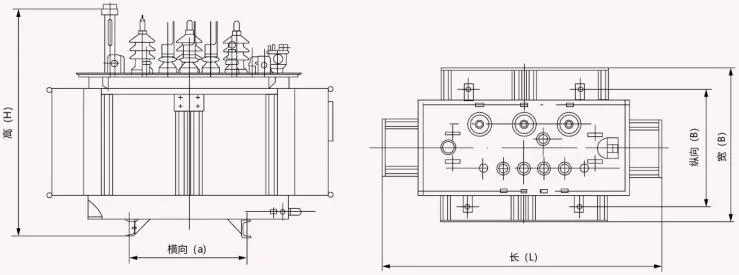
| General arrangement (GA) drawing | Dimensions, weights, bushing and cable box layout | With quotation |
| Nameplate draft | Rated kVA and voltage combination, vector group, impedance | Before PO |
| Loss and impedance sheet | No-load and load losses at one reference temperature | With quotation |
| Routine test report template | Which tests the factory performs on every unit | With quotation |
| Type test evidence | Design-level proof of temperature rise and short-circuit strength | Before PO |
| O&M manual sample | Installation, commissioning, and maintenance scope | Before shipment |
Ask which items are standard and which are priced options; the split varies by factory and export market.
Part 3. Electrical ratings the RFQ must state
State the rated kVA and voltage combination, frequency, vector group and tap range, cooling method and enclosure, and the short-circuit impedance target in one ratings table.
Add altitude, ambient range, and any harmonic-rich or motor-starting duty so the factory can confirm design margins.
Quotations built on complete ratings tables can be compared line by line without guessing what each bidder assumed.
Part 4. Test reports and quality evidence
Routine tests run on every production unit; request the report format and acceptance criteria in advance.
Separate routine tests from type and special tests, and state which type test evidence you accept: reports on identical designs, or witnessed repeats.
Reference IEC 60076-1 and IEEE C57.12.90 as the testing basis so both sides read the same definitions.
Part 5. Commercial and shipping documents
Request all quotations on the same Incoterm so freight, insurance, and export packing stay comparable.
Ask for packing method, impact recorder policy, gross weights, and the customs document set for the destination market.
Payment terms, warranty wording, and spare parts lists belong in the quotation stage, not after contract signature.
Part 6. Product recommendation and Fit Boundary
Product recommendation: Use the checklist to shortlist series-level options before requesting model drawings. Start at the transformer product category, then review the S□-M oil-immersed power transformer series and the SC(B) resin insulated dry transformer series against the approved specification.
| Better fit | Poor fit without extra study |
|---|---|
| Importers with an approved single-line diagram and load data | Buyers requesting quotes from brochure photos alone |
| Teams that can name required tests and documents | RFQs that state only kVA and a delivery wish date |
| Projects comparing losses on one reference basis | Orders placed before nameplate draft review |
Submit the rated kVA and voltage combination, vector group and tap range, no-load and load losses, cooling method and enclosure, and short-circuit impedance target through Contact Us for model-specific confirmation.
Part 7. Common RFQ mistakes
- Sending kVA-only enquiries and expecting engineering answers.
- Accepting loss values quoted at different reference temperatures.
- Skipping the nameplate draft review before releasing the purchase order.
- Leaving witness testing undefined until the factory schedule is fixed.
- Ignoring packing and impact recorder requirements for long transport legs.
- Treating catalog data as final; issued drawings govern the delivered unit.
FAQ
What documents should a power transformer RFQ request?
Request GA drawings, a nameplate draft, loss and impedance data, routine test report formats, type test evidence, and an O&M manual sample with the quotation.
Which test reports matter most for importers?
Routine test reports on the actual unit matter most; type test evidence proves the design family; special tests apply only when the contract names them.
Should the RFQ state impedance and losses?
Yes—state the short-circuit impedance target and require no-load and load losses at one reference temperature so bids stay comparable.
How do I compare supplier quotations fairly?
Fix the ratings table, loss basis, Incoterm, and document list in the RFQ, then score each quotation against the same sheet.
What drawings should suppliers provide with a quotation?
A general arrangement drawing with dimensions, weights, and terminal layout is the minimum; foundation and cable box details follow at order stage.
When should a witness test be included in the RFQ?
Include witness testing when the project or lender requires third-party evidence, and name the tests and notice period in the RFQ itself.
What shipping documents should importers request?
Packing lists, gross weight and lifting data, impact recorder policy, and the customs document set for the destination market.