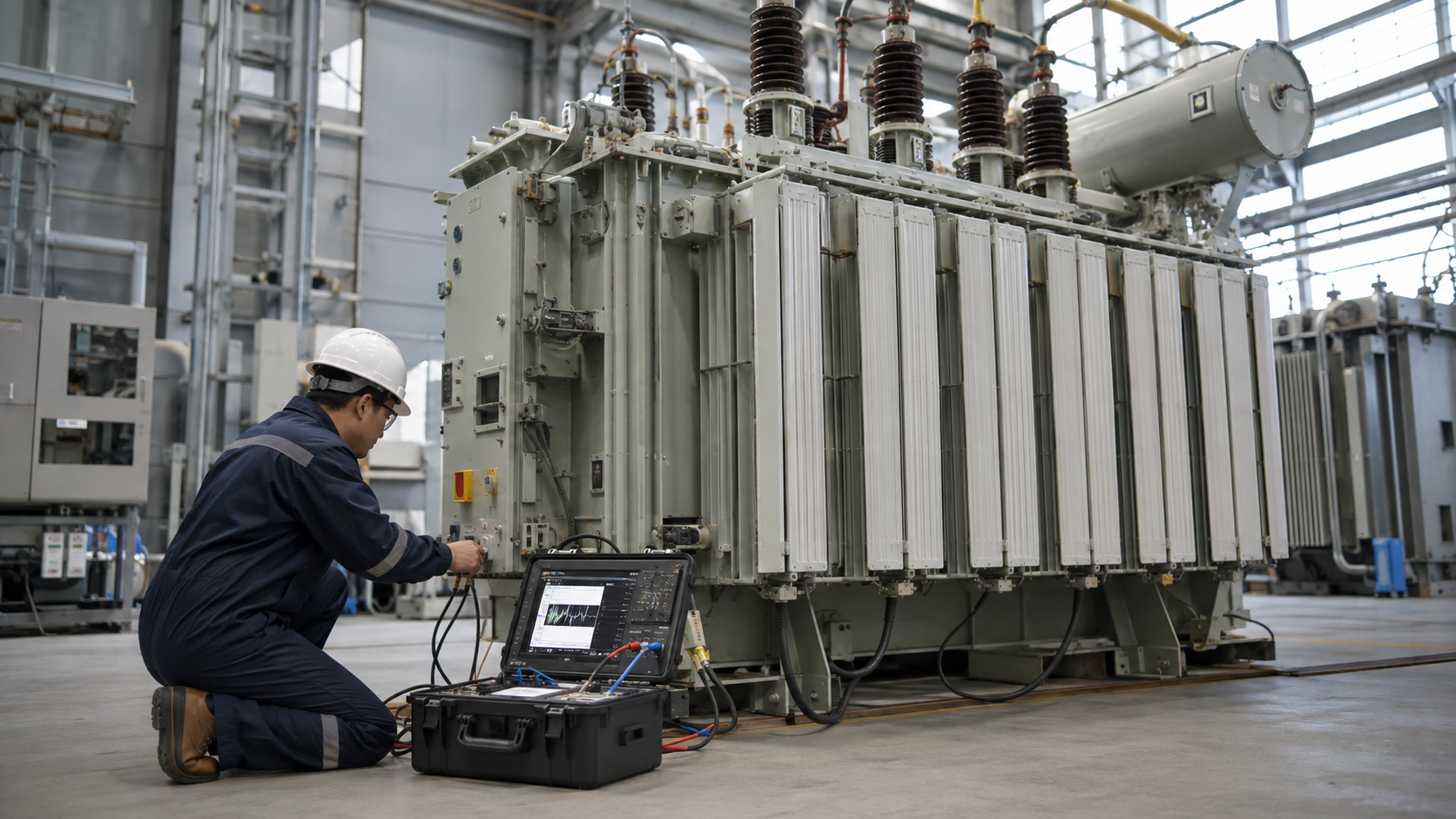

Transformer slings are engineered lifting assemblies selected from the verified transformer mass, center of gravity, approved lifting points, sling angles, edge conditions, crane geometry, environment, and applicable rigging rules; nameplate weight alone is not a lift plan.
Key Takeaways
- Identify the exact duty and system boundary before selecting equipment.
- Verify ratings, protection, environment, interfaces, and maintainability together.
- Use qualified personnel and project-specific standards for final decisions.
Quick Selection Table
| Decision area | Practical meaning | Project check |
|---|---|---|
| Confirm weight and center of gravity | Use approved drawings and shipping documentation for transformer, liquid, radiators, conservator, cable boxes, coolers, and accessories. | Verify drawings, ratings, interfaces, environment, protection, and acceptance evidence. |
| Use only approved lifting points | Distinguish lifting lugs from jacking pads, pulling eyes, tie-down points, cover eyes, and accessory brackets. | Verify drawings, ratings, interfaces, environment, protection, and acceptance evidence. |
| Sling angle and leg force | As sling legs become flatter, tension increases sharply. | Verify drawings, ratings, interfaces, environment, protection, and acceptance evidence. |
| Choose sling and hardware | Select wire rope, chain, synthetic web, round sling, shackles, hooks, master links, and spreader equipment with legible identification and adequate working load limit for hitch, angle, temperature, chemicals, edges, and dynamic effects. | Verify drawings, ratings, interfaces, environment, protection, and acceptance evidence. |
| Inspect before every lift | Remove gear from service for cuts, melted fibers, severe abrasion, broken wires, kinks, corrosion, stretched chain, damaged stitching, illegible tags, bent hooks, worn pins, cracks, unauthorized repairs, or heat damage according to the applicable criteria. | Verify drawings, ratings, interfaces, environment, protection, and acceptance evidence. |
| Plan the crane and route | Check crane capacity at actual radius, boom and outrigger configuration, ground bearing, underground services, wind, overhead conductors, clearance, travel route, landing area, and emergency actions. | Verify drawings, ratings, interfaces, environment, protection, and acceptance evidence. |
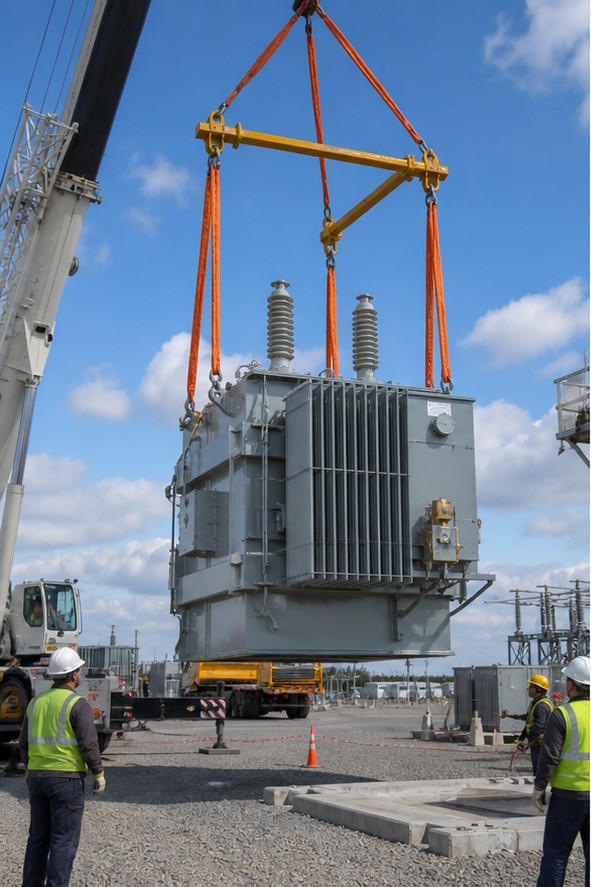
Confirm weight and center of gravity
Use approved drawings and shipping documentation for transformer, liquid, radiators, conservator, cable boxes, coolers, and accessories. Clarify whether components are installed or removed. An offset active part or cooler bank can move the center of gravity away from the tank center.
Record the assumptions behind every rating. Nameplate values, the one-line diagram, cable schedule, protection study, ambient conditions, and operating history should agree before a decision is approved. If they do not, stop and resolve the discrepancy rather than choosing a component from a catalogue description.
Use only approved lifting points
Distinguish lifting lugs from jacking pads, pulling eyes, tie-down points, cover eyes, and accessory brackets. Verify lug orientation, hole size, condition, and permitted loading. Never attach a sling to bushings, radiators, pipework, or unapproved structural members.
Treat safety as a design input. Isolation, lockout/tagout, verification of absence of voltage, grounding, stored-energy control, approach boundaries, and suitable personal protective equipment must follow the site procedure and applicable law. Only qualified personnel should open, test, connect, or lift energized-power equipment.
Sling angle and leg force
As sling legs become flatter, tension increases sharply. Calculate each leg for the actual geometry and load sharing; do not divide weight equally without considering center of gravity. A spreader beam can keep forces closer to vertical and protect bushings and tank edges.
For procurement, state the required standard, ratings, environment, interfaces, routine tests, drawings, certificates, spare parts, and acceptance criteria. Ask suppliers to list deviations explicitly. Comparable bids are possible only when every bidder is answering the same technical requirement.
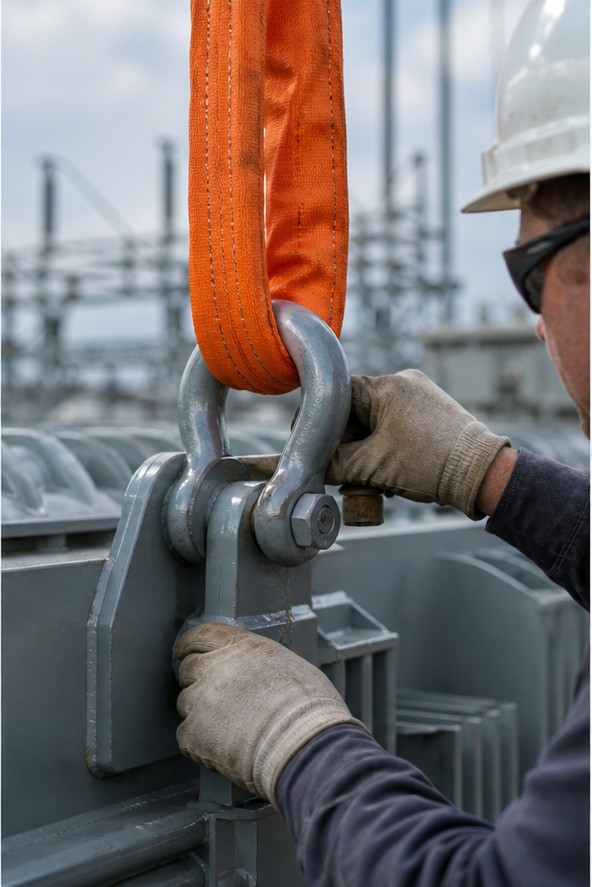
Choose sling and hardware
Select wire rope, chain, synthetic web, round sling, shackles, hooks, master links, and spreader equipment with legible identification and adequate working load limit for hitch, angle, temperature, chemicals, edges, and dynamic effects. Components must be compatible.
For maintenance, establish a clean baseline at commissioning and trend condition rather than relying on one isolated measurement. Photographs, torque records, insulation results, thermography, event logs, and oil or component tests can reveal change before it becomes an outage.
Inspect before every lift
Remove gear from service for cuts, melted fibers, severe abrasion, broken wires, kinks, corrosion, stretched chain, damaged stitching, illegible tags, bent hooks, worn pins, cracks, unauthorized repairs, or heat damage according to the applicable criteria.
Record the assumptions behind every rating. Nameplate values, the one-line diagram, cable schedule, protection study, ambient conditions, and operating history should agree before a decision is approved. If they do not, stop and resolve the discrepancy rather than choosing a component from a catalogue description.
Plan the crane and route
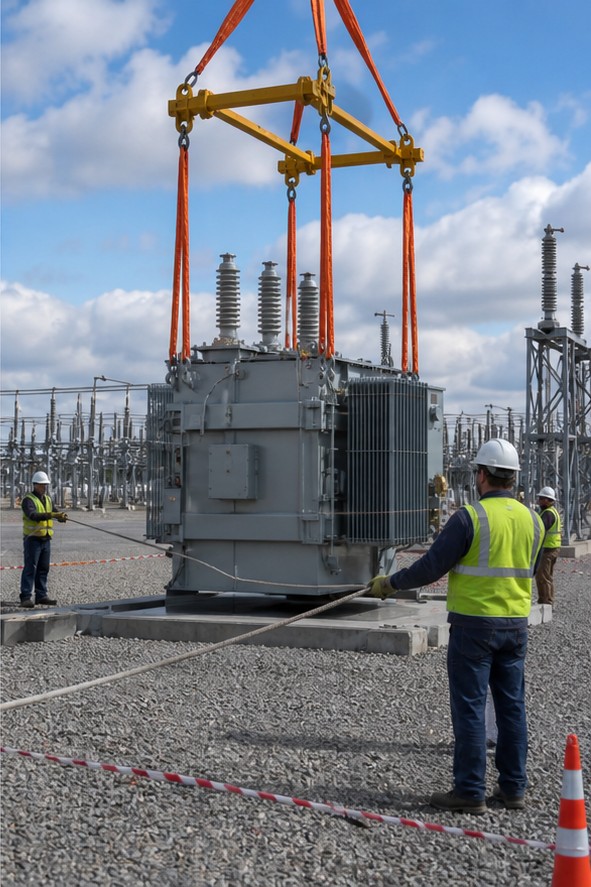
Check crane capacity at actual radius, boom and outrigger configuration, ground bearing, underground services, wind, overhead conductors, clearance, travel route, landing area, and emergency actions. Establish communication and exclusion zones.
Treat safety as a design input. Isolation, lockout/tagout, verification of absence of voltage, grounding, stored-energy control, approach boundaries, and suitable personal protective equipment must follow the site procedure and applicable law. Only qualified personnel should open, test, connect, or lift energized-power equipment.
Control the lift
Hold a pre-lift briefing, use a designated signal person, attach tag lines where appropriate, take slack gradually, make a low trial lift, verify balance and brake response, then move smoothly. No person should stand beneath or between the suspended load and a fixed object.
For procurement, state the required standard, ratings, environment, interfaces, routine tests, drawings, certificates, spare parts, and acceptance criteria. Ask suppliers to list deviations explicitly. Comparable bids are possible only when every bidder is answering the same technical requirement.
Landing, storage, and records
Prepare level supports before lifting. Keep hands out of pinch points, use tools for final alignment, and release rigging only after stability is confirmed. Record equipment IDs, inspection, calculations, lift authorization, and any damage discovered.
For maintenance, establish a clean baseline at commissioning and trend condition rather than relying on one isolated measurement. Photographs, torque records, insulation results, thermography, event logs, and oil or component tests can reveal change before it becomes an outage.
Practical Specification Workflow
- Define normal, abnormal, and contingency operating cases.
- Collect verified system and nameplate data.
- Select the governing codes and standards.
- Calculate continuous, short-time, and fault duties.
- Coordinate protection, isolation, grounding, and controls.
- Check environment, layout, transport, installation, and service access.
- Issue drawings, tests, documentation, and acceptance criteria.
- Review deviations before placing the order.
How to Review a Supplier Submittal
Begin with a compliance matrix instead of a brochure. Check every requested rating and interface against the supplier drawing, data sheet, calculation, and test plan. Confirm that stated values apply to the offered configuration, enclosure, ambient temperature, altitude, and accessories. Resolve exclusions involving protection, terminals, controls, monitoring, installation, commissioning, and spare parts before approval. Where a standard permits alternatives, record which option has been supplied.
Next, test the proposal against credible operating events: maximum and minimum voltage, peak load, starting or energization, external fault, loss of cooling, maintenance isolation, communication failure, and the planned contingency. Confirm access for inspection and component replacement. Require final as-built drawings, nameplate schedules, routine-test reports, settings, manuals, and a clear warranty contact. This review prevents a technically plausible product from arriving with the wrong interfaces or incomplete scope.
Related LBAJI Resources
Review the relevant LBAJI equipment page, the main technical guide, and the related articles on system selection and safety and installation or application planning. For a quotation, provide the one-line diagram, ratings, quantity, environment, and required standards.
Educational Video
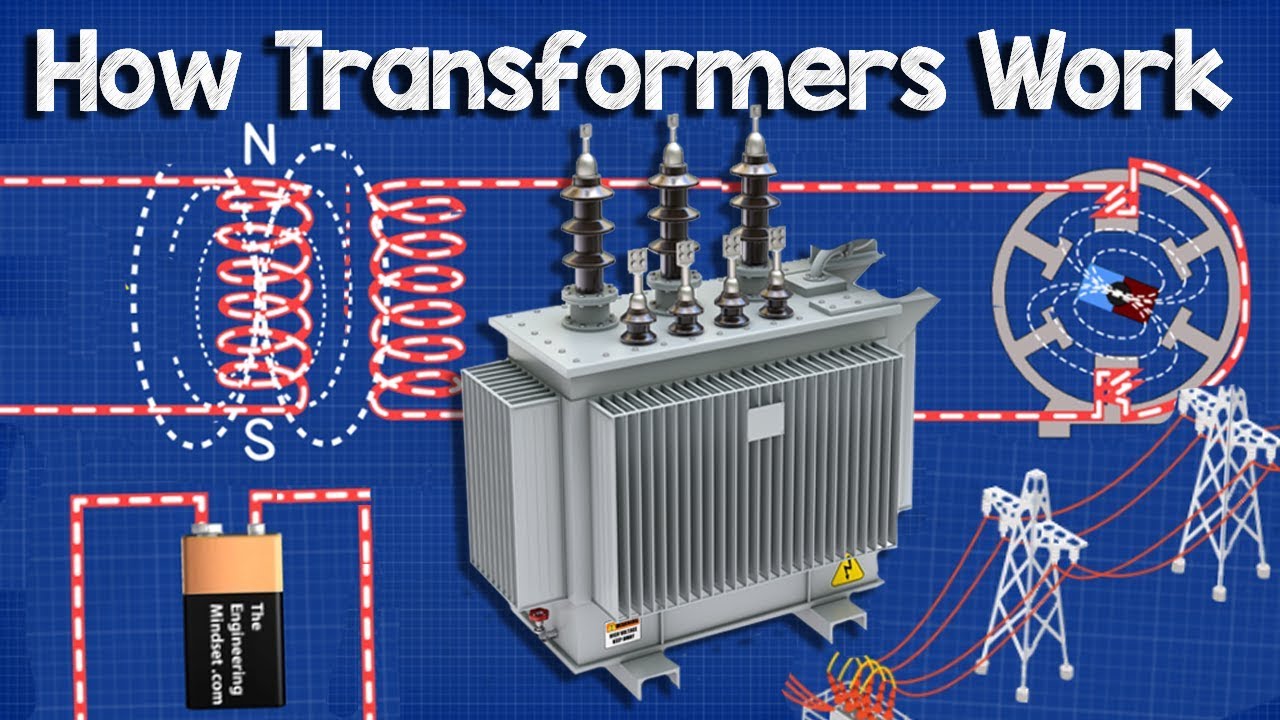
This independent video provides useful visual background for the equipment and electrical principles discussed above.
Frequently Asked Questions
Is this equipment safe to work on while energized?
No general article can authorize energized work. De-energize whenever feasible and follow the site electrical-safety program, risk assessment, and qualified-person requirements.
Which nameplate data should be recorded first?
Record manufacturer, model, serial number, voltage, phase, frequency, current or kVA, insulation or interrupting ratings, connection, cooling, and all accessory data relevant to the application.
Can a replacement be chosen from dimensions alone?
No. Mechanical fit does not prove electrical, thermal, protective, environmental, or interface compatibility.
What should be included in a supplier quotation?
Require ratings, standards, drawings, deviations, routine tests, documentation, warranty, lead time, spares, and site or commissioning scope.
Who should approve the final design?
A qualified engineer and the responsible owner, utility, authority, or safety organization should approve the design according to the jurisdiction and project scope.
Technical References
Conclusion
Transformer slings are engineered lifting assemblies selected from the verified transformer mass, center of gravity, approved lifting points, sling angles, edge conditions, crane geometry, environment, and applicable rigging rules; nameplate weight alone is not a lift plan. Final selection, installation, testing, and maintenance must be based on project data and approved procedures rather than a general web guide.