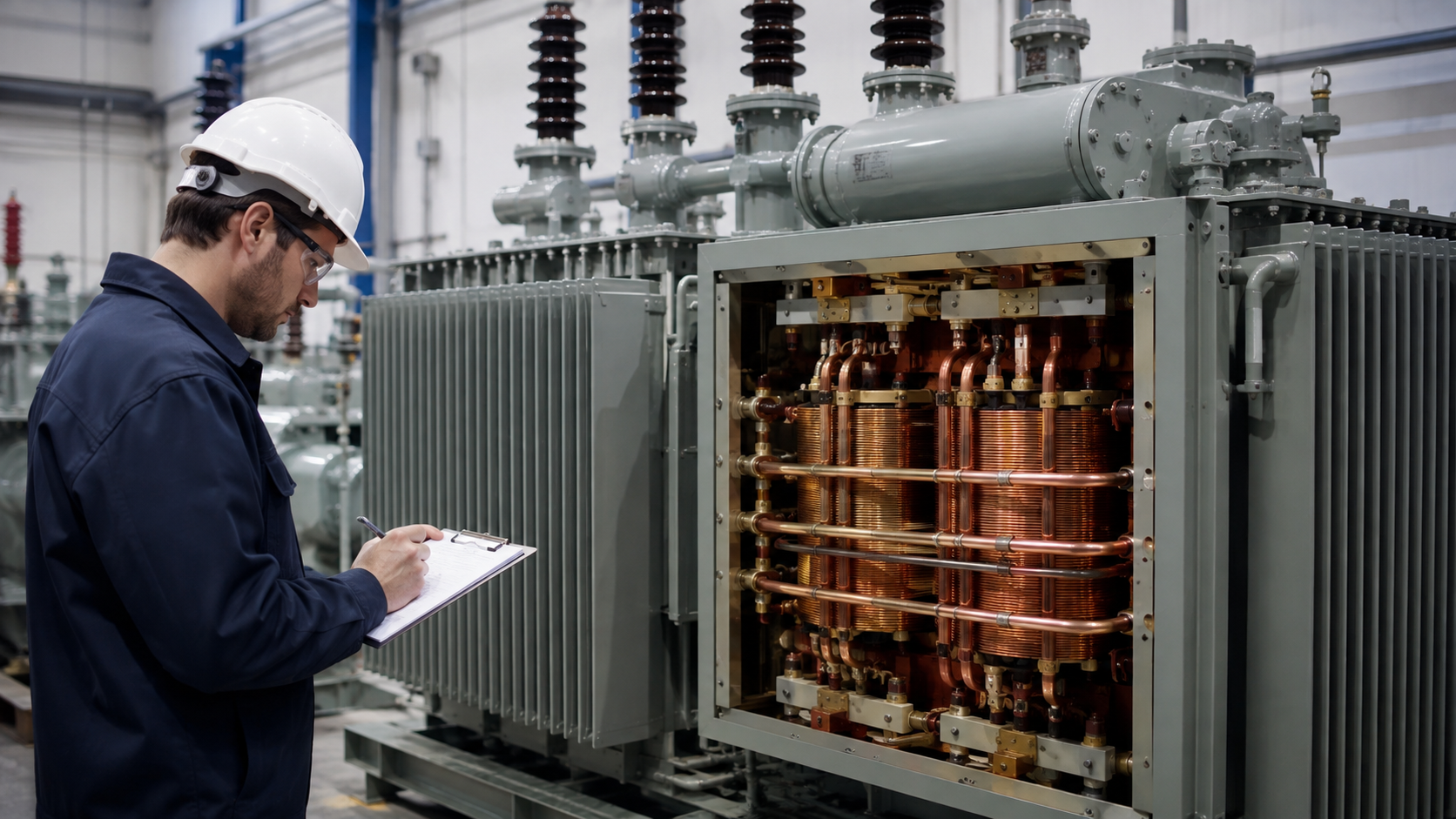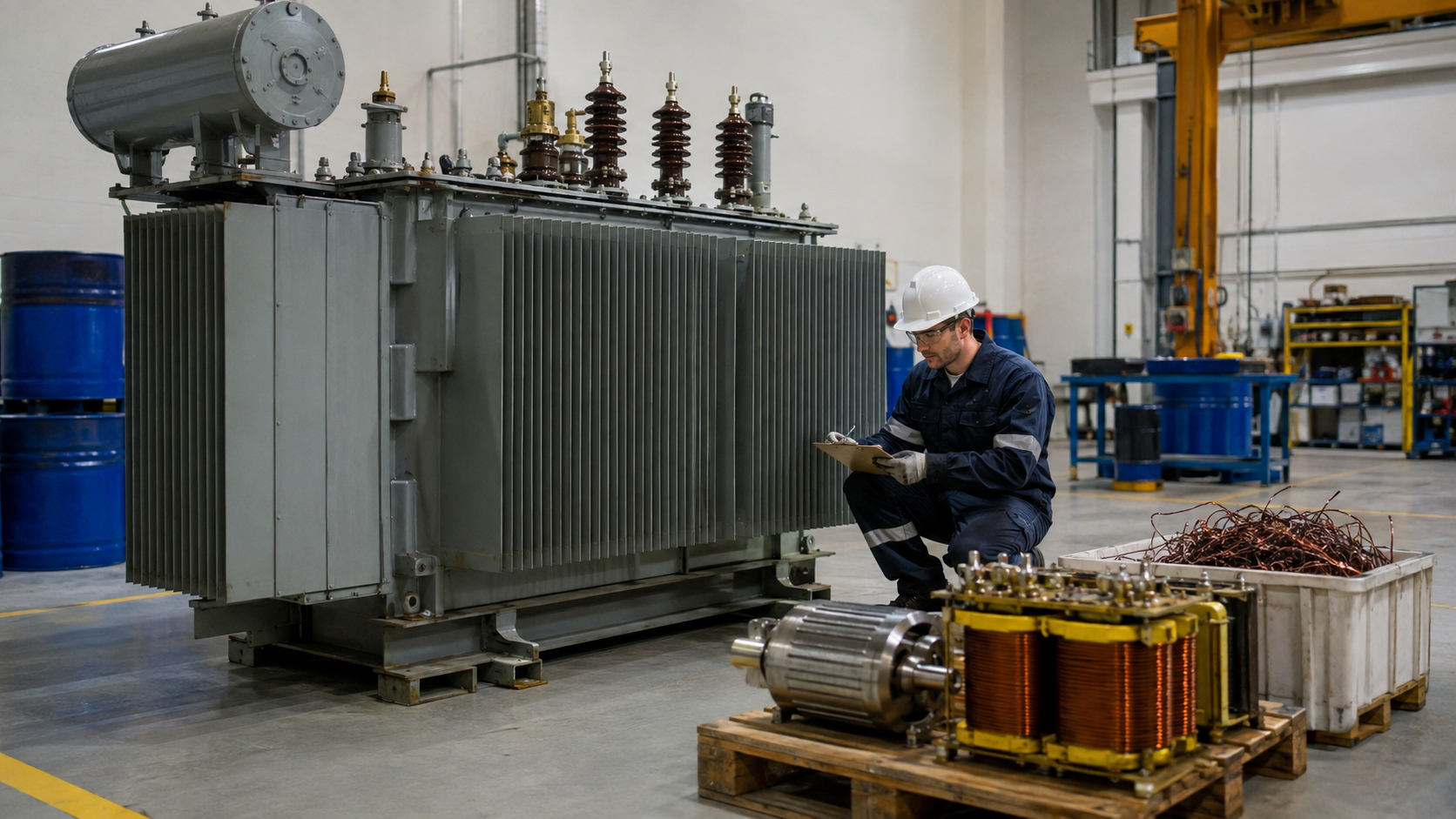

Transformer capacity, physical size and dimensions are related but not interchangeable. A 150 kVA transformer states apparent-power capability; it does not uniquely determine height, width, weight or current until voltage, phase, construction, cooling and enclosure are known. This guide compares common capacities from 15 kVA to 5,000 kVA and explains how to select a rating and obtain reliable dimensional data.
What Does Transformer kVA Capacity Mean?
kVA is apparent power. A transformer’s rated kVA defines the voltage-current combination it can carry continuously under stated cooling, temperature-rise, altitude and frequency conditions. For three phase:
kVA = √3 × line voltage × line current ÷ 1,000
For single phase:
kVA = voltage × current ÷ 1,000
The same kVA produces different current at different voltages. That current determines cables, breakers and busbars.
150 kVA Transformer Full-Load Current
A 150 kVA three-phase transformer has approximate secondary full-load current of:
- 208 V: 416 A
- 400 V: 217 A
- 415 V: 209 A
- 480 V: 180 A
At a 10 kV three-phase primary, current is about 8.66 A. These are calculated values; breaker and cable selection must also consider code factors, inrush, ambient conditions and coordination.
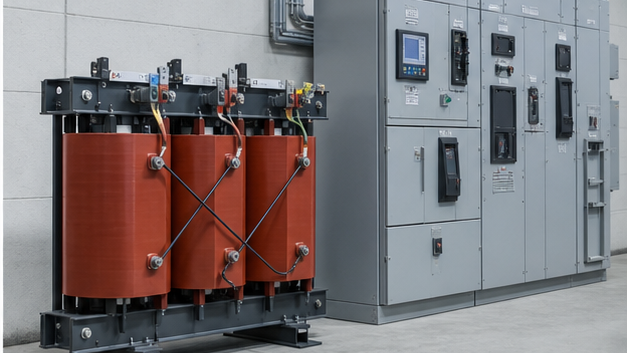
Quick Comparison and Selection Table
Use this table as a quick review of the main engineering and procurement decisions explained in the article.
| Decision area | Practical meaning | What to verify |
|---|---|---|
| What Does Transformer kVA Capacity Mean? | kVA is apparent power. | A transformer’s rated kVA defines the voltage-current combination it can carry continuously under stated cooling, temperature-rise, altitude and frequency conditions. |
| 150 kVA Transformer Full-Load Current | A 150 kVA three-phase transformer has approximate secondary full-load current of: At a 10 kV three-phase primary, current is about 8.66 A. | These are calculated values; breaker and cable selection must also consider code factors, inrush, ambient conditions and coordination. |
| Common Small and Medium Transformer Capacities | Small transformers serve control power, isolated equipment and light single-phase or three-phase loads. | A 15 kVA unit at 480-to-208Y/120 V may supply small panels, but phase arrangement and load balance must be checked. |
| 500 kVA to 2,500 kVA Distribution Transformers | At this range, transformer impedance strongly influences secondary fault current. | The LV side can carry hundreds or thousands of amperes, making busbar, breaker and cable layout central to the design. |
| 5,000 kVA and Larger Power Transformers | A 5,000 kVA transformer is usually project-engineered. | Dimensions depend on voltage, BIL or impulse level, cooling banks, conservator, tap changer, bushings, sound requirement and transport limits. |
Common Small and Medium Transformer Capacities
1 to 15 kVA
Small transformers serve control power, isolated equipment and light single-phase or three-phase loads. A 15 kVA unit at 480-to-208Y/120 V may supply small panels, but phase arrangement and load balance must be checked.
25, 37.5 and 45 kVA
These ratings are common in commercial distribution. A 45 kVA three-phase transformer at 208 V carries about 125 A; at 480 V it carries about 54 A. “45 kVA transformer 480 to 208” must also specify vector connection, neutral, impedance and enclosure.
75, 112.5 and 150 kVA
These ratings serve larger panels, buildings and industrial loads. Motor starting, harmonics and future expansion can be more important than steady demand. Standard ratings vary by region, so 112.5 kVA may be common in one market while 100 or 125 kVA is standard elsewhere.
500 kVA to 2,500 kVA Distribution Transformers
At this range, transformer impedance strongly influences secondary fault current. The LV side can carry hundreds or thousands of amperes, making busbar, breaker and cable layout central to the design. Liquid-filled units may be outdoor pad-mounted or substation transformers; dry-type units may be installed indoors with ventilation and fire considerations.
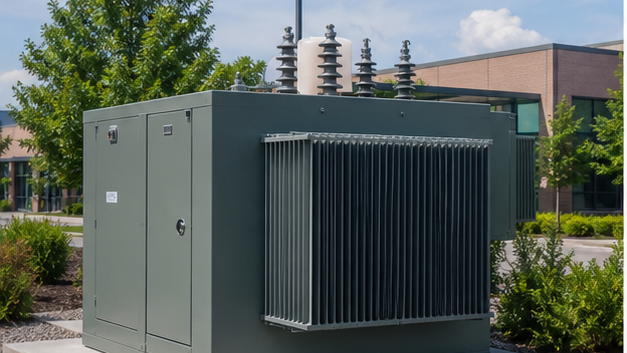
A 500 kVA three-phase transformer at 400 V supplies about 722 A. A 1,500 kVA unit supplies about 2,165 A, and a 2,500 kVA unit about 3,608 A. Large LV currents may favor multiple transformers, bus duct or a higher distribution voltage.
5,000 kVA and Larger Power Transformers
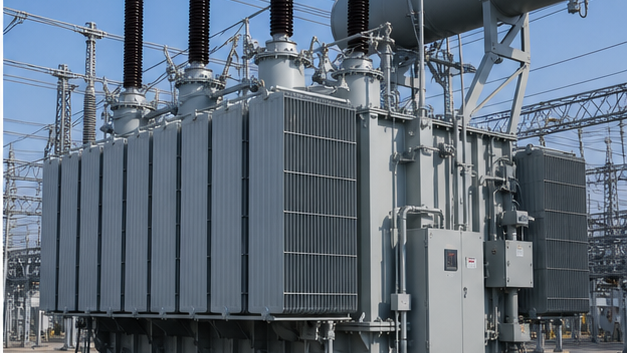
A 5,000 kVA transformer is usually project-engineered. Dimensions depend on voltage, BIL or impulse level, cooling banks, conservator, tap changer, bushings, sound requirement and transport limits. Foundation loads, lifting points, oil containment, fire separation, access and assembly space must be designed from the approved outline drawing.
Why Transformer Dimensions Vary
- Voltage and insulation: higher voltage requires greater clearances, bushings and winding insulation.
- Dry vs liquid-filled: core-and-coil, tank, radiator and enclosure arrangements differ.
- Temperature rise and efficiency: lower losses or lower temperature rise may require more material.
- Impedance: winding geometry changes with the specified impedance and fault forces.
- Enclosure: indoor, outdoor, ventilated and sealed constructions change dimensions.
- Accessories: tap changers, conservators, fans, terminal boxes and monitoring add space.
- Standards and frequency: 50/60 Hz and regional efficiency rules affect design.
How to Select Transformer Capacity
- Create a load schedule with kW/kVA, power factor, duty and starting current.
- Apply realistic demand and diversity by load type.
- Check motor starting, cyclic load and harmonic heating.
- Include necessary future capacity without excessive oversizing.
- Review normal and emergency loading and redundancy.
- Choose a standard kVA rating and verify voltage drop and losses.
- Calculate secondary fault current using transformer impedance.
- Coordinate primary and secondary protection.
Product and Package Selection
For higher-voltage projects, LBAJI offers a configurable 35 kV oil-immersed power transformer. A 35 kV new-energy box-type substation can integrate transformer and distribution equipment for renewable projects. At 12 kV class, the YBM-12 prefabricated substation provides a compact packaged solution.
Data Needed for Accurate Dimensions
Request a vendor outline drawing only after providing kVA, primary and secondary voltage, phase, frequency, vector group, impedance, taps, insulation level, cooling, temperature rise, enclosure, cable entry, accessories, altitude and standards. Preliminary catalog dimensions are useful for budgeting but should not be used for final foundations or cable routes.
150 kVA technical specification checklist
For a comparable quotation, state phase, frequency, primary and secondary voltages, connection, taps, impedance, insulation system, temperature rise, efficiency, enclosure and required accessories. Also identify the installation altitude, ambient temperature, harmonic load, sound limit and terminal orientation.
Replacement dimensions and interfaces
A replacement transformer must fit more than the floor space. Verify weight, center of gravity, lifting points, ventilation, fire separation, cable bending space, bus or lug locations, neutral and grounding points, and removal route. Certified drawings should be approved before foundations or conductors are committed.
Technical references and further reading
The following independent sources support the standards, terminology, calculations, and safety context discussed in this guide:
- IEC 60076-1 power transformer standard — Scope, terminology, ratings, connection symbols, testing, safety, and general requirements for power transformers.
- U.S. Department of Energy: Distribution Transformers — Official definitions, efficiency requirements, test procedures, and regulatory resources for distribution transformers.
- OSHA electric power transmission and distribution requirements — Safety requirements relevant to construction and work around electric power transmission and distribution equipment.