
Switchgear transport and storage require a documented plan for receiving, moving, preserving and releasing an assembly for installation. The objective is to keep the equipment in the condition established at factory inspection, while making damage, moisture exposure and missing accessories visible before commissioning. Transport precautions depend on the manufacturer’s actual shipping units and instructions; a cabinet photograph cannot establish lifting points or permissible storage conditions. For an importer or EPC contractor, the practical deliverable is a receiving record linked to the packing list, transport history, preservation instructions and eventual site acceptance report.
Define the shipping unit before booking transport
The ordered lineup and the transported units are not necessarily identical. A manufacturer may separate an assembly into shipping sections, remove selected accessories, or supply connection materials in separate crates. Ask for a packing list that links each unit to its final location and identifies the contents of accessory packages. Confirm which items remain attached and which require installation after arrival. This prevents a complete delivery from being mistaken for an incomplete lineup, and prevents genuinely missing items from disappearing into an undefined package description.
Request shipping dimensions, actual packed mass, orientation requirements and the approved handling instructions for each unit. These are shipment-specific values rather than generic ratings for a switchgear family. The logistics contractor needs the packed envelope, not a catalogue drawing of the bare cabinet. Review the route through ports, warehouses and the final building before dispatch. If a doorway, unloading area or turning point is restrictive, resolve the method with the manufacturer and lifting contractor before the load reaches that obstacle.
Separate packaging protection from equipment protection
Packaging protects equipment during a defined journey. It does not automatically create a weatherproof storage enclosure or remove the need for environmental control. Record whether the packaging is intended for domestic transport, export shipment, temporary outdoor staging or indoor storage. Ask what exposure duration and inspection arrangements the preservation plan assumes. A wrapped cabinet may still contain humid air, and a damaged crate may allow water to reach vulnerable surfaces without an obvious impact mark.
Do not choose preservation materials solely by their appearance. Confirm compatibility of wrapping, corrosion protection, desiccants and any monitoring indicators with the assembly and its accessories. The transport-information guidance linked below treats switch cabinets as moisture-sensitive cargo; its shipping advice is useful background, while the equipment manufacturer’s instructions remain the basis for the actual package. Preservation responsibilities should cover handovers between organizations so that nobody assumes another party is maintaining the required conditions.
Prepare a receiving checklist with decision owners
Receiving is both a logistics check and a condition check. Name the person who can accept the shipment, the person who can place equipment on hold, and the engineering contact who can assess questionable damage. The unloading team should know where an uncertain unit will be placed without obstructing other deliveries. Establish a photograph convention that records package identity, all accessible sides and any unusual condition. A photograph without a package reference is difficult to use in a subsequent claim.
Use the following decision table as a qualitative receiving aid. It provides evidence categories, not acceptance limits. Actual limits and release criteria belong in the approved equipment and shipment documents.
Contenu de référence : German insurers Transport Information Service: switch cabinets and switchgear. Cette liste de contrôle qualitative originale organise les décisions relatives aux projets ; elle ne constitue pas une norme reproduite ni un substitut des critères approuvés.
| Receiving item | Evidence to collect | Decision if uncertain |
|---|---|---|
| Package identity | Shipping label, packing-list reference and final lineup position | Reconcile with supplier before installation |
| Visible package condition | Photographs of damage, wet areas and displaced restraints | Record on receipt and isolate affected unit |
| Assembly condition | Accessible exterior inspection under approved unpacking instructions | Request manufacturer assessment of suspected damage |
| Loose accessories | Count and identity against package list | Preserve packaging and investigate shortages |
| Preservation status | Storage instructions, indicators and exposure history | Hold release until preservation is restored or assessed |
| Handover responsibility | Named custodian, location and next inspection date | Assign responsibility before moving to storage |
Inspect before the transport evidence disappears
Check accessible packaging before unloading when the circumstances allow safe observation. Record wet packaging, tears, collapsed corners, displaced supports and evidence of contact with another load. Follow the contract and carrier’s process for noting reservations on the delivery record. Avoid signing a technical acceptance statement when the inspection only confirms that a number of packages arrived. Receipt of cargo, acceptance of condition and permission to energize are different decisions.
Unpack only as permitted by the preservation plan. Keep labels, protective parts and the packing list together with the equipment record. Inspect accessible doors, panels, handles and exposed interfaces without opening compartments that require an approved procedure. If equipment has suffered an impact, a normal-looking exterior is not proof that internal alignment and insulation remain sound. Photograph the condition and obtain a written assessment rather than concealing damage with a cosmetic repair.
Use only approved handling information
Lifting and moving switchgear require the correct information for the actual shipping unit. Rated lifting equipment, suitable support arrangements and a controlled route must be selected by competent personnel. A door handle, roof panel, ventilation opening or visible structural edge is not a lifting point unless the manufacturer identifies it as such. Do not improvise a lift from a generic image, another cabinet’s manual or an assumed balance point.
Before movement, confirm who controls the operation and who can stop it. Review the ground condition, turning space, overhead obstructions and the destination surface. A complete handling method must consider the transition from vehicle to ground and from ground to the building, rather than only the main lift. If the approved method cannot be followed, pause and request a revised method. Schedule pressure is not evidence that an unverified movement is acceptable.
Establish an indoor storage area
Select a storage location that meets the supplier’s environmental instructions and remains accessible for inspections. Assess water ingress from roofs, doors, nearby pipework and incomplete construction. Keep the assembly away from uncontrolled dust, corrosive contamination and activities that could damage its enclosure. A nominally indoor location can still experience substantial humidity changes and condensation. Store equipment according to its approved orientation and support requirements, with access to identifying labels and preservation records.
Allocate separate space for accessories and documentation. Small control items and connecting materials are easily lost when boxes are opened for another purpose. Label any removed protective parts so that they can be restored. Maintain a clear distinction between installed equipment and preserved equipment awaiting installation. Construction workers should not treat stored assemblies as convenient shelves, barriers or supports. The storage custodian needs authority to prevent these uses, not merely a checklist to record them afterward.
Monitor moisture and contamination
Moisture damage can develop during storage even without direct rain exposure. Temperature changes can cause condensation on surfaces, and contamination can make moisture more consequential for insulation. The monitoring arrangement should follow the supplier’s instructions and reflect the actual building condition. Where temporary environmental controls or approved auxiliary supplies are required, document how they are provided, inspected and maintained. Do not install an improvised heater inside an assembly without manufacturer approval.
Keep inspection observations specific. Record where moisture was seen, when it was observed, the condition of packaging and indicators, and any interruption of preservation measures. A log saying only that storage was satisfactory does not help an engineer assess exposure. If contamination or wetting occurs, preserve evidence and request an assessment that identifies cleaning, drying, inspection or testing requirements. Appearance after drying is not enough to establish readiness for service.
Manage long storage as a controlled extension
Projects often receive equipment before the building or cables are ready. If storage lasts longer than originally planned, review the preservation arrangements rather than assuming the original package remains suitable indefinitely. Ask whether the manufacturer requires renewed inspections, maintenance of mechanisms, checks on batteries or other supplied accessories, or replacement of preservation materials. Requirements differ across designs and shipment contents, so a single universal interval would be misleading.
Link storage extensions to a named approval and a revised release plan. Record changes of warehouse, movement between floors, exposure during construction and interruptions of environmental controls. If a unit is temporarily unwrapped for inspection, record who restored its protection and how. This history helps distinguish a factory defect from damage acquired after delivery, but its more important purpose is to support an informed technical decision before installation and energization.
Release equipment for installation through a hold point
Before installation, reconcile package identities with the final layout and confirm that the receiving and preservation records are complete. Resolve shortages, damaged components and uncertain exposure through the responsible technical authority. Check that accessories and connection materials remain associated with the correct assembly. Review whether any transport restraints or protective devices require removal under an approved installation procedure. Keep the manufacturer’s instructions available to the installation team.
Release should be a recorded decision with a clear scope. It may permit positioning and mechanical installation while leaving electrical completion or energization on hold. Do not compress these stages into one informal approval. Transport and storage checks support commissioning but do not replace site testing, protection verification or safe electrical work procedures. The related testing and factory acceptance articles provide complementary records; neither eliminates the need to assess the equipment’s condition after its journey.
Plan the supplier and carrier interfaces
An effective RFQ asks who designs the packing, who approves the handling method, who inspects on arrival and who advises after a storage incident. Confirm what photographs and records are needed for support. Request a contact route that works across the shipment’s time zones. Keep warranty and claim requirements separate from the immediate technical decision: equipment may need to remain isolated while commercial responsibility is still being resolved.
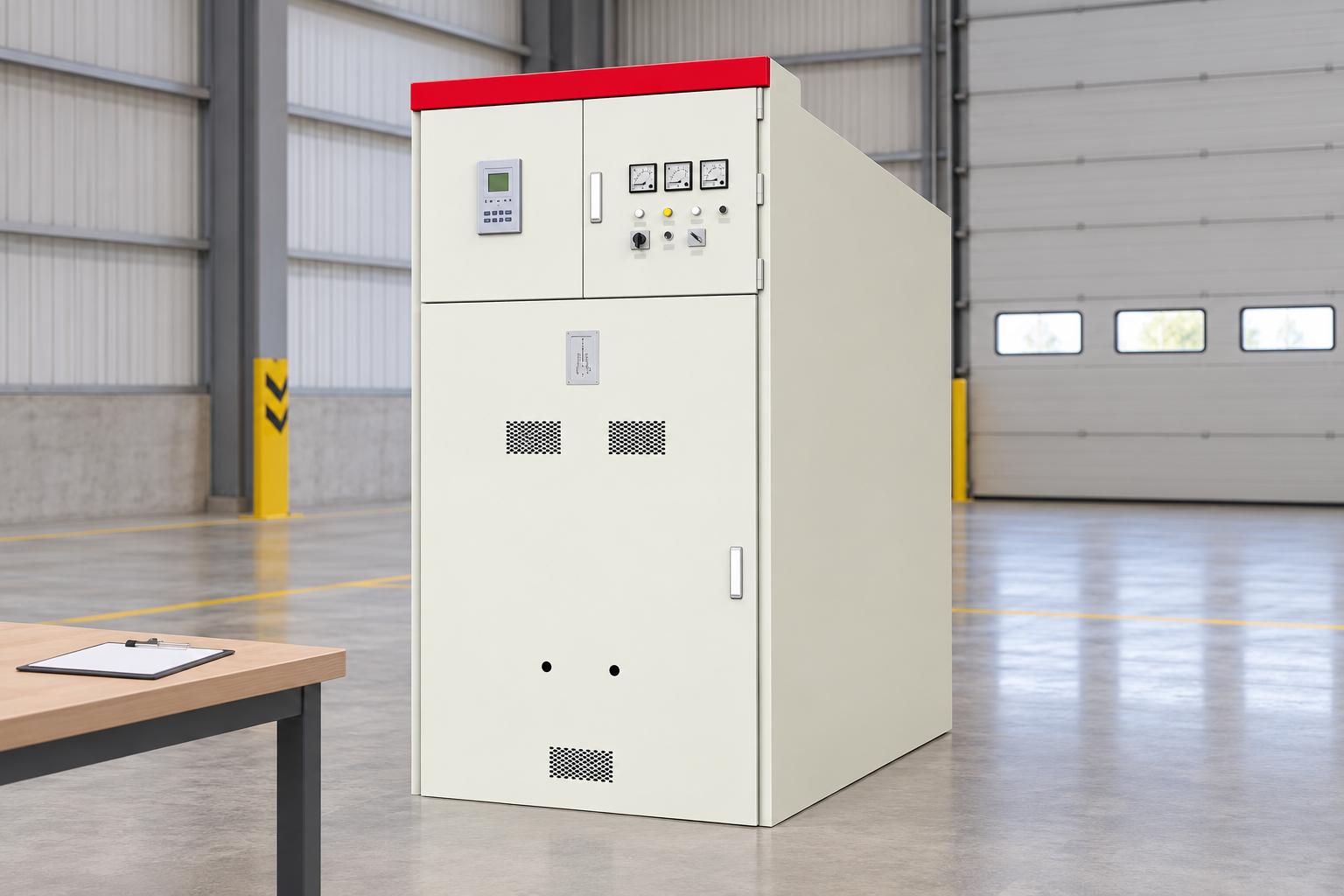
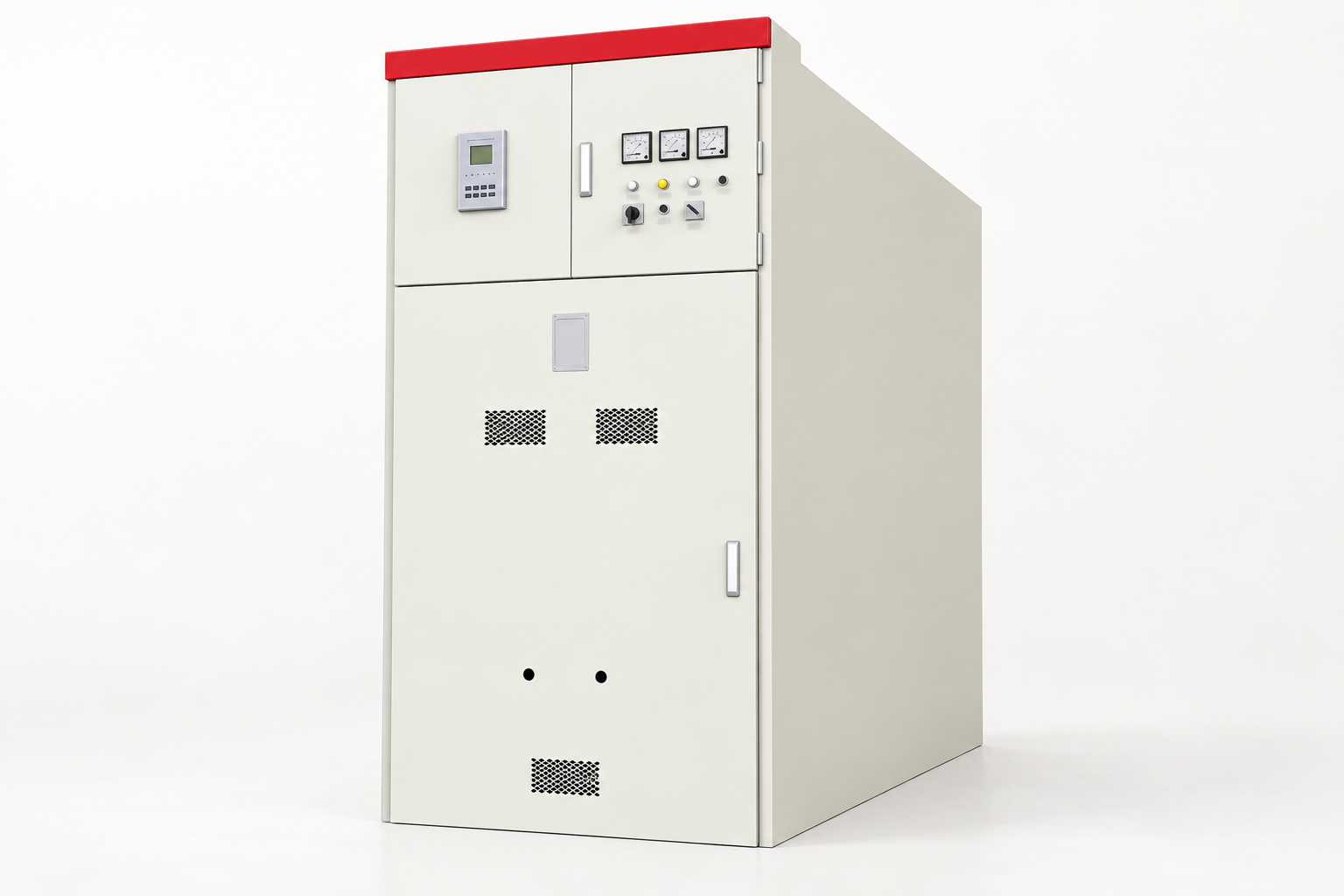
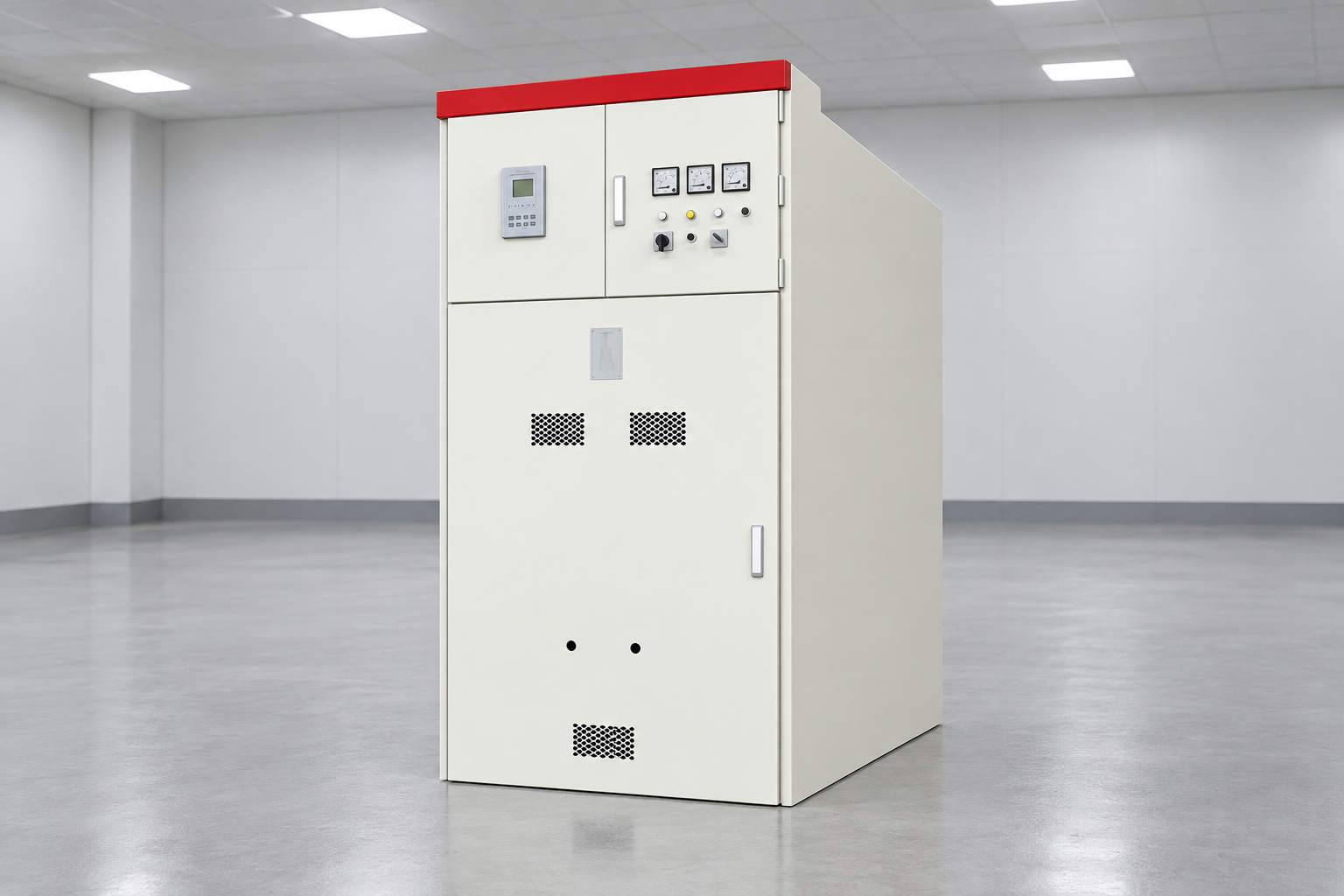
LBAJI’s KYN61-40.5 product reference illustrates the exterior assembly used in this article. Its visible doors, controls and enclosure help identify the equipment category; they do not establish the packed mass, lifting method, internal configuration or permitted exposure. Those details must come from the supplied project documents. A useful procurement request therefore includes destination conditions and expected storage duration together with the electrical specification, so that preservation can be planned before shipment.
Foire aux questions
Can switchgear stay outside in its shipping crate?
Only when the actual equipment and preservation instructions permit the location, exposure and duration. A crate or plastic wrap alone does not establish outdoor storage suitability.
Is a clean exterior enough to accept a damaged shipment?
No. Suspected impact or moisture exposure needs a documented assessment. Internal alignment, insulation and accessories may require further inspection even if exterior marks are minor.
Who should approve a lifting method?
Competent handling personnel should use the manufacturer’s shipment-specific instructions. Any departure from those instructions requires an approved revised method for the actual unit and site.
Does receiving acceptance authorize energization?
No. Receiving, release for installation and energization are separate decisions. Site completion, testing and safe operating authorization remain necessary.
What should be retained after unpacking?
Keep package references, photographs, packing lists, preservation history, accessory records and resolved damage decisions with the final equipment handover documents.
Sources techniques et équipements connexes
Les pages du catalogue standard définissent le champ d’application du document ; la conformité et l’acceptation requièrent la consultation des documents complets applicables ainsi que l’examen de l’ingénierie du projet.
- German insurers Transport Information Service: switch cabinets and switchgear
- Scénario de l'IEC 62271-200 pour les équipements de commutation à courant alternatif à protection métallique
- LBAJI KYN61-40.5 Armature de commutation en métal amovible avec prise électrique
- Fondements de l'équipement de distribution électrique
- vérification et essais des équipements de commande
- Fiche de constatations d’acceptation de l’usine
Formation continue : fonctions des équipements
Cette introduction pédagogique indépendante explique le fonctionnement de l’équipement. Elle ne démontre pas de procédure de travail sécuritaire pour le montage spécifique. Source : Gaurav J – TheElectricalGuy.