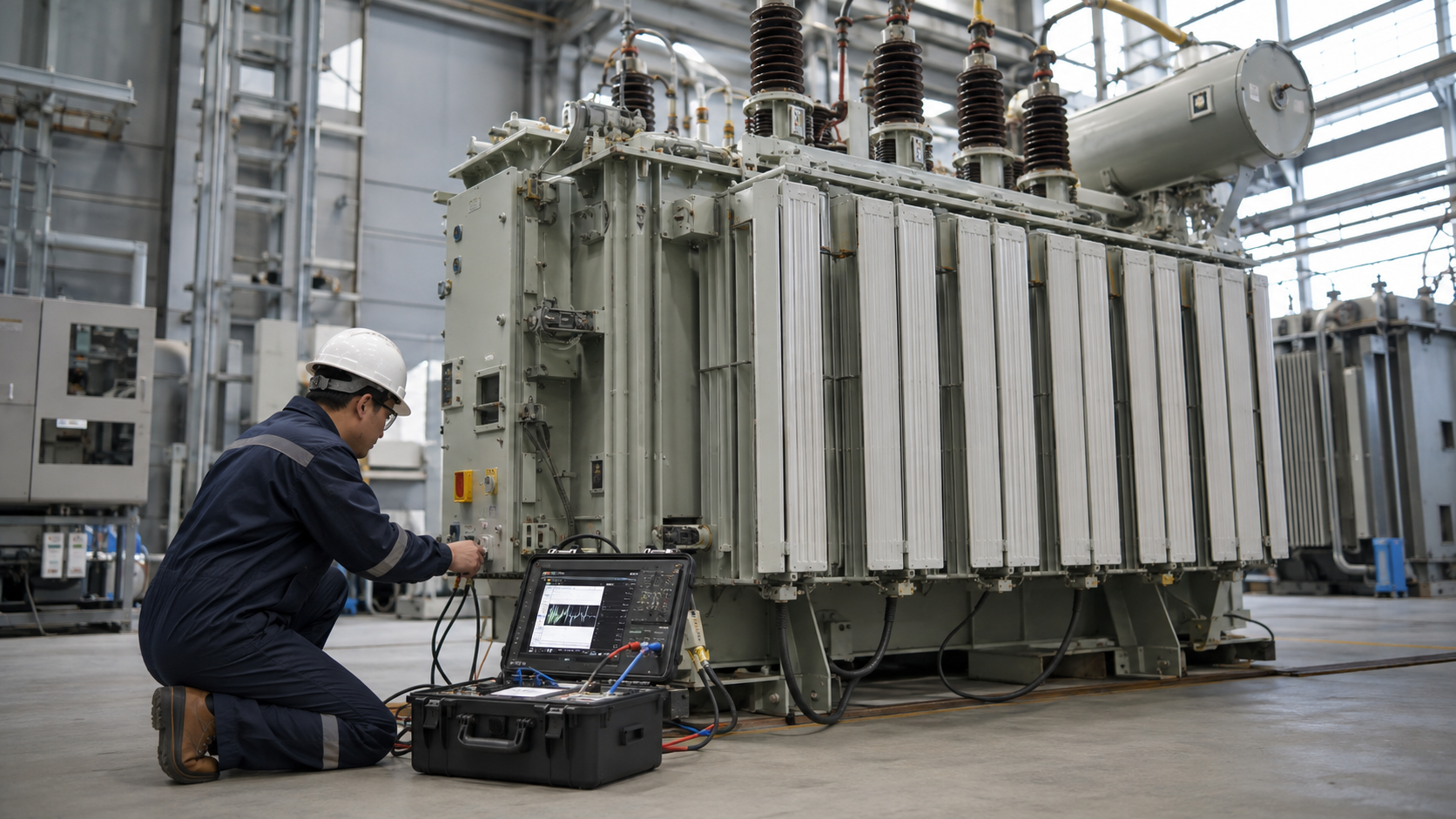

Trafo 75 kVA tidak memiliki satu peringkat ampere yang tetap. Current depends on phase and voltage: single-phase current is 75,000 ÷ V; three-phase line current is 75,000 ÷ (1.732 × V). For example, 75 kVA is about 90.2 A at 480 V three-phase and 208.2 A at 208 V three-phase.
Poin Utama
- At 75 kVA, full-load amps depend on phase and the voltage at the side being measured.
- At 480 V three phase the result is 90.2 A; at 208 V three phase it is 208.2 A.
- These are winding current calculations, not automatic breaker, cable, or safe continuous-load ratings.
Rumus Arus 75 kVA
Untuk fasa tunggal, I = kVA × 1.000 ÷ V. Untuk tiga fasa, I = kVA × 1.000 ÷ (√3 × tegangan antar-fasa). Gunakan tegangan papan nama daripada asumsi nominal. Persamaan ini mendeskripsikan arus tampak beban penuh; ukuran konduktor dan perangkat proteksi tetap mengikuti kode yang berlaku, tugas pembebanan, suhu, dan metode pemasangan.
Tabel Perbandingan dan Pemilihan Cepat
Gunakan tabel ini sebagai tinjauan singkat mengenai keputusan utama teknik dan pengadaan yang dijelaskan dalam artikel.
| Area keputusan | Makna praktis | Apa yang harus diverifikasi |
|---|---|---|
| Rumus Arus 75 kVA | Untuk fasa tunggal, I = kVA × 1.000 ÷ V. | Untuk tiga fasa, I = kVA × 1.000 ÷ (√3 × tegangan antar-saluran). |
| Arus Beban Penuh 75 kVA Umum | Pada 240 V fasa tunggal, arus yang dihitung adalah 312,5 A, dan pada 480 V fasa tunggal arusnya adalah 156,3 A. | For three phase, common results are 90.2 A at 480 V, 104.3 A at 415 V, 108.3 A at 400 V, 208.2 A at 208 V and 180.4 A at 240 V. |
| Penguat Primer dan Sekunder | Unit tiga fasa 480 ke 208Y/120 V membawa arus sekitar 90 A pada sisi 480 V dan 208 A pada sisi 208 V pada 75 kVA. | Transformator mengubah hubungan tegangan-arus sementara daya tampak tetap kira-kira konstan, tidak termasuk rugi-rugi. |
| Ukuran Pemutus Arus dan Konduktor | Jangan memilih pemutus arus berdasarkan angka beban penuh saja. | Kode mengizinkan atau mewajibkan pengaturan perlindungan primer saja atau primer dan sekunder tertentu serta memperhitungkan arus lonjakan (inrush). |
| Apakah 75 kVA Cukup Besar? | Tambahkan beban kVA daripada hanya menambahkan ampere pada voltase yang berbeda. | Pertimbangkan permintaan, penyalaan motor, harmonisa non-linier, ekspansi masa depan, suhu sekitar, dan regulasi tegangan yang dapat diterima. |
Arus Beban Penuh 75 kVA Umum
At 240 V single phase the calculated current is 312.5 A, and at 480 V single phase it is 156.3 A. For three phase, common results are 90.2 A at 480 V, 104.3 A at 415 V, 108.3 A at 400 V, 208.2 A at 208 V and 180.4 A at 240 V. Rounding should not be used to conceal a voltage mismatch.
Penguat Primer dan Sekunder
Unit tiga fasa 480-ke-208Y/120 V membawa sekitar 90 A di sisi 480 V dan 208 A di sisi 208 V pada 75 kVA. Trafo mengubah hubungan tegangan-arus sementara daya tampak tetap kurang lebih konstan, tidak termasuk rugi-rugi. Oleh karena itu, konduktor primer dan sekunder memerlukan ampasitas dan perlindungan yang berbeda.
Ukuran Pemutus Arus dan Konduktor
Jangan memilih pemutus arus berdasarkan angka beban penuh saja. Peraturan mengizinkan atau mewajibkan pengaturan proteksi khusus sisi primer saja atau sisi primer dan sekunder serta memperhitungkan arus lonjakan (inrush). Konduktor harus diperiksa terhadap beban kontinu, suhu isolasi, peringkat terminal, koreksi suhu sekitar, pengelompokan, dan susut tegangan. Seorang perancang yang berkualifikasi harus mengkoordinasikan perangkat hulu dan hilir.
Apakah 75 kVA Cukup Besar?
Tambahkan beban kVA alih-alih sekadar menjumlahkan ampere pada berbagai tegangan. Pertimbangkan faktor permintaan, pengaktifan motor, harmonisa nonlinier, ekspansi di masa mendatang, suhu sekitar, dan regulasi tegangan yang dapat diterima. Unit yang memadai untuk beban stabil dapat menghasilkan penurunan tegangan yang berlebihan selama akselerasi motor atau beroperasi panas dengan arus yang kaya harmonisa.
Pemeriksaan Pelat Nama dan Pengadaan
Konfirmasikan tegangan primer dan sekunder, fasa, frekuensi, sambungan vektor atau lilitan, tap, impedansi, kelas isolasi, kenaikan suhu, rumah/enklosur, efisiensi, suara, dan aksesori. Untuk penggantian (retrofit), verifikasi jejak kaki (footprint), masuknya kabel, susunan terminal, arus gangguan yang tersedia, dan proteksi hulu sebelum melakukan pemesanan.
75 kVA Full-Load Amps by Voltage and Phase
The table below uses a 75,000 VA nameplate rating. For three-phase rows, voltage means line-to-line voltage and current means line current. Single-phase rows use the voltage across the winding. Values are rounded to one decimal ampere; the design calculation should use the actual nameplate voltage and the project electrical drawings.
| System voltage | Single-phase full-load current | Three-phase full-load line current |
|---|---|---|
| 208 V | 360.6 A | 208.2 A |
| 230 V | 326.1 A | 188.3 A |
| 240 V | 312,5 A | 180.4 A |
| 400 V | 187,5 A | 108.3 A |
| 415 V | 180.7 A | 104.3 A |
| 480 V | 156.3 A | 90.2 A |
| 600 V | 125,0 A | 72.2 A |
This table is a current lookup, not a promise that every 75 kVA transformer is available in every listed voltage or connection. Confirm the actual primary and secondary nameplate ratings, winding connection, frequency, taps and cooling designation. Never use a 400 V row for a 480 V winding simply because both are described as industrial three-phase systems.
Worked Example: 480 V Primary to 208Y/120 V Secondary
Consider a balanced 75 kVA, three-phase step-down transformer with a 480 V line-to-line primary and a 208Y/120 V secondary. On the primary, the theoretical full-load line current is 75,000 ÷ (√3 × 480) = 90.2 A. On the secondary, it is 75,000 ÷ (√3 × 208) = 208.2 A. The 120 V marking identifies line-to-neutral voltage on the wye secondary. For the three-phase calculation, use 208 V line-to-line, not 120 V.
The higher secondary current is expected: voltage falls while apparent power remains approximately the same, allowing for real transformer losses. When reviewing a one-line diagram, calculate each side separately. Check the transformer nameplate before ordering a breaker or cable; current alone does not establish conductor ampacity, breaker setting or short-circuit duty.
How Many kW Can a 75 kVA Transformer Supply?
kVA measures apparent power; kW measures real power. For a balanced load, estimated real power is kW = 75 × power factor. At 0.8 power factor, that is 60 kW. At 0.9 power factor, it is 67.5 kW. At unity power factor, the mathematical maximum is 75 kW. These figures do not replace a load study: harmonics, motor starting, duty cycle, ambient temperature and the transformer’s actual thermal rating still matter.
Do not apply an automatic “80% of 75 kVA” rule to every transformer. A continuous-load rule for a particular protective device or installation is not the same as the transformer’s nameplate thermal capacity. Ask the electrical designer to document the applicable code, manufacturer instructions, load profile and required spare capacity.
When 75 kVA Is Too Small
Compare the highest expected coincident demand in kVA with the transformer’s rating under the actual operating conditions. If several loads start at different times, a simple sum of every nameplate rating may overstate demand. If large motors start together, steady-state current can understate the short-duration voltage dip. Record both cases rather than treating a single amperage number as the entire sizing decision.
For example, a balanced 480 V three-phase load drawing 100 A represents approximately √3 × 480 × 100 ÷ 1,000 = 83.1 kVA before any allowance for expansion. That exceeds 75 kVA. Conversely, a 60 A load at the same voltage represents about 49.9 kVA, leaving apparent-power headroom, subject to starting current, thermal conditions and other connected loads. Schneider Electric’s capacity guidance explicitly notes that motor and specialty loads may require more than the simple arithmetic result.
What to Send With a 75 kVA Transformer Inquiry
Give the supplier the primary and secondary voltage, phase, frequency, connection, installation site, required enclosure, ambient conditions and available fault current. Include the load schedule, motor-starting information, harmonic-producing equipment and space limits. Ask for a data sheet showing nameplate ratings, impedance, losses, temperature rise, dimensions and routine test documents. If replacing a unit, provide photos of the existing nameplate and terminal layout, not only the phrase “75 kVA transformer.”
For adjacent calculations, use our 63 kVA load-capacity example, amps-to-kVA formula guide dan panduan sekering transformator. Review the rentang produk transformator for available configurations; confirm project-specific values with the manufacturer.
Three-Phase Transformer Video Lesson
For the relationship between phase voltage, line voltage and transformer connections, this NPTEL university lecture provides a useful technical introduction. The calculation table above remains the direct answer for 75 kVA current.
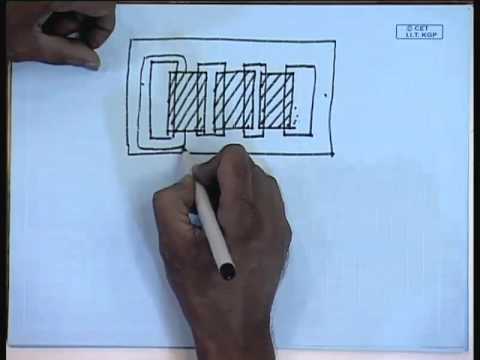
Watch NPTEL’s Introduction to Three Phase Transformer on YouTube.
Peralatan LBAJI Terkait
Tinjau yang relevan Jajaran produk LBAJI dan pendukungnya Panduan pilar Kapasitas, Ukuran & Dimensi Transformator. Kirimkan diagram satu garis, rating, jumlah, dan lingkungan untuk konfigurasi spesifik proyek.
Pertanyaan yang Sering Diajukan
How many amps is a 75 kVA transformer at 480 V three phase?
Approximately 90.2 A at full load, calculated as 75,000 divided by 1.732 times 480.
How many amps is 75 kVA at 208 V three phase?
Approximately 208.2 A at full load.
Is kVA the same as kW?
No. kVA is apparent power; kW is real power and equals kVA multiplied by power factor for a balanced load.
Can I size the breaker exactly at full-load current?
Not automatically. Transformer inrush and electrical-code protection rules must be applied.
Why are secondary amps higher than primary amps?
A step-down transformer reduces voltage, so current rises for approximately the same apparent power.
Alur Kerja Evaluasi Praktis
Untuk besaran ampere trafo 75 kva, gunakan alur kerja yang terdokumentasikan, bukan sekadar pilihan dari katalog. Pertama, tetapkan input sistem dan batas operasional. Selanjutnya, bandingkan opsi konstruksi atau servis yang tersedia dengan lingkungan aktual. Kemudian, verifikasi perhitungan, antarmuka proteksi, dan uji penerimaan. Terakhir, catat deviasi yang disetujui dan simpan hasil dasar untuk pengujian dan pemeliharaan.
- Tinjau arus beban penuh 75 kVA yang umum dan catat keputusan spesifik proyek.
- Tinjau amplifier primer dan sekunder serta catat keputusan khusus proyek.
- Tinjau ukuran pemutus arus dan konduktor, lalu catat keputusan spesifik proyek.
- Tinjau apakah 75 kva sudah cukup besar? dan catat keputusan spesifik proyek tersebut.
Catatan Penerimaan yang Harus Disimpan
Simpan lembar data yang disetujui, gambar, daftar penyimpangan, sertifikat material jika berlaku, laporan uji rutin dan khusus, pengaturan proteksi, hasil pengujian, foto, dan detail pelat nama akhir. Catat kondisi pengujian beserta nilainya, karena suhu, metode instrumen, dan sambungan dapat memengaruhi perbandingan. Dokumen-dokumen ini menetapkan dasar yang digunakan untuk menyelidiki alarm di kemudian hari, perubahan beban, atau penurunan kondisi. Dokumen-dokumen tersebut juga mencegah pemesanan peralatan pengganti dari deskripsi yang tidak lengkap setelah pergantian personel atau pemasok.
Referensi Teknis dan Bacaan Lanjutan
Kesimpulan
A 75 kVA transformer does not have one fixed amp rating. Current depends on phase and voltage: single-phase current is 75,000 ÷ V; three-phase line current is 75,000 ÷ (1.732 × V). For example, 75 kVA is about 90.2 A at 480 V three-phase and 208.2 A at 208 V three-phase. Use project data and documented acceptance criteria before purchase, installation or service.