
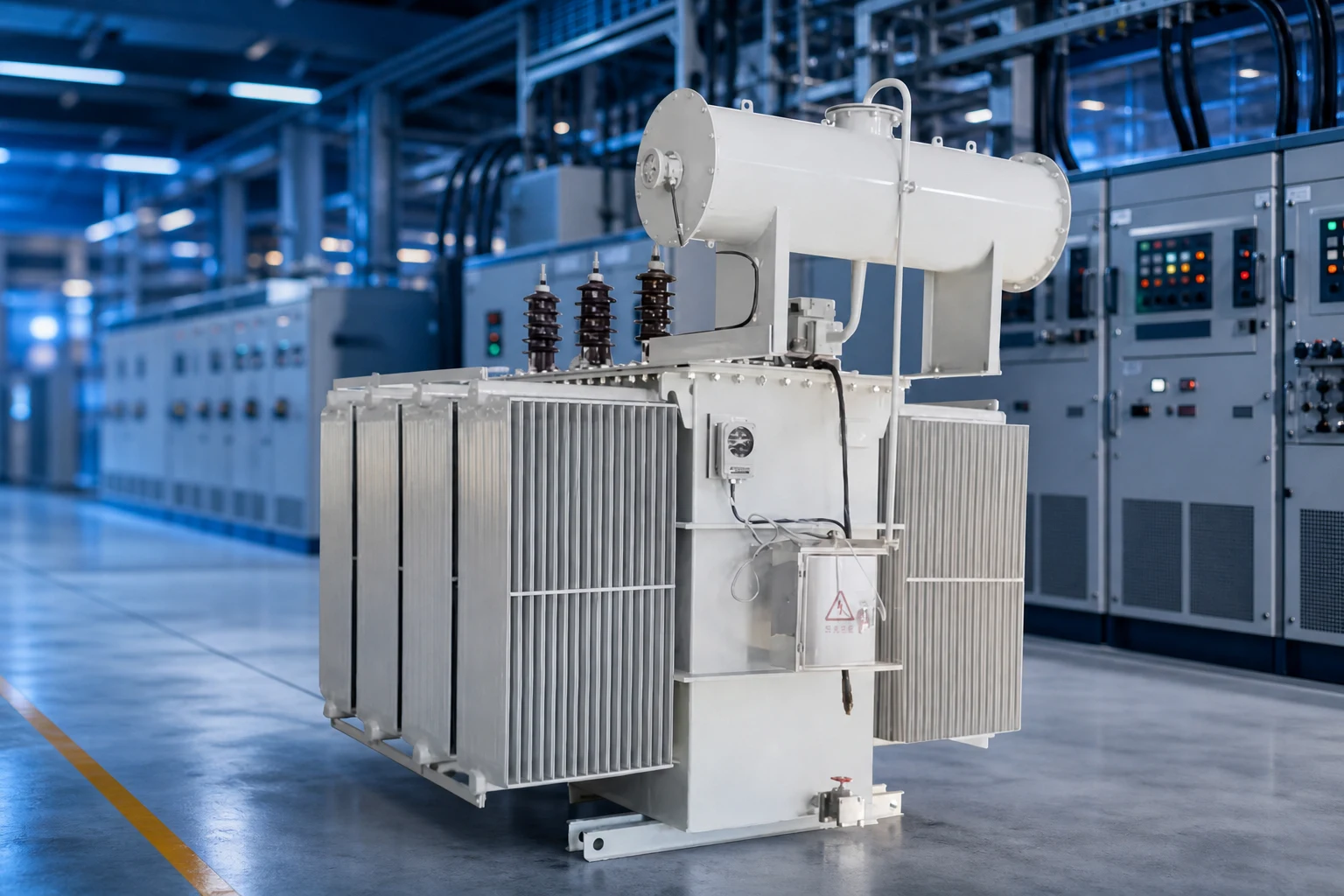
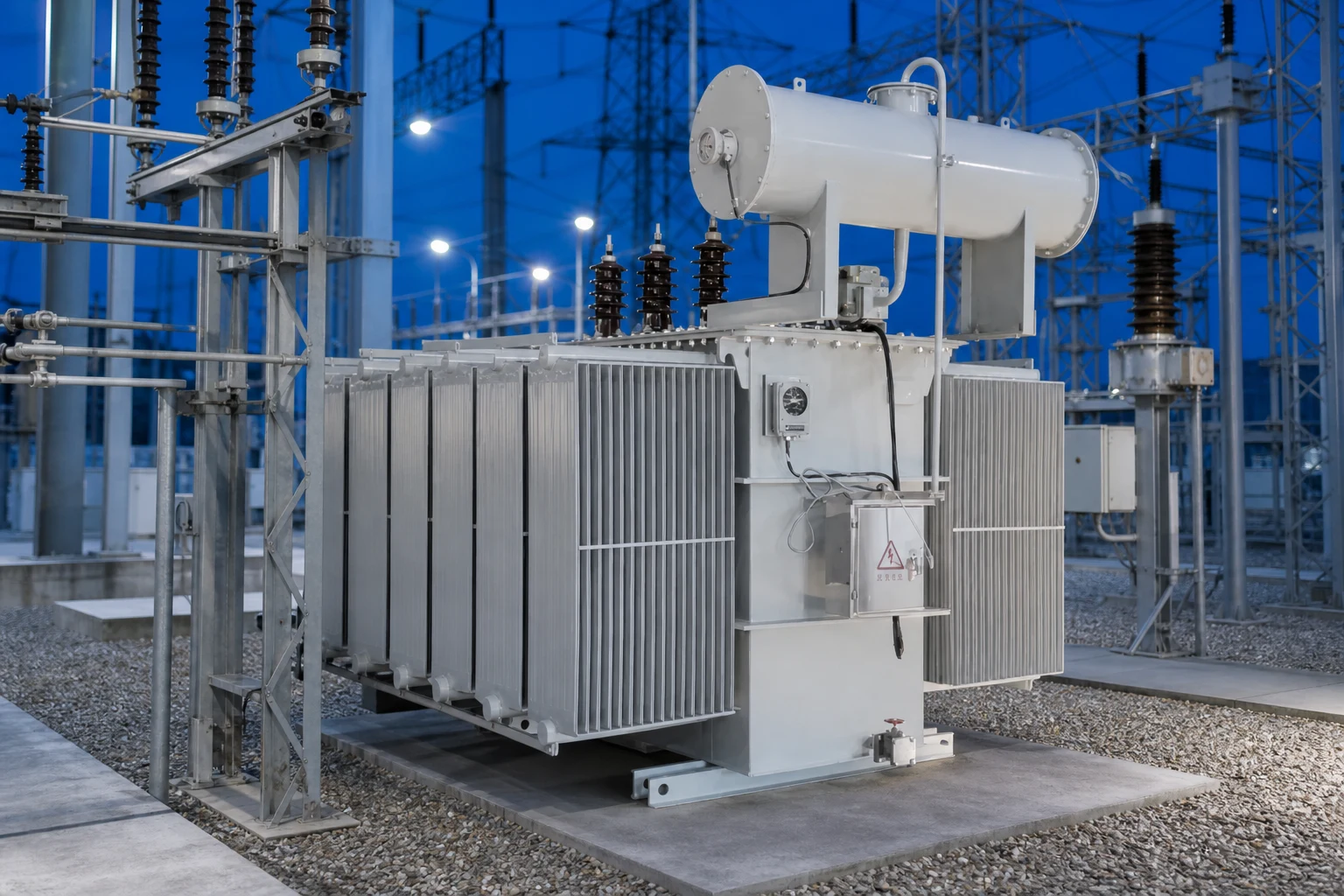
A 125KVA oil immersed power transformer bridges medium-voltage sources to plant or campus low-voltage buses. At 125 kVA, engineers sizing feeders for US industrial or commercial loads should align voltage class, cooling, and impedance with utility requirements before RFQ. This guide focuses on practical evaluation steps for U.S. industrial and commercial buyers—measurement, documentation, and lifecycle support—not generic marketing claims. Where equipment selection is involved, cross-check public specifications on lbajiele.com and confirm project-specific limits with your utility or consulting engineer. Section checklists can be reused as RFQ attachments and commissioning handover outlines.
Part 1. What a 125KVA Unit Does in Your Network
The 125 kVA rating often serves mixed loads where daily cycles require stable secondary voltage and adequate fault tolerance.
Whether specified as oil immersed power, buyers should treat nameplate data, tap range, and vector group as binding design inputs.
For US industrial campuses, the 125KVA oil immersed power transformer frequently feeds motor control centers, lighting panels, and process loads from a single medium-voltage source.
Industrial buyers should treat transformer selection as a lifecycle decision: rated kVA, losses, and impedance must match measured site behavior after commissioning.
Request evidence of routine test reports or third-party type tests rather than marketing summaries alone.
Compare distribution and power transformers options against load growth, ambient temperature, and indoor versus outdoor installation constraints.
Document who owns warranty response—the OEM, distributor, or local integrator—before equipment ships overseas.
Capture nameplate data, single-line drawings, and utility interconnection rules in the RFQ package to reduce back-and-forth during technical review.
Confirm primary voltage class, secondary voltage, vector group, and available fault level before comparing vendor quotations.
Define acceptance criteria before shipment—insulation resistance, ratio test, and energization checks—so commissioning disputes are less likely.
Part 2. Key Specifications at 125 kVA
Compare catalogs only after the single-line diagram fixes primary class and secondary voltage.
Include prospective fault current and protective device curves when reviewing impedance declarations with your utility engineer.
For U.S. projects, confirm 60 Hz design, applicable efficiency rules, and enclosure ratings early in RFQ discussions.
Panel integrators benefit from dimensional drawings, cable entry options, and lifting points before pad or vault design freeze.
Coordinate upstream switchgear and protection and downstream cable sizing with the transformer’s impedance and tap settings.
Ask whether tap-changer positions, surge arresters, and protective relay inputs are included in the scope of supply.
Capture nameplate data, single-line drawings, and utility interconnection rules in the RFQ package to reduce back-and-forth during technical review.
Confirm primary voltage class, secondary voltage, vector group, and available fault level before comparing vendor quotations.
Define acceptance criteria before shipment—insulation resistance, ratio test, and energization checks—so commissioning disputes are less likely.
| Parameter | Typical at 125 kVA | Why it matters |
|---|---|---|
| Primary voltage | 6 kV – 35 kV class | Utility/interconnection match |
| Secondary | 480/277 V or 400/230 V | Motor and panel design |
| Cooling | ONAN or AN/AF (dry) | Site and fire code |
| Impedance | ~4–5% (verify) | Protection coordination |
| Vector group | Dyn11 or Yyn0 | Grounding path |
Part 3. Loading, Environment, and Compliance Notes
Continuous loading above nameplate without utility approval can violate interconnection agreements and affect warranty coverage.
Harmonic-rich loads may require study before energization; sustained THD can accelerate insulation aging even when average loading looks modest.
Altitude above 1,000 m typically requires derating per manufacturer curves—state site elevation in every RFQ packet.
Fire separation for oil-filled equipment varies by local AHJ; confirm indoor versus outdoor codes before selecting fluid type and enclosure.
After-sales support should include spare bushings or gaskets where applicable, oil sampling guidance for liquid-filled units, and escalation paths for field issues.
Compare warranty scope for core/coils, accessories, and on-site commissioning labor under different Incoterms.
Explore LBAJI engineering contact when voltage class or kVA falls outside standard catalog tables.
For export projects, confirm customs documentation and whether factory acceptance tests can be witnessed remotely.
Capture nameplate data, single-line drawings, and utility interconnection rules in the RFQ package to reduce back-and-forth during technical review.
Confirm primary voltage class, secondary voltage, vector group, and available fault level before comparing vendor quotations.
Define acceptance criteria before shipment—insulation resistance, ratio test, and energization checks—so commissioning disputes are less likely.
Part 4. Documentation and Handover Checklist
Transformer acceptance should not rely on energization alone—test reports and as-built drawings prove ratings, safety, and maintainability for the next maintenance cycle.
Use the tables below as a starting RFQ checklist; your utility or EPC contract may require additional items.
For product-specific datasheets, cross-check related LBAJI product pages and request any missing type test excerpts.
Align factory acceptance tests with items your insurer or utility interconnection agreement may require.
When comparing quotations, normalize currency, Incoterms, and included commissioning services before ranking suppliers.
| Document / item | Purpose | When to request |
|---|---|---|
| Factory type test report | Verify rated kVA, voltage, losses, and temperature rise | Before purchase order |
| Single-line diagram | Protection coordination and cable sizing | Design phase |
| Wiring / connection diagram | Field termination and grounding | Before shipment |
| Spare parts list (5+ year) | Bushings, gaskets, tap-changer parts | Contract negotiation |
| Commissioning checklist | Acceptance tests and as-built records | Before energization |
| Application | Typical load profile | Selection note |
|---|---|---|
| Industrial plant feeder | Mixed motors + lighting | Confirm impedance and fault level with utility |
| Commercial campus | HVAC + elevators | Indoor dry type vs outdoor oil per fire code |
| Utility secondary | Feeder stepping | Pad-mount or substation style per AHJ |
| Mining / heavy industry | Cyclic heavy load | Review overload and cooling margin |
Part 5. Commissioning, Monitoring, and Long-Term Operations
Commissioning should verify ratio, polarity, grounding, and protective relay coordination before loading the transformer to production demand.
Functional tests typically include insulation resistance, oil dielectric strength for liquid-filled units, and temperature rise checks under agreed load points.
Monitoring after energization helps catch abnormal gas-in-oil trends, hot spots, or tap-changer issues before they affect uptime.
Train maintenance staff on lockout/tagout, confined-space rules for vaults, and which alarms require immediate shutdown versus scheduled service.
Schedule a post-warranty review to reassess load growth—plant expansions often require tap changes or additional capacity within three to five years.
Utility account managers can clarify voltage tolerance and fault contribution limits—align acceptance tests with interconnection agreements.
Keep a spare-parts criticality list (bushings, gaskets, fans, control boards) based on lead time and production impact, not catalog defaults alone.
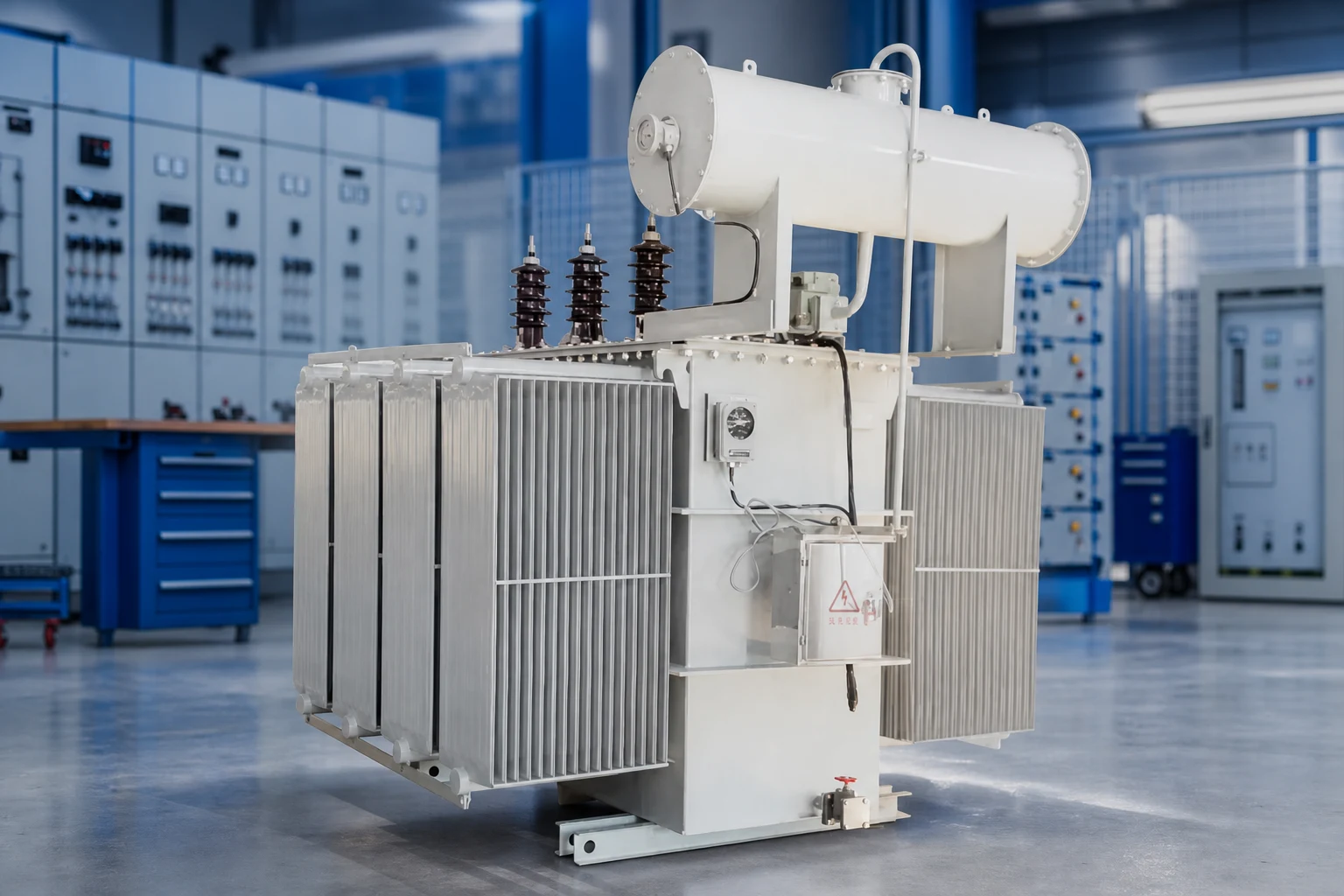
Recommended LBAJI Products
For project support, explore our related product line, solution options, and OEM/ODM capabilities on lbajiele.com.
FAQ
What is a 125KVA 125KVA oil immersed power transformer used for?
It supports medium-voltage to low-voltage distribution for industrial, commercial, or utility secondary networks at the 125 kVA rating band.
What cooling is typical for this rating?
Oil-immersed units commonly use ONAN; dry-type units use air natural/forced air—match method to indoor/outdoor codes.
What primary voltage classes appear in datasheets?
6 kV through 35 kV class primaries are common; confirm with your single-line diagram and utility interconnection.
What impedance is typical near 125 kVA?
Many distribution designs center near 4–5% impedance, but utilities may specify—verify before purchase.
Can this rating serve outdoor pad-mount installations?
Yes where codes allow; specify bushings, grounding, and fluid type for the site climate.
How do US efficiency rules affect selection?
Request loss values aligned to applicable DOE rules and include test reports in the RFQ.
When choose dry type vs oil immersed at ~125 kVA?
Dry type suits many indoor occupied spaces; oil immersed remains common for outdoor pad-mount economics.
What documents belong in the technical submittal?
Type test summaries, wiring diagrams, tap settings, weight, and warranty terms should accompany the quote.
References
Ready to discuss your project? Contact LBAJI engineering support with your project parameters and technical requirements.