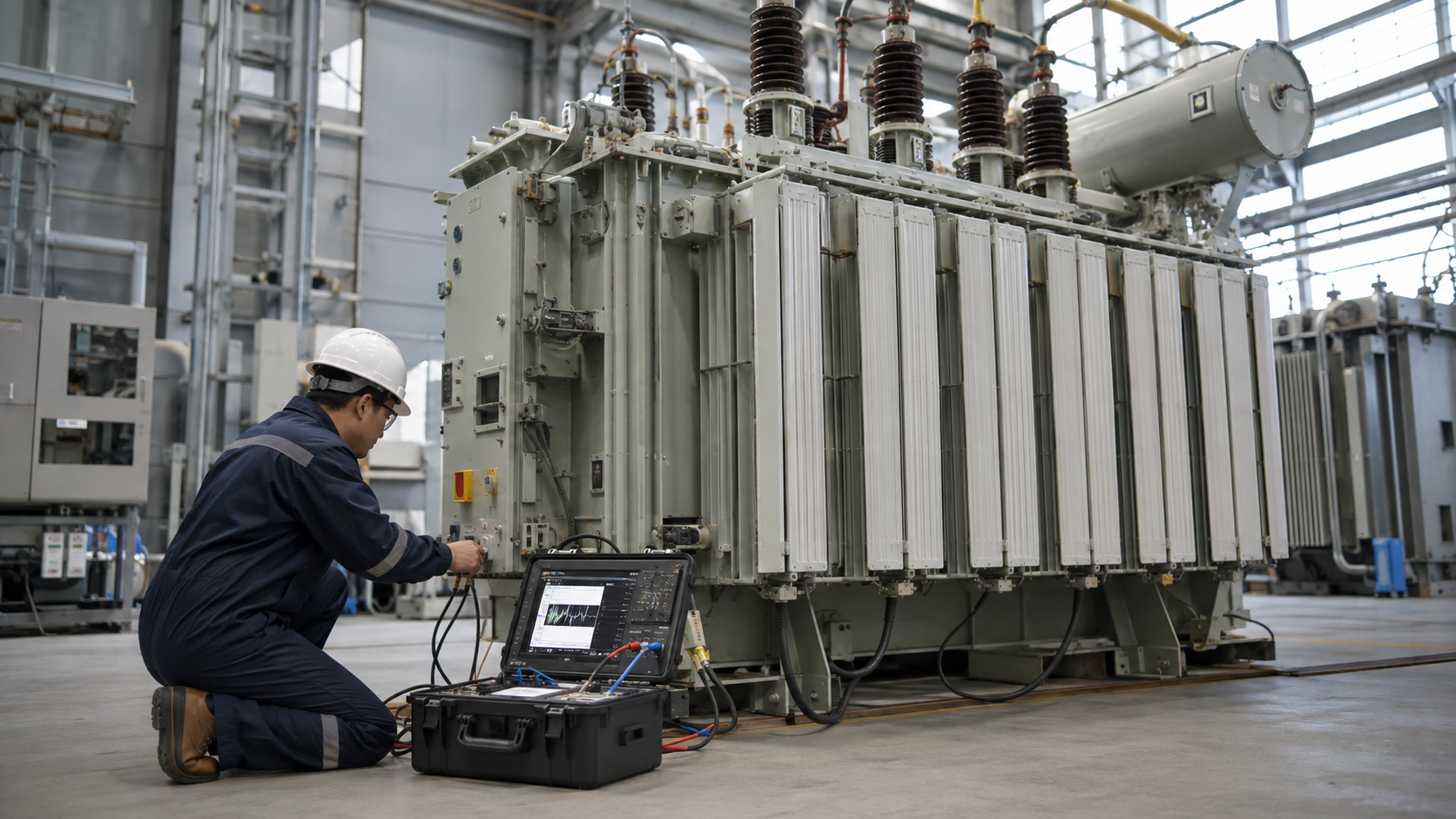

“Transformer size” can mean two different things: the electrical rating in kVA or MVA, and the equipment’s physical envelope, weight and installation footprint. A kVA chart can help shortlist a rating, but it cannot tell you the final dimensions. Phase, voltage, construction, cooling, insulation level, enclosure and accessories all change the finished design.
Quick answer: transformer ratings vary by market, phase and product class. Use a regional catalog series as a starting reference—not as a universal IEC or ANSI rule—then confirm the required nameplate, drawings and dimensions for the exact model and project. For load-based kVA calculations, use the separate transformer capacity guide.
Representative transformer kVA rating examples
The table below shows example published rating sets, not one global standard list. A manufacturer may offer only some ratings for a given voltage, winding, cooling method or enclosure, and other regional/utility requirements can change the available sequence.
| Market or product-family example | Published rating examples | How to use the list |
|---|---|---|
| US low-voltage, single-phase product range | 1, 1.5, 2, 3, 5, 7.5, 10, 15, 25, 37.5, 50, 75, 100, 167, 200, 250 and 333 kVA | Illustrative U.S. manufacturer listing; the values are not automatically available in every design or required by every code. |
| US low-voltage, three-phase product range | 3, 6, 9, 15, 30, 45, 75, 112.5, 150, 225, 300, 500 and 750 kVA | Illustrative product range; confirm voltage, winding connection, cooling and exact catalog family. |
| US medium-voltage, three-phase product range | 1,000, 1,500, 2,000, 2,500, 3,000, 3,750 and 5,000 kVA | A catalog example only. Larger or special ratings are often project-engineered. |
| Trihal dry-type technical-sheet example (15 kV / 420 V) | 250, 400, 630, 800, 1,000 and 1,250 kVA | Examples listed for this manufacturer’s documented voltage family—not a universal European or IEC-required rating sequence. |
The U.S. product examples are from Schneider Electric USA’s published rating guide; the six dry-type examples are listed in Schneider Electric’s Trihal technical-sheet reference for one 15 kV / 420 V family. These are examples rather than “the” ANSI or IEC list. The product-standard page for IEEE C57.12.38-2025, for instance, covers a narrower class of single-phase, liquid-filled, pad-mounted units rated 250 kVA and smaller. Applicable scope and local utility requirements matter as much as the number on a chart.
What does a transformer rating tell you?
The nameplate kVA rating is the apparent-power capacity under stated conditions; it does not specify the transformer’s physical dimensions or by itself determine the load’s kW. Phase, rated voltage, frequency, cooling, temperature rise, ambient/altitude assumptions and winding connection are part of the product definition. The same kVA number on two different configurations does not mean they are interchangeable.
If you need to calculate required capacity from load current or power, use the separate transformer sizing guide or the amps-to-kVA calculator. This page focuses on rating-series examples and physical sizing inputs so those search intents stay separate.
A short lesson on reading transformer ratings
This NPTEL IIT Kharagpur lesson explains rated voltage, current and kVA through a single-phase example. It is useful background for interpreting a nameplate, but it does not define the rating series or dimensions of every product family.

Watch the NPTEL lecture on YouTube.
Dry-type vs oil-immersed transformer dimensions
Construction affects the shape and installation space, not just the label. Dry-type equipment may have exposed or enclosed winding assemblies and depends on the specified ventilation and enclosure. An oil-immersed design includes a tank and liquid, and may include radiators, a conservator, bushings, valves, gauges or other accessories. Neither construction has one fixed size for a given kVA.
| Design factor | Dry-type transformer | Oil-immersed transformer |
|---|---|---|
| Main envelope | Core, coils, support frame and any enclosure; enclosure style can materially change width and depth. | Tank plus cooling surfaces and fitted accessories; radiator and conservator arrangement affects outline. |
| Installation space | Indoor/outdoor suitability, airflow, room temperature, enclosure and service access must be resolved for the model. | Foundation, access to fittings, cooling airflow, spill/fire provisions and the site’s environmental rules may affect layout. |
| Weight and handling | Core/coil materials, frame, enclosure and lifting method determine shipping and installed weight. | Tank, core/coil assembly, insulating liquid, radiators and accessories contribute to operating and shipping weight. |
| What must be approved | Outline drawing, ventilation/enclosure details, sound and service clearances. | Outline drawing, total/transport weight, oil containment needs, accessory positions and maintenance access. |
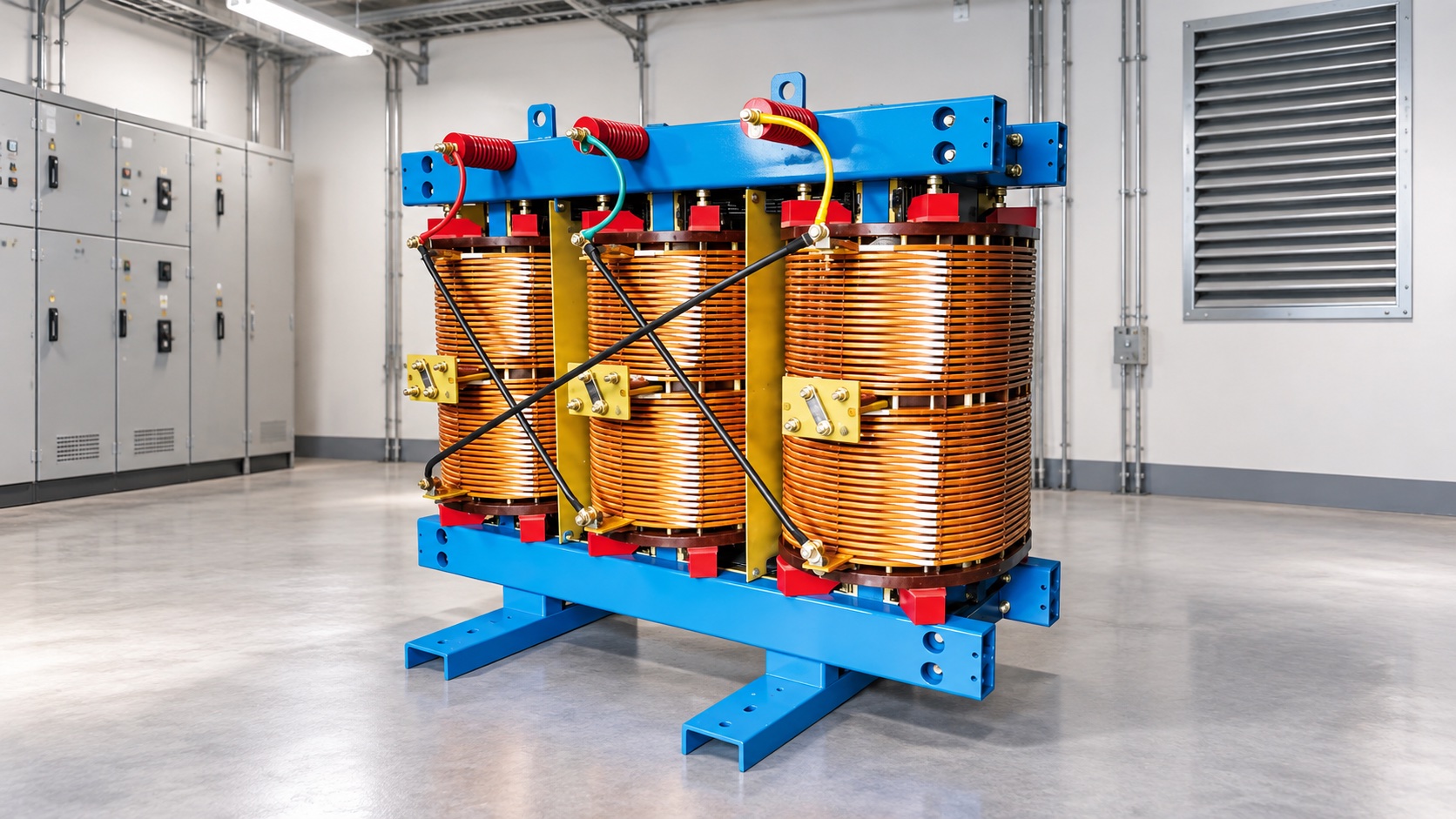
For a construction example, see the SG(B) dry-type transformer page. Compare its approved product data—not the illustrative image—with the project’s ventilation, enclosure and service-access requirements.
Why the same kVA can have different physical dimensions
When a transformer rating rises, the magnetic and winding design often changes, but kVA alone is not enough to predict a footprint. Two units at the same rating can differ because their primary or secondary voltages, insulation level, impedance, conductor material, losses, temperature rise, cooling method, sound limit, tap arrangement and applicable short-circuit duty differ. Indoor versus outdoor protection, cable boxes, bushings and monitoring accessories add further variation.
A preliminary catalog outline is useful for budgeting and site coordination. Do not use it to cast a foundation, set cable lengths or reserve final clearances. Obtain the manufacturer’s approved outline drawing for the quoted configuration and confirm weight, lifting points, center of gravity, door/access path, cable-bending space, ventilation and required working clearances with the responsible designer.
How to read a transformer dimensions chart
Before comparing columns, check what each published dimension actually includes. A table may describe the transformer without an enclosure, show one insulation and voltage combination, or omit separately fitted radiators and cable boxes. Confirm the stated configuration and scope notes before treating dimensions or weight as comparable. Treat catalog dimensions as a shortlist, not a promise that every unit with that kVA rating will fit the same space.
Make comparisons only after aligning the equipment definition. Confirm that both quotations use the same phase, primary and secondary voltages, frequency, winding arrangement, cooling method, enclosure and accessory scope. If one supplier includes a terminal box or radiator in the overall width and another lists it separately, the bare numbers are not comparable. Also distinguish the transformer body from the space needed to open compartments, bend cables, circulate cooling air, inspect fittings and remove the equipment later.
A drawing gives equipment geometry, not automatic approval of the surrounding layout. The site team must separately confirm access, safe working space, cable routing, ventilation and applicable fire or environmental provisions for that installation. Keep the outline drawing and the site-layout drawing distinct, then check that both describe the same orientation and terminal arrangement.
| Compare item | Record for each quoted unit | Why it changes the decision |
|---|---|---|
| Equipment definition | Model, kVA, phase, voltage, frequency, winding connection, cooling and enclosure. | A matching kVA alone does not establish equivalent design or physical outline. |
| Drawing scope | Overall length, width and height; whether boxes, radiators and other fitted parts are included; drawing revision and status. | Preliminary catalog outlines can differ from the ordered configuration and approved construction drawing. |
| Weight and handling | Shipping and operating weights, removable parts, lifting points and center of gravity. | Transport and lifting plans use different information from foundation and operating-load checks. |
| Site interfaces | Base or anchor pattern, floor/foundation interface, terminal locations, cable entry and required working space. | Installation fit depends on the actual cable route and site arrangement, not just the cabinet envelope. |
Ask the manufacturer to identify assumptions and exclusions on the drawing rather than filling missing dimensions from a generic chart. Where accessories will be added after shipment, obtain their final outline and connection positions before approving the layout. Keep the drawing revision with the purchase and installation records so civil, cable and equipment teams are checking the same configuration.
Dimensions to request before installation
- Overall length, width and height, with all fitted radiators, conservator, enclosure, cable boxes and terminals included.
- Shipping and operating weights, liquid weight where applicable, center of gravity, lifting/lashing points and removable parts.
- Base footprint, anchor pattern, foundation/interface loads, access/working clearances and equipment removal route.
- High- and low-voltage terminal positions, cable entry direction, lug orientation, bending space, neutral/ground locations and connection-compartment envelope.
- Cooling airflow, ventilation or environmental protection requirements, sound data and any site-specific fire or liquid-containment provisions.
- Drawing revision, tolerances, accessories included in the quoted dimensions, and any field-assembled items that change the final outline.
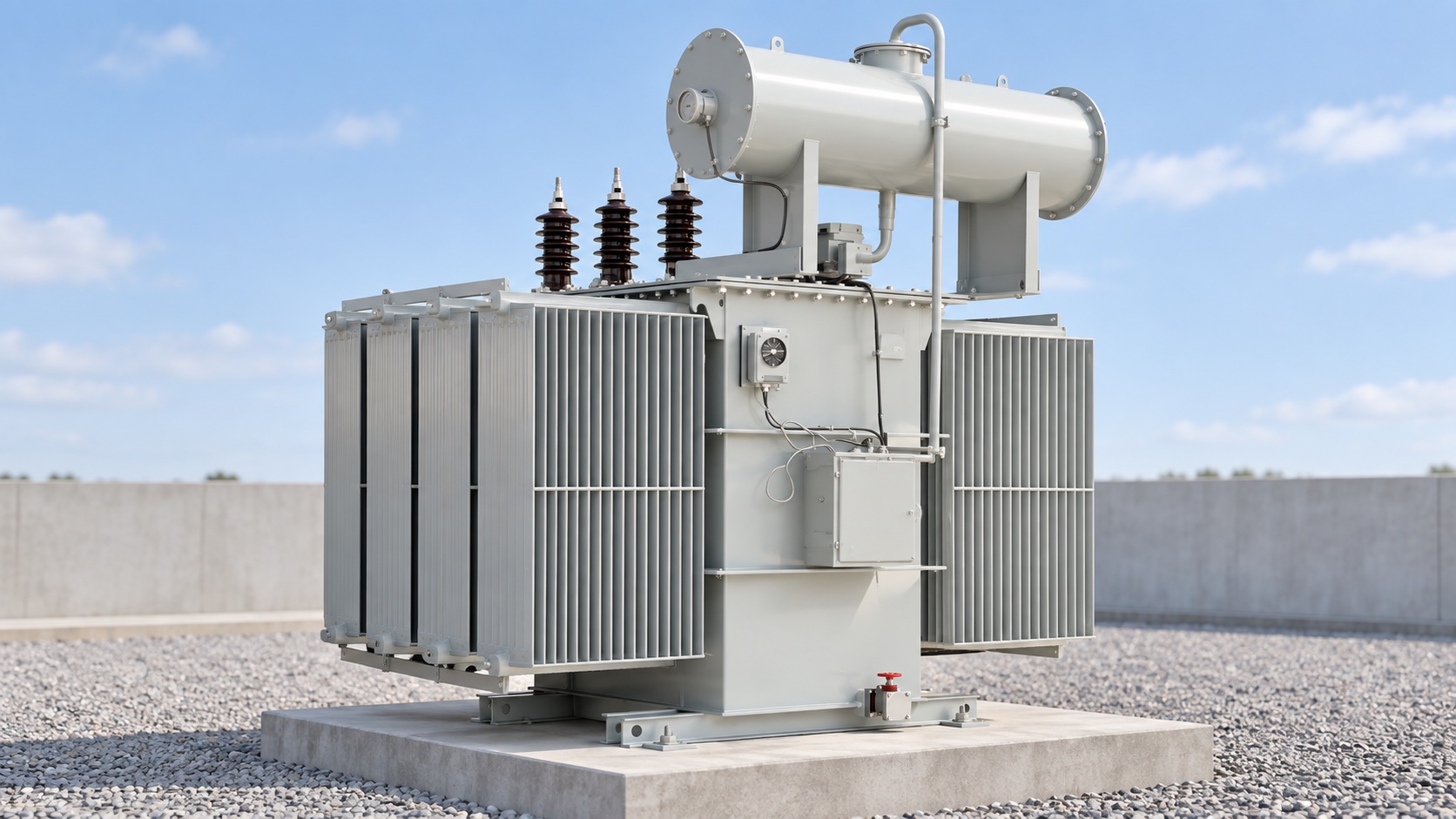
The 35 kV oil-immersed transformer product page is one equipment example; its approved data sheet and outline drawing control the actual project dimensions. IEC’s 60076-11:2018 addresses dry-type power transformers within its stated voltage and equipment scope. The exact product class, local standard and customer/utility specification still need to be confirmed.
How to shortlist the right standard rating
- Confirm whether the load and supply are single-phase or three-phase, then state primary and secondary voltage and frequency.
- Calculate the actual load duty in kVA, including demand profile, motor starting, non-linear loads and justified future growth. Do not round up from average kW alone.
- Choose the product class and construction: dry-type, liquid-filled, pole-mounted, pad-mounted or substation design. The regional catalog and approved utility standard determine the available rating steps.
- Check impedance, losses, temperature rise, cooling, taps, insulation level, sound, enclosure and environmental conditions.
- Compare the proposed rating to available standard steps, then request the complete guaranteed data sheet and approved outline drawing for that exact design.
Do not automatically choose the next larger rating without checking starting duty, load profile, protection and operating cost. If these are the questions you are working through, use our single-phase transformer guide for winding and connection context, or the transformer types and construction guide to compare design families.
What to include in a transformer-size RFQ
Send the supplier phase, kVA/MVA, primary and secondary voltage, frequency, connection, taps, impedance, insulation level, cooling, temperature rise, losses, sound target, enclosure, ambient temperature, altitude, installation environment, accessories, cable entry, required standard and edition, quantity and delivery constraints. State separately whether you need a budgetary footprint or certified construction drawings.
For installation interfaces, provide the one-line diagram, available site layout, foundation information, cable approach, access route, fire/environment requirements and responsibility split. Ask the supplier to identify deviations and excluded accessories in writing. Review the final rating, outline drawing, terminal arrangement, total operating weight, maintenance access and shipping split before releasing civil, cable or procurement work. For transformer installation planning, see the transformer installation and maintenance guide.
Frequently asked questions
Are IEC and ANSI transformer sizes the same?
No single rating table applies to every IEC or ANSI product class. Market, phase, voltage, construction, utility requirements and the exact standard scope affect which ratings are offered. Treat published catalog values as examples until the project specification is checked.
What are common single-phase transformer kVA sizes?
Published U.S. low-voltage catalogs may include values such as 15, 25, 37.5, 50, 75, 100, 167 and 250 kVA, with other ratings in some families. Availability depends on voltage, construction and manufacturer; use the applicable product schedule rather than assuming every size is standard for your project.
Can I determine transformer dimensions from kVA?
No. kVA does not uniquely determine length, width, height or weight. Request the outline drawing and operating/shipping data for the exact voltage, phase, construction, cooling, enclosure and accessory configuration.
Which is physically smaller, a dry-type or an oil-immersed transformer?
There is no universal answer. Winding design, cooling, enclosure, tank/radiator arrangement, insulation level and site clearances can change the comparison. Evaluate the exact catalog models and their installed clearances.
Where should I calculate the required kVA?
Use the transformer capacity and sizing references for load, current, power factor and operating-duty calculations. This page focuses on available rating examples and physical dimensions, not a complete load-sizing calculation.
Conclusion
Use a standard kVA chart to identify possible ratings, not to infer dimensions or certify an application. Separate the load-capacity decision from the physical outline, compare the right product class and region, and approve the exact manufacturer drawing before fixing installation interfaces.