
Substation maintenance is a planned program of inspections, condition checks, testing and corrective work that keeps equipment safe and available. The right checklist and schedule depend on the assets installed, their duty and condition, the manufacturer’s instructions, site risk and local requirements. Use this guide to scope a maintenance program and record decisions; it is not a field switching order or a substitute for qualified-person procedures.
Key Takeaways
- Build the asset register and safety boundaries before setting inspection intervals.
- Use routine observations to find change, then choose tests that answer a specific condition question.
- Set frequencies from equipment manuals, applicable rules, criticality and history—not a generic calendar.
- Record as-found and as-left condition, test conditions, actions and approval for future comparison.
What substation maintenance covers
A substation combines transformers, breakers, disconnect switches, buswork, instrument transformers, protection and control, DC supplies, grounding, buildings and monitoring. Maintenance must consider both each component and the way those components work together. A protective relay may pass a bench check while its trip circuit, breaker mechanism or DC battery does not; a transformer may appear sound while a leak, alarm trend or deteriorating accessory calls for investigation.
A useful program separates planned prevention from response work. Preventive tasks are scheduled inspections or tests. Condition-based work is triggered by a measured change or an alarm. Corrective work restores a known defect, while reliability-centered review asks which failure modes matter most and what action can manage them. Many sites combine these approaches. The choice should be documented by asset class and operating consequence, not by a single “annual maintenance” label for the whole yard.
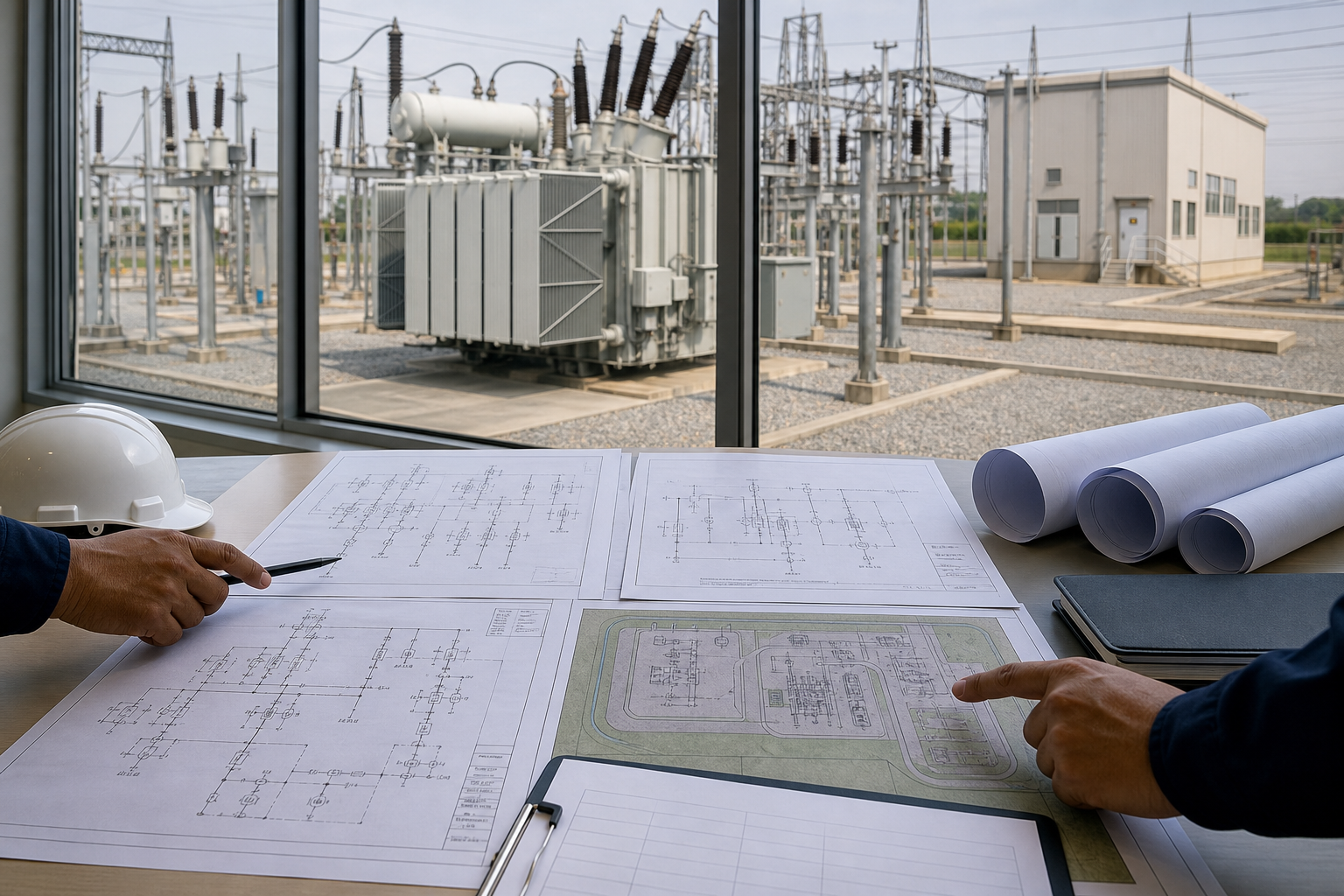
Start from the approved one-line diagram, equipment list, nameplates, operating limits and existing test history. If drawings, relay settings or labels do not match the installed equipment, resolve that discrepancy before planning work. The substation fundamentals guide explains the major equipment groups; the maintenance plan should use the site’s actual configuration.
Set maintenance intervals from risk and evidence
There is no universal interval that safely applies to every substation. A low-duty unit in a clean indoor room and a heavily loaded outdoor transformer beside salt spray or industrial dust do not have the same exposure. Consider the asset’s consequence of failure, age, loading, switching count, fault or alarm history, environmental contamination, redundancy, access constraints, OEM recommendations and warranty. Include any legally or contractually required task and its maximum interval. A missed alarm, trip event, leak, unusual temperature trend or severe weather exposure may require an assessment sooner than the calendar date.
Use a schedule framework to assign work; populate actual dates and intervals only after an engineer or asset owner checks the governing documents. The U.S. Bureau of Reclamation’s 2026 electrical maintenance scheduling manual provides task-specific examples and explicitly allows equipment, manufacturer and risk differences to matter. Its intervals are not a universal prescription for other owners or jurisdictions.
| Work window | Typical purpose | Planning output |
|---|---|---|
| Routine operating rounds | Observe alarms, status indications, leakage, abnormal sound or smell, visible damage, access and housekeeping changes. | Time-stamped readings and observations compared with that asset’s normal baseline; escalate exceptions. |
| Planned condition review | Review trends, loading, operations, monitoring alarms, thermography or fluid/electrical test results where specified. | Named follow-up action, responsible owner and due date; no test result is interpreted in isolation. |
| Approved outage maintenance | Perform tasks requiring isolation, access, cleaning, adjustment or intrusive inspection under the site work plan. | Approved work scope, switching/clearance plan, permits, test instruments and return-to-service checks. |
| After an event or adverse finding | Evaluate fault interruption, protection operation, abnormal alarm, overload, water ingress, contamination or impact. | Engineering disposition based on event records and inspection; do not wait for the next routine interval. |
Substation walkdown checklist
A walkdown is a repeatable observation, not permission to approach exposed live parts or open equipment. Use the station’s access rules, safe viewing points and reporting process. Keep the checklist specific enough that a different inspector can understand what was seen and what changed.
- Site and enclosure: check gates, locks, warning signs, fences, lighting, drainage, housekeeping, water entry, vegetation, animal intrusion, corrosion and obvious impact damage.
- Yard and visible equipment: note cracked or contaminated insulation, unusual surface tracking, loose or displaced external components, oil or other fluid leaks, missing guards, damaged cable terminations and abnormal indications. Do not infer electrical condition from appearance alone.
- Operating indicators: record the displayed position, alarms, counters and readings that the site procedure calls for. Compare values with normal history and the approved operating range; flag unexplained changes rather than resetting or bypassing an indication.
- Environmental conditions: record ambient conditions, recent weather and unusual contamination when they affect interpretation. A temperature reading taken at a different load or ambient condition may not be comparable with the previous survey.
- Follow-up: assign each finding a severity, responsible person and next action. A photo should show location and context without exposing restricted site information.
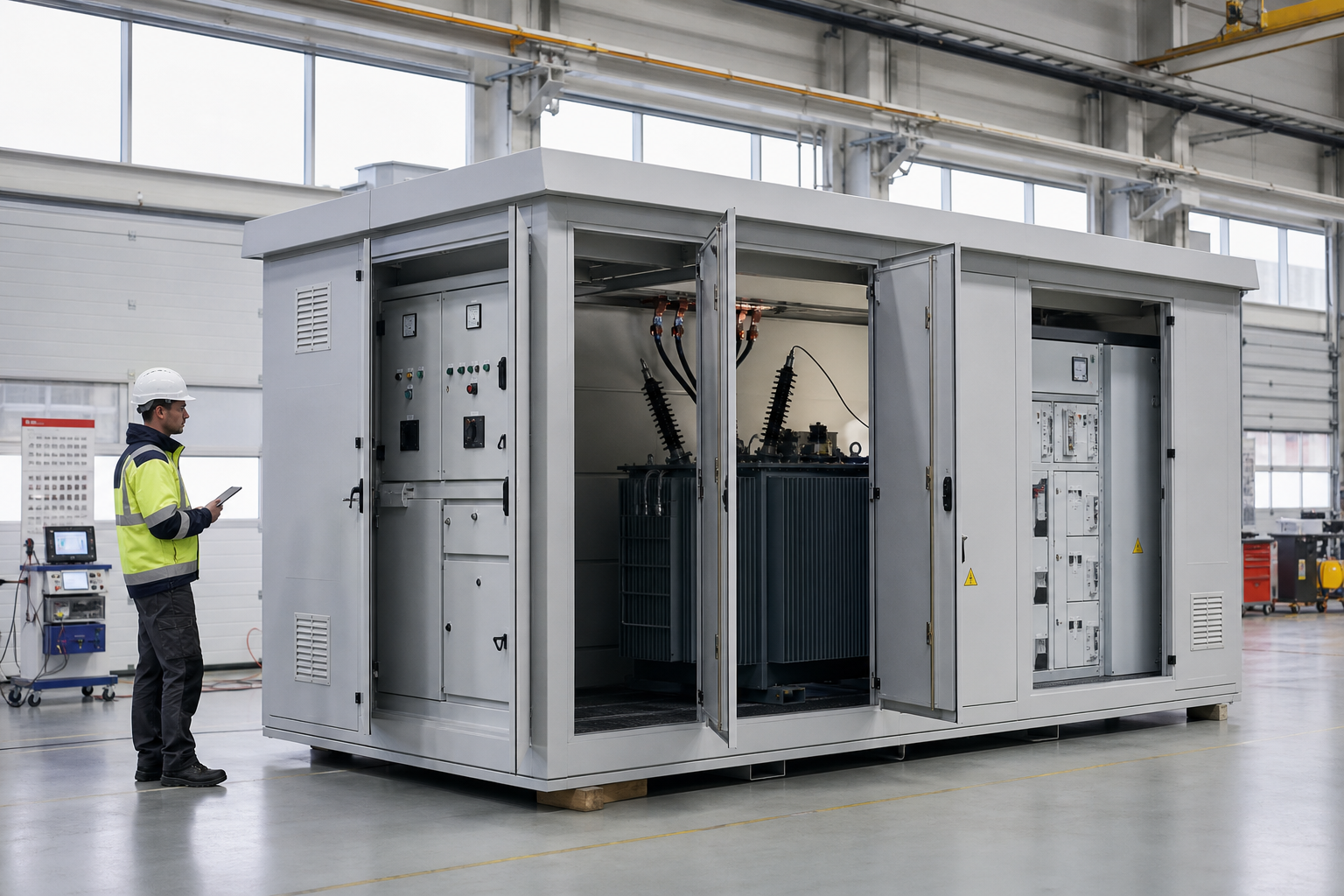
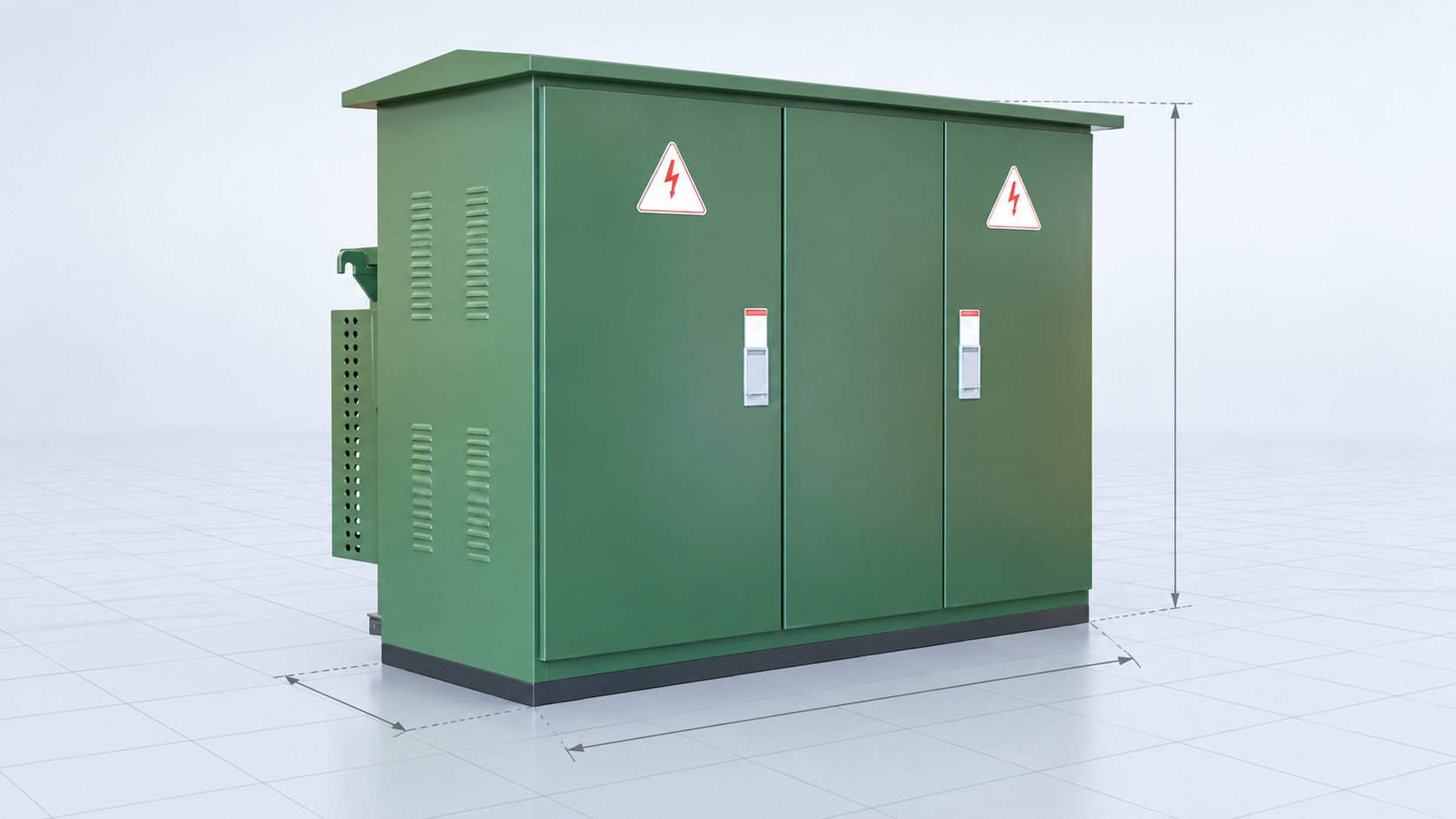
The illustrated YBM-12 prefabricated substation is one example of a packaged arrangement; its actual access and maintenance points must come from the delivered drawings and manufacturer documents.
Equipment-specific inspection points
Power transformers
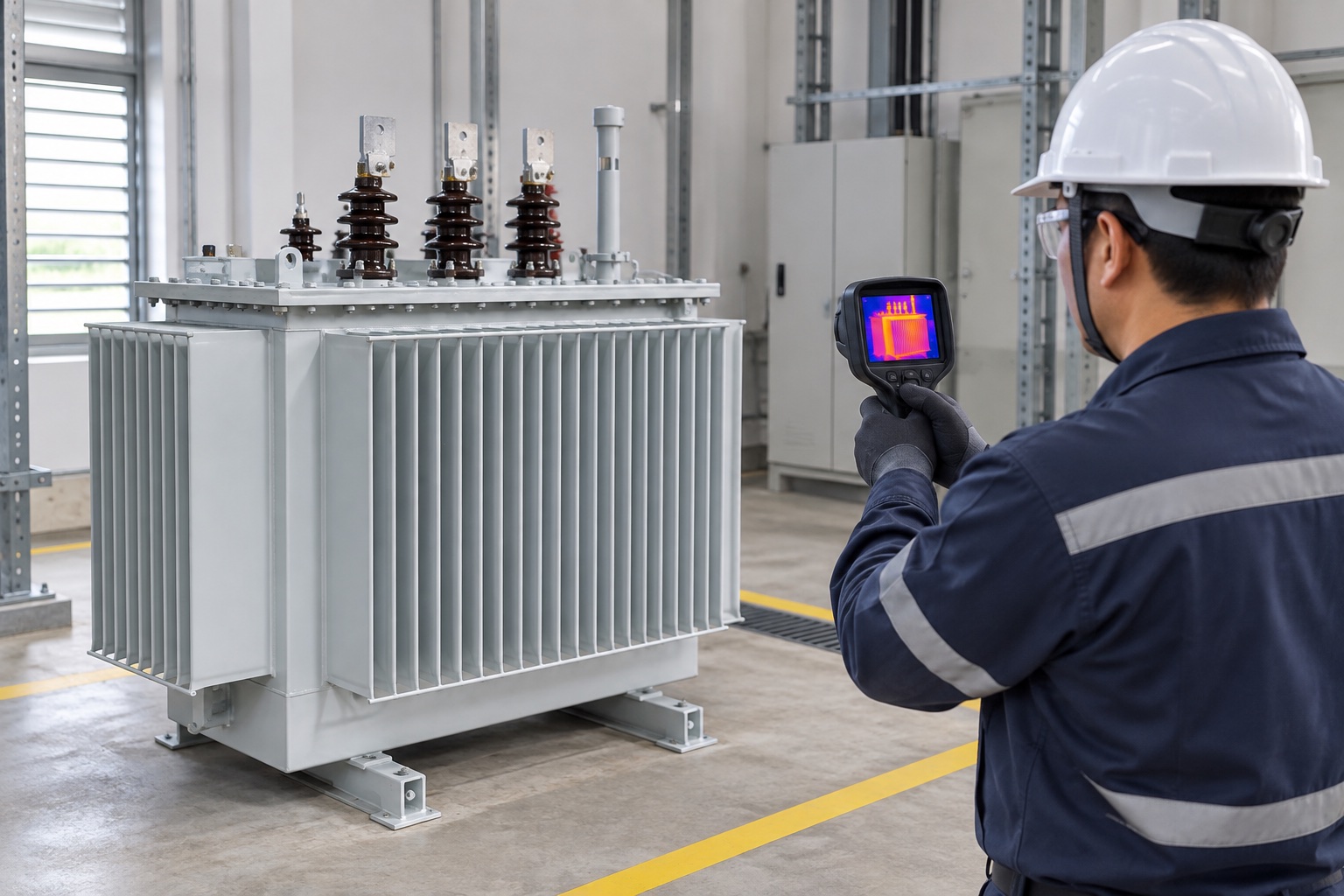
At the level permitted by the operating procedure, review load and temperature indications, oil or insulating-fluid level, pressure or gas-relay indication where fitted, cooling fans and pumps, bushings, seals, conservator and visible leaks. Check that alarms are reported and that cooling equipment does not show unexpected noise or operation. Record nameplate identity so a result cannot be assigned to the wrong unit.
Oil sampling and dissolved gas analysis are diagnostic tools, not pass/fail answers by themselves. Trend the laboratory result against prior samples using consistent sampling points, methods and operating context; assess notable changes with a qualified transformer specialist and the applicable interpretation method. Do not open an oil compartment, sample from energized equipment or change a protection setting as part of a general checklist. See the related transformer maintenance guide and DGA trend guide for more detail. For equipment context, review this oil-immersed transformer product page.
Switchgear, breakers and disconnectors
On an external round, observe enclosure condition, doors and seals, heaters or ventilation where installed, status indicators, counters and alarms. For gas-insulated designs, use only the manufacturer’s specified density or pressure monitoring and response limits. During approved outage work, the task plan may include mechanical checks, interlock and trip-function verification, contact measurements or timing tests. Those tasks need the correct equipment, acceptance basis and isolation; they are not safe do-it-yourself steps.
For metal-clad lineups, preserve clear operating access and report abnormal odor, sound, moisture, dust or damage. A thermal survey can help prioritize a connection for investigation, but it does not prove that a breaker can interrupt a fault or that internal insulation is healthy. Refer to the medium-voltage switchgear selection guide for construction types and to the KYN28A-12 product page for one example of a metal-clad cabinet. Exact configuration and maintenance instructions must be confirmed for the installed unit.

Protection, control and station DC supply
Confirm that settings files, approved setting sheets and device identity are controlled and versioned. Review relevant relay targets, alarm history, communication status and control-power alarms according to the site procedure. Battery and charger tasks depend on chemistry and construction: inspection and measurements must follow the battery maker’s instructions, ventilation requirements and applicable safety rules. A relay test is not complete if its current/voltage inputs, DC supply, trip path, breaker indication and event-record time are not considered as a system.
Grounding, buswork and cables
Report visible damage, corrosion or disturbed bonding connections in the ground grid, fence, structure and equipment grounding paths. Electrical continuity or grid testing should be planned by qualified personnel using the correct method and site-specific safety controls. For cables, include terminations, support, sealing, sheath or screen condition and any monitoring data relevant to the installed design. Do not use an insulation test voltage or acceptance threshold copied from another cable type.
Choose tests to answer a condition question
Testing is most useful when the team knows what concern it is evaluating, what measurement would change the decision and how it will compare the result. Select methods from the equipment manual, applicable standard, baseline record and a qualified test plan. Preserve instrument identity and calibration status, test connections, ambient and equipment conditions, measured values, acceptance criteria and reviewer. A test outside its intended range or without a comparable baseline can create false confidence.
| Method or evidence | Question it can help answer | Important limitation |
|---|---|---|
| Visual and operating observations | Has an alarm, leak, indication, surface condition or operation changed? | Cannot confirm internal insulation or interrupting performance. |
| Infrared thermography | Are accessible connections or components showing a temperature pattern that merits comparison? | Record load, ambient, viewing angle and emissivity assumptions; investigate findings under an approved plan. |
| Oil/fluid laboratory analysis | Is fluid quality or dissolved-gas trend indicating a change that needs specialist review? | Sampling quality and operating context affect interpretation; one result is not a complete diagnosis. |
| Breaker or relay functional tests | Do the specified mechanical, timing, logic and trip functions respond as designed? | Requires an approved isolation, test procedure, correct tools and defined acceptance criteria. |
| Grounding or insulation measurements | Is a particular grounding path, insulation system or cable showing a condition change? | Test method, configuration and safety controls are asset-specific; never transfer limits between designs. |
Plan outages and return equipment to service
Combine tasks that need the same outage only when their approved scopes, personnel and test windows fit. Before an outage, reconcile the one-line diagram and equipment labels, define isolation points with the system operator, identify stored-energy sources, determine temporary-grounding requirements, review adjacent energized equipment and confirm access, lifting, environmental and fire-protection needs. The site’s switching authority—not this article—sets clearances and authorizes work.
Before return to service, close the work permits and clearances through the site process; verify tools, temporary grounds, barriers and personnel are accounted for; document tests and approved deviations; restore protection, alarms and controls to their approved state; and obtain the required operating release. The substation testing and maintenance guide covers the broader lifecycle, while the substation design guide provides context for equipment interfaces and drawings.
Apply the employer’s electrical-safety program and all regulations that govern the specific site and task. Utility owners may also need to apply the current edition and local adoption of the National Electrical Safety Code. Standards vary by jurisdiction, and no online checklist replaces the worksite hazard assessment or authorized switching process.
Keep records that make the next decision easier
Keep a permanent, searchable record for every significant task: asset ID, work date, crew and reviewer, work order, approved procedure, operating conditions, as-found observations, readings, test instrument and calibration, acceptance basis, repairs, parts, as-left checks, deviations and follow-up date. Store reports with the relevant drawings and settings revision. For trendable measurements, preserve raw values and conditions, not only “pass” or “fail.” Record adverse findings and decisions not to act so the reasoning remains visible to the next operator.
Useful program measures include overdue critical tasks, repeat findings, alarms that remain unresolved, corrective work arising from planned inspections, test values outside their trend band, outage overruns and equipment unavailable time. Use these measures to adjust resource priorities and task intervals through the asset owner’s approval process. Do not lengthen an interval just because no failure has occurred if the needed condition-monitoring evidence is absent.
Substation maintenance overview video
The short explainer below shows how substations connect transformers, switchgear and the surrounding network. It is useful background for mapping assets and interfaces before defining inspection ownership; it is not a maintenance procedure or safety authorization.
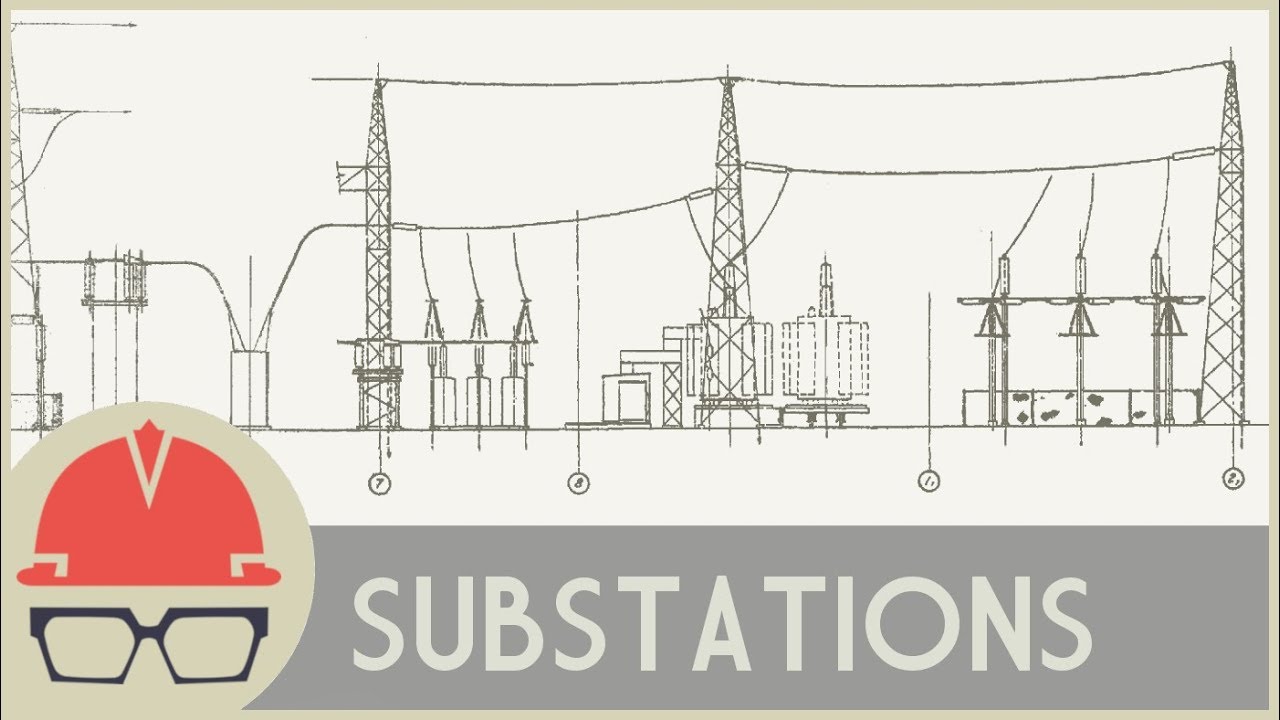
Watch the explainer on YouTube.
Substation Maintenance FAQs
What does substation maintenance include?
It can include routine observations, equipment-specific servicing, condition monitoring, electrical and mechanical tests, protection and DC-system checks, repairs and record updates. The approved asset plan defines which tasks apply to each installed device.
How often should a substation be inspected?
There is no safe single interval for all substations. Use local operating rules, the manufacturer’s instructions, required regulations, condition history, environment, equipment duty and criticality to set the schedule. Reassess after alarms, faults, adverse weather or a significant finding.
What belongs on a substation inspection checklist?
Include site access and enclosure condition, visible equipment damage or leakage, alarms and indicators, readings required by the site procedure, environmental changes, asset identification, evidence, severity and assigned follow-up. Add device-specific checks only where the approved procedure supports them.
Which tests are used in substation maintenance?
Depending on the asset and concern, qualified teams may use thermography, transformer-fluid analysis, breaker mechanical or timing tests, relay and trip-circuit functional tests, grounding measurements or insulation diagnostics. Each needs a defined purpose, method, safety plan and acceptance basis.
Can maintenance be performed while a substation is energized?
Some external observations or monitoring may be permitted by the owner’s rules, but energized work and test activity require task-specific hazard assessment, qualified personnel and applicable procedures. Treat equipment as energized unless the authorized isolation process establishes otherwise; never use a general online checklist as permission to approach or open equipment.
Related equipment and planning resources
Maintenance recommendations must follow the actual nameplate, drawings and manufacturer documentation. For examples of equipment used in compact distribution stations, see the YBM-12 prefabricated substation, oil-immersed transformer product and KYN28A-12 metal-clad switchgear. These product references do not establish a project specification.
Technical references
- U.S. Bureau of Reclamation, FIST 4-1B: Maintenance Scheduling for Electrical Equipment (Revision 4.0, 2026) — equipment task and frequency examples, with applicability limits.
- IEC 62271-200:2021+AMD1:2024, AC metal-enclosed switchgear and controlgear — equipment requirements for relevant medium-voltage assemblies.
- IEEE National Electrical Safety Code (NESC) — safety framework for electric-supply installations, subject to local adoption.
Conclusion
A dependable substation maintenance program begins with accurate asset records and safe operating boundaries, then connects inspections, diagnostics, outages and follow-up to each asset’s condition and risk. Use specific procedures and standards to set task details and intervals, and preserve comparable evidence after every intervention. That turns a checklist from a paperwork exercise into a useful record for reliability, safety and future equipment decisions.