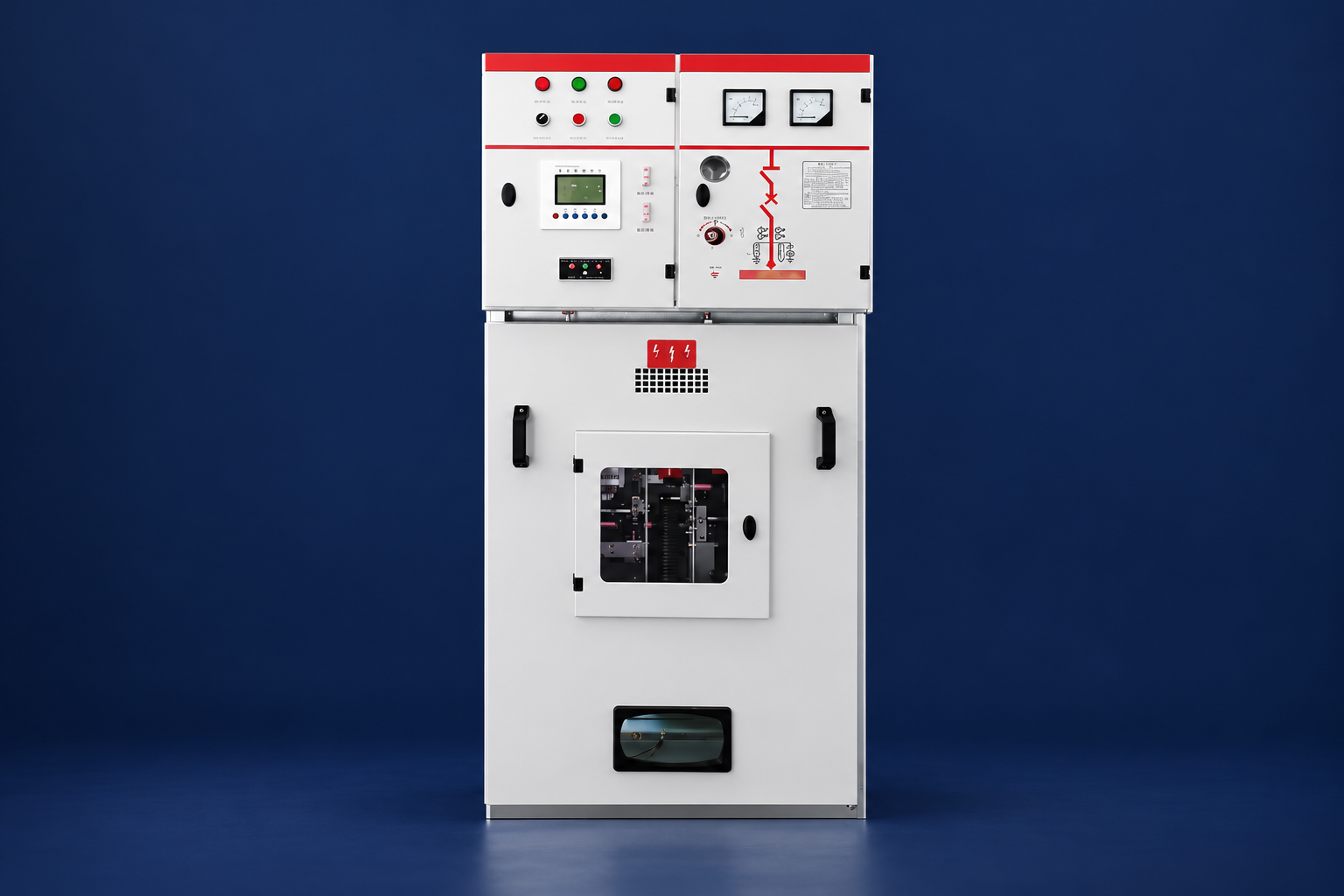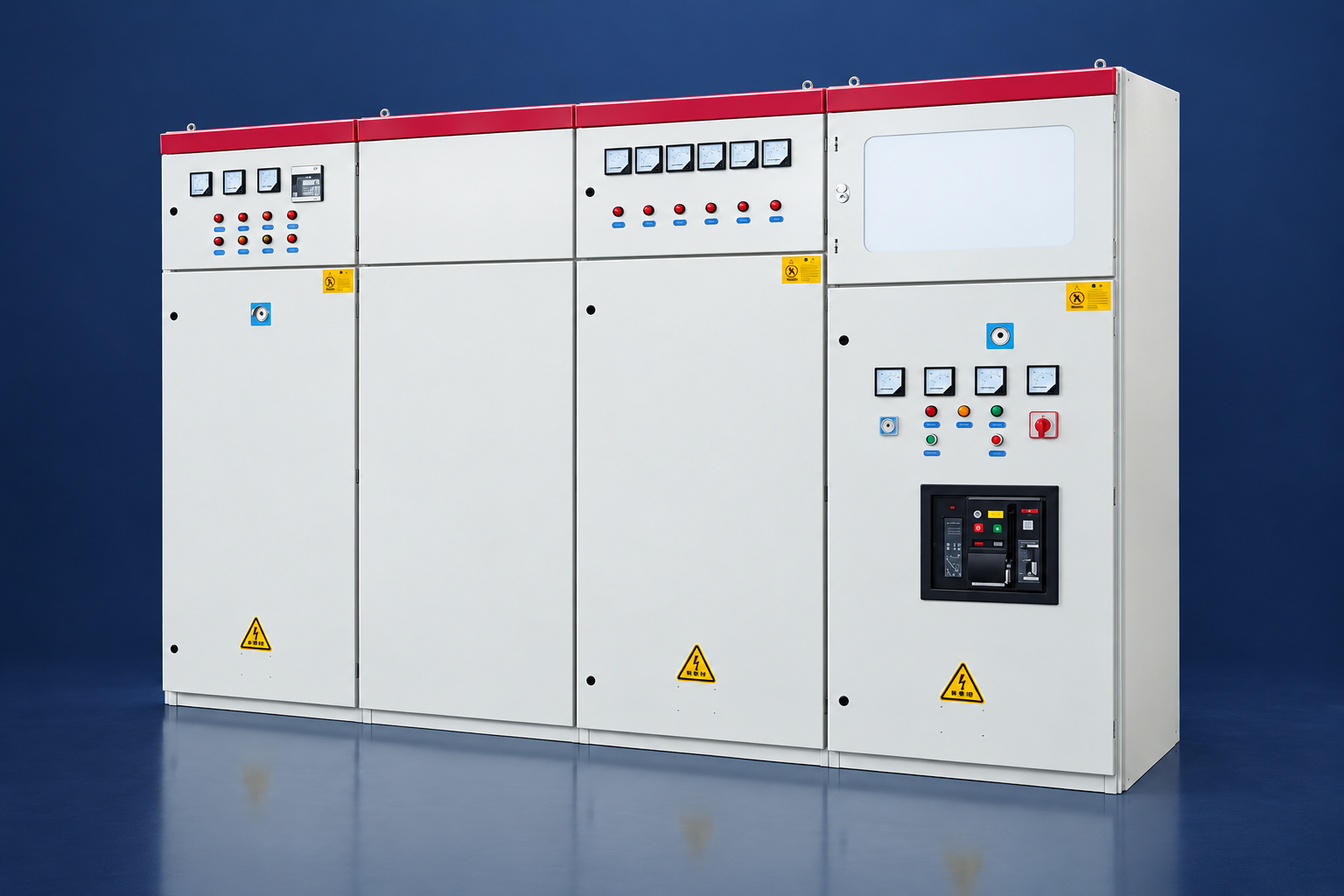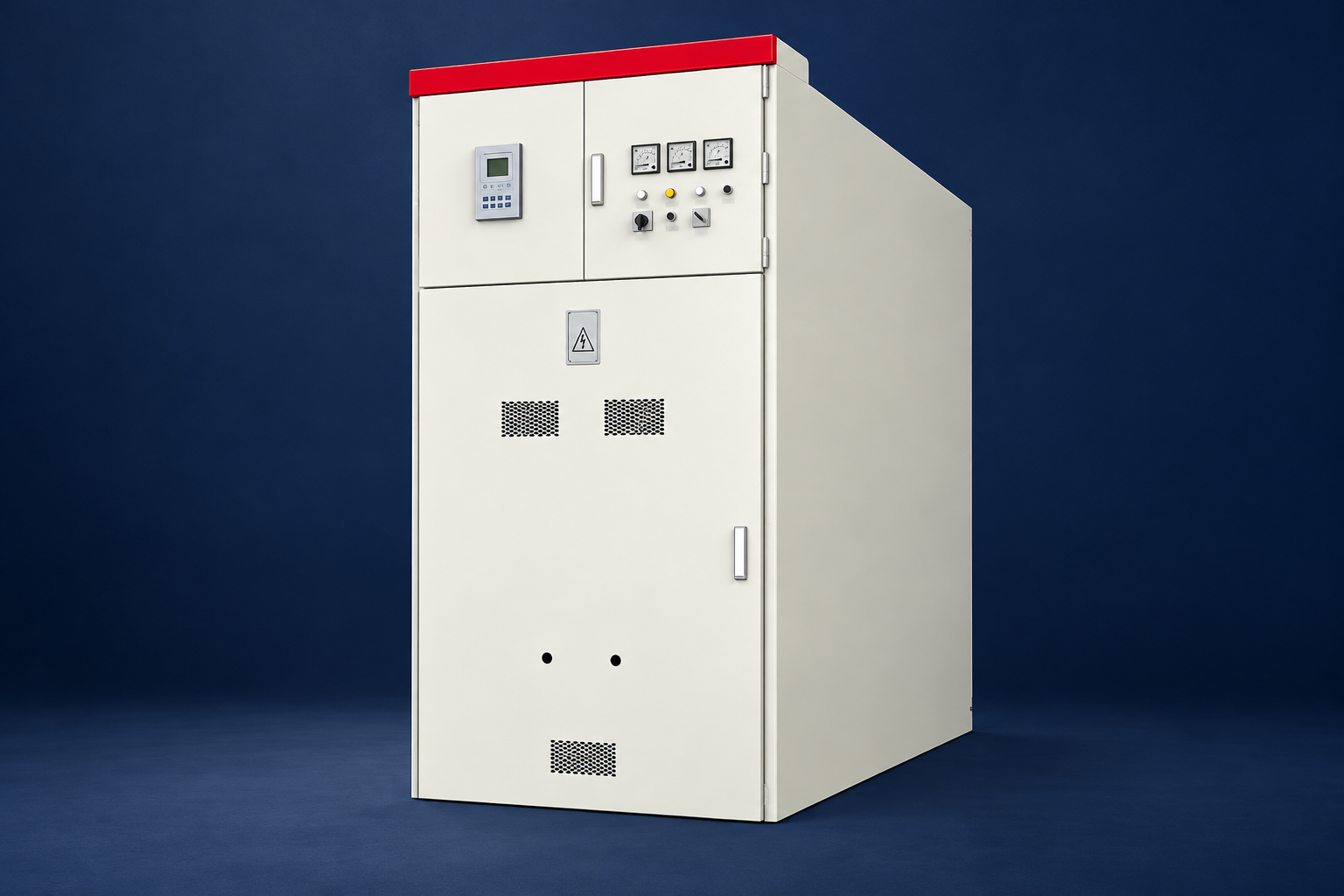

Air-insulated medium-voltage switchgear uses atmospheric air as the principal insulation between phases and ground while metal compartments contain breakers, buses, instrument transformers, cables and control equipment. AIS is maintainable and familiar but requires more space than sealed alternatives. Selection should be based on rated voltage, insulation level, continuous and short-circuit current, internal-arc strategy, service continuity, environment and maintenance access.
Key Takeaways
- Do not select MV switchgear from nominal voltage alone.
- Compartmentalization, interlocks and arc classification affect personnel risk and continuity.
- Altitude, contamination, condensation and access can change the correct design.
AIS Construction and Compartments
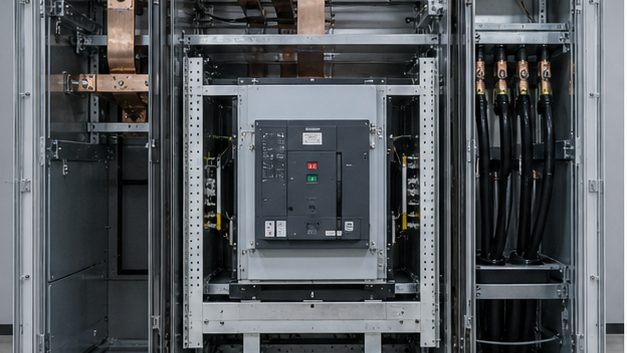
A typical metal-clad lineup separates the drawout circuit breaker, main bus, cable terminations and low-voltage controls with grounded metal barriers. Shutters cover primary disconnects when the breaker is withdrawn. Current and voltage transformers supply metering and relays, while grounding switches or trucks support maintenance where specified.
Metal-enclosed switchgear is a broader term and may provide less segregation than metal-clad construction. The project specification should state the construction standard and service requirements instead of relying on marketing names.
Electrical Ratings That Control Selection
Rated maximum voltage and power-frequency or impulse withstand must suit the system and insulation coordination. Continuous current applies to the bus and each functional unit. Short-time withstand current and duration describe thermal duty; peak withstand describes electrodynamic force. Breaker interrupting and closing ratings must exceed the studied fault duty.
Frequency, grounding, load type, cable charging, capacitor switching, transformer inrush and motor duty may affect breaker selection. Future fault-level growth should be evaluated rather than hidden by rounding.
Internal Arc, Interlocks and Service Continuity
An internal-arc classification states tested accessibility sides, arc current and duration under defined conditions. It is not a guarantee that every possible arc event is harmless. Room relief paths, exhaust ducts, fastening, installation and maintenance condition must match the tested configuration.
Mechanical and electrical interlocks should prevent unsafe operations such as racking a closed breaker, accessing energized compartments or closing onto an improperly positioned earthing switch. Key interlocks must be documented across connected equipment.
AIS Rating and Construction Checklist
| Item | Specify | Common mistake | Verification |
|---|---|---|---|
| Voltage insulation | Maximum voltage, BIL/LIWV and power-frequency withstand | Using nominal voltage only | Nameplate and dielectric report |
| Fault duty | Short-time, peak, breaker interrupting and duration | Ignoring future fault growth | Short-circuit study and test certificates |
| Arc performance | Accessibility, current, duration and exhaust arrangement | Treating arc-resistant as universal | Classification report and room design |
| Compartments | Breaker, bus, cable and LV segregation | Assuming all metal-enclosed gear is metal-clad | Construction drawings |
| Environment | Altitude, pollution, humidity and temperature | No condensation control | Site data and manufacturer derating |
Environment, Maintenance and Factory Tests
Dust, salt, humidity, condensation, altitude and temperature affect insulation and corrosion. Space heaters, ventilation, filtered rooms or higher creepage may be necessary. Altitude can require insulation or current derating depending on the standard and equipment design.
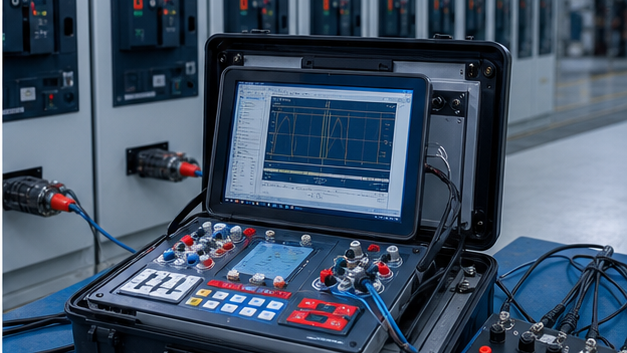
Routine maintenance includes cleaning, mechanical operation, contact inspection, insulation checks, relay testing and verification of racking and shutters. Factory acceptance should cover dielectric, resistance, mechanical, wiring, protection and functional tests with traceable records.
Engineering Validation and Safety Boundary
This guide supports specification and procurement; it does not replace a project study, the applicable code, the manufacturer instructions or work by qualified electrical personnel. Verify the following before equipment selection, testing, wiring or energization:
- Use the latest short-circuit, load-flow and protection studies.
- Confirm cable termination space, bend radius, phase sequence and entry direction.
- Coordinate room clearances, pressure relief and emergency egress.
- Verify interlocks through a documented functional sequence.
- Keep doors, covers and fasteners in the tested condition during service.
Information to Include in the RFQ
A useful quotation must be based on the same technical boundary for every supplier. Include the following information and require all deviations to be listed explicitly:
- System voltage, frequency, grounding and available fault current.
- Bus and feeder currents, breaker duties and protection functions.
- Construction standard, compartment class and internal-arc requirement.
- Indoor/outdoor environment, altitude, temperature and corrosion exposure.
- Single-line, lineup, cable schedule, communication, tests and documentation.
From Technical Data to an Approved Decision
Use a staged review rather than approving the first catalogue match. Begin with ais construction and compartments, then reconcile electrical ratings that control selection with internal arc, interlocks and service continuity. Complete the review with environment, maintenance and factory tests. At each stage, record the source document, units, operating case and person responsible for approval. This prevents a value copied from an old drawing, nominal system label or unrelated product from becoming an uncontrolled design input.
Before acceptance, compare the supplier response line by line with the RFQ and mark every exception. Confirm that drawings, calculations, settings, certificates and test reports refer to the exact offered model and revision. Preserve the approved submittal, nameplate data, factory results and commissioning measurements as the maintenance baseline. If a rating, connection, environment or test condition changes, repeat the affected review rather than assuming the original conclusion remains valid.
Document control should identify revision, approval status and superseded files. Field teams should receive the same approved values used for procurement, while commissioning records should capture any authorized change made during installation. This traceability is especially important when equipment is replaced years later: the next engineer needs verified interfaces and test history, not an incomplete description copied from a purchase order.
Coverage Informed by Current Search Results
The current U.S. Google top-20 review repeatedly surfaced themes including AIR-INSULATED SWITCHGEAR, Gas-insulated switchgear (GIS) portfolio, What is Medium Voltage Switchgear?, RELATED OFFERING, Live Tank Circuit Breakers (LTB). The article addresses those user needs in an original engineering and procurement sequence; competitor brand navigation and unrelated sales material were excluded.
Related LBAJI Resources
Continue with medium-voltage switchgear guide gas versus air-insulated switchgear LBAJI switchgear products. These resources help connect the calculation or component decision to a complete transformer, switchgear, control or distribution specification.
Technical References and Further Reading
- IEC 62271-200 — AC metal-enclosed switchgear and internal-arc classification.
- IEEE Standards Association — C37 switchgear and circuit-breaker standards.
- OSHA Electrical Safety — Work practices around electrical equipment.
Conclusion
A sound AIS specification joins electrical ratings, compartment construction, arc strategy, site environment and maintainability. Require the supplier to demonstrate each rating and interface with drawings and test evidence rather than a catalogue description.