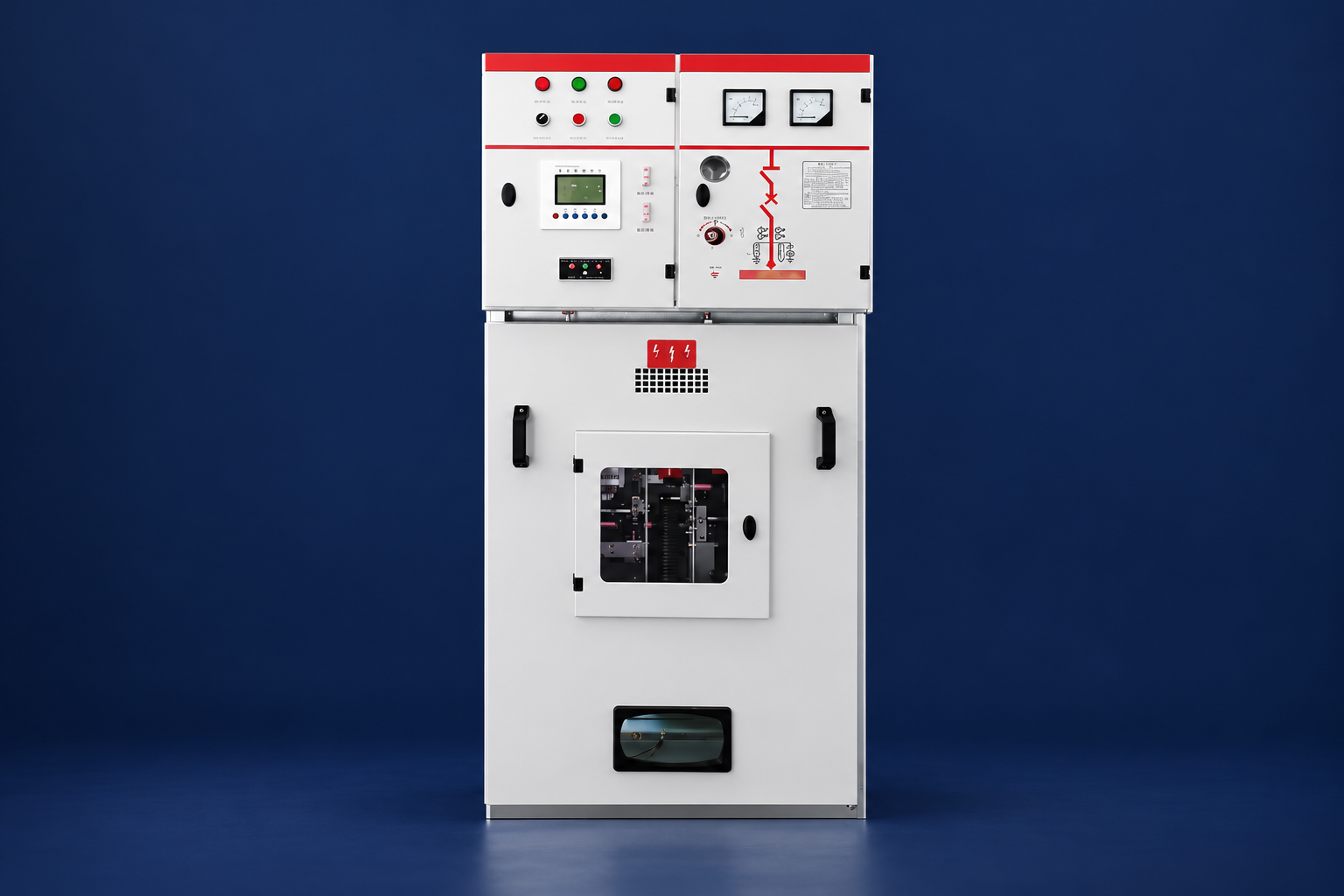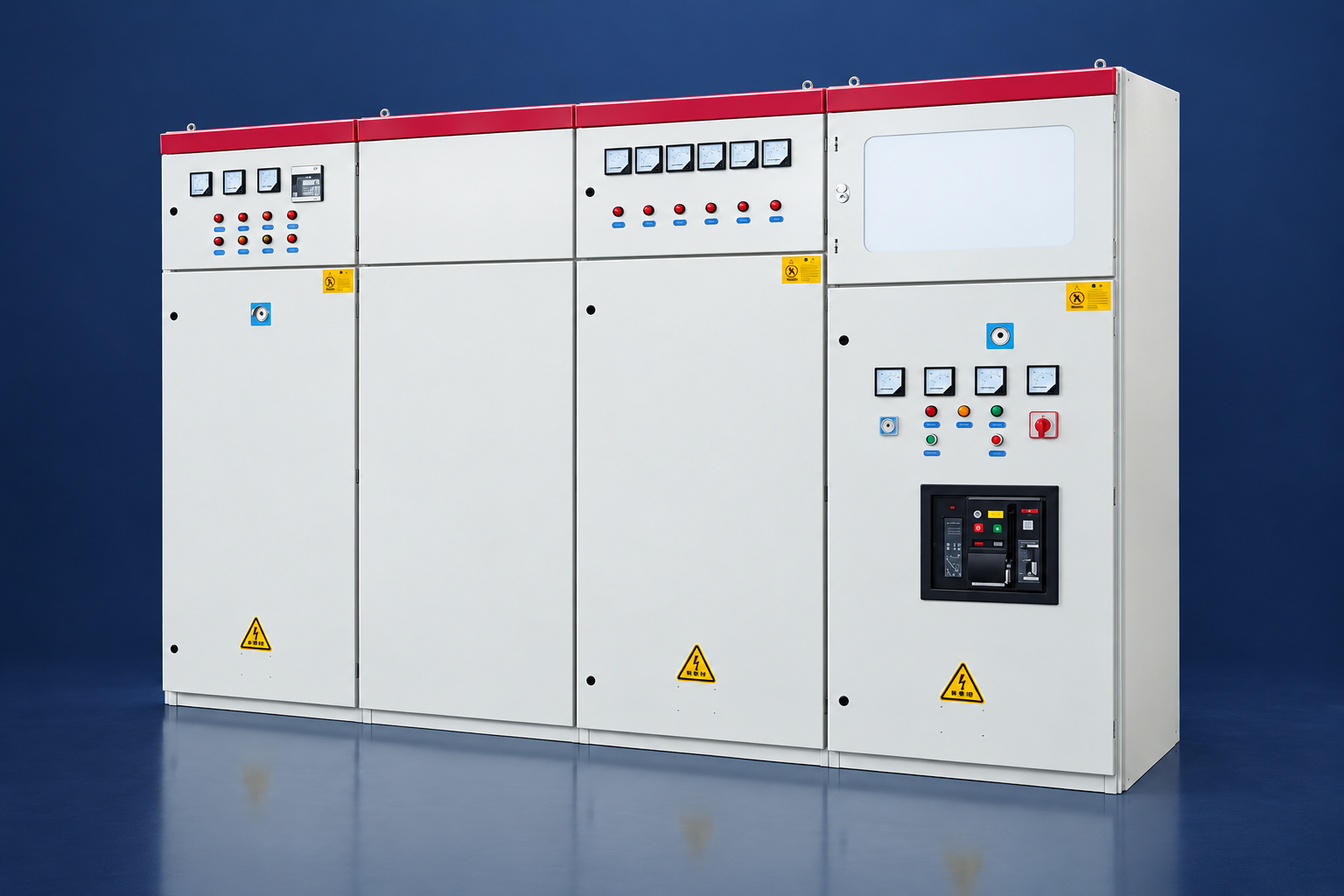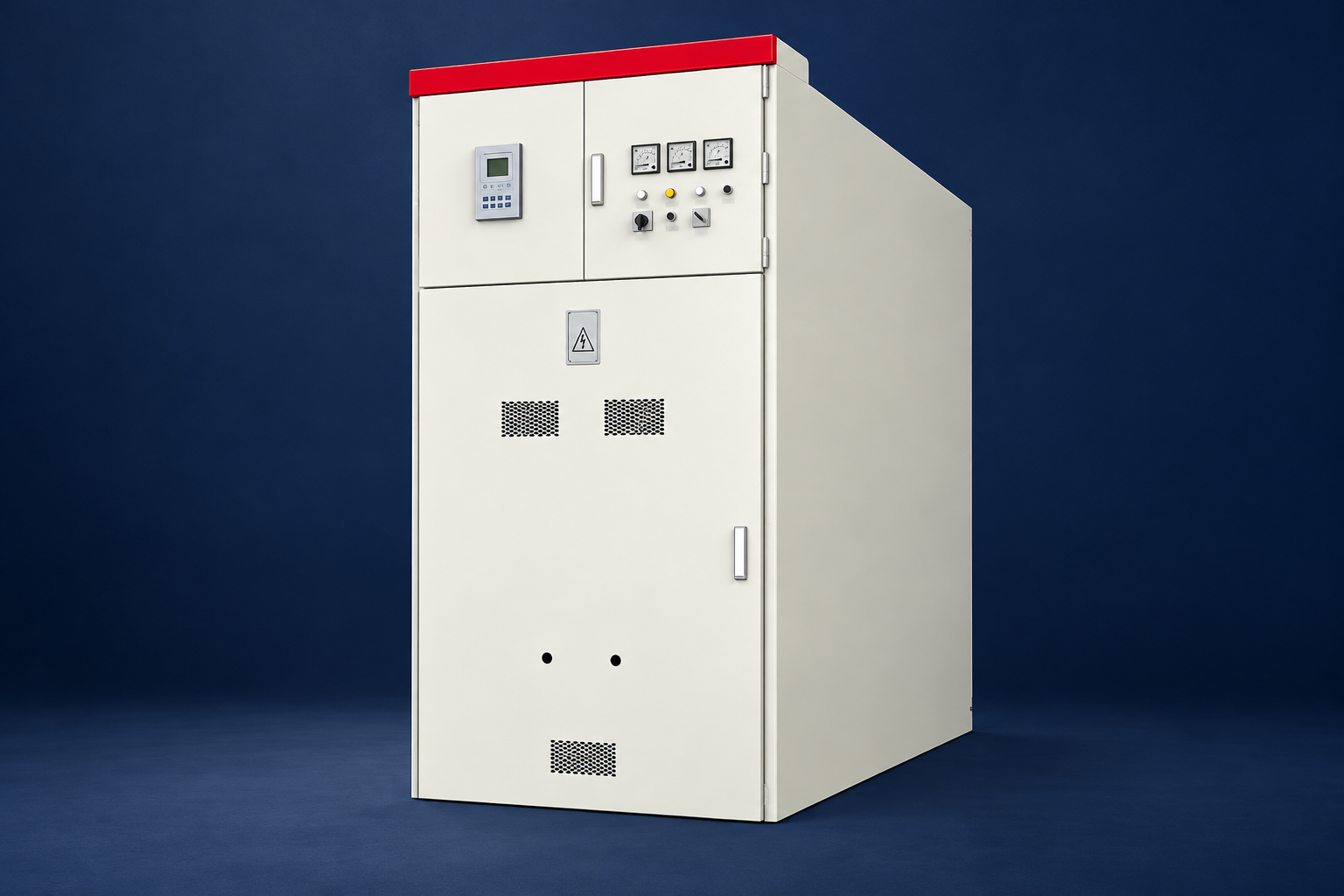

34.5 kV switchgear is normally specified in the 38 kV maximum-voltage class and must match the system insulation level, continuous current, short-circuit duty, grounding, switching application and internal-arc requirements. Nominal voltage alone does not define the equipment. Utility interface, altitude, cable or overhead terminations, breaker duties, CT/VT data, protection and room pressure relief determine the actual lineup.
Key Takeaways
- Specify rated maximum voltage and insulation withstand, not only 34.5 kV nominal.
- Match breaker interrupting and assembly withstand to the fault study.
- Coordinate arc classification, terminations, protection and room design.
Voltage Class and Insulation Coordination
A 34.5 kV nominal system commonly uses equipment with a 38 kV maximum rating. Lightning impulse withstand, power-frequency withstand, surge arresters, cable insulation and clearances must coordinate with utility and site exposure. Grounding method affects temporary overvoltage and arrester selection.
Altitude reduces air dielectric strength and may require corrected clearances or a higher insulation rating. Pollution and condensation can drive creepage and enclosure controls.
Current, Fault and Breaker Ratings
Bus and feeder continuous current reflect actual loading, ambient and future capacity. Short-time and peak withstand must exceed the studied fault current for the specified duration. The breaker needs adequate interrupting, closing and operating-duty ratings.
Application duties such as transformer energization, capacitor switching, reactor switching and cable charging require review beyond a symmetrical fault number. Transient recovery voltage and restrike performance may control selection.
Protection, Metering and Control
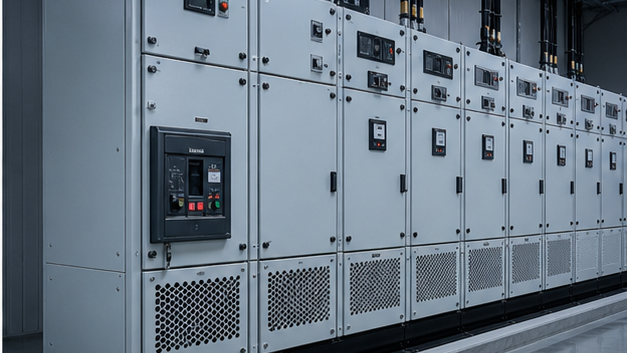
CT ratio, accuracy class, saturation and burden must support protection and metering. VTs require ratio, connection, fusing and ferroresonance consideration. Relays may provide phase and ground overcurrent, differential, voltage, frequency, breaker failure, arc detection and communications.
DC trip and close circuits, anti-pump logic, interlocks, SCADA points and time synchronization should be defined in functional diagrams. Test switches and accessible isolation points support commissioning.
34.5 kV Switchgear Specification Table
| Parameter | Typical specification question | Evidence |
|---|---|---|
| Voltage class | Is equipment rated for the 38 kV class and required BIL? | Nameplate and dielectric certificate |
| Continuous current | Do bus and feeders cover normal and contingency load? | Load-flow study |
| Fault duty | Do short-time, peak and breaker ratings exceed duty? | Short-circuit study and type tests |
| Arc classification | Which sides, current and duration are tested? | Internal-arc report |
| Terminations | Are cable size, entry, arrester and CT interfaces coordinated? | Approved section drawings |
Construction and Arc Strategy
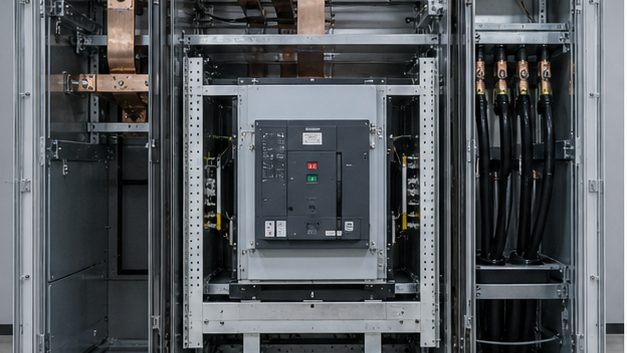
Metal-clad construction separates breaker, bus, cable and low-voltage compartments. Drawout breakers, shutters and grounding provisions improve maintainability. Cable bend radius, stress cones, arresters and entry direction require enough termination space.
Internal-arc ratings state tested current, duration and accessibility. Ducts or plenums must discharge safely, and the room must accommodate pressure and egress. Maintenance must preserve doors, fasteners and barriers in the tested configuration.
Engineering Validation and Safety Boundary
This guide supports specification and procurement; it does not replace a project study, the applicable code, the manufacturer instructions or work by qualified electrical personnel. Verify the following before equipment selection, testing, wiring or energization:
- Confirm utility maximum voltage and grounding method.
- Apply altitude and environmental corrections.
- Review special switching duties and transient recovery voltage.
- Validate CT performance for maximum and minimum faults.
- Coordinate arc exhaust and room pressure with the tested design.
Information to Include in the RFQ
A useful quotation must be based on the same technical boundary for every supplier. Include the following information and require all deviations to be listed explicitly:
- Nominal/maximum voltage, frequency, grounding and BIL.
- Bus and feeder currents, fault current and duration.
- Breaker duties, CTs, VTs, relays and communication protocols.
- Internal-arc classification, room arrangement and cable details.
- Single-line, lineup, interlocks, tests, spare parts and documentation.
From Technical Data to an Approved Decision
Use a staged review rather than approving the first catalogue match. Begin with voltage class and insulation coordination, then reconcile current, fault and breaker ratings with protection, metering and control. Complete the review with construction and arc strategy. At each stage, record the source document, units, operating case and person responsible for approval. This prevents a value copied from an old drawing, nominal system label or unrelated product from becoming an uncontrolled design input.
Before acceptance, compare the supplier response line by line with the RFQ and mark every exception. Confirm that drawings, calculations, settings, certificates and test reports refer to the exact offered model and revision. Preserve the approved submittal, nameplate data, factory results and commissioning measurements as the maintenance baseline. If a rating, connection, environment or test condition changes, repeat the affected review rather than assuming the original conclusion remains valid.
Document control should identify revision, approval status and superseded files. Field teams should receive the same approved values used for procurement, while commissioning records should capture any authorized change made during installation. This traceability is especially important when equipment is replaced years later: the next engineer needs verified interfaces and test history, not an incomplete description copied from a purchase order.
Coverage Informed by Current Search Results
The current U.S. Google top-20 review repeatedly surfaced themes including Product Features, Explore Switchgear & the Value of A Custom Switchgear Manufacturer, GHA Gas Insulated Switchgear, Ratings, Medium Voltage Paralleling Switchgear. The article addresses those user needs in an original engineering and procurement sequence; competitor brand navigation and unrelated sales material were excluded.
Related LBAJI Resources
Continue with medium-voltage switchgear guide air-insulated switchgear guide LBAJI MV switchgear. These resources help connect the calculation or component decision to a complete transformer, switchgear, control or distribution specification.
Technical References and Further Reading
- IEC 62271-200 — Metal-enclosed AC switchgear requirements.
- IEEE Standards Association — C37 switchgear standards.
- OSHA Electrical Safety — Electrical work-practice context.
Conclusion
A 34.5 kV lineup is a coordinated 38 kV-class system, not a collection of cubicles. Insulation, switching, fault, protection, termination and arc requirements must be proven with studies, drawings and test records.