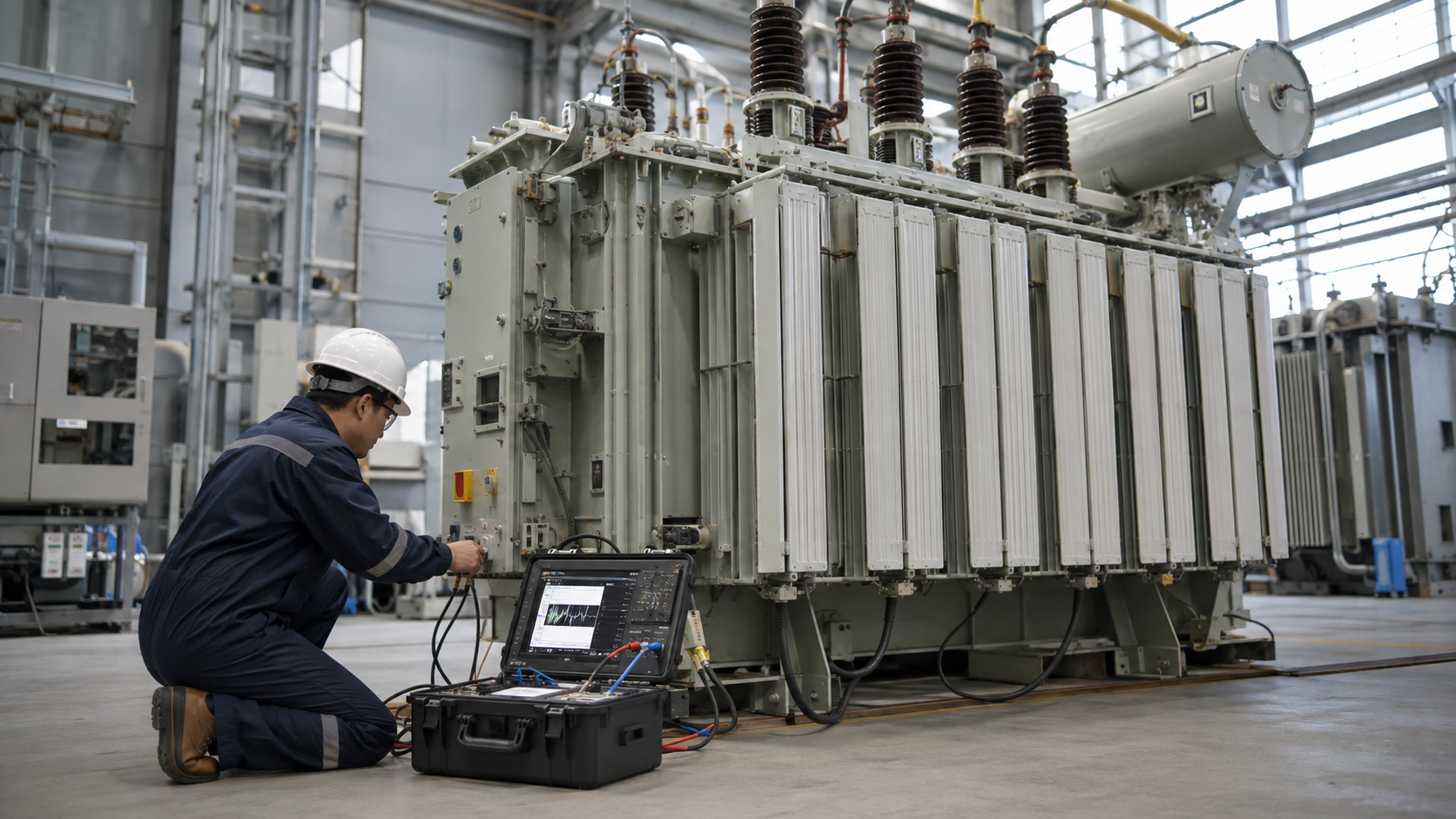

A dry-type triplex transformer is a project-specific way to group dry transformer windings or single-phase units into a three-phase supply. The word “triplex” is not used identically by every manufacturer: one offer may describe three separable single-phase core-and-coil units with a common bus, while another may use a different common frame, enclosure or winding arrangement. It should not be treated as a universal electrical topology or as a synonym for every three-phase dry-type transformer. Before comparing prices, ask the supplier to define the physical assembly, primary and secondary connections, terminal arrangement, transport units, and which parts are shared or removable.
What “triplex” means—and why the drawing matters
Three related constructions can look similar in a short product description but behave differently during transport, connection, maintenance and replacement. A conventional three-phase transformer may place its magnetic circuit and windings in one integrated assembly. A bank of three single-phase transformers uses three separate units connected into a three-phase circuit. A triplex package may group three single-phase core-and-coil sections, terminals or buses within one engineered assembly. Some designs allow sections to be separated for movement through restricted access; other designs do not.
There is no safe way to infer those details from the search term, a product photo or a model name. Require an outline drawing and a single-line/connection diagram for the exact offered configuration. The selected standard also depends on the equipment scope. IEC 60076-11:2018 covers defined classes of dry-type power transformers and lists exclusions; the project engineer must confirm applicability, local adoption and any additional requirements.
Triplex assembly versus a standard three-phase transformer
| Construction description | What may be different | Evidence to request |
|---|---|---|
| Three independent single-phase units | Each unit may be moved and serviced separately, but the complete bank still depends on compatible ratings, connections and protection. | Three nameplates, bank connection drawing, matching data and a transport/installation plan. |
| Triplex packaged assembly | Three units or coil sections may share a frame, bus, barriers or enclosure; the degree of disassembly is design-specific. | Section-by-section outline, common-bus details, assembly sequence, lifting points and joint/terminal schedule. |
| Integrated three-phase dry-type transformer | Windings and magnetic circuit form a single designed unit; it may not be separable into three field-swappable transformers. | Complete nameplate, connection/vector-group diagram, dimensions, mass, cooling method and routine-test records. |
Confirm the primary and secondary connection before selection
For a three-phase design, the system connection is part of the specification. The source, load, available neutral, grounding method, phase shift, fault level and protection design determine whether a delta or wye arrangement is suitable. Do not choose the winding connection from a generic diagram or assume two visually similar units have the same vector group.
- Identify the primary and secondary system voltages and whether each is line-to-line or line-to-neutral.
- State the required winding connections, neutral availability, grounding method and vector group in the project schedule.
- Check phase sequence, polarity, ratio, tap range and terminal labels against the approved connection drawing.
- Compare the impedance and rating of each single-phase section if the bank uses separate units; resolve differences with the engineer before manufacture.
- Review available fault current, inrush and primary/secondary protective-device coordination for the complete assembly.
- Have a qualified designer approve the final one-line diagram and manufacturer terminal schedule before field work.
This is a document-review sequence, not field wiring instructions. If the project requires a particular phase relationship or parallel operation, the design review must verify that the chosen ratios, polarity, vector group, taps and impedance are compatible. See our three-phase transformer calculation guide for line and phase relationships, and our transformer protection overview for system-level protection context.

Check capacity, impedance and phase loading together
Start with the actual load schedule, not a single connected-load total. Identify continuous demand, motors and starting duty, nonlinear loads, expected imbalance, future expansion and the required loading profile. Confirm how the supplier defines the rating of a triplex assembly: the total three-phase output, the rating of each single-phase unit, or both. The quotation must make the relationship explicit.
Where three individual units form a bank, their ratios, taps, polarity, connection, impedance and thermal capabilities must be compatible with the intended arrangement. Unequal impedances can affect load sharing and the current carried by each unit. If a unit is to operate in parallel with another transformer, require an engineering compatibility review; equal kVA alone is not enough. The design package should state which loads are served by each phase and how unbalanced or harmonic currents are addressed.
Do not publish one generic “triplex kVA chart” as a substitute for this work. A catalogue rating without voltage, cooling, environment, impedance, connection and test conditions cannot establish a suitable project selection. For a broader load-and-capacity workflow, review our transformer sizing and calculations guide.
Plan cooling, enclosure and service access
Dry-type construction avoids the insulating-liquid handling associated with liquid-filled equipment, but it still depends on heat removal, insulation condition and a suitable room or enclosure. State the ambient temperature, altitude, dust or moisture exposure, indoor/outdoor location, ventilation and any acoustic or fire constraints. Ask the supplier to identify the insulation system, cooling designation, temperature-rise basis and required clearances for the offered design rather than assume that all dry-type models are open ventilated units.
Check that room airflow can reach the transformer’s intake and discharge paths without short-circuiting hot air back to the inlet. Leave the access needed to inspect, test and open any panels or barriers. Eaton’s dry-type installation guidance discusses ventilation, service clearances and equipment removal; apply the selected manufacturer’s limits and the rules adopted for the project.
Transport and modular replacement can drive the design
A modular package is useful only if its sections fit the actual route and can be safely reassembled. Give the manufacturer the doorway and elevator dimensions, corridor turns, floor loading, crane access and final room layout. Request the shipping size and mass for each transport piece, not just the assembled unit. Identify lifting points, permitted orientations, temporary supports, assembly space and the planned order for joining sections.
Also plan future removal. Ask whether a failed coil, enclosure panel, bus section or complete transformer can be taken out without dismantling adjacent live equipment. Clarify which connections are intended to be separated during transport and which joints require inspection or a specified torque after reassembly. Do not assume that a photographed three-section design can be dismantled in the same way at another site.

Testing, protection and acceptance records
Before manufacture, agree the applicable design standard, routine and any special tests, acceptance limits and report format. The supplier package should identify the serial numbers of the three units or sections, the connection and nameplate data, factory test results, terminal schedule, protective-device interfaces, assembly instructions and deviations from the specification. Check that the test plan corresponds to the purchased design rather than a generic dry-type transformer brochure.
For commissioning or replacement, compare the delivered configuration with the approved drawings before energization. Confirm connections, phase sequence, ratio, tap positions, grounding, protection settings, clearances, ventilation and auxiliary-device operation under a qualified person’s approved procedure. Retain baseline records so later troubleshooting can compare like-for-like measurements. A triplex arrangement adds interfaces; it does not remove the need for inspection and acceptance evidence.
Dry-type triplex transformer RFQ checklist
| RFQ field | What to submit or request | Why it matters |
|---|---|---|
| Definition and scope | Written explanation of “triplex,” number of units/sections, shared bus and parts that can be separated. | Prevents bids for different physical products being compared as if identical. |
| Electrical schedule | Primary/secondary voltage, phase, frequency, total and per-unit kVA, connection, neutral, vector group, taps and impedance. | Defines the system interface and any unit-matching requirements. |
| Load and protection | Load schedule, starting/overload profile, harmonic or imbalance information, fault study and one-line diagram. | Supports capacity, thermal and protective-device review. |
| Environment | Ambient, altitude, indoor/outdoor, enclosure, dust/moisture, ventilation, acoustic and fire constraints. | Confirms cooling and insulation design for the installed location. |
| Movement and installation | Route dimensions, elevator/door limits, floor loading, lifting access and final clearances. | Tests whether each shipped section can reach its location and be removed later. |
| Drawings and assembly | Outline, shipping-section mass/dimensions, lifting points, terminal plan, assembly and torque instructions. | Makes connections, handling and future service reviewable before purchase. |
| Tests and quality | Applicable standard, routine/special test schedule, acceptance limits, serial-numbered reports and deviations. | Links factory evidence to the exact delivered assembly. |
| Commercial scope | Accessories, spares, documentation, commissioning support, delivery terms and lead-time assumptions. | Reduces gaps between the technical design and the quoted supply. |
What LBAJI’s public dry-type listing confirms
LBAJI’s SG(B) environment-friendly dry-type transformer page is a relevant product-family starting point, but its public listing does not confirm that a triplex assembly, three removable single-phase sections, or any particular shared-bus design is included. Send the system one-line, load schedule, required connection and the site transport route with an RFQ, and ask LBAJI to confirm the exact configuration, ratings, drawings and test scope in writing. No triplex construction or rating is implied by the product photo.
For background on dry-type construction, see our dry-type transformer guide. A generic connection lecture can help visualize delta and wye basics, but it cannot substitute for the project’s own vector diagram and approved manufacturer drawings.
Three-phase connection video
“Three-Phase Transformers Explained | Delta vs Wye Basics” by Utility Design Simplified demonstrates three single-phase units forming a delta-primary/wye-secondary bank. It is useful visual background for the connection terminology; it does not show or define LBAJI’s dry-type triplex product, and it is not field-wiring guidance.

Watch the delta/wye connection overview on YouTube.
Frequently asked questions
What is a dry-type triplex transformer?
It is a supplier- or project-defined dry transformer assembly that groups three single-phase units or coil sections into a three-phase arrangement. The exact enclosure, shared bus and transport configuration must be confirmed on the manufacturer drawing.
Is a triplex transformer the same as any three-phase dry-type transformer?
No. A conventional three-phase transformer can be one integrated assembly. “Triplex” may describe a multi-section arrangement, but suppliers can use the term differently. Request the connection diagram and section layout before comparing products.
Can three single-phase transformers be combined into a bank?
They can form a three-phase bank when the ratings, ratios, polarity, winding connections, phase sequence, impedance, taps, cooling and protection are compatible with the system. A qualified designer must approve the actual configuration.
What should I send with a triplex transformer quotation request?
Provide the one-line diagram, load and protection data, voltage and connection schedule, site environment, transport-route limits, required tests and delivery scope. Ask for signed drawings, each section’s shipping dimensions and mass, nameplate data and deviations.
Bottom line: define the assembly before you select it. Compare electrical connections, unit matching, thermal conditions, transport sections and acceptance documents on the same project-specific basis; never infer a triplex design from a generic product name.