
Partial discharge in switchgear is a localized electrical discharge associated with part of an insulation system rather than a complete bridge across the insulation. Monitoring can provide evidence for condition assessment, but a signal is not automatically a diagnosis, a remaining-life prediction or a reason to apply a universal alarm threshold. A useful investigation identifies the assembly, measurement method, operating context, interference and engineering follow-up. This guide helps buyers define that evidence package and understand its limits. It addresses metal-enclosed switchgear assessment, rather than transformer gas analysis, and does not prescribe energized access, test voltages or a repair procedure.
Start with an asset-specific question
Determine why an assessment is being requested. A recurring monitor alert, a change from an established baseline and a pre-purchase request for factory test evidence are separate questions. Each needs a different measurement context. A contractor should be able to explain which question the proposed work can answer and what further evidence may remain necessary.
Identify the assembly, feeder and relevant compartments from controlled drawings. Record the installed configuration and any known changes since commissioning. Equipment descriptions such as medium-voltage board are too broad for traceable assessment. A finding should connect to an identifiable asset and location, while acknowledging that a signal detected at one point may not uniquely locate its source.
Separate measurement from interpretation
A measurement system detects a response through a specified coupling path and processes that response into recorded information. The result depends on the sensor, acquisition arrangement, signal processing and interference environment. A competent interpretation therefore needs more than a screenshot showing a number or a coloured pattern. Ask what quantity is reported and which method defines it.
IEC 60270 concerns charge-based partial-discharge measurement, while IEC TS 62478 addresses electromagnetic and acoustic methods. Their catalogue scopes help identify different measurement families. These references do not make outputs from different instruments interchangeable. The applicable full documents, equipment instructions and specialist method remain necessary; no acceptance limit is inferred here from a catalogue description.

Distinguish online and offline assessment
An online assessment observes equipment under its operating conditions through an approved arrangement. It can support trending and investigation, but the operating state, electrical noise and accessible measurement locations affect the evidence. State whether the work is a one-time survey or part of a continuing monitoring programme, and who is responsible for reviewing subsequent alerts.
An offline test has a separate test configuration and requires a controlled outage and approved specialist procedure. Its results should not be treated as directly equivalent to an online reading without an engineering basis. The purchase order should name the intended method, responsibility for test planning and the required report. This article deliberately provides no connection instructions or test-voltage sequence.
Specify a measurement evidence package
Reference context: IEC 60270:2025 charge-based partial-discharge measurement scope. This original qualitative checklist organizes project decisions; it is not a reproduced standard or a substitute for approved criteria.
| Evidence item | Question for the specialist | Decision supported |
|---|---|---|
| Asset and location | Which assembly and compartment does the record concern? | Traceable assignment of findings |
| Method and quantity | What sensor arrangement and reported quantity are used? | Interpretation within the actual method |
| Operating context | What service state existed during measurement? | Assessment of comparison limitations |
| Interference assessment | How was external or unrelated activity considered? | Confidence that a signal concerns the asset |
| Engineering disposition | Who reviews the evidence and defines next action? | Controlled follow-up and escalation |
This original qualitative matrix organizes a procurement discussion; it does not reproduce a test standard. Add project-specific information requirements without inventing a generic pass value. If the proposed system cannot supply an item, ask the specialist to explain the consequence and record the limitation before treating the scope as suitable.
Plan for interference and source location
Electrical activity detected near an assembly may originate outside the suspected insulation component. A report should describe how the specialist considered unrelated sources and why a finding was assigned to the equipment under review. Confidence can vary between a screening observation and a more detailed investigation. Those stages should not be described with the same certainty.
Where several measurement positions or complementary techniques are used, ask how their evidence is combined. An indication strongest at one accessible surface is not necessarily proof that the nearest hidden component is defective. Keep raw observations, localization reasoning and the proposed diagnosis separate. This makes the review more useful to the manufacturer and prevents a preliminary result becoming a misleading maintenance instruction.
Establish a meaningful baseline
A baseline should include the installed configuration, measurement arrangement and operating context, not merely a date and a single number. Retain instrument identification, sensor location records and the relevant acquisition settings. If a sensor or processing method changes, document the change so future reviewers can determine whether a trend remains comparable.
A new reading should be interpreted against an appropriate history where one exists. A change in operating conditions or measurement arrangement can affect that comparison. Conversely, an apparently stable result does not prove that every inaccessible region of the assembly has been assessed. The monitoring plan should identify its coverage and the questions it leaves unanswered.
Define alarm ownership before installation
Continuous monitoring creates a continuing operational responsibility. The facility needs to know who receives alerts, who checks data quality and who decides whether further assessment is required. Agree how the system distinguishes a communication fault or sensor issue from a condition indication. An unattended dashboard is not a complete condition-management programme.
Alarm settings require a justified basis for the actual system and asset. Do not copy a numerical threshold from a different sensor family or another installation. The responsible specialists should define the criteria, review interval and escalation process. Record changes to those criteria so a later investigation can reconstruct why a particular alert was or was not acted upon.
Combine evidence before choosing an intervention
A suspected insulation concern may require comparison with service history, environmental conditions, prior test records and manufacturer information. The engineer should explain which further checks can reduce uncertainty and whether they require an outage. The objective is to resolve a specific question, rather than accumulate unrelated measurements that cannot be reconciled.
Keep monitoring separate from claims about remaining useful life. A single observation cannot establish a universal countdown to failure. Likewise, an absence of a detected indication does not demonstrate that insulation everywhere is defect-free. The report should state the scope of its conclusion and avoid commercial guarantees that exceed the evidence actually obtained.

Preserve safe access and configuration boundaries
No part of the assessment should assume that opening energized compartments is routine or authorized. The operating organization must define the electrical work boundary, qualified personnel and approved equipment instructions. A sensor described as non-intrusive does not remove every hazard associated with approaching or working around the assembly.
Retrofitting permanent sensors or changing an enclosure requires configuration review. Ask the manufacturer about approved installation arrangements, interfaces and effects on the documented assembly. Do not improvise openings, change insulation clearances or bypass protective arrangements. If the proposed method cannot be implemented within approved conditions, retain the issue as an engineering decision rather than forcing the survey to proceed.
Relate the assessment to the purchased assembly
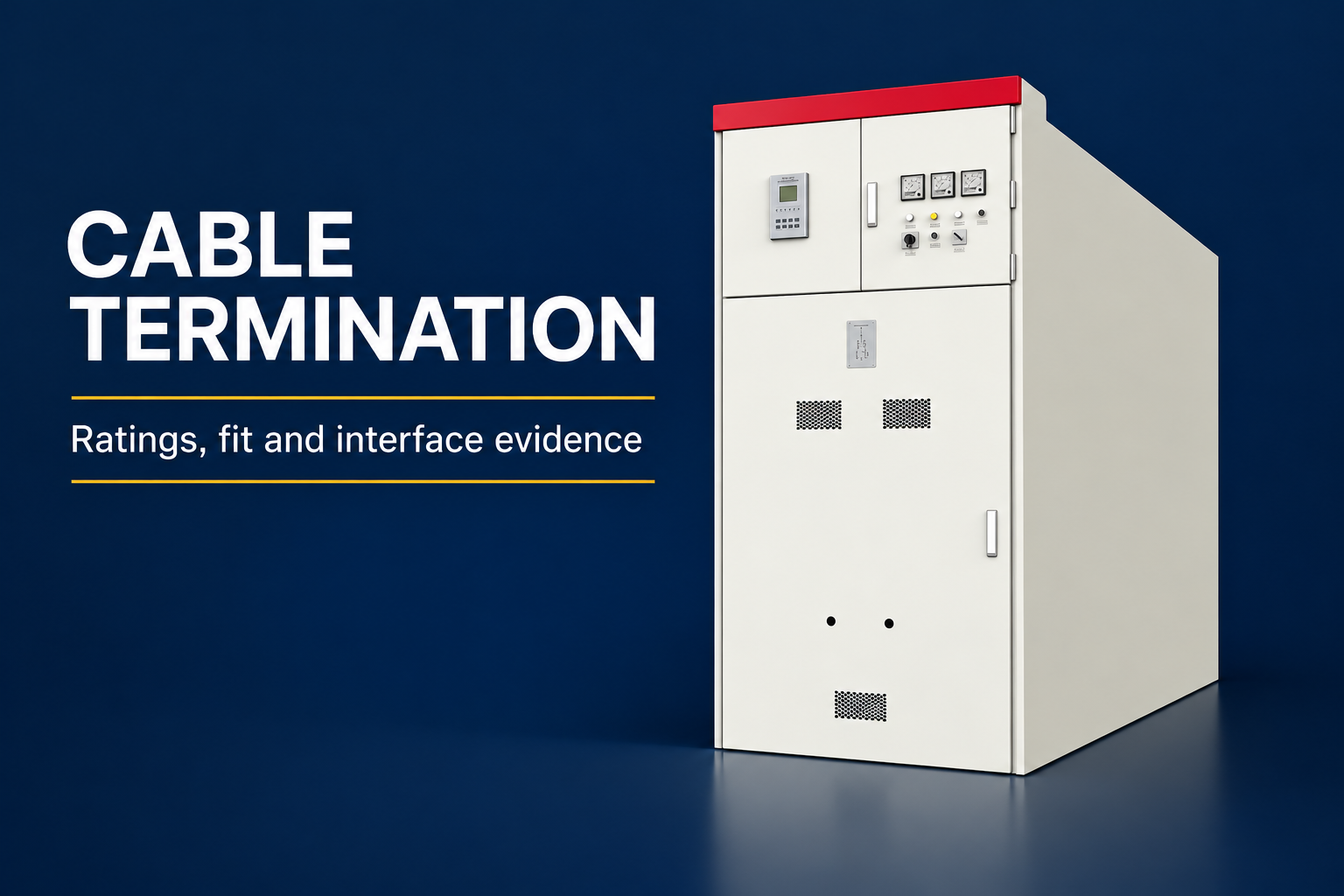
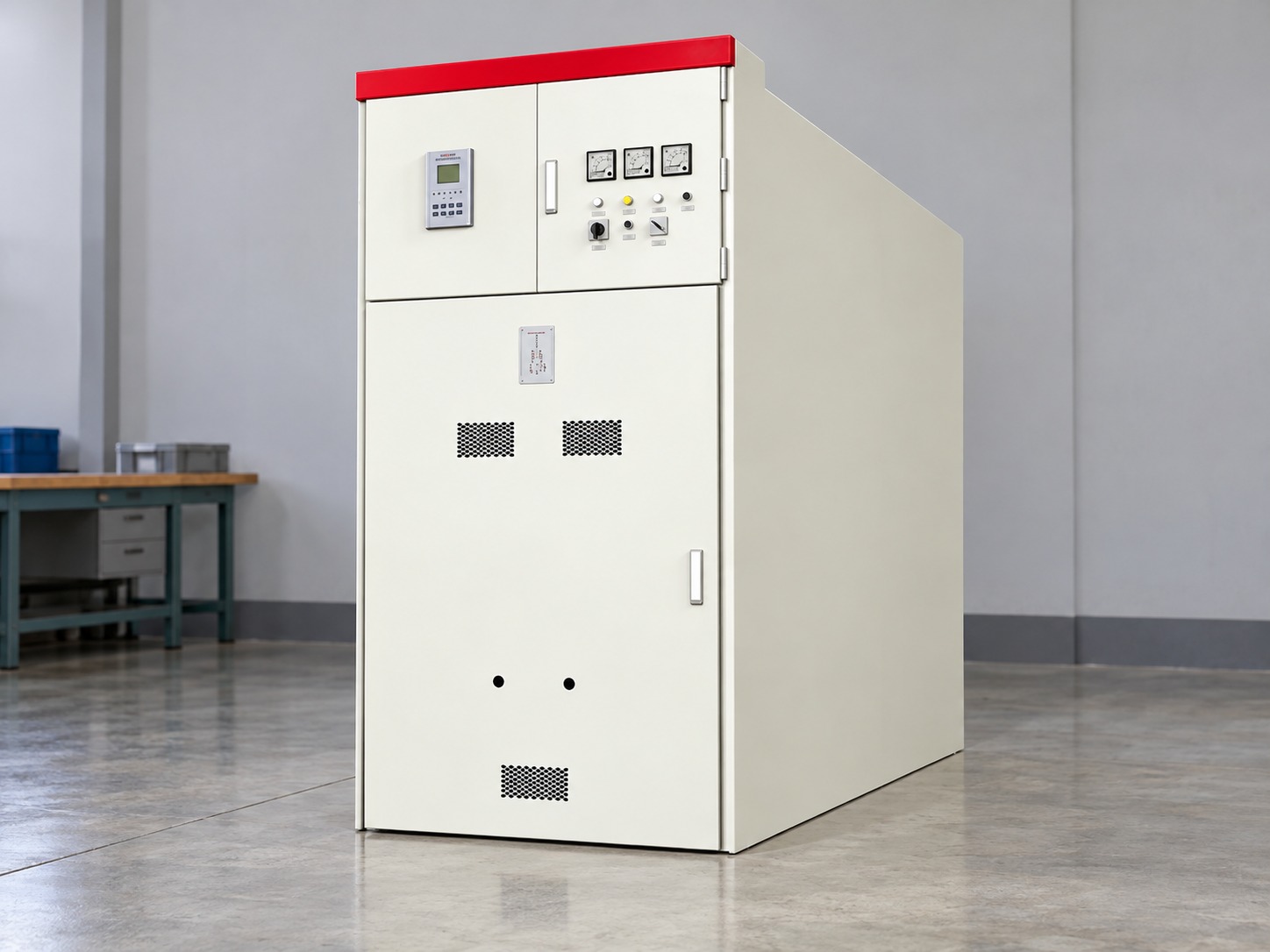
The LBAJI KYN61 product reference illustrates a closed metal-enclosed assembly. Its exterior does not establish the type or condition of hidden insulation, a sensor location or a monitoring capability. The images accompanying this guide are equipment illustrations, not discharge maps or evidence that the illustrated unit has a defect.
For a new purchase, request the applicable factory test and inspection documentation for the supplied configuration. Clarify which tests are included, which requirements are project-specific and how any requested monitoring interfaces are supported. Avoid asking for a generic certificate detached from the actual assembly identity and scope. The manufacturer’s technical response should identify what is supplied and what remains outside its offer.
Review reports and retain an auditable history
A strong report separates observed data, interpretation, confidence and action. It records what was not measured and explains why. Ask the specialist to identify any additional information needed from the facility or manufacturer. A statement such as further assessment required should name the outstanding question and the proposed owner so it can be resolved.
Retain issued reports, relevant raw records, configuration information, decisions and follow-up results together. When a later investigation changes the interpretation, preserve the original record and explain the revision. That history is more valuable than an isolated pass or fail label. It supports a proportionate maintenance decision while keeping uncertainty visible to the people responsible for operation.
Frequently asked questions
Is a partial-discharge indication automatically a confirmed defect location?
No. The specialist must consider the measurement method, interference, coupling path and supporting evidence before assigning a source or diagnosis.
Can readings from different monitoring systems be compared directly?
Not without a justified basis. Sensor arrangements, reported quantities and processing methods can differ and must be understood first.
Does no detected indication prove the entire assembly is defect-free?
No. A result applies to the method, coverage and operating conditions recorded in the assessment.
Should every installation use the same alarm threshold?
No universal threshold is supplied here. Criteria require specialist justification for the actual equipment, method and monitoring objective.
Do the product images show a discharge measurement?
No. They are exterior illustrations based on the approved product reference and do not depict sensors, internal defects or test results.
Technical sources and related equipment
Standard catalogue pages establish document scope; compliance and acceptance require the applicable full documents and project engineering review.
- IEC 60270:2025 charge-based partial-discharge measurement scope
- IEC TS 62478:2016 electromagnetic and acoustic partial-discharge measurement scope
- UK HSE HSG85: Electricity at work, safe working practices
- LBAJI KYN61-40.5 Armouring Removable AC Metal Enclosed Switchgear
- switchgear equipment fundamentals
- switchgear verification and testing
- switchgear maintenance checklist
Further learning: technical background
This independent educational video explains the measurement principles or equipment background discussed above. It does not demonstrate a safe work procedure for the specific assembly. Source: Electrical Engineering Lectures-T. G. Arora.

Watch High Voltage Engineering: Lect.88: Partial Discharge Measurement