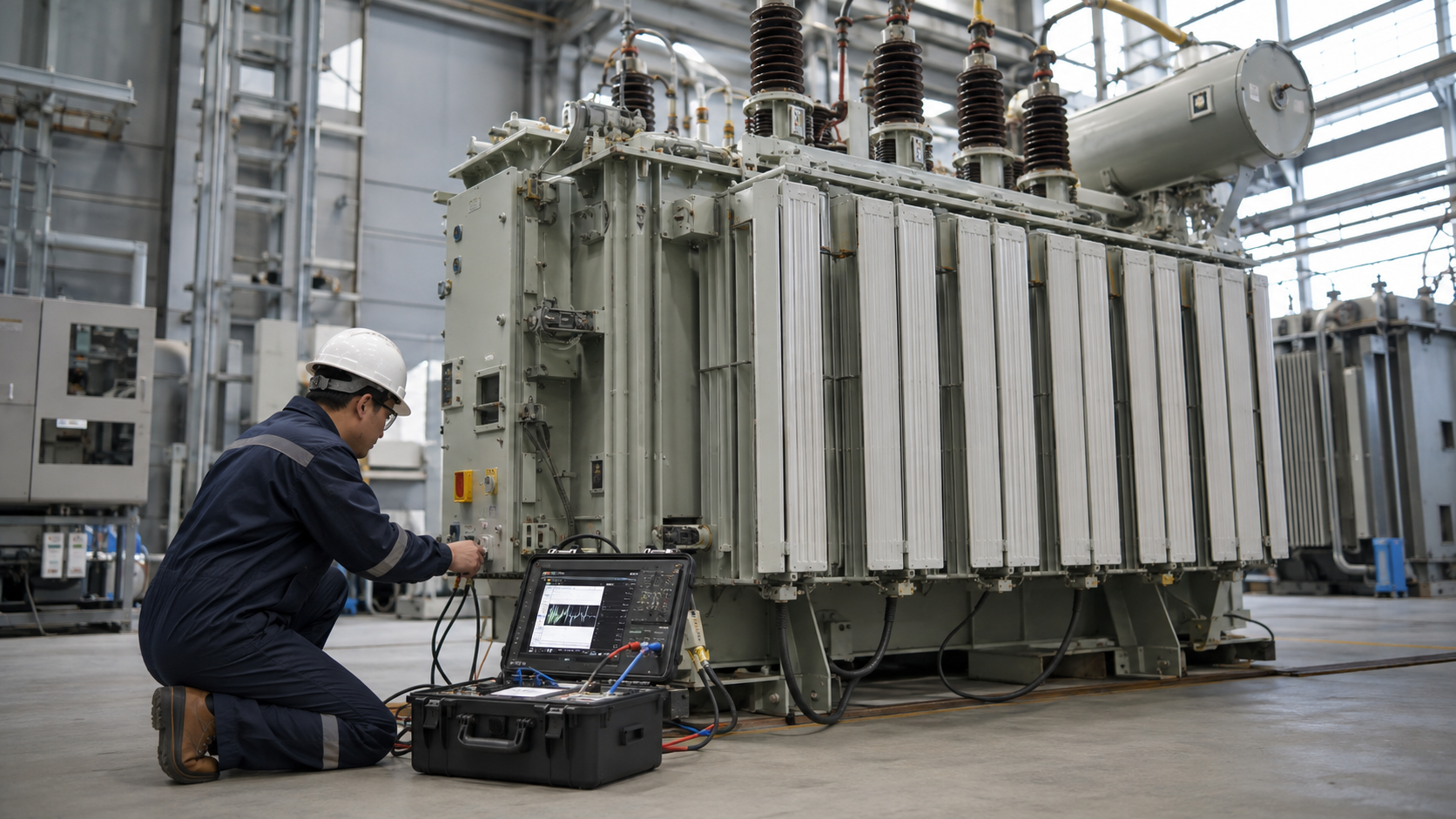

DGA monitoring for transformers tracks gases dissolved in insulating liquid to identify changes that may indicate electrical or thermal stress. It is most useful as a trend: a new result is compared with the transformer’s own history, operating load, oil treatment and other condition evidence. Online monitors can reveal a developing change between scheduled laboratory samples, while laboratory analysis can validate the gas pattern and provide a broader test record. Neither method can guarantee that a failure will be prevented. Sampling quality, sensor performance and engineering interpretation matter, and an alarm must lead to a documented investigation rather than an automatic diagnosis.
What DGA can—and cannot—tell you
Oil and cellulose insulation can generate characteristic gases when exposed to heat, partial discharge or other electrical stress. Dissolved gas analysis (DGA) measures these gases and helps an asset team decide whether conditions are stable, changing or in need of urgent evaluation. The analysis does not show the exact physical location of a fault, prove that one gas came from one cause, or replace electrical tests and inspection. A transformer with concerning DGA needs interpretation in the context of its design, duty and service history.
The scope of the source matters. IEEE C57.104-2019 is a guide for gases in in-service mineral-oil-immersed transformers. IEC 60599:2022 addresses interpretation in mineral-oil equipment with cellulose-based solid insulation and cautions that its indications are guidance requiring engineering judgment. Do not transfer a gas limit or diagnostic rule to a dry-type unit or a different liquid-solid system without a validated method for that equipment.
The gases to review in a transformer DGA report
A laboratory report or monitor may include hydrogen, methane, ethane, ethylene, acetylene, carbon monoxide and carbon dioxide, among other measurements. Individual gases, ratios and rates of change are interpreted together. This table is a reading aid, not a fault classification or alarm table; the actual interpretation method must follow the selected guide, equipment history and test quality.
| Gas or group | Why it attracts attention | What to check before deciding |
|---|---|---|
| Hydrogen (H2) | Can rise with several forms of electrical or thermal activity. | Check other gases, sample handling and the transformer’s own trend; hydrogen alone is not a diagnosis. |
| Methane (CH4) and ethane (C2H6) | Part of the hydrocarbon pattern used when evaluating oil decomposition. | Compare with ethylene, acetylene and operating history; do not assign a temperature from one value. |
| Ethylene (C2H4) | A material change in its trend can contribute to a thermal-stress assessment. | Review gas-generation rate, other hydrocarbons, loading and cooling data. |
| Acetylene (C2H2) | Can be important in an electrical-fault assessment. | Confirm the measurement and consider oil treatment, tap-changer design and the whole gas pattern before escalation. |
| Carbon monoxide (CO) and carbon dioxide (CO2) | Relevant when reviewing possible cellulose insulation involvement. | Interpret with age, temperature, moisture, oil processing and complementary paper-condition evidence. |
The table deliberately does not give universal parts-per-million thresholds. An action level can depend on the standard edition, equipment class, prior readings, rate of change, measurement uncertainty, operating stress and the owner’s risk policy. The responsible engineer should document which method and baseline were used before comparing a number with an alarm criterion.
Online monitoring versus periodic laboratory DGA
Periodic oil sampling creates a detailed laboratory record at planned intervals. It supports trend comparison, investigation and quality-controlled analysis, but a fast-developing change may occur between visits. An online monitor measures selected gas indicators more frequently. It can show direction and rate of change quickly, but monitor models vary in which gases they measure, how they sample, how they compensate for conditions and how they are maintained. The two approaches should be designed as a complementary program rather than treated as substitutes by default.
| Question | Periodic laboratory sample | Online monitor |
|---|---|---|
| What is captured? | A scheduled snapshot, often with a broader analytical package and traceable lab record. | Frequent measurements of the gases or indicators supported by that installed model. |
| Best use | Baseline, confirmation, investigation and routine condition assessment. | Detecting change between sampling visits and supporting timely investigation. |
| Quality risk | Sampling contamination, wrong point, handling delay or inconsistent laboratory method. | Sensor drift, calibration, communications, installation position and model-specific limitations. |
| Escalation | Compare with historical samples and complementary tests. | Validate unusual trends with equipment data and, when appropriate, a laboratory sample. |
For sampling and gas-analysis methods, refer to the scope of IEC 60567:2023. A mathematically precise trend from a poor sample is not reliable. Record the sampling location, date, oil temperature and recent oil handling so a later reviewer can distinguish an equipment change from a process change.
How to turn a DGA trend into an action
1. Establish a useful baseline
Identify the transformer, liquid type, service date, loading pattern, cooling configuration and prior oil treatment. Gather more than one historical DGA result if available. Align the laboratory method, units and gas names across records. A newly commissioned unit, a unit after oil processing and a long-serving unit should not be interpreted as if they had identical histories.
2. Check whether the change is credible
Ask whether the change exceeds expected measurement variation and whether another sample, monitor channel or operating observation supports it. Review sensor status, calibration, communications, sample chain of custody and any recent maintenance. Do not dismiss a sharp change simply because an earlier reading was low, but do not issue a fault label from an unconfirmed data point either.
3. Evaluate gas pattern and rate together
Look at how individual gases and the total pattern evolved, not only the latest concentration. A high but stable historical value can imply a different action from a rapid rise in a previously quiet unit. The selected IEC/IEEE interpretation method may use ratios, gas patterns and comparative values; record which method was applied and where its assumptions may not fit this transformer. If the unit has a load tap changer or a separate compartment, verify whether the measured oil and gas could be influenced by that arrangement.
4. Correlate with operating and test evidence
Compare DGA with load, cooling performance, oil temperature, alarms, protective-device events, visual condition and maintenance records. Depending on the case, complementary electrical or oil tests may be appropriate. A gas trend can prioritize investigation; it does not locate a winding hot spot or confirm a mechanical fault without corroboration. Our transformer testing guide covers other methods, the installation and maintenance guide covers routine care, and the protection overview addresses the wider protection system. To place fluid analysis in a wider station-level inspection and outage plan, see the substation maintenance guide.
5. Decide, document and revisit
An asset team may increase sampling frequency, verify the online monitor, perform additional tests, change loading or plan a controlled outage. If a fast-developing condition appears credible, follow the site’s engineering and safety escalation procedure. The selected response depends on the transformer’s importance, redundancy, risk, observed rate and approved operating policy. Record the decision maker, evidence, interpretation method, action and next review date. DGA creates value only when a finding changes an informed maintenance decision.
When an online DGA monitor is worth considering
Continuous monitoring may be useful where a transformer is critical to a process, hard to sample, expensive to replace or exposed to rapidly changing duty. It can also help after an abnormal event or when the asset team needs a closer trend before a planned outage. That does not mean every transformer needs a multi-gas monitor. Compare the cost of the device and maintenance with the consequence of missing a developing fault, and define in advance who reviews alarms and what action follows.
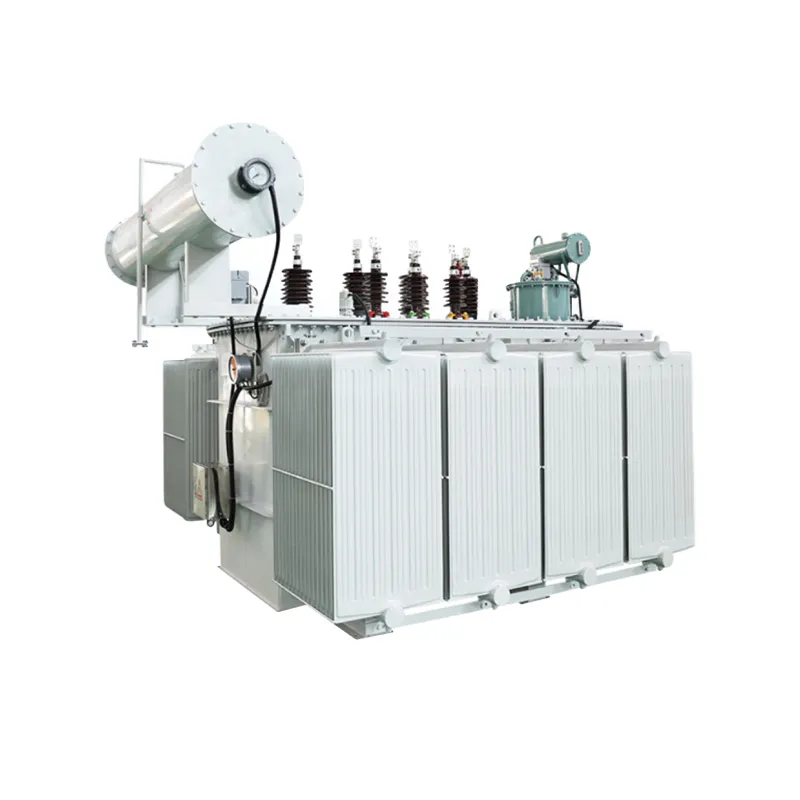
For a procurement review, ask what gases the monitor actually reports, its measurement range and uncertainty, sampling arrangement, calibration/maintenance procedure, communications, alarm logic, cybersecurity approach, environmental rating and integration with the asset system. Separate what the monitor measures from what its software infers. Avoid claiming that any particular sensor predicts a failure date or eliminates the need for laboratory confirmation. LBAJI’s S-M 35 kV oil-immersed transformer page describes a relevant transformer product; it should not be read as a claim that a named DGA sensor is supplied as standard.
Common interpretation errors
Using one universal threshold. A gas number without context can hide a rapid change or exaggerate a stable historical condition. Mixing methods. A single-gas monitor, a multi-gas monitor and a full laboratory report do not contain identical evidence. Ignoring sample quality. Contamination or a changed sampling point can imitate a trend. Over-interpreting ratios. A diagnostic method is only as useful as its assumptions and measurement quality. Conflating detection with prevention. DGA can create time to investigate, but reducing risk depends on the response and on other protection and maintenance controls.
Site teams should also avoid treating normal-looking DGA as proof that the transformer is healthy in every respect. Mechanical, dielectric, cooling and external-system problems may require other inspections and tests. DGA is one instrument in a broader condition-monitoring program.
What to include in a DGA monitoring plan
Define the equipment and oil type; baseline and prior samples; sampling/measurement method; test frequency or online data interval; gas set and units; data-quality checks; selected interpretation standard and edition; alarm-review responsibility; confirmation process; escalation pathway; record retention; and review cadence. For oil treatment or a major repair, document the event because it may reset the baseline. The plan should name the responsible engineering role, not leave alarms to an unattended dashboard.
During an RFQ, provide the transformer nameplate and service context, site environmental conditions, existing SCADA/communications requirements, desired gas measurements, maintenance access and data ownership expectations. Request evidence for the offered monitor’s measurement performance and installation method. Do not ask a supplier to promise that DGA alone will prevent catastrophic failure; ask how its data will support the site’s actual operating and maintenance decisions.
Educational video: on-site DGA
ON Engineers’ “Part 3 – On-Site DGA” provides a visual introduction to field DGA context. It is general education, not a sampling instruction for a particular transformer and not a statement about equipment supplied by LBAJI. Follow the approved sampling procedure and the applicable standard for actual work.

View the ON Engineers DGA video and playlist.
Frequently asked questions
Does DGA monitoring prevent transformer failure?
Not by itself. It can reveal changes that justify investigation or controlled action. Prevention depends on measurement quality, interpretation, other condition evidence and a timely response.
Is online DGA better than laboratory testing?
They serve different roles. Online measurements can show changes between planned samples; laboratory analysis can validate and broaden the evidence. Choose the combination that matches asset risk and the specific monitor’s capabilities.
Can I diagnose a fault from one gas?
No. Evaluate the pattern, rate of change, measurement uncertainty, oil treatment and operating history with the selected interpretation guide. Confirm important decisions with appropriate additional evidence.
Do IEC 60599 and IEEE C57.104 apply to every transformer?
No. Both address defined oil-immersed equipment contexts. Confirm the liquid and solid insulation system, standard edition and site requirements before applying an interpretation method.
Bottom line: the useful question is not “What single gas number means failure?” It is “Has this transformer’s credible gas trend changed, what else supports the finding, and what action will a qualified team take now?”