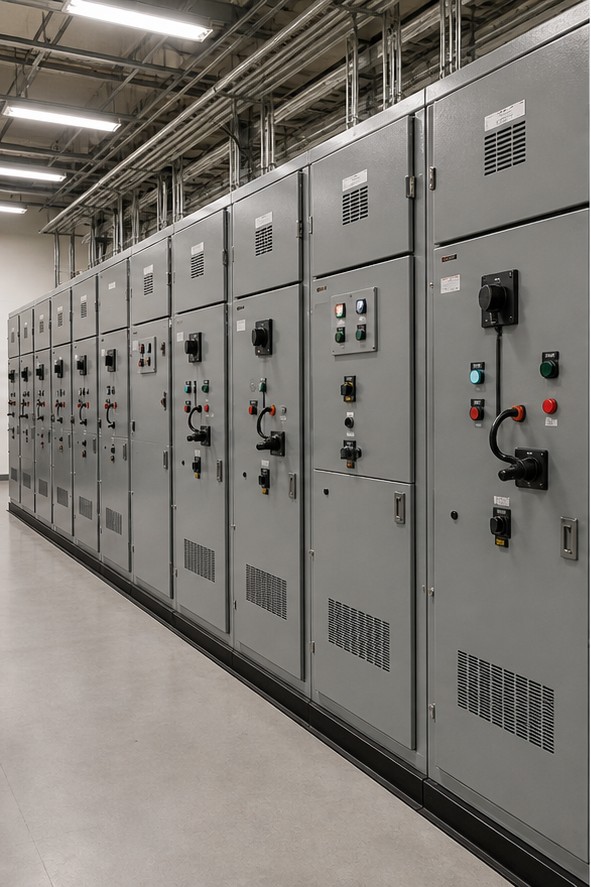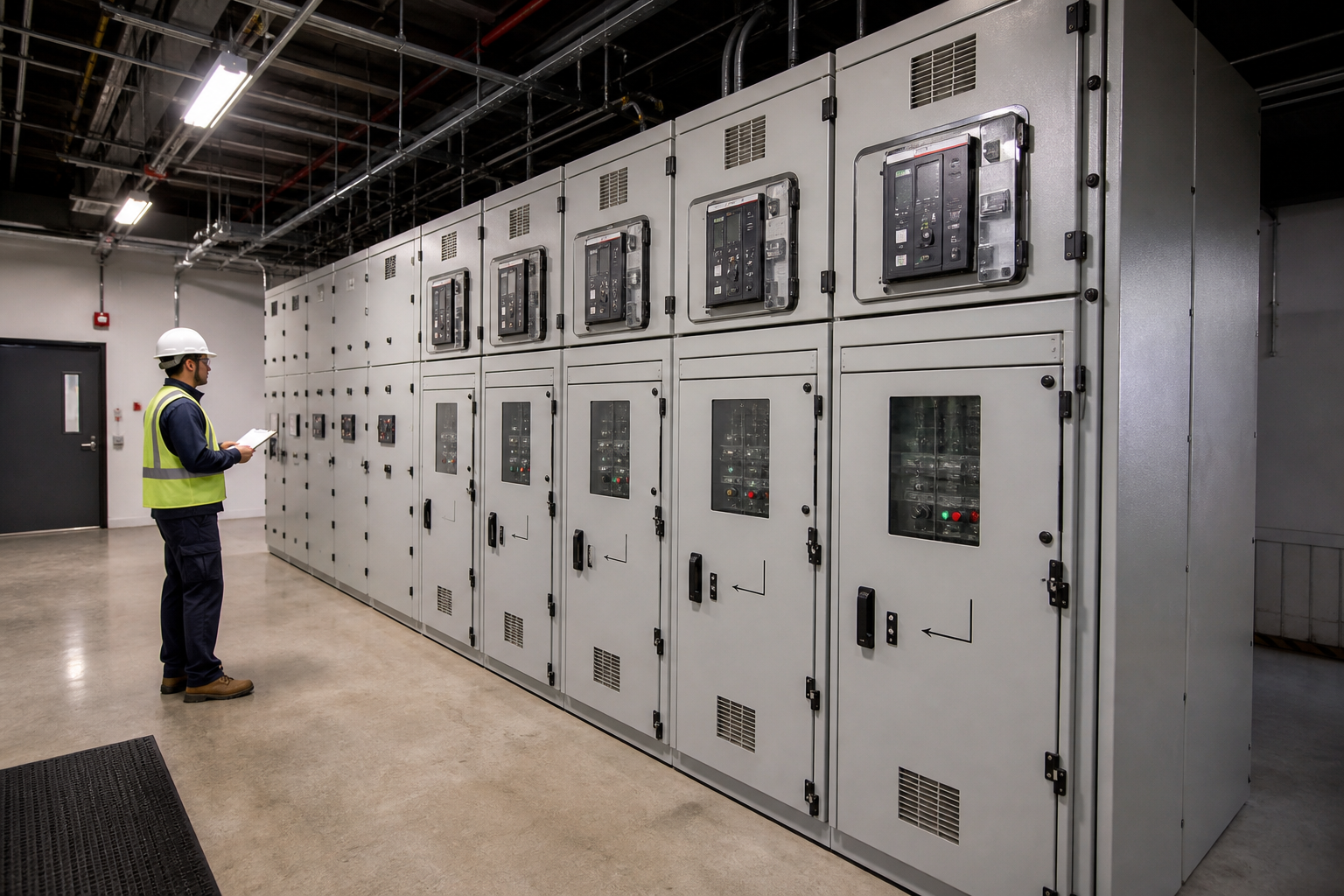

Medium-voltage switchgear controls and protects electrical distribution systems between low-voltage utilization and high-voltage transmission. It is used in utility substations, factories, data centers, mines, buildings and renewable-energy plants. This guide compares air- and gas-insulated, metal-clad and ring-main designs and explains ratings, circuit breakers, protection, internal-arc safety, testing and procurement.
What Is Medium-Voltage Switchgear?
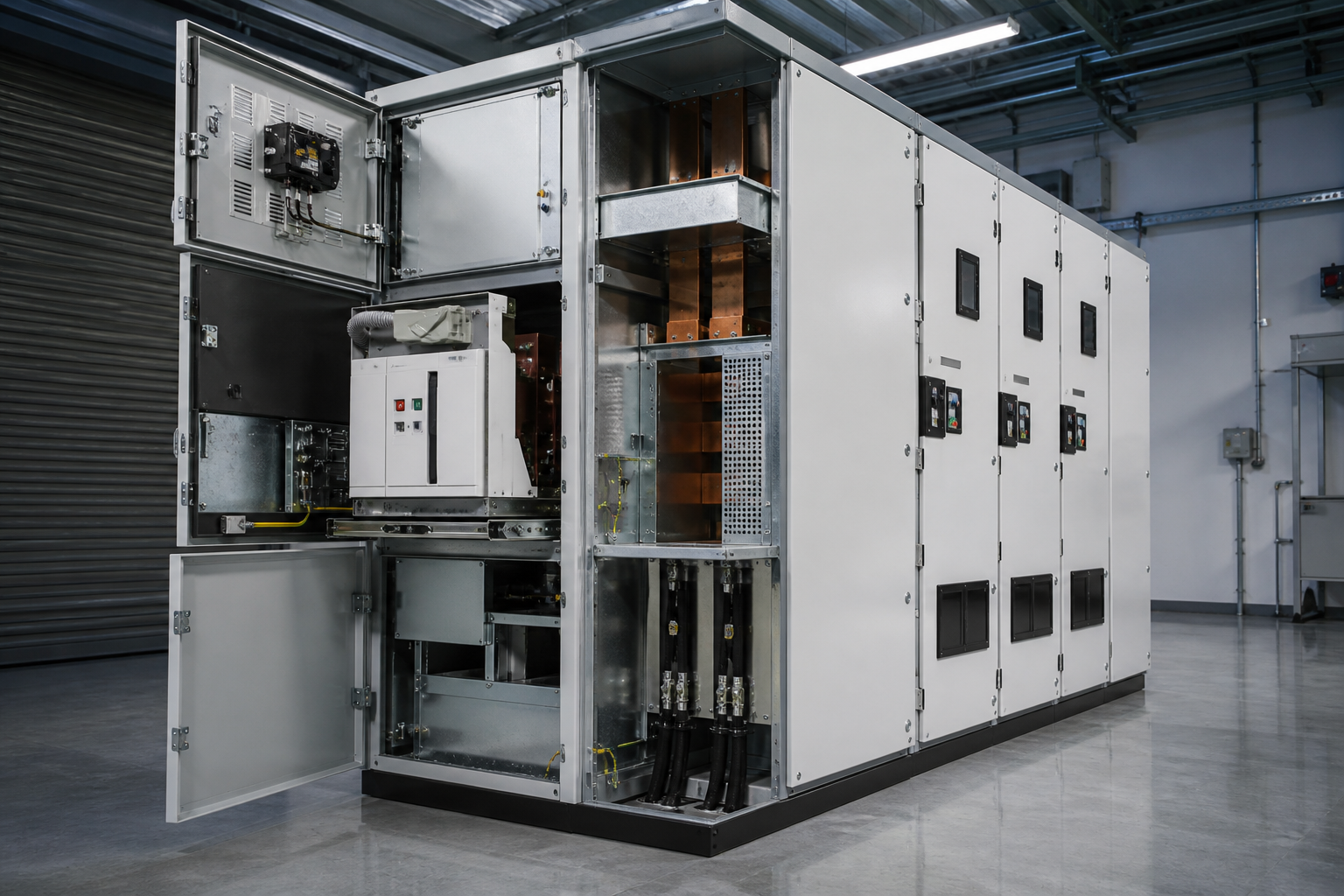
MV switchgear is an assembly of busbars, switching devices, instrument transformers, relays, control circuits, cable terminations and an enclosure. Voltage ranges vary by standard and market, but common equipment classes include 3.6, 7.2, 12, 17.5, 24, 36 and 40.5 kV.
During normal operation it carries load and supports switching. During a fault, CTs and VTs supply measurements to protection relays, which trip the circuit breaker. Disconnecting and earthing functions then establish a safe maintenance state.
Main Medium-Voltage Switchgear Types
Air-insulated switchgear (AIS)
AIS uses air for external insulation inside metal compartments. It is familiar, inspectable and often economical where space is available. Clearances, cleanliness and humidity control are important.
Gas-insulated switchgear (GIS)
GIS encloses energized parts in sealed insulation. It provides compact dimensions and strong protection from dust, salt and humidity. The insulating medium, leakage specification, environmental impact, pressure monitoring and end-of-life handling should be stated.
Solid-insulated and hybrid designs
Solid dielectric or mixed insulation can reduce gas use and footprint. Interfaces, partial-discharge performance, repair strategy and recycling need careful review.
Quick Comparison and Selection Table
Use this table as a quick review of the main engineering and procurement decisions explained in the article.
| Decision area | Practical meaning | What to verify |
|---|---|---|
| What Is Medium-Voltage Switchgear? | MV switchgear is an assembly of busbars, switching devices, instrument transformers, relays, control circuits, cable terminations and an enclosure. | Voltage ranges vary by standard and market, but common equipment classes include 3.6, 7.2, 12, 17.5, 24, 36 and 40.5 kV. |
| Main Medium-Voltage Switchgear Types | AIS uses air for external insulation inside metal compartments. | It is familiar, inspectable and often economical where space is available. |
| Metal-Clad and Metal-Enclosed Construction | Metal-clad switchgear uses grounded metal barriers between the breaker, busbar, cable and low-voltage control compartments, typically with a withdrawable breaker. | “Metal-enclosed” is broader and can include fixed switches, contactors or fuse combinations. |
| Vacuum Circuit Breakers | Vacuum interrupters extinguish arcs inside sealed bottles and are widely used in MV equipment. | Important ratings include voltage, continuous current, short-circuit breaking and making current, operating sequence, mechanical endurance and capacitive or motor switching duty. |
| Ring Main Units | An RMU is compact switchgear for ring or radial distribution. | Ways may use load-break switches, switch-fuse combinations or circuit breakers with relays. |
Metal-Clad and Metal-Enclosed Construction
Metal-clad switchgear uses grounded metal barriers between the breaker, busbar, cable and low-voltage control compartments, typically with a withdrawable breaker. “Metal-enclosed” is broader and can include fixed switches, contactors or fuse combinations. Require the applicable standard and verified construction rather than relying on terminology alone.
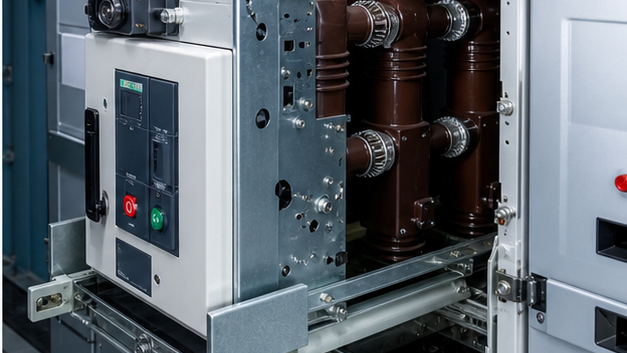
LBAJI’s KYN28A-12 switchgear serves 12 kV-class systems. For 40.5 kV class, see KYN61-40.5 switchgear.
Vacuum Circuit Breakers
Vacuum interrupters extinguish arcs inside sealed bottles and are widely used in MV equipment. Important ratings include voltage, continuous current, short-circuit breaking and making current, operating sequence, mechanical endurance and capacitive or motor switching duty. The complete breaker includes mechanism, trip/close coils, auxiliary contacts and interlocks.
Ring Main Units
An RMU is compact switchgear for ring or radial distribution. Ways may use load-break switches, switch-fuse combinations or circuit breakers with relays. It is suited to secondary distribution, packaged substations and renewable collectors where compact sealed equipment is valuable.
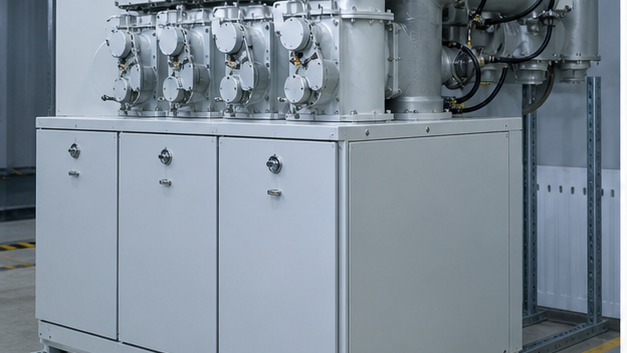
The LBHB-12 environmentally friendly RMU supports compact 12 kV networks. The HC-40.5 sealed ring-network switchgear addresses higher-voltage compact applications.
Essential Ratings
- Rated voltage and power-frequency/lightning impulse withstand.
- Busbar and feeder continuous current.
- Rated short-time withstand current and duration.
- Rated peak withstand and breaker making current.
- Breaker short-circuit breaking current and duty cycle.
- Internal-arc classification, accessibility, current and duration.
- Ingress protection, ambient temperature, altitude and pollution.
Protection, Metering and Control
Protection may include phase/earth overcurrent, directional, transformer differential, motor, busbar and breaker-failure functions. CT ratios, class and burden must match fault levels and relay requirements. Control voltage, trip-circuit supervision, communications, remote control and time synchronization should be defined before manufacturing.
Internal-Arc Safety
Internal-arc classification indicates that a tested assembly controlled specified arc effects for stated sides, current and duration. Installation must match the tested venting and room conditions. Arc-resistant construction does not make energized work safe; remote operation, fast protection, maintenance and safe procedures remain necessary.
How to Specify MV Switchgear
- Provide the single-line diagram and operating philosophy.
- State voltage, frequency, grounding and insulation levels.
- Give load current and maximum/minimum fault current.
- Define bus arrangement, feeders and future extension.
- Specify protection, CT/VT, metering and communication.
- State internal-arc, enclosure and environmental requirements.
- Define cable sizes, entry, termination and earth switch duties.
- Cite standards, type tests, FAT and site tests.
Factory Acceptance Testing
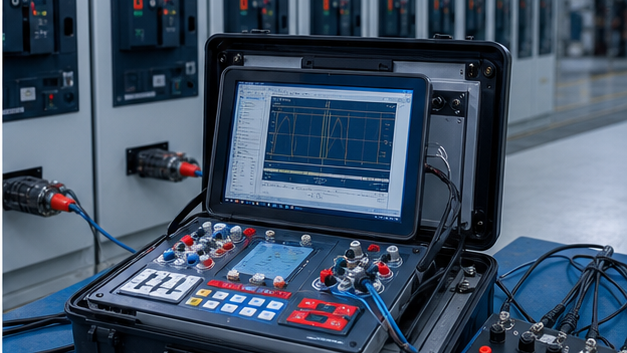
Routine and FAT checks include visual inspection, wiring continuity, dielectric tests, main-circuit resistance, mechanical operation, interlocks, relay injection, trip/close circuits, metering, communications and alarms. Type-test reports should apply to the offered design and ratings.
Installation and Maintenance
Verify room clearances, floor loading, arc-vent path, cable bending space, grounding and environmental control. Commission CT polarity, relay settings and the full trip chain. Maintenance uses inspection, cleaning, contact resistance, mechanism checks, breaker timing, relay diagnostics, insulation/partial-discharge assessment and thermography based on duty and condition.
Arc-resistant and pad-mounted MV switchgear
Arc-resistant construction is tested to direct internal-arc effects away from specified accessible sides, but only when installation conditions, doors and exhaust paths match the tested arrangement. Pad-mounted gear adds tamper resistance and outdoor cable access; it may use switches, fuses, breakers or automation depending on feeder duty.
Disconnectors, earthing switches and bus systems
A disconnector provides isolation but normally does not interrupt fault current. An earthing switch grounds an isolated circuit for work. Busbar insulation, joints, supports and compartments must withstand continuous heating and short-circuit forces while allowing inspection and extension consistent with the service plan.
Technical references and further reading
The following independent sources support the standards, terminology, calculations, and safety context discussed in this guide:
- IEC 62271-200 metal-enclosed switchgear standard — Scope, classifications, service conditions, internal-arc testing, interlocks, and requirements for AC metal-enclosed switchgear up to 52 kV.
- IEEE C37.121 guide for switchgear-unit substations — Coordination guidance for switchgear and transformer sections in three-phase unit substations.
- OSHA electrical power safety requirements — Safety requirements for construction involving electric power transmission and distribution equipment.