
An electrical substation is the controlled point where voltage is transformed, circuits are switched, faults are interrupted, and power flow is measured and protected. Substations connect generation, transmission, distribution, and large electricity users. Their equipment and layout vary widely, but every well-designed power substation must perform the same basic functions safely and reliably.
This guide explains what a substation does, the main types of electric substations, essential equipment, common layouts, protection and control, and the information a project owner should define before requesting a quotation. It also connects substation fundamentals to the transformers, switchgear, ring main units, and prefabricated substations supplied by LBAJI.
What Is an Electrical Substation?
An electrical substation is part of a power system rather than a generating source. It receives power from one or more incoming circuits and delivers it through outgoing circuits at the same or a different voltage. A substation may transform voltage, split a network into controllable sections, isolate faulty equipment, regulate voltage and reactive power, and provide data to operators.
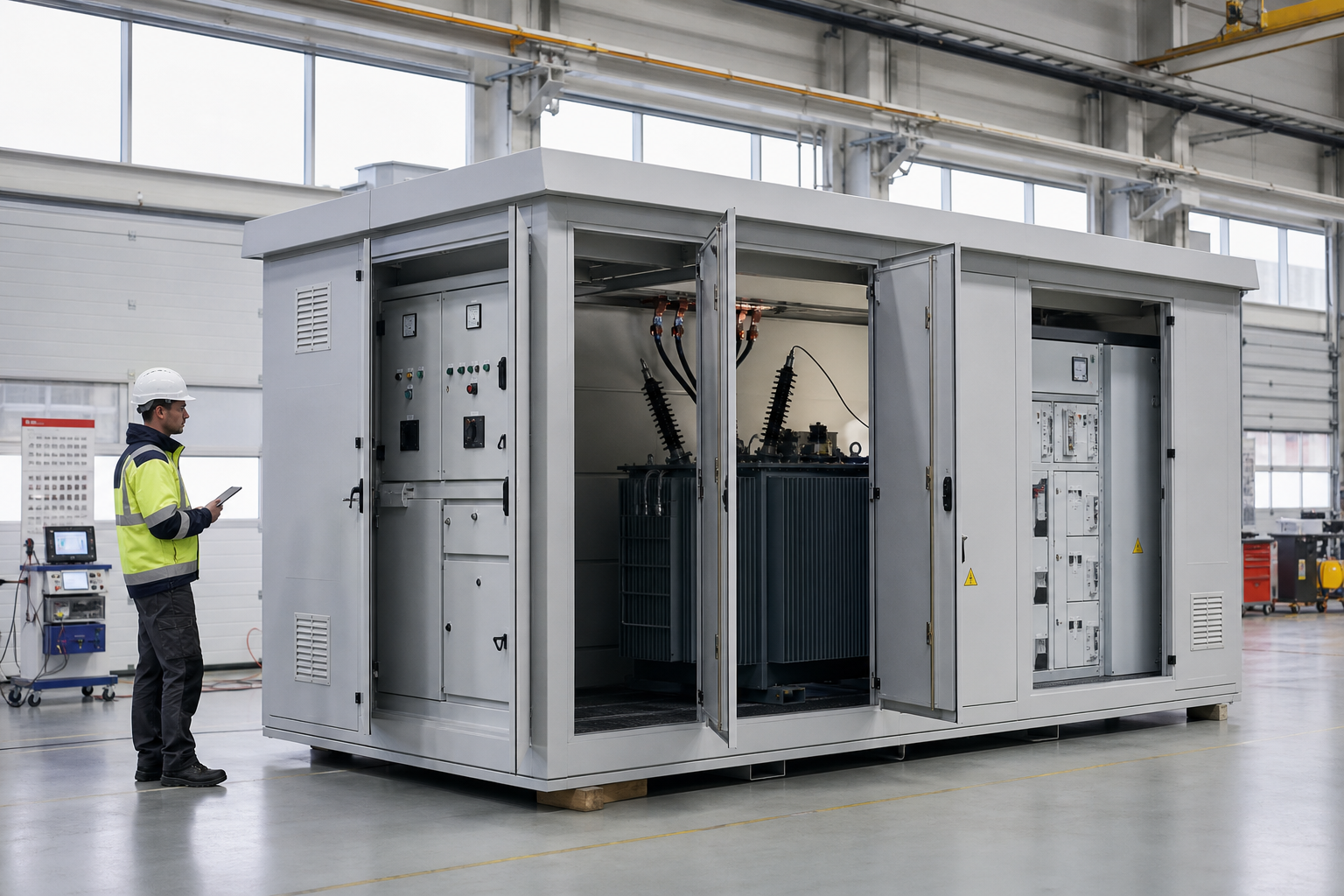
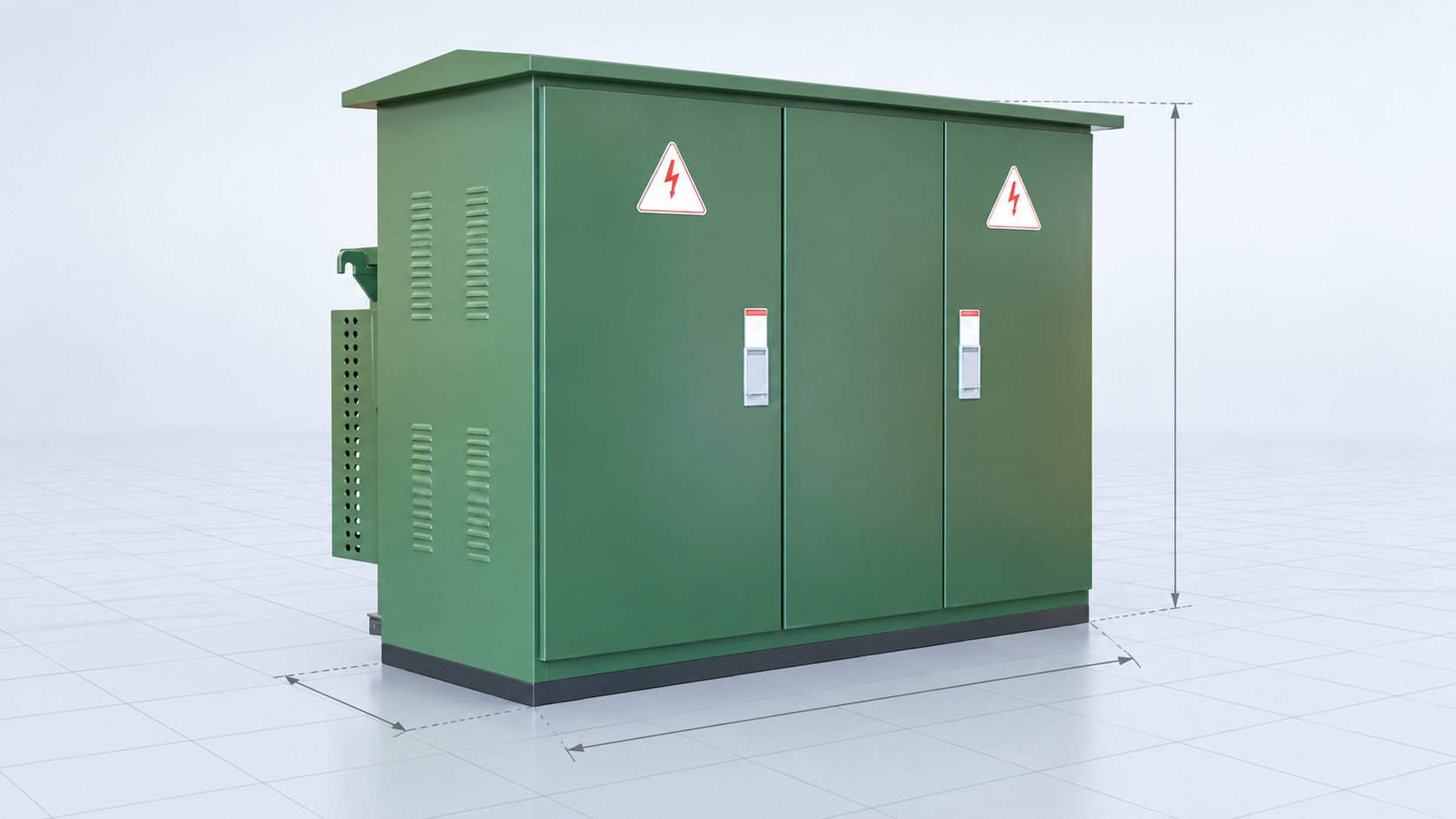
The term covers installations ranging from a compact distribution substation serving a commercial development to a high-voltage substation connecting a power plant to a transmission grid. Some substations are outdoor air-insulated yards with open bays. Others use gas-insulated switchgear inside a compact building. A packaged box-type substation can combine medium-voltage switching, a transformer, and low-voltage distribution in one factory-assembled enclosure.
What Does a Substation Do?
A substation normally performs several coordinated functions:
- Voltage transformation: power transformers raise or lower voltage between system levels.
- Switching: circuit breakers and disconnectors connect, isolate, and reconfigure circuits.
- Protection: instrument transformers and relays detect abnormal conditions and trip the correct breaker.
- Control: local and remote systems supervise equipment status and operating sequences.
- Measurement: current, voltage, power, energy, frequency, and power quality are monitored.
- Voltage support: tap changers, capacitor banks, reactors, and other devices help control voltage and reactive power.
- Grounding: the grounding grid manages fault current and limits dangerous touch and step voltages.
These functions explain why substation engineering must be treated as a complete system. Selecting a transformer or breaker in isolation is not enough; ratings, protection zones, insulation levels, interfaces, and operating philosophy must work together.
Quick Comparison and Selection Table
Use this table as a quick review of the main engineering and procurement decisions explained in the article.
| Decision area | Practical meaning | What to verify |
|---|---|---|
| What Is an Electrical Substation? | An electrical substation is part of a power system rather than a generating source. | It receives power from one or more incoming circuits and delivers it through outgoing circuits at the same or a different voltage. |
| What Does a Substation Do? | A substation normally performs several coordinated functions: These functions explain why substation engineering must be treated as a complete system. | Selecting a transformer or breaker in isolation is not enough; ratings, protection zones, insulation levels, interfaces, and operating philosophy must work together. |
| Main Types of Electric Substations | A transmission substation interconnects high-voltage lines and may transform between transmission voltage levels. | Reliability and fault-clearing performance are central because a single failure can affect a large area. |
| Substation Parts and Equipment | The power transformer establishes the voltage relationship between networks. | Important specifications include MVA rating, voltage ratio, vector group, impedance, cooling method, tap changer, insulation level, guaranteed losses, sound level, and accessories. |
| Air-Insulated and Gas-Insulated Substations | An air-insulated substation uses air as the primary external insulation. | It normally requires more space but provides visible equipment, flexible expansion, and familiar maintenance access. |
Main Types of Electric Substations
Transmission substations
A transmission substation interconnects high-voltage lines and may transform between transmission voltage levels. Reliability and fault-clearing performance are central because a single failure can affect a large area. These substations commonly use high-capacity transformers, busbar protection, redundant control power, sophisticated communications, and layouts that permit maintenance without taking the entire station out of service.
Distribution substations
An electrical distribution substation reduces transmission or sub-transmission voltage to a medium-voltage level used by local feeders. Typical equipment includes incoming switchgear, one or more power transformers, a medium-voltage bus, feeder breakers, protection panels, metering, station service, and surge protection.
For packaged projects, LBAJI’s YBM-12 high- and low-voltage preinstalled substation combines major distribution functions in a coordinated enclosure.
Collector and solar power substations
A solar power substation collects output from inverter stations or renewable-energy feeders, steps voltage up, and connects the plant to the grid. Design inputs include plant capacity, inverter characteristics, harmonics, reactive-power requirements, grid-code protection, fault ride-through, communications, and the point-of-interconnection study.
For new-energy applications, LBAJI offers the 35 kV new-energy box-type substation and related photovoltaic distribution equipment.
Industrial substations
Industrial substations serve factories, mines, processing plants, data centers, and other large loads. They may include utility incomers, on-site generation, multiple voltage levels, motor feeders, harmonic-producing loads, and critical-process redundancy. Load flow, short-circuit, motor-starting, harmonic, arc-flash, and protection-coordination studies are commonly required.
Mobile substations
A mobile substation mounts major equipment on trailers or transportable skids. Utilities and industrial operators use them during emergencies, planned maintenance, capacity upgrades, or construction. Transport dimensions, axle loads, fast connection, grounding, protection settings, and site preparation are essential parts of the design.
Substation Parts and Equipment
Power transformers
The power transformer establishes the voltage relationship between networks. Important specifications include MVA rating, voltage ratio, vector group, impedance, cooling method, tap changer, insulation level, guaranteed losses, sound level, and accessories. LBAJI’s 35 kV oil-immersed power transformer is relevant to distribution and industrial substation applications.
Substation circuit breakers
A circuit breaker in a substation must make, carry, and interrupt current under normal and fault conditions. Selection depends on rated voltage, continuous current, short-circuit breaking current, making current, operating duty, insulation medium, mechanical endurance, and control voltage. Breaker ratings must match the calculated fault level rather than a generic equipment preference.
Disconnectors and earthing switches
Disconnectors provide visible or defined isolation but are not normally intended to interrupt fault current. Earthing switches connect isolated equipment to ground for maintenance safety. Mechanical and electrical interlocking prevents unsafe operating sequences.
Busbars and bays
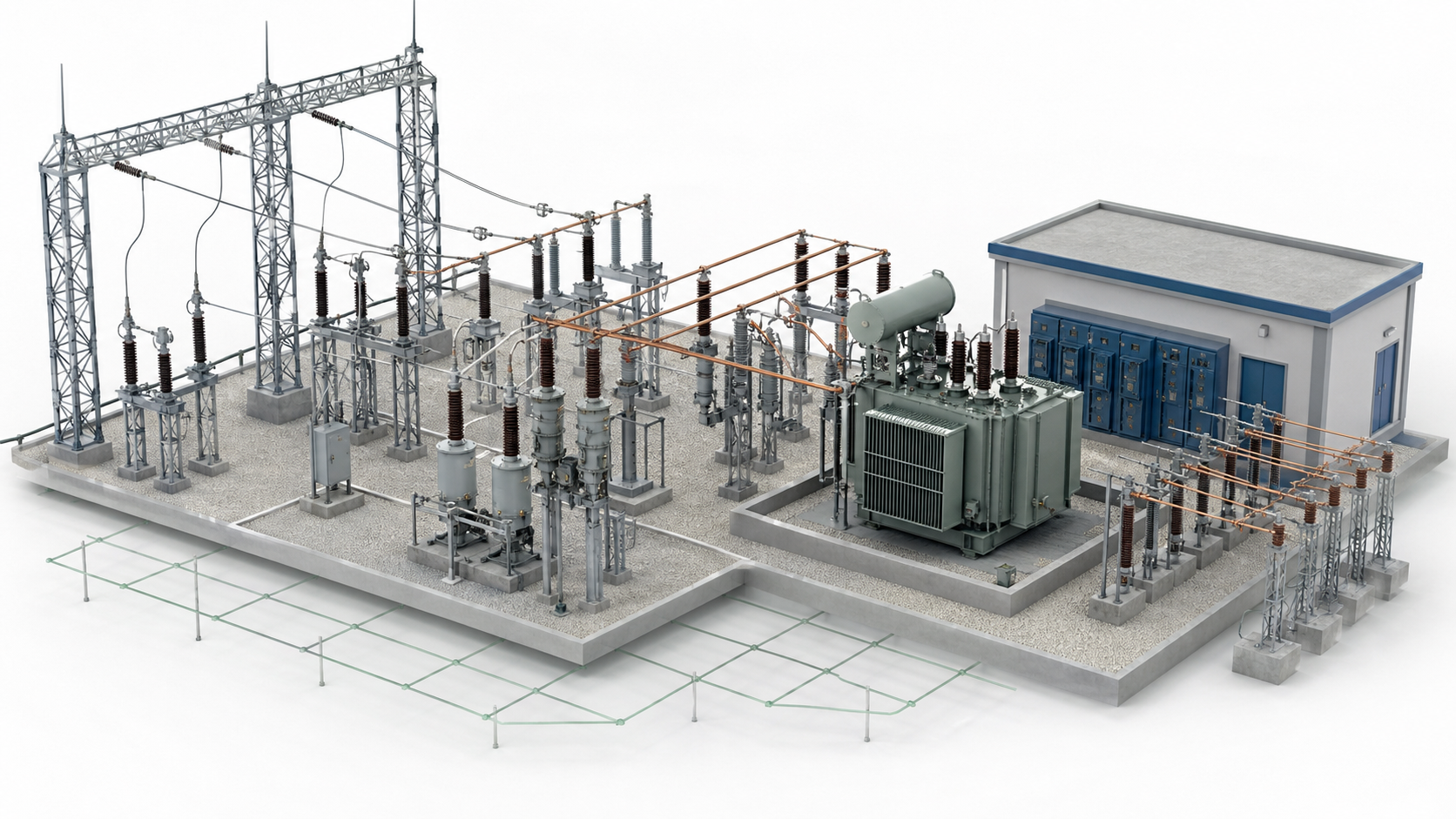
A busbar collects power from incoming circuits and distributes it to outgoing bays. Open bays at a substation normally contain the switching, measurement, and surge-protection equipment associated with one line, transformer, bus coupler, or feeder. Bus arrangements range from a simple single bus to sectionalized, double-bus, ring-bus, and breaker-and-a-half schemes.
Instrument transformers
Current transformers supply scaled current signals to meters and relays. Voltage transformers, CVTs, and CCVTs provide scaled voltage and may support carrier communications. A CCVT substation application must define accuracy, burden, insulation, transient performance, and communications requirements. CT and CVT secondary wiring must be treated as part of the protection and metering system.
Medium-voltage switchgear
Metal-enclosed switchgear houses breakers, busbars, instrument transformers, relays, and cable terminations. The KYN61-40.5 removable metal-enclosed switchgear supports 40.5 kV applications, while the KYN28A-12 switchgear serves 12 kV systems.
Capacitor banks and reactors
A capacitor bank in a substation supplies reactive power and supports voltage. Reactors may limit fault current, control charging current, or absorb reactive power. Switching transients, harmonics, inrush current, protection, discharge time, and insulation coordination must be evaluated.
Surge arresters
Surge arresters limit overvoltage caused by lightning and switching events. Their location, rating, protective level, grounding connection, and distance from protected equipment affect performance.
Air-Insulated and Gas-Insulated Substations
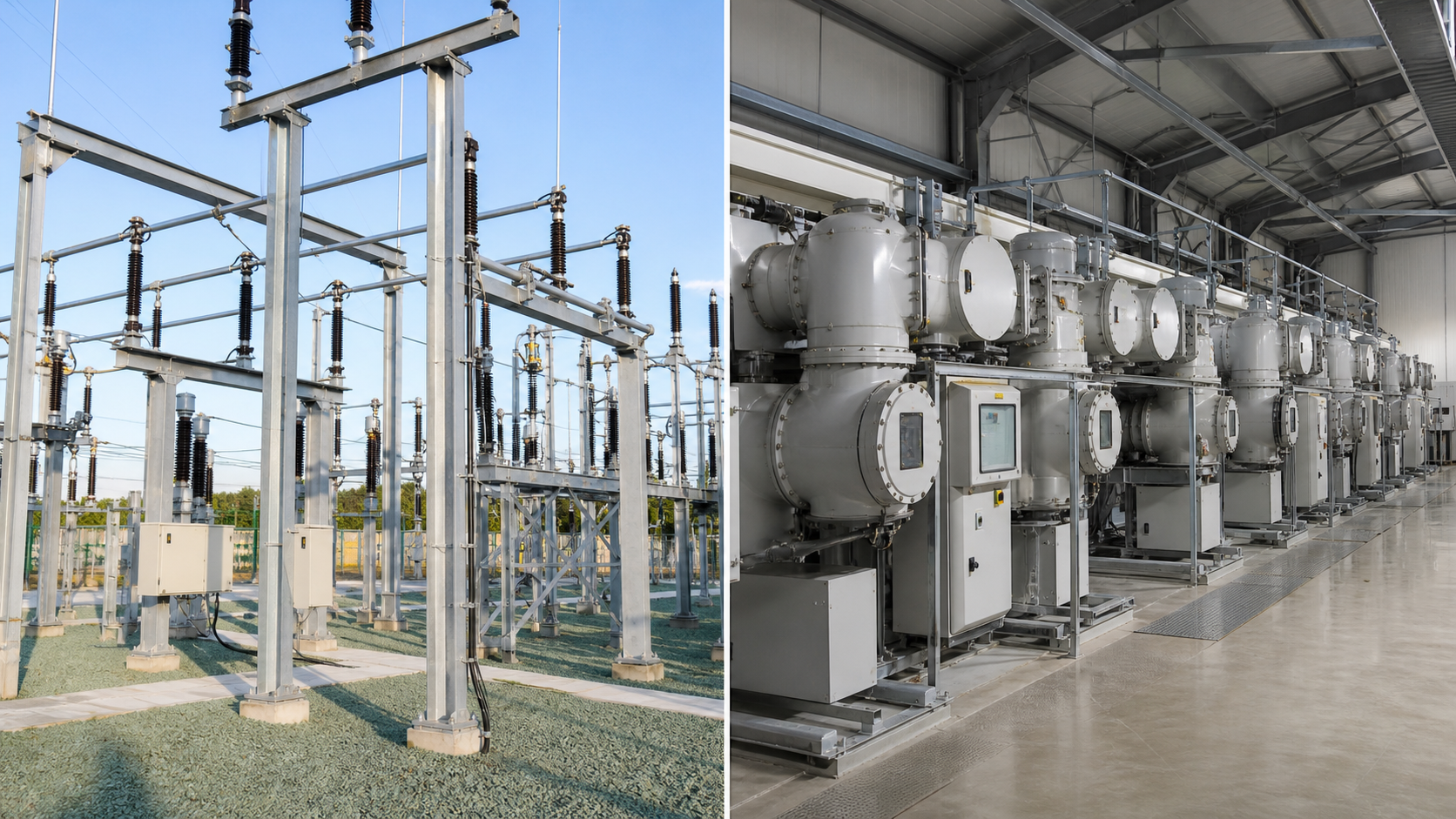
An air-insulated substation uses air as the primary external insulation. It normally requires more space but provides visible equipment, flexible expansion, and familiar maintenance access. Pollution, salt, ice, wildlife, altitude, and required clearances influence the design.
A gas-insulated substation, or GIS substation, encloses conductors and switching equipment in grounded metal compartments containing insulating gas. GIS offers a compact footprint and strong environmental protection, making it useful in dense cities, industrial sites, underground spaces, and severe environments. The tradeoffs include higher initial cost, specialized maintenance, gas handling, and more complex extensions.
LBAJI’s HC-40.5 fully insulated ring-network switchgear and LBHB-12 environmentally friendly gas-insulated RMU are relevant to compact distribution schemes.
Substation Protection and Control
Protection divides the electrical substation into zones such as lines, transformers, busbars, feeders, capacitor banks, and station service. Relays compare measured quantities with settings derived from system studies. When they detect a fault, they trip the minimum number of breakers needed to isolate it.
Common functions include overcurrent, earth fault, transformer differential, restricted earth fault, bus differential, distance, under- and overvoltage, frequency, breaker failure, and thermal protection. Settings must coordinate across utility and customer boundaries.
A digital substation uses networked intelligent electronic devices and standardized communications to exchange measurements, status, trips, interlocking, and supervisory data. Digital systems can reduce copper wiring and improve visibility, but cybersecurity, time synchronization, network redundancy, testing, and configuration management become essential.
Grounding and Safety
The grounding grid connects structures, equipment tanks, fences, neutrals, surge arresters, and operating surfaces to a controlled earth network. Its design is based on fault current, clearing time, soil resistivity, conductor capacity, touch voltage, and step voltage.
Safe design also requires electrical clearances, fire separation, oil containment, access control, warning signs, emergency egress, lighting, interlocks, arc-flash controls, and maintenance procedures. Compliance must be based on the applicable IEC, IEEE, utility, and local regulations.
How to Specify a Power Substation
- Define the network: voltage levels, frequency, grounding, source impedance, fault level, and grid requirements.
- Define the load: present and future MVA, load profile, power factor, harmonics, motor starting, and criticality.
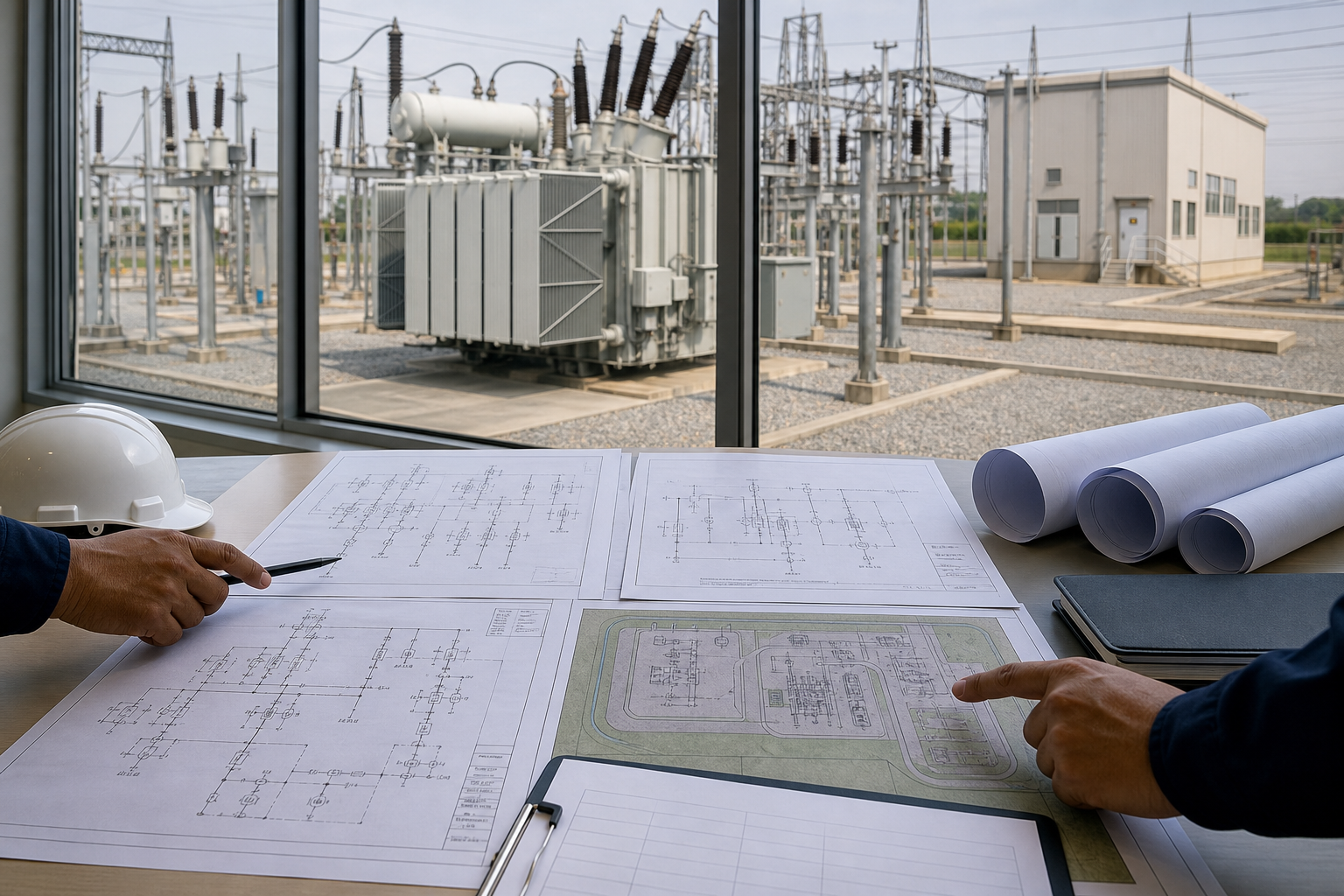
- Select the single-line arrangement: incoming circuits, transformer count, bus scheme, feeder count, redundancy, and maintenance philosophy.
- Complete system studies: load flow, short circuit, protection coordination, grounding, insulation coordination, harmonics, and arc flash as applicable.
- Define the site: available area, indoor or outdoor installation, climate, pollution, altitude, seismic requirements, access, transport, and civil interfaces.
- Specify equipment: transformers, switchgear, breakers, instrument transformers, control power, batteries, protection, automation, metering, and communications.
- Define testing and documentation: drawings, calculations, routine and type tests, factory acceptance tests, commissioning, manuals, and training.
Frequently Asked Questions
What is the main purpose of an electrical substation?
Its main purpose is to control and protect power flow between circuits, often while transforming voltage between transmission, distribution, or utilization levels.
What is the difference between a substation and a transformer?
A transformer is one item of equipment that changes AC voltage. A substation is a complete installation that may include transformers, switchgear, breakers, protection, metering, control, grounding, and auxiliary systems.
What are the main types of substations?
Common types include transmission, distribution, collector or renewable-energy, industrial, switching, converter, mobile, air-insulated, gas-insulated, and prefabricated substations.
Why is a gas-insulated substation used?
GIS is selected when space is limited or strong environmental protection is required. It offers a compact footprint but requires specialized equipment, gas management, and maintenance practices.
What information is needed to design a substation?
Key inputs include voltage levels, capacity, fault level, grounding, load profile, single-line arrangement, site conditions, reliability target, protection philosophy, communications, applicable standards, and future expansion.
Conclusion
An electrical substation is the operating and protection center of a power network. Successful projects begin with accurate system studies and a coordinated single-line design, then translate those requirements into correctly rated transformers, switchgear, breakers, protection, grounding, control, and civil works.
LBAJI manufactures power transformers, medium- and low-voltage switchgear, ring main units, photovoltaic equipment, and prefabricated substations. Share the single-line diagram, voltage levels, capacity, fault level, site conditions, and required standards with the LBAJI team to develop a project-specific substation equipment package.
How an electrical substation works from line to feeder
Power enters through a line termination and surge protection, passes through disconnectors and a circuit breaker, reaches a busbar, and is routed through a transformer or outgoing feeder. CTs and VTs feed relays and meters; when a relay identifies a fault inside its zone, it trips the associated breaker while healthy circuits remain in service. This sequence explains why transformation, switching, protection, control and grounding must be engineered together.
Substation automation and maintenance
Modern substations combine local control with SCADA, event records, condition alarms and time-synchronized protection data. Maintenance should be risk-based: inspect and test breakers, transformers, batteries, protection channels, grounding connections and auxiliary systems at intervals justified by duty and condition. Settings, firmware and drawings need the same change control as physical equipment.
Technical references and further reading
The following independent sources support the standards, terminology, calculations, and safety context discussed in this guide:
- IEEE C37.121 guide for unit substations — IEEE guidance on coordinating incoming, transformer, transition, and outgoing sections in unit substations.
- OSHA electric power transmission and distribution overview — Official safety context for transmission and distribution systems and equipment.
- Electrical substation overview — A general reference for substation functions, types, switching, protection, and transformation.