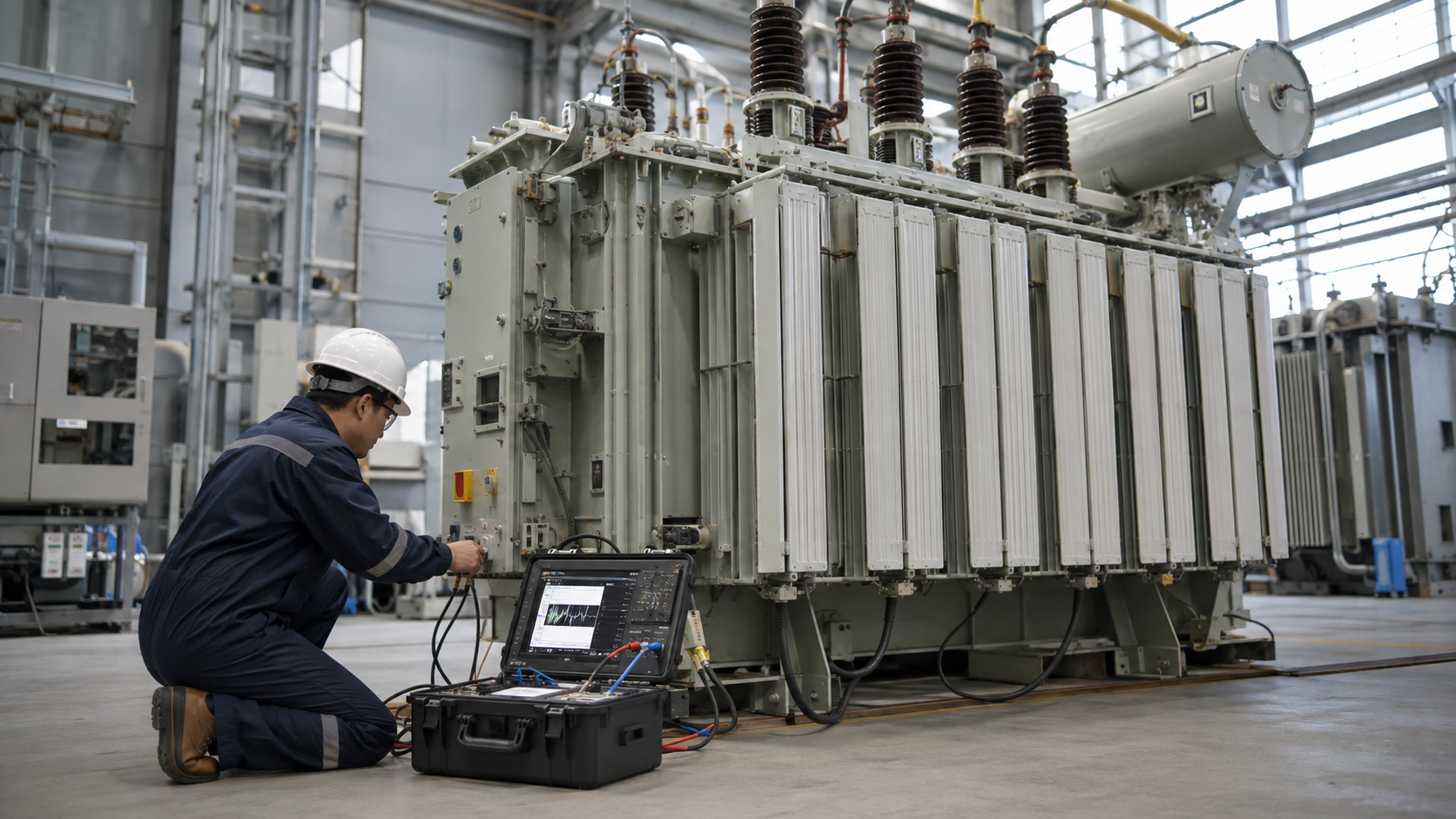

A delta-delta transformer has both primary and secondary windings connected in closed delta, so line voltage equals winding phase voltage on each side and there is no inherent neutral; it also has zero-degree phase displacement for corresponding polarity connections. The arrangement handles balanced three-phase loads and triplen harmonics but requires deliberate grounding and ground-fault protection. Open-delta operation is possible only at reduced capacity and with engineering limits.
Key Takeaways
- Line voltage equals winding voltage in delta.
- No neutral is available unless separately derived.
- Open delta provides only about 57.7% of the original bank kVA.
Voltage Ratio and Phase Relationship
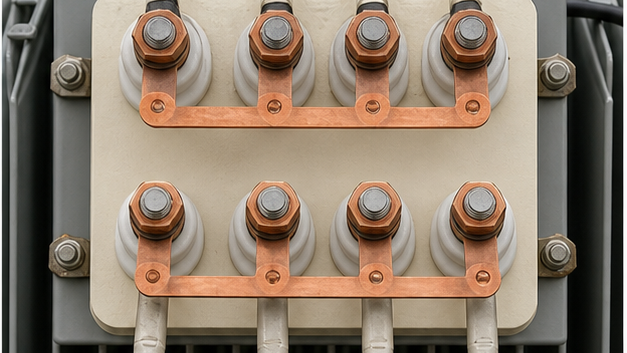
Because each delta winding is connected line-to-line, the line-voltage ratio equals the winding turns ratio. Corresponding delta connections can provide zero-degree displacement, but terminal polarity and phase sequence still require verification.
A changed corner connection can reverse phase sequence or introduce an unintended angle. Use the vector diagram and phase-angle test, not continuity alone.
Neutral, Grounding and Ground Faults
Closed delta has no natural neutral point. Systems may operate ungrounded, corner-grounded or with grounding transformers depending on the design and code. Each option changes fault current, overvoltage and protection behavior.
An ungrounded system can continue after a first ground fault but may experience elevated phase-to-ground voltage and requires insulation monitoring and prompt fault location.
Harmonics and Unbalanced Loading
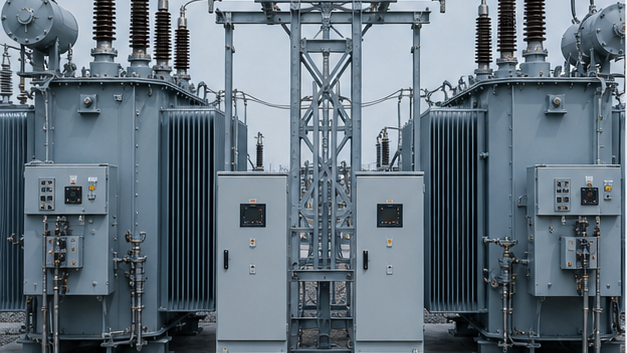
The closed delta provides a circulating path for triplen harmonic magnetizing current, helping prevent waveform distortion from appearing as line current. This internal current contributes to winding heating and design duty.
Delta can serve unbalanced phase loads within winding and bank limits, but severe imbalance changes currents and voltage regulation. Load studies should examine individual winding current rather than only average line current.
Closed Delta vs Open Delta
| Factor | Closed delta | Open delta | Engineering effect |
|---|---|---|---|
| Transformers | Three | Two | Different bank loading |
| Capacity basis | 100% original bank rating | About 57.7% of original | Load must be reduced |
| Neutral | None inherent | None inherent | Grounding needs separate design |
| Phase displacement | Connection-dependent, commonly 0° | Maintains line relationship when correct | Verify polarity and sequence |
| Use | Normal three-phase service | Emergency or limited service | Check motors and unbalance |
Open-Delta Operation
If one unit in a three-transformer bank is removed, the remaining two may operate as open delta where the equipment and protection permit. The bank capacity becomes about 57.7% of the original closed-delta kVA—not two-thirds—and each unit is more heavily utilized for a given bank load.
Open delta may support emergency or planned small loads, but voltage unbalance, harmonics, motor performance and protection must be reviewed before operation.
Engineering Validation and Safety Boundary
This guide supports specification and procurement; it does not replace a project study, the applicable code, the manufacturer instructions or work by qualified electrical personnel. Verify the following before equipment selection, testing, wiring or energization:
- Verify polarity, phase rotation and vector diagram.
- Define grounding method and ground-fault detection.
- Calculate winding current under unbalanced load.
- Apply the 57.7% bank capacity limit for open delta.
- Coordinate fuses or relays for closed- and open-bank conditions.
Information to Include in the RFQ
A useful quotation must be based on the same technical boundary for every supplier. Include the following information and require all deviations to be listed explicitly:
- Primary/secondary line voltage, kVA, frequency and taps.
- Closed-delta vector relationship and terminal markings.
- Grounding method and ground-fault protection.
- Load balance, motors, harmonics and emergency open-delta duty.
- Impedance matching, tests and parallel-operation requirements.
From Technical Data to an Approved Decision
Use a staged review rather than approving the first catalogue match. Begin with voltage ratio and phase relationship, then reconcile neutral, grounding and ground faults with harmonics and unbalanced loading. Complete the review with open-delta operation. At each stage, record the source document, units, operating case and person responsible for approval. This prevents a value copied from an old drawing, nominal system label or unrelated product from becoming an uncontrolled design input.
Before acceptance, compare the supplier response line by line with the RFQ and mark every exception. Confirm that drawings, calculations, settings, certificates and test reports refer to the exact offered model and revision. Preserve the approved submittal, nameplate data, factory results and commissioning measurements as the maintenance baseline. If a rating, connection, environment or test condition changes, repeat the affected review rather than assuming the original conclusion remains valid.
Document control should identify revision, approval status and superseded files. Field teams should receive the same approved values used for procurement, while commissioning records should capture any authorized change made during installation. This traceability is especially important when equipment is replaced years later: the next engineer needs verified interfaces and test history, not an incomplete description copied from a purchase order.
Coverage Informed by Current Search Results
The current U.S. Google top-20 review repeatedly surfaced themes including Delta (Δ) Connection, Categories, Wye (Y) Connection, I have two Delta Wye transformers installed in a main-tie-main. One failed, can I replace the failed one with a Wye Wye?, 32 Comments. The article addresses those user needs in an original engineering and procurement sequence; competitor brand navigation and unrelated sales material were excluded.
Related LBAJI Resources
Continue with delta-wye connection guide transformer vector-group guide transformer products. These resources help connect the calculation or component decision to a complete transformer, switchgear, control or distribution specification.
Technical References and Further Reading
- IEC 60076-1 — Transformer connection symbols.
- IEEE Standards Association — Transformer connection and testing standards.
- NFPA Codes and Standards — Grounding and installation requirements.
Conclusion
Delta-delta is effective where no neutral is needed and grounding is intentionally engineered. Confirm phase relationship, individual winding load and protection; treat open delta as a reduced-capacity operating mode, not a free spare transformer.