
Dry type insulation and temperature class choices decide whether an indoor unit runs inside its thermal budget—or ages quietly behind a closed door. For the broader construction and project-selection overview, see our dry-type transformer design and selection guide.
Buyers who pick a familiar class without ambient and airflow data often discover derating, fan noise, or hot-spot alarms after energization. This guide separates the labels, lists RFQ fields, and flags unfit paths.
Lock thermal class with the room plan before cable tray freeze.
Part 1. When insulation class becomes a room decision
Indoor dry type units sit close to occupied spaces and shared ventilation paths.
Class selection is therefore a room interface problem, not only a catalog preference.
For adjacent indoor thermal and install notes, review the temperature rise class guide and the dry type indoor installation guide.
Important: Do not freeze insulation class before ambient, rise limits, and ventilation are written into the RFQ (IEC 60076-11).
Part 2. RFQ fields that keep thermal bids comparable
Ask suppliers to quote the same ambient and rise package.
| RFQ item | Why it matters | Send with quote |
|---|---|---|
| Insulation / temperature class | Thermal capability label | Yes |
| Temperature rise limits | Comparable thermal bids | Yes |
| Rated kVA and voltage combination | Continuous sizing basis | Yes |
| Cooling method and enclosure | Air path and IP interfaces | Yes |
| No-load and load losses | Heat to be rejected | Yes |
| Short-circuit impedance | Protection coordination | Yes |
Include maximum ambient and altitude if relevant.
Part 3. Insulation class versus temperature rise class
Insulation class describes material temperature capability; rise class describes allowed temperature rise above ambient.
Mixing the two labels without ambient data produces false confidence.
Write both into the RFQ in plain language.
Part 4. Ambient, enclosure, and ventilation interactions
Enclosures and blocked vents raise effective ambient at the windings.
Forced-air stages change both capacity and sound; state which stages are allowed.
Civil and electrical teams must share one ventilation assumption.
Part 5. Drawings and checks before order release
Request GA drawings with ventilation openings, clearances, and any fan locations.
Confirm vector group and tap range with the single-line diagram.
Record the ambient basis used for design in the project file.
Part 6. Shortlist dry type series after thermal limits are written
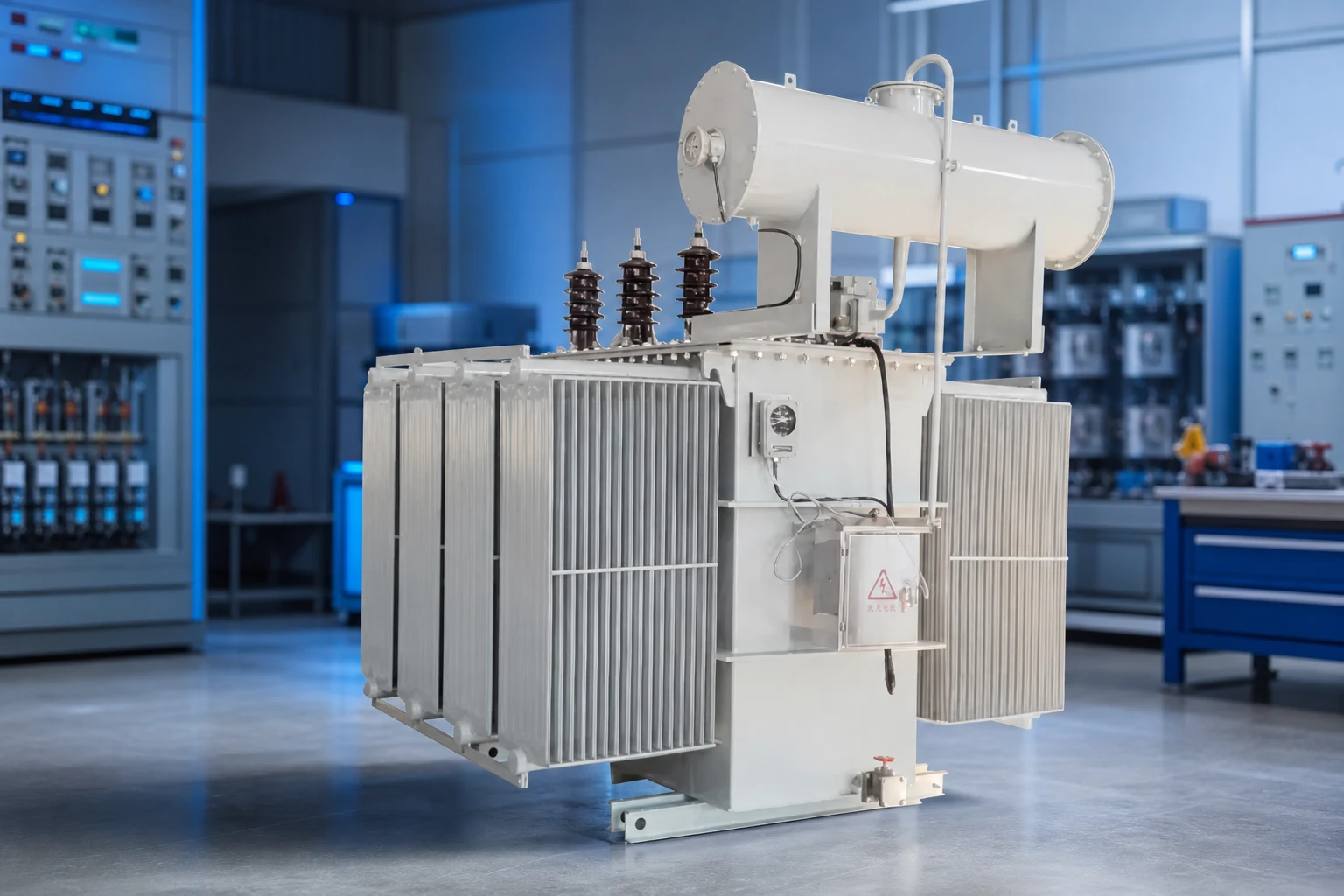
Product recommendation: After thermal limits are written, open the transformer product category and prioritize the SC(B) resin insulated dry transformer series, with the S□-M oil-immersed power transformer series only if an outdoor oil alternative re-enters the study.
| Better fit | Needs more study |
|---|---|
| Ambient and rise stated early | Class chosen from habit alone |
| Ventilation fixed with enclosure | Layout frozen before airflow review |
| Losses and impedance included | Thermal class quoted without electrical package |
Submit ratings and room notes through Contact Us for catalog confirmation.
Part 7. Thermal-selection mistakes that overheat rooms
- Treating insulation class as interchangeable with rise class.
- Omitting ambient from the RFQ.
- Upgrading enclosures without revisiting airflow.
- Ignoring fan noise when forced air is required.
- Freezing room layout before thermal class is set.
- Comparing bids on different ambient assumptions.
FAQ
What is the difference between insulation class and temperature rise?
Insulation class is material capability; temperature rise is the allowed rise above ambient—both need ambient context.
Can a higher insulation class fix a hot room?
Not by itself; ventilation, enclosure, and ambient still govern usable margin.
Which data belong in a dry type thermal RFQ?
State ambient, rise limits, class labels, kVA/voltage, cooling/enclosure, losses, and impedance together.
Do fans change the class decision?
Forced-air stages can raise capacity but add noise and maintenance; define allowed stages in the RFQ.
When should altitude be included?
Whenever the site is above the standard reference altitude used by the governing specification.
Should oil immersed options stay in the comparison?
Only if outdoor placement and liquid interfaces are still open; otherwise keep the dry type thermal package focused.
What should buyers send suppliers?
Send room ambient, ventilation limits, ratings needs, and required drawings with the RFQ.