
Switchgear altitude derating is the review of an assembly’s usable ratings and insulation suitability at the installation elevation. It is not a single percentage that can safely be applied to every cabinet rating. Lower air density can affect air insulation and cooling differently, while sealed insulation systems, switching devices and auxiliary components have their own declared limits. Buyers should obtain a configuration-specific statement covering the actual site conditions before accepting an ordinary nameplate rating for a high-altitude installation.
Why elevation belongs in the original specification
A project elevation should appear in the inquiry, equipment data sheet and design review, not first in an installation note after manufacture. Include the equipment location within the site, indoor or outdoor service, ambient conditions and the ventilation concept. A mountaintop outdoor kiosk and a conditioned indoor room at the same elevation may impose different combinations of requirements.
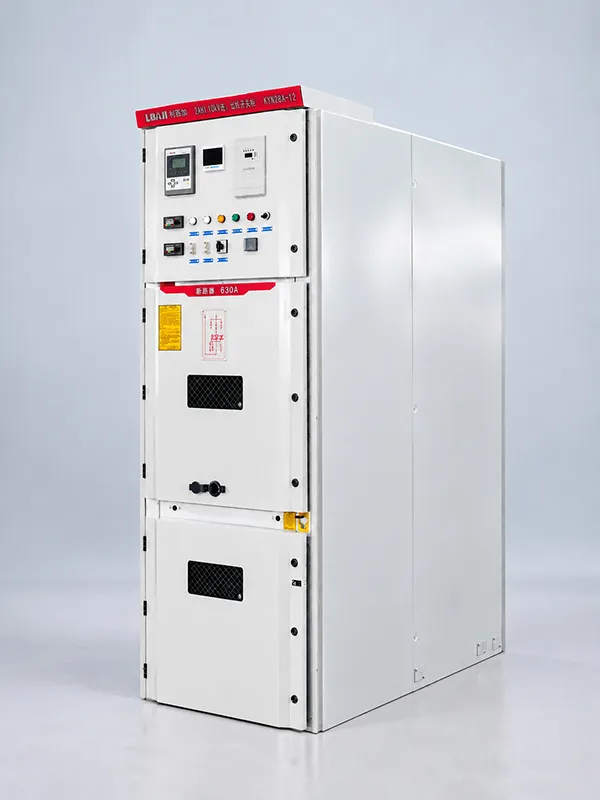
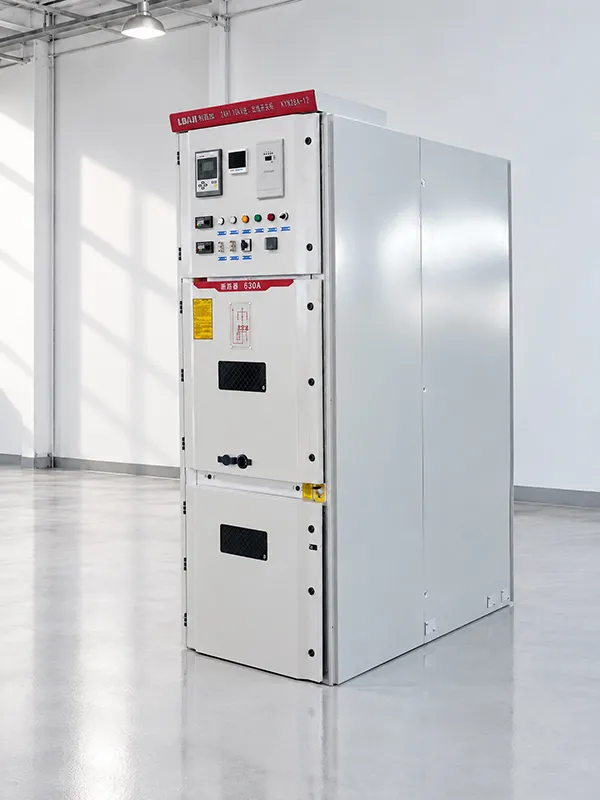
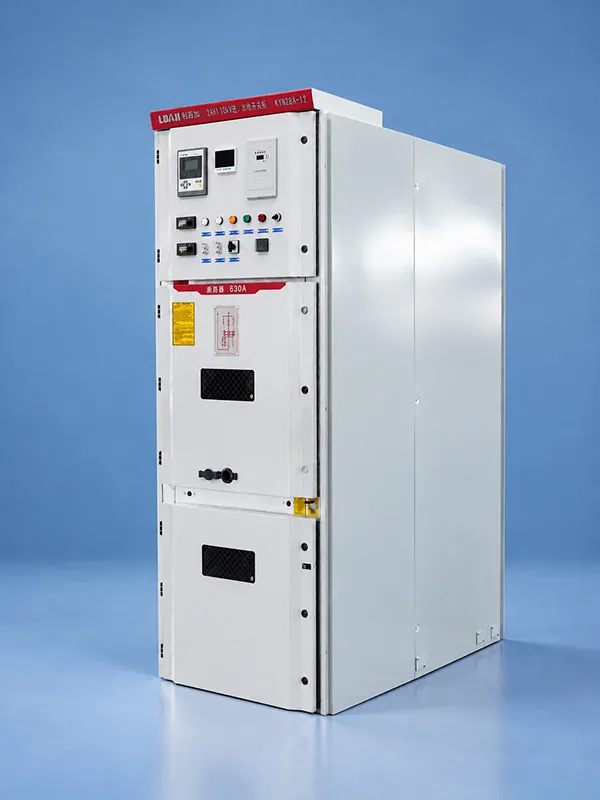
The illustrated LBAJI KYN28A-12 assembly is an exterior product reference. The photograph establishes the visible equipment type and arrangement only. It does not demonstrate an altitude-qualified configuration, a particular dielectric withstand level or a thermal rating at your location. Request those declarations against the exact offered assembly and installed components.
Separate insulation review from current-carrying review
Air insulation and heat removal are different design questions. A dielectric correction addresses the adequacy of an insulation arrangement under its relevant atmospheric conditions. A current-rating assessment addresses losses, cooling and temperature limits in the actual assembly. A factor provided for one question should not be silently reused to answer the other.
Distinguish rated operating voltage, declared insulation levels, continuous current and short-circuit duties in the review schedule. State what the supplier has confirmed for each item. A statement that a circuit breaker is suitable for the elevation does not automatically approve the complete busbar, cable termination, enclosure and auxiliary-equipment arrangement around it.
Use the applicable standard and edition
The IEC 62271-1 catalogue describes common specifications for AC switchgear above 1,000 V and identifies altitude correction among its service-condition provisions. That scope is useful for locating the relevant requirements, but a catalogue summary is not a complete design method. The project must identify the applicable edition, amendments and equipment-specific standard before applying a correction.
Avoid copying an equation or table from an unrelated device manual. Its assumptions may concern a different insulation medium, voltage class, installation arrangement or reference condition. Ask the manufacturer to state the method and documents supporting its offered performance. Resolve any conflict between specification, standard edition and equipment documentation during technical approval.
Provide a complete service-condition package
Record the site elevation and the source of that information. Add maximum and minimum ambient conditions, installation enclosure, ventilation restrictions, expected pollution and moisture exposure, and the relevant operating duty. Keep measured values, project design values and provisional assumptions distinguishable so reviewers can see what remains to be confirmed.
For indoor installations, describe how the room environment is controlled and what happens when ventilation or conditioning is unavailable. A nominal building temperature does not prove the temperature around every assembly compartment under load. Coordinate equipment losses, room heat removal and permitted operating conditions with the electrical and building-service designers.
Reference context: IEC 62271-1 common specifications and service-condition scope. This original qualitative checklist organizes project decisions; it is not a reproduced standard or a substitute for approved criteria.
| Review boundary | Question for the supplier | Required project record |
|---|---|---|
| Air insulation | Are declared insulation levels suitable at the site elevation? | Configuration-specific insulation assessment |
| Continuous current | What current is permissible under the stated ambient and cooling conditions? | Assembly rating statement and operating limits |
| Switching devices | Are device ratings and operating conditions supported at this elevation? | Applicable device documentation and assembly coordination |
| Cable interfaces | Do the selected terminations suit the complete installation conditions? | Cable accessory and equipment compatibility records |
| Auxiliary equipment | Are control power, sensing and operating components within their limits? | Component service-condition schedule |
| Installation | Which ventilation and environmental assumptions must remain true? | Approved room design and handover conditions |
Ask for a rating statement, not an unexplained factor
A useful supplier response identifies the offered assembly, elevation, ambient conditions, applicable insulation levels and permissible continuous current. It should state any changed components, installation restrictions and unresolved items. An isolated percentage without a reference rating, scope and conditions is difficult to evaluate and easy to misapply during later design changes.
Ask whether the response applies to the complete quoted configuration or only to a standard product family. A project assembly may contain devices, metering, cable accessories or auxiliary components absent from a generic brochure. Technical approval should establish which parts were evaluated and whether substitutions require a new review before they can be accepted.
Consider the whole insulation path
A vacuum interrupter does not make every surrounding insulation path independent of atmospheric conditions. The assembled equipment still has interfaces whose suitability depends on its design. Similarly, a sealed main-circuit compartment does not automatically settle the conditions for external bushings, cable accessories, auxiliary circuits or exposed installation interfaces.
Request a clear boundary diagram or description from the manufacturer. Identify which insulation arrangements are covered by the declaration and what the installer must provide. Keep this review distinct from general enclosure protection: an IP classification addresses ingress protection and cannot be used as evidence that an insulation system meets altitude-related requirements.
Coordinate thermal limits with the load study
Use the supplier’s confirmed installation rating in the project load and operating assessment. Check continuous demand, expected operating patterns and the conditions under which loads coincide. The design should show how the assembly remains within its accepted limits during normal service and any planned operating modes, including temporary arrangements where relevant.
Do not compensate for an uncertain equipment rating by informally adjusting a protection setting. Protection coordination and equipment thermal suitability need a consistent engineering review. A relay threshold cannot independently establish that busbars, connections and other assembly components have acceptable performance under the specified service conditions.
Check auxiliary components and mechanisms
Control power supplies, relays, sensors, operating mechanisms and local indication may have their own environmental declarations. Ask the supplier how these limits are incorporated into the offered assembly statement. An acceptable main-circuit review can leave an incomplete project if an auxiliary component has a narrower service envelope that nobody has evaluated.
Mechanical operation and safe maintenance access also remain part of the equipment selection. Obtain the relevant instructions and identify any special inspection or operating restrictions. The article’s exterior images show only the visible cabinet arrangement; they are not evidence of a particular mechanism’s tested performance or qualification at a stated altitude.
Keep procurement comparisons on the same basis
When comparing quotations, issue one common service-condition schedule and require each bidder to identify deviations. Compare the final proposed ratings, documentation, configuration changes and installation requirements. A lower price based on ordinary reference conditions is not directly comparable with an offer that includes an approved high-altitude configuration.
Record whether any proposed change affects dimensions, cable interfaces, spare parts, lead time or room cooling. A solution that is electrically suitable may require different installation provisions. Resolve those consequences before purchase rather than treating a supplier’s altitude statement as an isolated document unrelated to the rest of the equipment package.
An example without an invented correction curve
Suppose a project moves a proposed indoor switchgear lineup to a higher-elevation site. The original offer lists voltage and current ratings but gives no elevation basis. The correct next step is to submit the revised service conditions and obtain an assembly-specific assessment, including the insulation arrangement, permissible continuous current and any component or installation changes.
The team then checks the load schedule, room environment and cable-interface package against the revised declaration. It does not multiply all nameplate numbers by one assumed factor. This example provides a decision process rather than a numerical design rule: an unsupported calculation can look precise while answering the wrong question about the actual equipment.
Verification and acceptance boundaries
Identify which tests, calculations, design assessments and declarations support the offered service conditions. The appropriate evidence depends on the equipment and applicable requirements. Routine factory tests, a general type-test certificate or a successful site functional check should not be described as proving every aspect of high-altitude suitability without an explicit link to the evaluated configuration.
At handover, retain the accepted rating statement with its operating assumptions and configuration reference. Ensure operators can find the restrictions that matter in service. Changes to room cooling, loading, cable accessories or internal components should trigger the relevant review, because the original acceptance was conditional on a defined installation rather than on altitude alone.
Common mistakes to prevent
The first mistake is treating transformer altitude guidance as a switchgear calculation. Both equipment types can be affected by site conditions, but their designs and governing requirements differ. Use the appropriate documents and manufacturer statements for the switchgear assembly. Link to transformer guidance only when coordinating a separate transformer in the same project.
Other recurring mistakes include treating a breaker manual as the complete assembly declaration, confusing insulation correction with current derating, omitting auxiliary limits and forgetting room conditions. A short, traceable service-condition schedule prevents more confusion than a spreadsheet full of correction factors whose applicability to the offered equipment has not been established.
Frequently asked questions
Is there one altitude derating factor for all switchgear ratings?
No. Insulation suitability, continuous current, switching devices and auxiliary components require the applicable assessment. A factor for one boundary should not be transferred to every nameplate rating.
Does a vacuum circuit breaker eliminate altitude review?
No. Other insulation paths, assembly components and installation interfaces may still require evaluation. Obtain a statement for the complete offered configuration and its service conditions.
Can transformer altitude guidance be used for switchgear?
It should not be used as a substitute for the switchgear requirements. Coordinate the equipment through the project design, but use the applicable documents and declarations for each product.
What should a buyer send to the manufacturer?
Provide elevation, indoor or outdoor location, ambient conditions, ventilation arrangement, load duty and relevant environmental exposure, together with the required equipment ratings and applicable standards.
Do these KYN28A-12 images prove high-altitude qualification?
No. They illustrate the exterior of a real LBAJI product. Altitude suitability must be confirmed for the quoted configuration through its technical documentation and approved project review.
Technical sources and related equipment
Standard catalogue pages establish document scope; compliance and acceptance require the applicable full documents and project engineering review.
- IEC 62271-1 common specifications and service-condition scope
- IEC 62271-200 metal-enclosed AC switchgear scope
- LBAJI KYN28A-12 Metal-clad Withdrawable AC Switchgear
- switchgear equipment fundamentals
- switchgear verification and testing
- switchgear maintenance checklist
Further learning: equipment functions
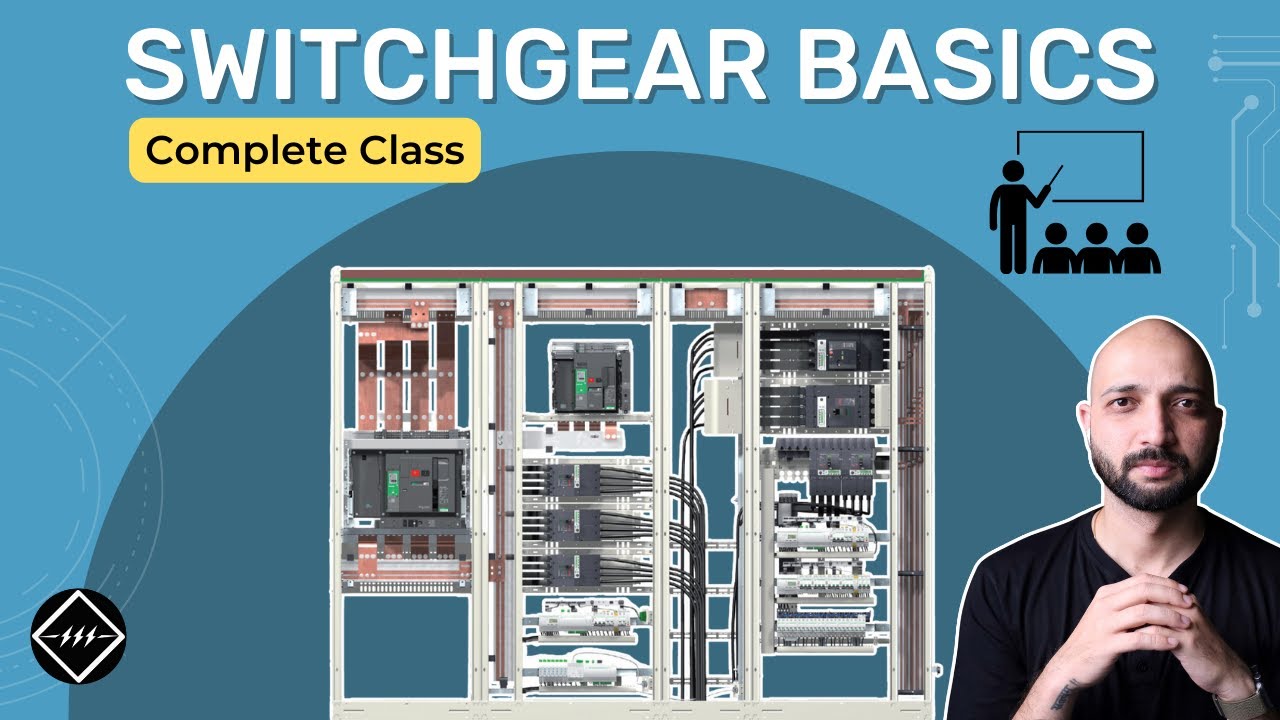
This independent educational introduction explains the equipment background. It does not demonstrate a safe work procedure for the specific assembly. Source: Gaurav J – TheElectricalGuy.
Watch Switchgear Basics: Complete Beginner's Guide | TheElectricalGuy