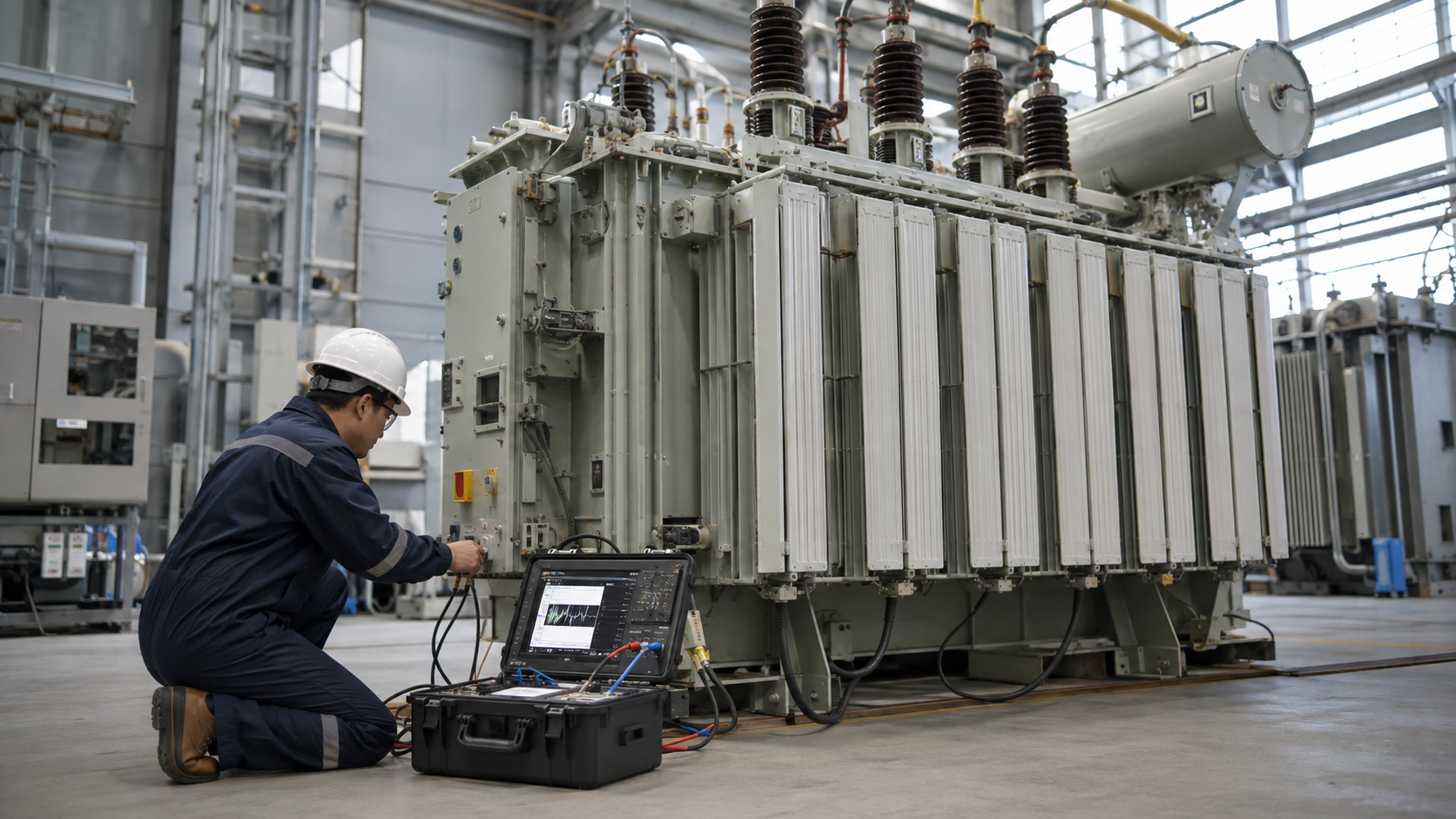

When a transformer “blows,” a fault or severe abnormal condition causes protective equipment to isolate it; the bang, flash, smoke, or outage may come from an expulsion fuse, internal arcing, bushing failure, pressure release, or burning insulation rather than the entire transformer exploding.
What the sound and flash actually mean
A loud report can be an upstream cutout interrupting fault current. A failed arrester, animal contact, conductor clash, lightning surge, internal winding fault, or overheated connection can produce similar symptoms. The visible event does not identify the failed component.
What happens electrically
Fault current rises until a fuse, breaker, relay, or internal protective device operates. Voltage may collapse locally, adjacent customers can see a dip, and automatic reclosing may briefly restore and remove power. Protection limits damage but cannot guarantee that the transformer remains serviceable.
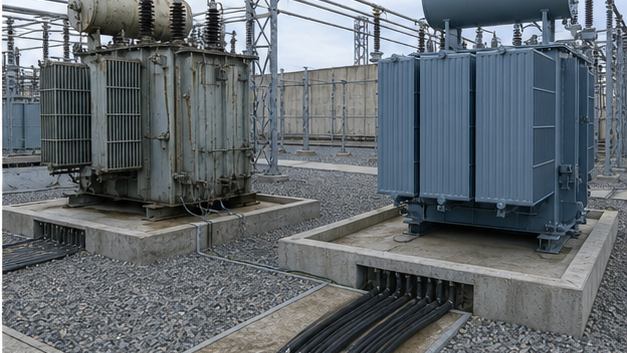
Common causes
Lightning and switching surges, overload, insulation aging, moisture, contaminated oil, loose joints, bushing damage, external short circuits, vegetation, wildlife, and vehicle impact are common contributors. Root cause must be proven from evidence rather than assumed from weather or age.
Fire, oil, and public safety
Stay away from the transformer, fallen conductors, fences, puddles, smoke, and leaking liquid. Do not approach to photograph it or attempt to extinguish energized electrical equipment. Call emergency services for fire or injury and notify the utility or facility operator.
Utility response sequence
Operators locate the fault, isolate and ground the affected section, inspect protection and equipment, test where practical, replace a fuse only when safe, or exchange the transformer. They then restore customers in controlled stages and monitor load and voltage.
Can the transformer be repaired
Minor external accessories may be replaceable, but internal arcing, severe winding damage, tank rupture, or contaminated insulation often favors replacement. A repair shop can evaluate ratio, winding resistance, insulation, oil, core, and mechanical condition before recommending work.
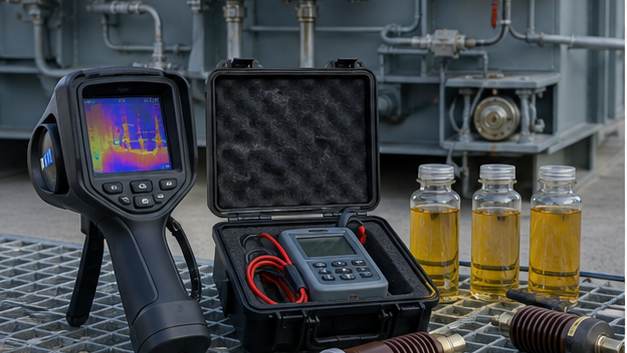
How long an outage may last
A simple fuse operation can be cleared relatively quickly after the cause is removed. A failed pole unit, difficult access, fire investigation, cable damage, or unavailable specialty transformer can extend restoration from hours to days or longer.
Preventing another failure
Coordinate fuses and relays, control loading, inspect arresters and bushings, trend temperature and oil condition, keep clearances, manage vegetation, and preserve maintenance records. After failure, confirm the actual root cause before energizing replacement equipment.
Did the transformer fail, or did its fuse operate?
A transformer and the devices protecting it are separate components. On an overhead distribution circuit, a cutout often contains an expulsion fuse. Interrupting a fault can produce a sharp report and a flash. The fuse may hang open afterward, while the transformer itself remains mechanically intact. That event says a protection device operated; it does not establish which component caused the fault. A damaged secondary cable or wildlife contact can interrupt the supply without destroying the windings.
Internal failure is different. An electrical arc inside an oil-filled transformer can break down insulating material and rapidly generate gas. If pressure rises faster than the enclosure and relief arrangements can manage, the tank may deform or rupture. A bushing flashover can also produce fire and visible damage outside the tank. These different mechanisms explain why two incidents described as a “blown transformer” may require completely different repairs.
| Reported observation | Possible explanation | What the observation cannot prove |
|---|---|---|
| One loud bang followed by an outage | A cutout or other protective device interrupted current | Whether the fault is inside the transformer |
| Repeated flashes or interruptions | Reclosing or intermittent fault activity | That the equipment will remain de-energized |
| Oil around a tank or radiator | A leak, impact, seal failure or pressure event | The fluid composition or remaining electrical condition |
| Soot near a bushing | External arcing or contamination flashover | The condition of the winding behind the terminal |
| No visible damage | Protection cleared the fault, or damage is concealed | That the transformer is suitable for re-energization |
Why storms cause transformer-related outages
Lightning can impose a steep voltage surge that stresses insulation. Surge arresters reduce that exposure but do not remove every risk, particularly if their condition, grounding or installation is deficient. Wind and ice can bring conductors together, move vegetation into a line, or damage poles and service connections. Floodwater may affect cables and connected equipment. An incident during a storm therefore does not establish lightning as the root cause.
The distinction matters after restoration. Replacing a transformer will not prevent a repeat outage if the damaged cable, failed arrester or tree contact remains. Crews use the fault location, protection records, weather timing and equipment inspection to decide which explanation fits. For an industrial site, preserving relay event files before resetting equipment can provide valuable evidence about the phases involved and the sequence of events.
What customers should do during the outage
Report the location and visible symptoms from a safe place. Describe a bang, smoke, a fallen line or leaking liquid without approaching to identify the device. Give the utility an address or known asset location if available. Keep other people and animals away. Smoke, flames, injury or a public hazard may require emergency services in addition to the utility. Follow the local responders’ directions rather than trying to determine a safe distance from an online photograph.
A line on the ground can energize nearby soil, fences, vehicles or standing water. It can also become energized again through switching or automatic reclosing. The absence of sparking is not evidence of safety. Downed power-line guidance hosted by NOAA explains why contact with the line and the surrounding energized area must be avoided.
Inside a building, use normal accessible switches to turn off equipment that should not restart unattended. Do not open service equipment, replace utility fuses or connect a generator through an improvised arrangement. Sensitive production loads may need a controlled restart when power returns. The building operator should communicate the restart sequence to staff, particularly where loss of ventilation, refrigeration or process controls creates a separate operational problem.
Can a transformer fault damage appliances?
An outage alone does not prove that appliances were damaged. The event may include a voltage dip, a transient or an abnormal voltage condition, and different equipment responds differently. A lost neutral elsewhere in a distribution system can produce dangerous voltage imbalance, but it should not be automatically attributed to an internal transformer fault. Determining damage requires inspection of the affected supply and appliances, including any surge-protection indicators or control-system event logs.
If equipment smells burned, has damaged cords or trips its protective device repeatedly after restoration, stop using it and arrange qualified inspection. Avoid repeated reset attempts. Photograph damage and preserve model numbers and event timing for the responsible service provider. A useful incident record distinguishes what happened before the outage, during restoration and only after a particular machine restarted.
How the repair decision is made
Inspection first establishes whether the trouble is external or internal. Ratio and winding-resistance tests can investigate winding and connection concerns. Insulation testing provides a different view of dielectric condition. For oil-filled equipment, oil sampling and dissolved-gas analysis may help identify thermal or electrical activity. No single test is a universal release-to-service certificate. The test plan should match the suspected mechanism, equipment size and available evidence.
A damaged external accessory may be replaceable while leaving the active part in service. Severe winding damage, carbonized insulation or a ruptured tank can require factory work or replacement. The Bureau of Reclamation transformer maintenance and diagnostics manual describes the complementary role of inspection and electrical and oil tests. Its guidance is a technical reference, not a promise that any particular failed unit is repairable.
What an industrial owner should verify before restart
Record the failure mechanism and check the replacement against the circuit. Voltage ratio alone is insufficient: connection, impedance, fault duty, taps, insulation level, cooling and terminals affect compatibility. The original protection settings should be reviewed if the replacement differs. Confirm that the upstream and downstream fault has been removed and that switching, alarms and trip functions operate as intended.
Restore loads in the approved sequence and observe voltage, current and temperature. Investigate unexpected sound, leakage or alarms rather than treating them as normal because the transformer is new. Preserve commissioning results as a new baseline. The objective is a stable return to service with the cause addressed, not simply getting the lights on for a few minutes.
Related transformer guides and product context
Review the transformer fundamentals guide for the underlying principles. For adjacent questions, read How Long Does It Take to Fix a Transformer? and How to Test a Transformer: Methods, Sequence and Interpretation. For distribution-equipment specifications, see the 35 kV oil-immersed power transformer; confirm the actual product scope and ratings before using it in a project.
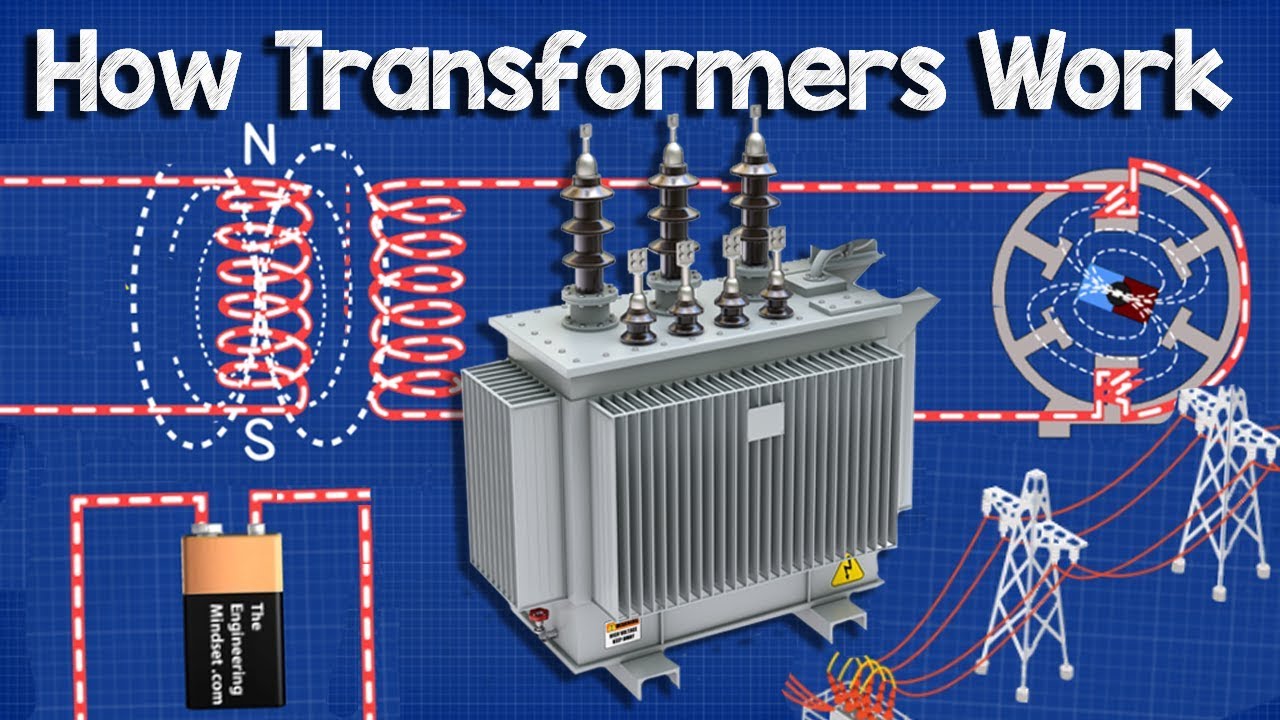
Video: the underlying transformer principle
The Engineering Mindset illustrates the electrical principle discussed here. This background explanation complements the article; it does not demonstrate or authorize field work.
Frequently asked questions
Does a loud bang mean the transformer exploded?
No. A fuse cutout, arrester or external flashover can produce a bang. Inspection is needed to distinguish those events from internal tank or winding damage.
Can the line become energized again after a fault?
Yes. Reclosing or switching can re-energize equipment. Do not use silence, lack of sparks or an outage as evidence that conductors are safe.
Can a transformer blow without visible damage?
Yes. Damage can be internal, or a protection device may clear a fault elsewhere. Appearance does not establish serviceability.
Will every appliance be damaged?
No. The effect depends on the voltage disturbance, circuit and equipment. Investigate damaged or repeatedly tripping appliances rather than assuming either universal damage or universal safety.
What must happen before a replacement is energized?
The cause must be addressed, the replacement checked for compatibility, protection and connections verified, and the approved commissioning and restoration sequence completed.