
Conservator vs sealed tank selection decides how an oil-immersed transformer handles expansion, moisture risk, and routine inspections.
Buyers who leave tank style vague often discover late changes to pads, cable boxes, and spare-parts lists. This guide compares the practical trade-offs and the RFQ inputs that keep bids comparable.
Lock tank style with the cooling method before civil layout freeze.
Part 1. When tank style becomes a project decision
Oil expands and contracts with load and ambient; the tank style decides how that volume change is managed.
Maintenance culture and site environment should drive the choice as much as catalog preference.
For adjacent planning notes, review the dry type vs oil immersed comparison guide and the oil immersed installation foundation guide.
Important: Tank style is a maintenance and layout decision, not a marketing badge. Fix conservator versus sealed tank before foundation and accessory placement freeze (IEEE C57.93).
Part 2. RFQ fields that keep tank-style bids comparable
Ask suppliers to quote the same tank style and accessory package.
| RFQ item | Why it matters | Send with quote |
|---|---|---|
| Tank style (conservator / sealed) | Defines expansion and accessory layout | Yes |
| Rated kVA and voltage combination | Electrical basis for comparison | Yes |
| Cooling method and enclosure | Thermal and layout package | Yes |
| No-load and load losses | Heat that drives oil expansion | Yes |
| Vector group and tap range | Electrical package confirmation | Yes |
| Short-circuit impedance | Protection coordination still applies | Yes |
State inspection access and oil-sampling expectations.
Part 3. Conservator breathing and maintenance realities
Conservator systems typically use a breather path and oil-level indication that need scheduled checks.
Moisture control depends on breather condition and inspection discipline.
Do not treat conservators as set-and-forget hardware.
Part 4. Sealed tank limits and monitoring needs
Sealed tanks reduce free breathing but still require pressure, oil quality, and leak monitoring.
Sealed is not a synonym for maintenance-free.
Confirm relief devices and sampling points in the quotation package.
Part 5. Civil, accessory, and oil-handling interfaces
Foundation size, bushing orientation, and cable entries can change with tank accessories.
Oil handling, spill planning, and spare breathers or gaskets belong in the O&M plan.
Align civil and electrical drawings on one tank-style decision.
Part 6. Shortlist oil-immersed series after tank style is fixed
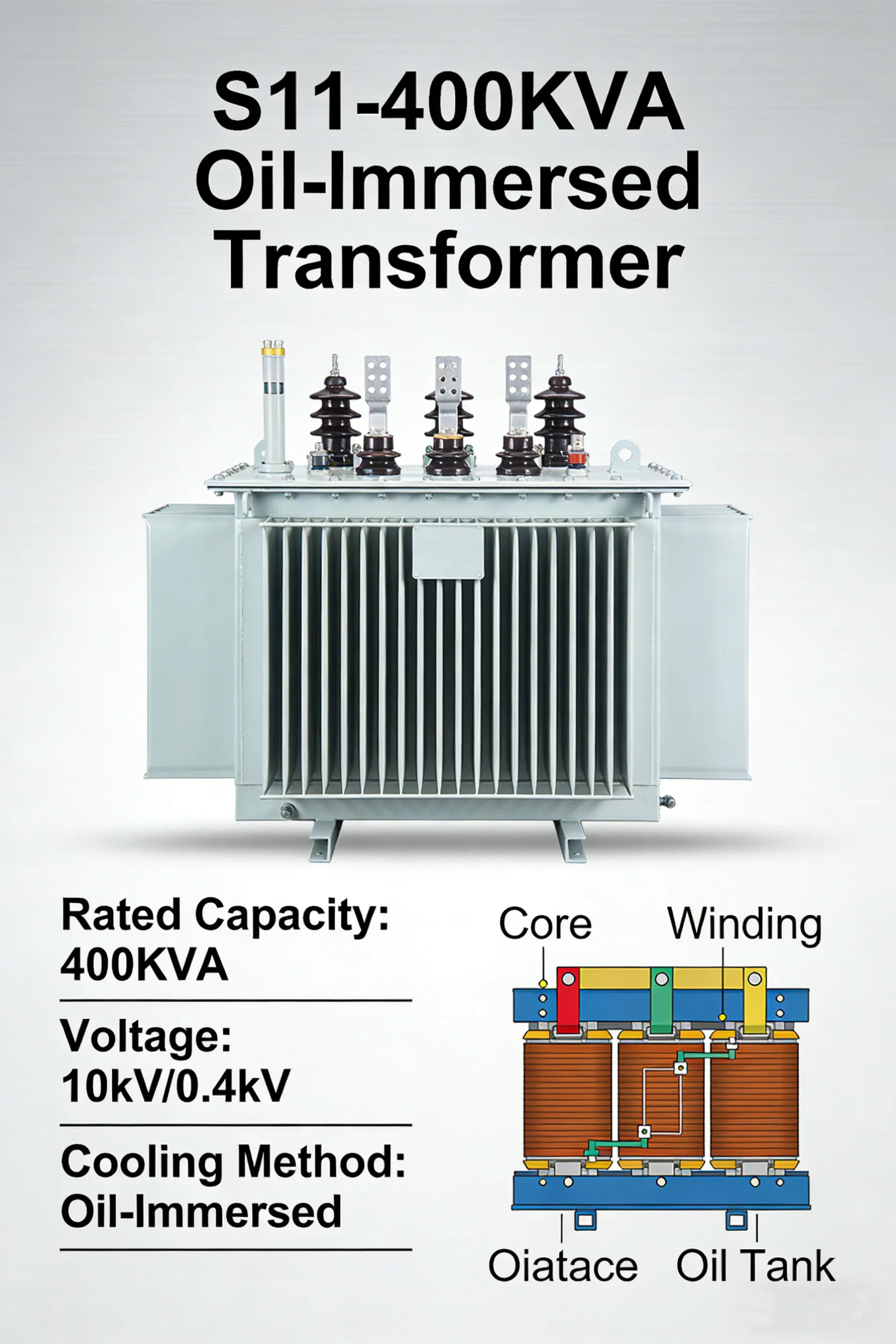
Product recommendation: After tank style and cooling method are written down, open the transformer product category and screen the S□-M oil-immersed power transformer series, with the SC(B) resin insulated dry transformer series only if an indoor dry alternative re-enters the study.
| Better fit | Needs more study |
|---|---|
| Tank style fixed before civil freeze | Late flips after pads are poured |
| Inspection access written into O&M | Assuming sealed means zero oil work |
| Cooling method aligned with tank choice | Comparing bids on mixed tank assumptions |
Submit ratings and tank-style preference through Contact Us for catalog confirmation.
Part 7. Tank-style mistakes that reopen civil work
- Leaving tank style blank in the RFQ.
- Equating sealed tanks with zero maintenance.
- Ignoring breather inspection on conservators.
- Changing tank style after foundation freeze.
- Comparing bids without the same accessory list.
- Omitting oil-sampling access from the layout.
FAQ
Is a sealed tank always better than a conservator?
No—choose from maintenance culture, environment, and accessory layout; neither style is universally best.
Does a conservator require more inspections?
Typically yes for breathers and oil-level checks; write the inspection plan into O&M.
Are sealed transformers maintenance-free?
No—pressure, leaks, and oil quality still need monitoring.
Which electrical data still belong in the quotation?
Even for tank-style comparisons, keep kVA/voltage, vector/tap, losses, cooling/enclosure, and impedance on one shared bid sheet.
When should tank style be frozen?
Before foundation and accessory layout freeze so civil and electrical drawings stay aligned.
Can I switch from conservator to sealed late in design?
Late switches often force pad, cable, and accessory redesign; avoid after civil freeze.
What should buyers send suppliers?
Send tank-style preference, cooling limits, site access notes, ratings, and required documents with the RFQ.