
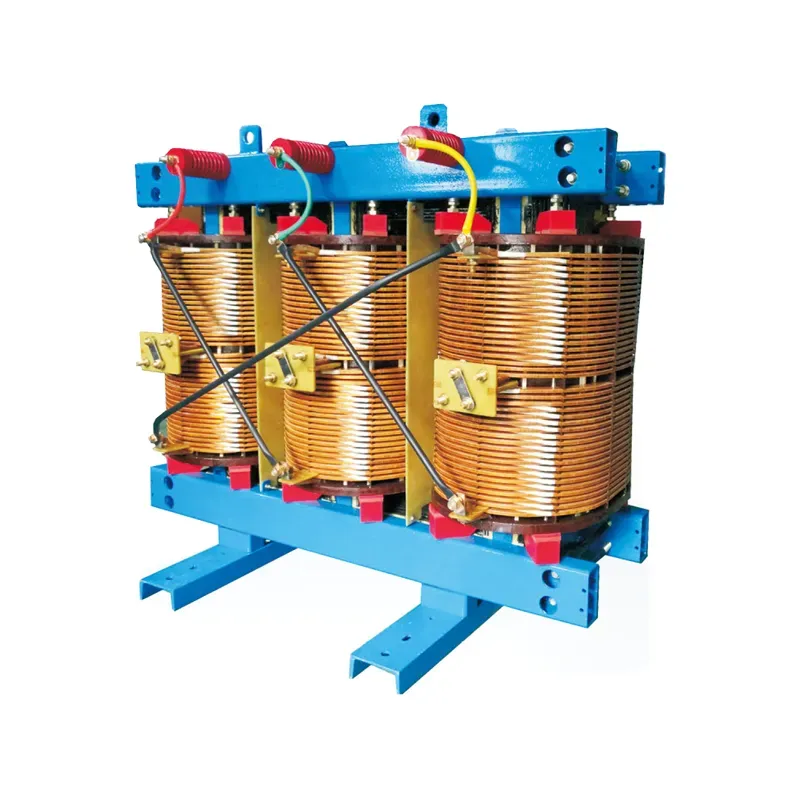
A 100KVA dry type power transformer is a practical distribution option when its voltage, load profile, connection group and room conditions are specified together. Capacity alone is not enough to compare suppliers or confirm an indoor installation. For the broader construction and project-selection overview, see our dry-type transformer types and ratings guide.
Use the published catalog as a screening tool, then lock the ordered configuration through the approved datasheet, GA drawing and test-document list. That keeps electrical, civil and procurement teams on the same basis.
Part 1. Start with the electrical duty, not the kVA label
100 kVA describes apparent-power capacity; it does not define the primary voltage, secondary voltage, grounding arrangement, load profile or installation method. Start with the approved single-line diagram and the loads that the transformer must support at the expected duty cycle.
For a three-phase project, record the supply voltage, the required low-voltage output, frequency, prospective fault level and whether downstream equipment expects a particular vector group. These inputs decide whether quotations are genuinely comparable.
The Transformer category is the main product-line entry point. For nearby dry-type capacity context, see the 63KVA dry type transformer guide and the 250KVA dry type specifications guide.
Part 2. Compare the specification fields on a common basis
The LBAJI SC(B) resin insulation dry transformer series includes a published 100 kVA entry in its 10 kV series. Treat those figures as a catalog reference, not a final nameplate commitment.
| Item | Catalog or project question | Why it matters | Send with quote |
|---|---|---|---|
| Rated capacity | 100 kVA | Establishes the duty basis | required load schedule |
| Voltage combination | 6–11 kV / 0.4 kV options are published | Must match the approved system | primary and secondary voltage |
| Connection group | Dyn11 or Yyn0 options are published | Affects grounding and downstream compatibility | required vector group |
| Tap range | ±5% or ±2 × 2.5% options are published | Supports voltage adjustment planning | required tap arrangement |
| No-load loss | 0.36 kW catalog reference | Used in lifecycle comparison | loss basis and tolerance |
| Load loss | 1.48 kW at the stated reference temperature | Must be compared at the same reference condition | insulation class and reference temperature |
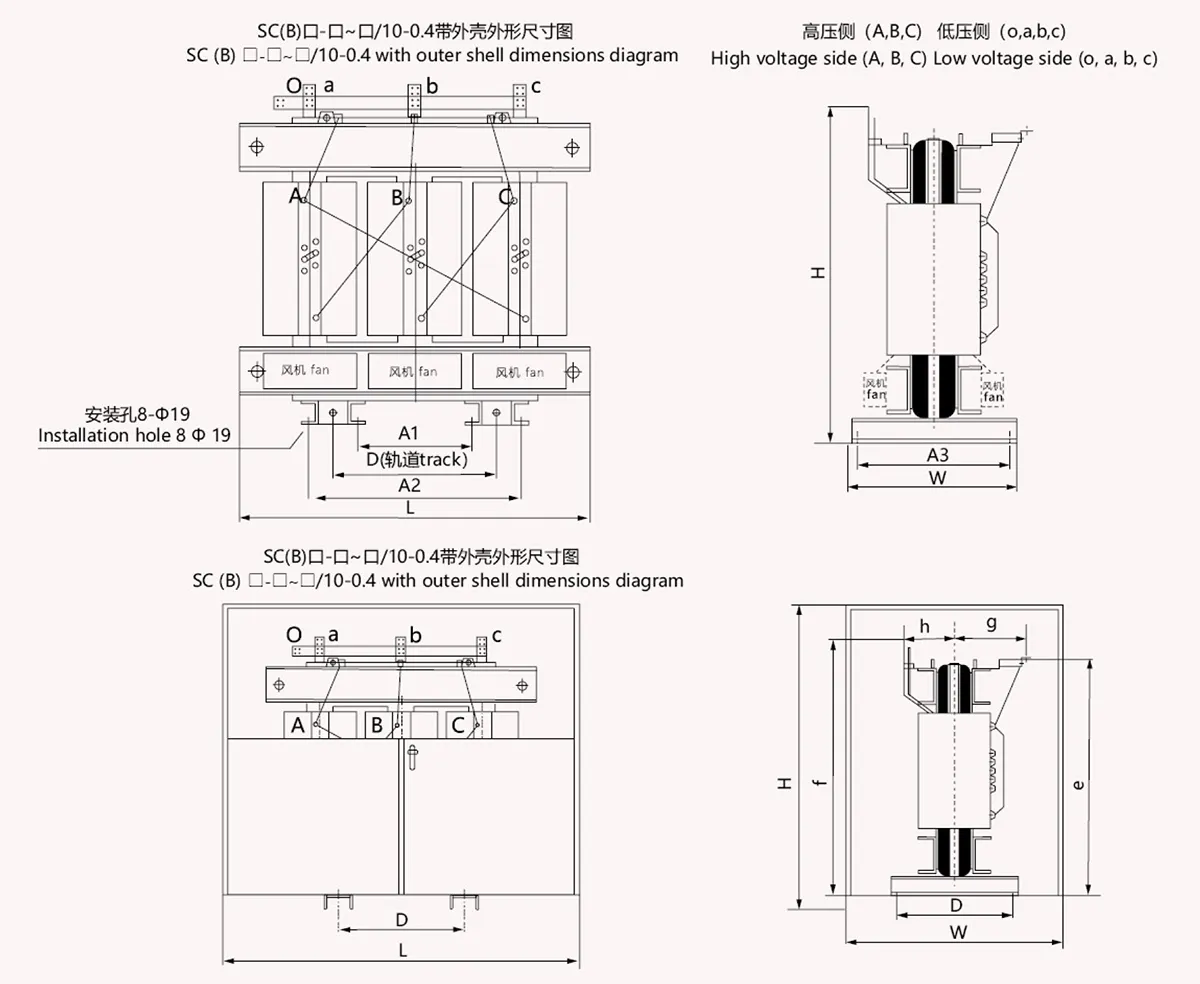
| Dimensions and weight | 720 × 600 × 720 mm; 570 kg catalog reference | Civil layout and lifting planning | issued GA drawing request |
Numbers in a supplier table are useful only when voltage, connection group, insulation system and reference temperatures align. Do not compare a loss value from one temperature condition with another supplier’s value from a different condition.
Part 3. Check load profile, heat and insulation assumptions
An indoor dry-type selection depends on more than connected nameplate load. Consider simultaneous demand, expected overload events, harmonic content, ambient temperature, elevation and the room’s ventilation arrangement before finalizing the rating.
IEC 60076-11 provides the dry-type transformer standard context, but it does not replace a project thermal review. If drives, rectifiers or other nonlinear loads are material, include the measured or calculated load information in the engineering review instead of assuming a standard duty.
The required insulation system, temperature limits and cooling arrangement must remain explicit in the quote comparison. A change in any of those fields can change loss values, dimensions and the acceptable loading conditions.
Important: Do not use a catalog loss figure, enclosure option or reference dimension as proof of code compliance or final thermal suitability. Confirm the ordered construction against the approved drawings and the applicable project requirements. Source: IEC 60076-11.
Part 4. Plan the room, enclosure and outgoing connection
Room planning should use the issued GA drawing, not a catalog thumbnail. Allow for safe access, cable bending, termination space, ventilation path, maintenance work and the lifting or replacement route.

The product page describes conventional, busbar and side outgoing methods. Confirm the actual interface with the switchboard designer because the connection method can affect clearances, busbar routing and enclosure design.
An enclosure may be needed for personnel protection, environmental exposure or site-specific access requirements. Do not state an IP class, fire rating or room-code compliance unless the ordered construction and applicable project requirements have been confirmed.
Part 5. Make supplier quotations technically comparable
Ask every supplier to answer the same configuration sheet. This reduces the risk that two 100 kVA quotations appear similar while relying on different voltage, loss, insulation or installation assumptions.
Include the following with the RFQ:
- approved primary and secondary voltage, frequency and vector group;
- tap range, impedance target and grounding requirements;
- load profile, harmonics, ambient temperature and elevation;
- indoor/outdoor location, enclosure request and outgoing-connection method;
- requested GA drawing, terminal arrangement, routine-test documentation and any witness-test requirement;
- required nameplate language, shipping constraints and spare-parts expectations.
Use the dry type versus oil immersed comparison when cooling technology itself is still undecided. It is a separate decision from selecting the final 100 kVA dry-type configuration.
Part 6. Choose the right LBAJI product review path
For a 100 kVA dry-type inquiry, start with the SC(B) resin insulation dry transformer series and provide the project inputs above. The published series table establishes a useful engineering discussion point; final values must be confirmed against the selected model’s drawings and documents.
| Better fit | Needs additional engineering confirmation |
|---|---|
| A documented indoor distribution duty with defined voltage and load data | A room layout based only on a catalog footprint |
| Projects able to state vector group, taps and outgoing method | A quotation request without a single-line diagram |
| Buyers comparing losses at matching reference conditions | A request that assumes a published figure applies to every configuration |
Send the electrical and installation inputs through Contact Us for a configuration-specific review.
Part 7. Avoid common 100 kVA selection mistakes
- Selecting capacity from connected load without considering simultaneous demand and future operating conditions.
- Leaving the vector group or grounding arrangement unspecified.
- Treating a catalog dimension as the final room-clearance drawing.
- Comparing load losses at unlike reference temperatures or insulation assumptions.
- Omitting the outgoing connection method from the RFQ.
- Claiming a site approval, enclosure class or certification that is not documented for the ordered configuration.
FAQ
What is a 100KVA dry type transformer used for?
It is commonly considered for a defined three-phase distribution duty where the electrical load, voltage combination and installation conditions support that rating. The final application must be checked against the approved load schedule and system design.
What information should be included in a 100KVA dry type transformer RFQ?
Provide primary and secondary voltage, frequency, vector group, tap range, load profile, ambient conditions, elevation, installation location, enclosure needs, outgoing method and required drawings or tests. Those inputs let suppliers quote a comparable configuration.
Can a 100KVA dry type transformer be installed indoors?
It may be considered for an indoor location when the room layout, ventilation, access, enclosure and applicable project requirements are confirmed. The catalog alone does not establish room-code compliance.
Do catalog dimensions fix the final electrical-room layout?
No. Use catalog dimensions for preliminary screening only. The issued GA drawing, termination arrangement, access route and required clearances must be reviewed before the layout is released.
When should an enclosure be specified?
Specify it when personnel protection, environmental conditions or the installation arrangement require it. Confirm the requested enclosure construction and any applicable protection requirement in the project RFQ.
Can the published product table replace approved drawings and tests?
No. The product table is a starting point for selection. The approved datasheet, drawings and agreed test documentation control the ordered transformer.